
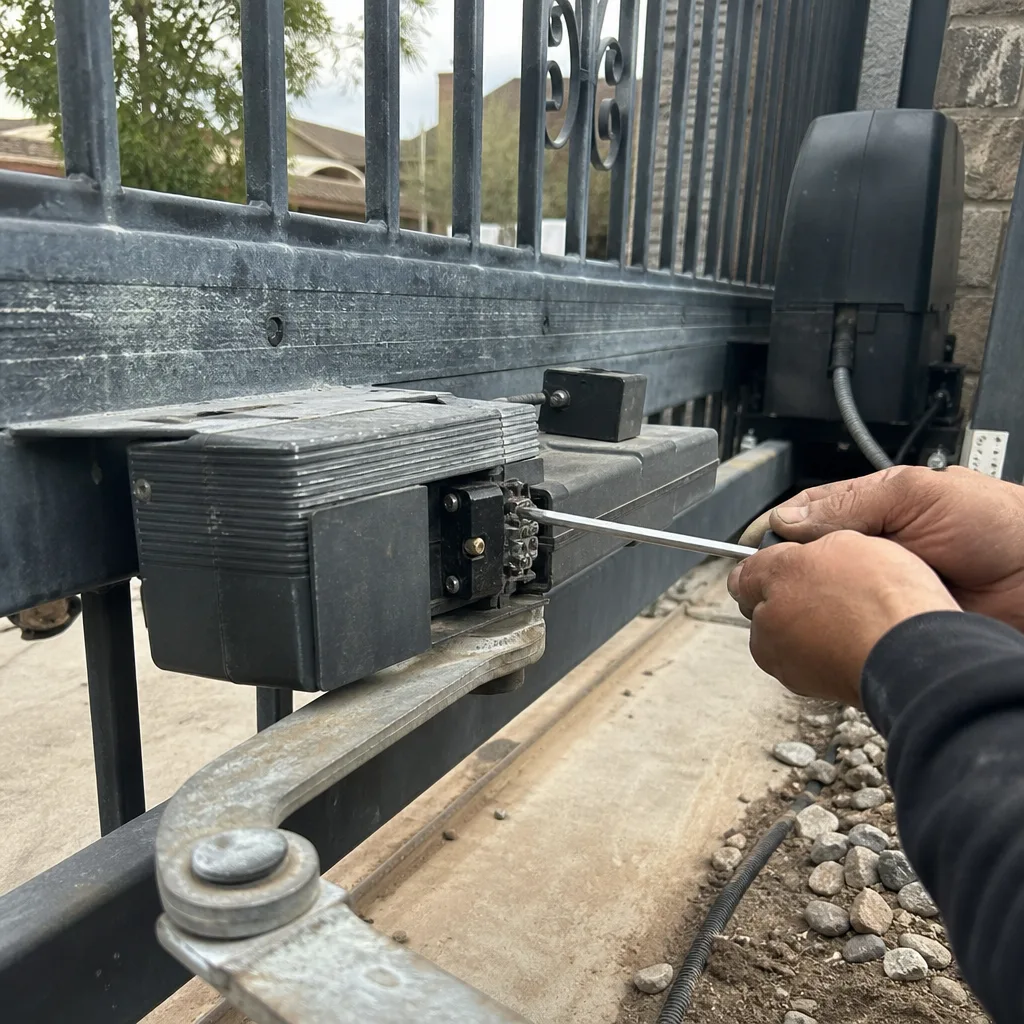
Last updated November 18, 2026
 Wrought iron
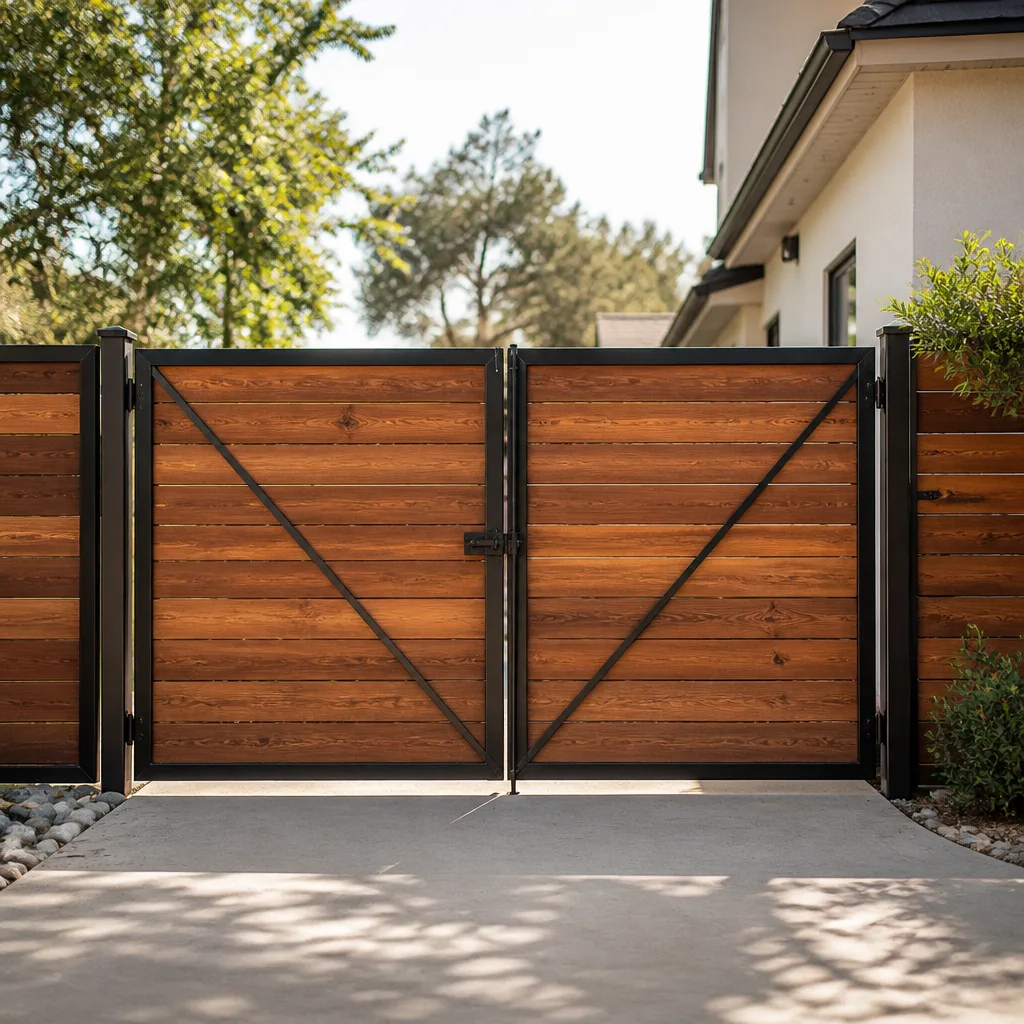 Wood & steel frame
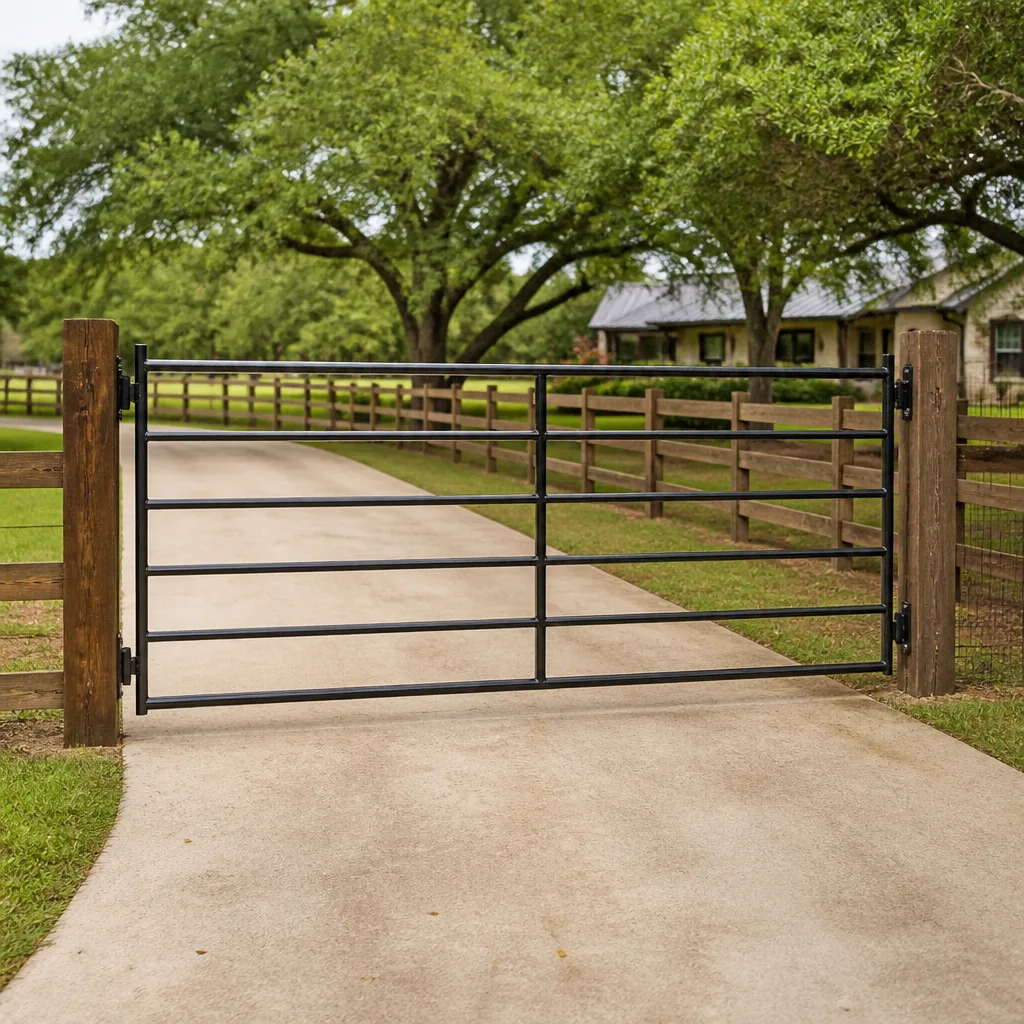 Farm & ranch
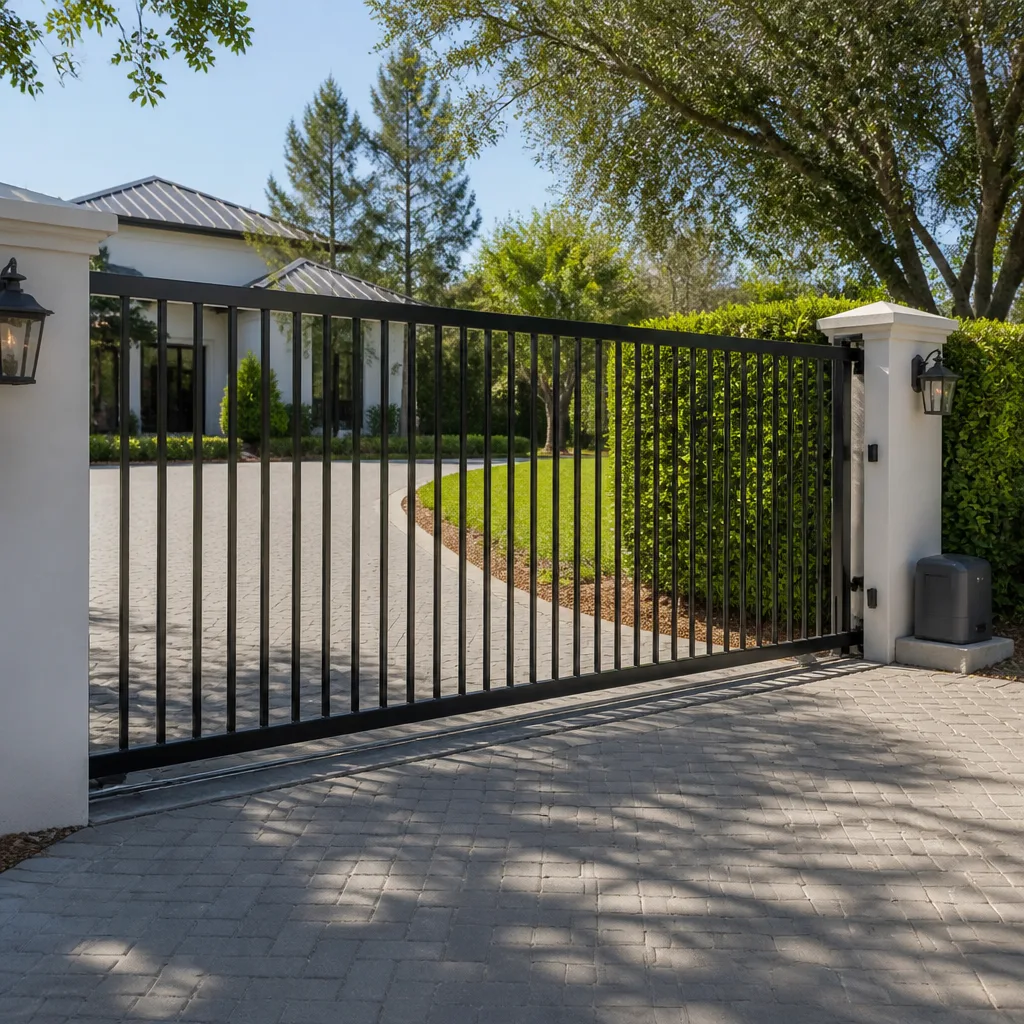 Sliding driveway gates
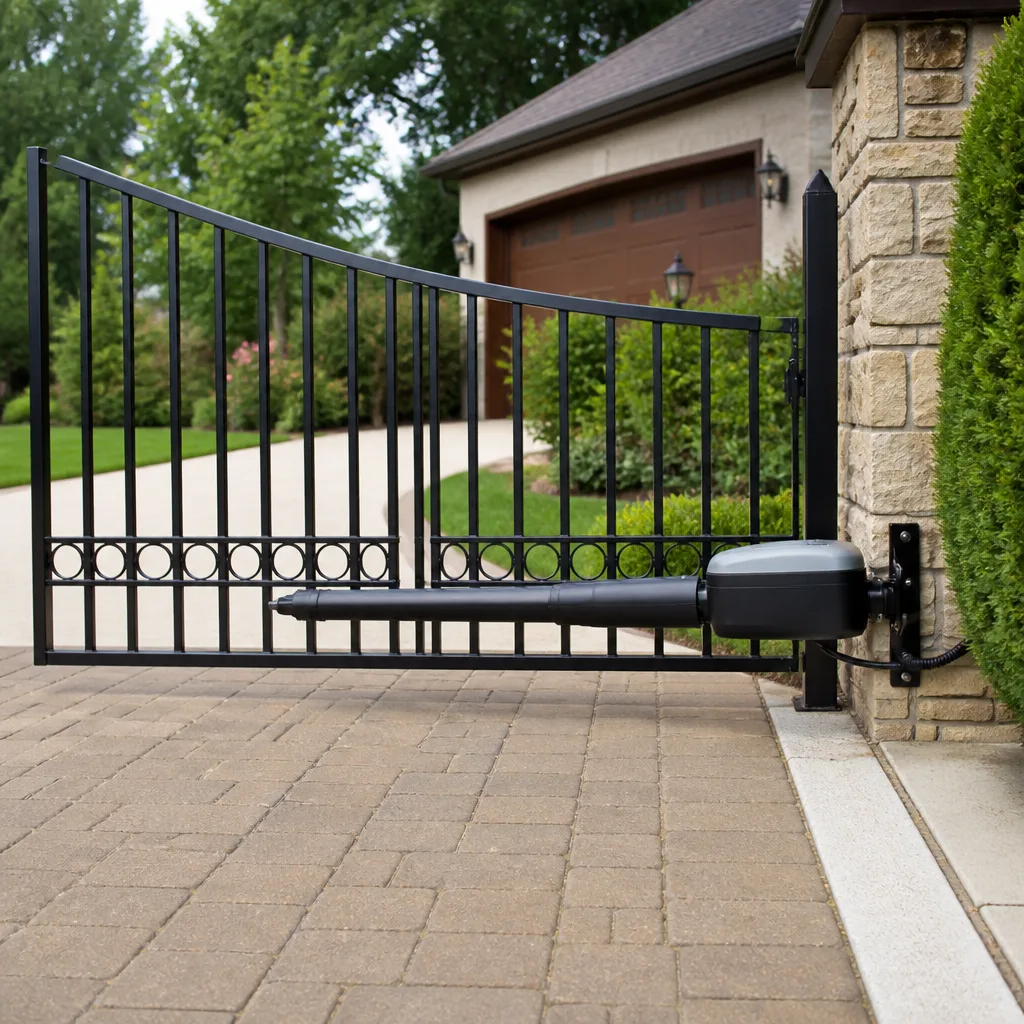 LiftMaster operators
Free on-site gate assessment - hinges, posts, and your LiftMaster or Nice gate operator checked before anything is quoted
The assessment is free and the quote is the invoice.
Get your free estimateGate Repair Warning Signs: A Whitney Homeowner’s Reference Guide
A gate that slams at the end of its travel isn’t aggressive. It’s telling you a limit switch already failed and the operator is now hitting a mechanical stop instead of gliding into it. That distinction matters, because the slamming gate gets blamed on wind, on the gate being “old,” on the hinge. The actual failed part sits inside the operator housing, and it will keep failing until someone tests it. Most homeowners are taught to watch the gate and not the operator. This guide re-maps the symptoms you can see to the components actually failing, so that when a Whitney gate starts acting up you know whether you have a weekend or a month to schedule the repair.
Quick Answer
Gate repair warning signs break into two groups: slow, consistent symptoms (slow travel, drifting stops) that usually give you weeks to schedule a fix, and acute symptoms (grinding, erratic reversals, dead limits) that can escalate within days. In Whitney’s temperature swings from cold desert nights to 100-degree afternoons, the same component often fails in opposite ways depending on the season, which is why a symptom that appears only at 4 p.m. tells us more than one that appears every time. Photograph what you see and note the time and temperature – it saves a diagnostic visit.
Styles & brands we work with
- Wrought iron
- Wood & steel frame
- Farm & ranch
- Sliding driveway gates
- LiftMaster operators
Table of Contents
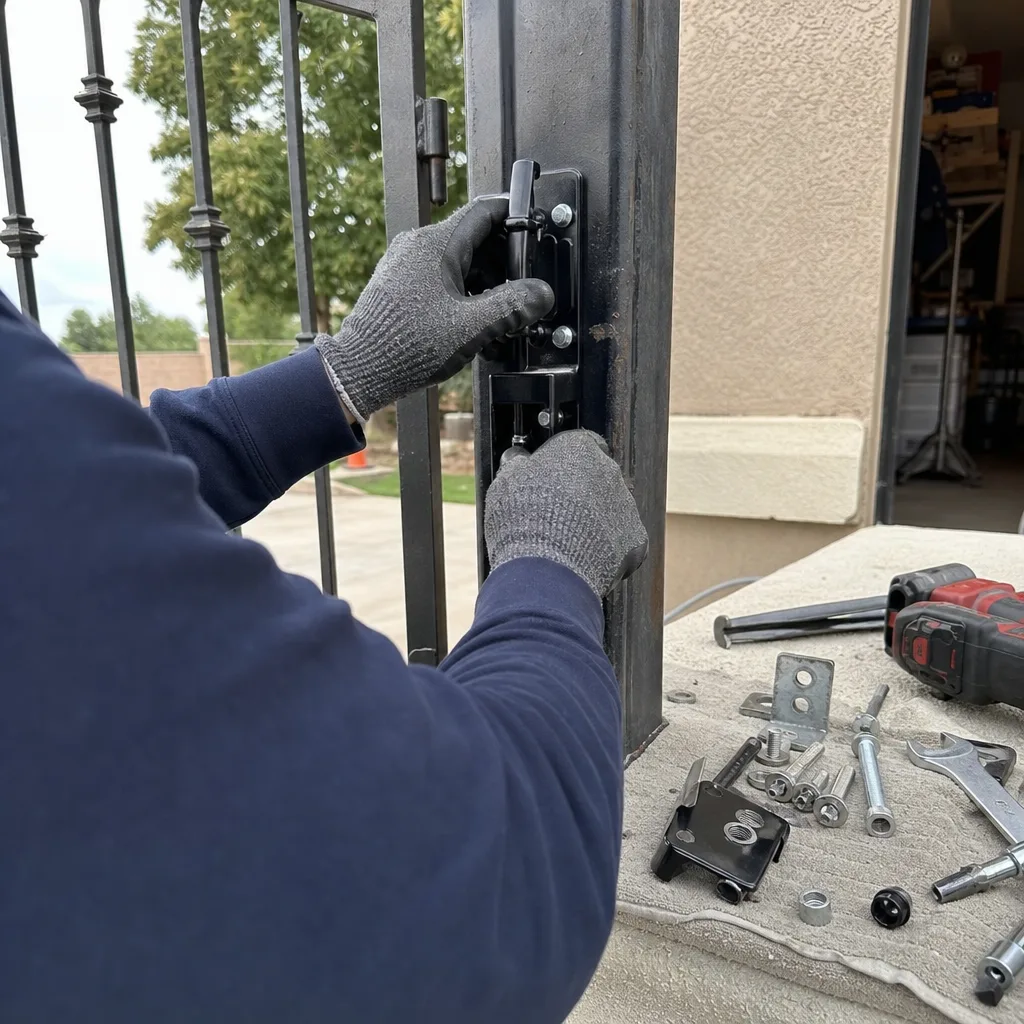
- Symptom-to-Component: What Your Gate Is Actually Telling You
- Weeks Versus Days: Telling a Slow Failure From a Fast One
- Why Intermittent Failures Are More Urgent Than Consistent Ones
- Heat-Triggered vs. Cold-Triggered Symptoms in Whitney
- What to Photograph and Log Before You Call Anyone
- Motor Brand Differences That Change the Symptom
- When the Symptom Means Stop Using the Gate
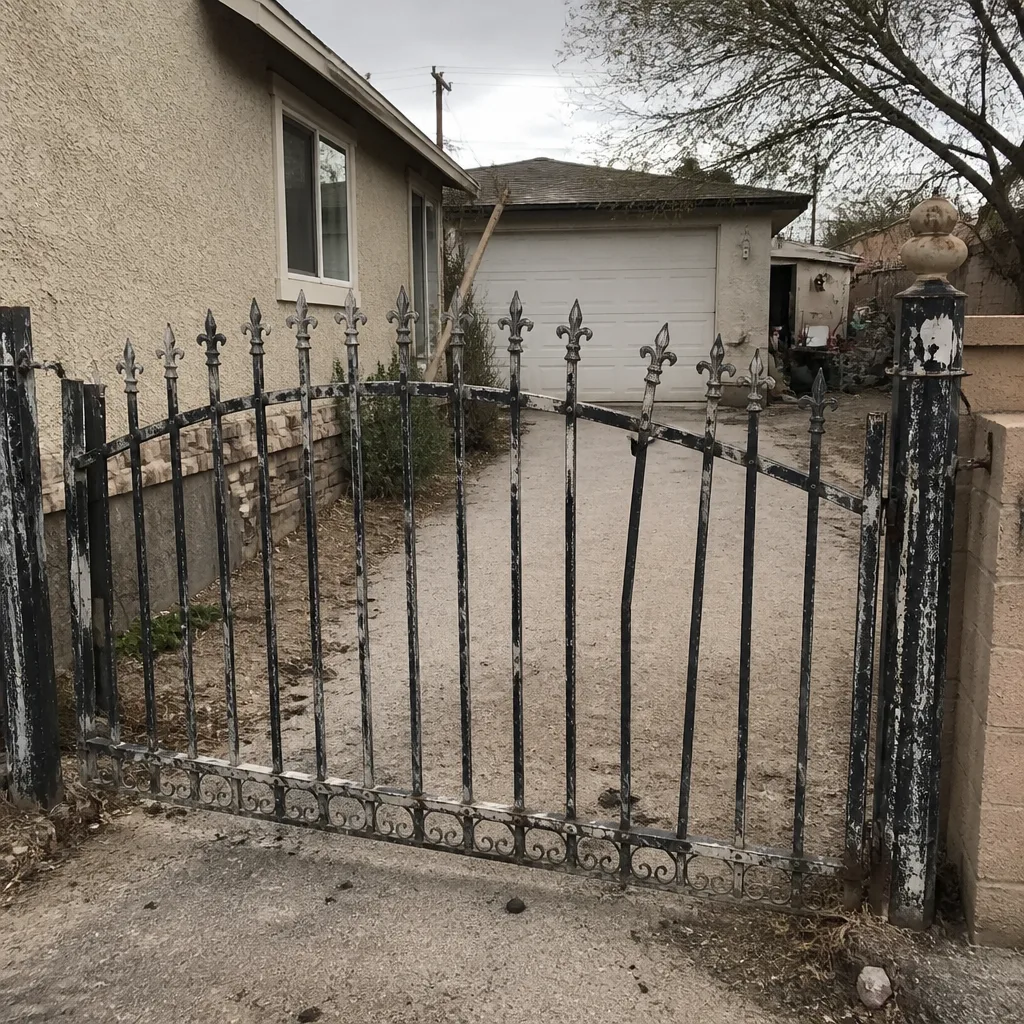 Before
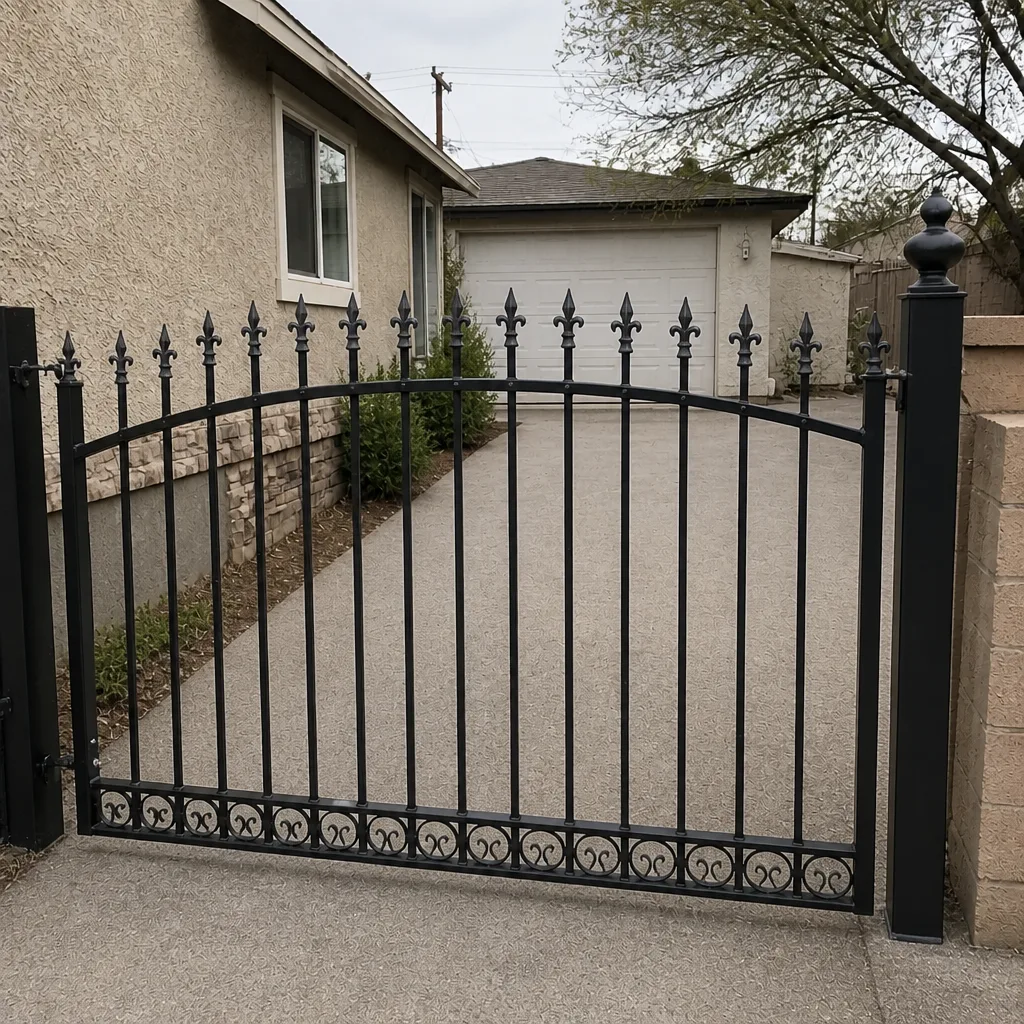 After
Symptom-to-Component: What Your Gate Is Actually Telling You
The map below is the core of this guide. Each symptom you can observe on a Whitney driveway gate corresponds to a documented cause we’ve confirmed repeatedly on repair calls: not every time, but often enough that the symptom is a reliable starting point. We’re mapping what you see to what we test.
- Slow travel speed, both directions. Usually a failing drive capacitor or a worn gearbox, not a “tired” operator. If the gate crept open this year and it didn’t last year, the motor’s torque is declining, and the capacitor is the cheapest cause to rule out.
- Erratic reversals mid-travel. Almost always a photo-eye (the infrared beam that stops the gate if something crosses its path) that’s been knocked out of alignment – often by roughly two inches after a landscape edge or a hard rain puddle. The gate reverses because the beam keeps breaking.
- Grinding at the open or close position. Worn gearbox teeth or a stripped drive sprocket. This is a mechanical problem, and running the gate through it worsens the gear. Stop operating it and schedule repair.
- Partial-travel stops. A limit switch has drifted or failed. The operator no longer knows where “fully open” is and halts at its last known position.
- Slamming at end of travel. The opening or closing limit is past its set point, and the gate is colliding with a mechanical stop instead of decelerating. This is the symptom many homeowners blame on the gate; the limit switch is the cause.
- Dead on one side of the driveway. A failed photo-eye receiver or a broken low-voltage wire run, not the motor itself.
If you only remember one line from this section: slow travel is almost never a dead motor, and slamming is almost never an aggressive gate. If you’ve read the symptoms and want the fuller picture of repair scope, our gate repair service in Whitney page walks through the standard diagnostic.
Weeks Versus Days: Telling a Slow Failure From a Fast One
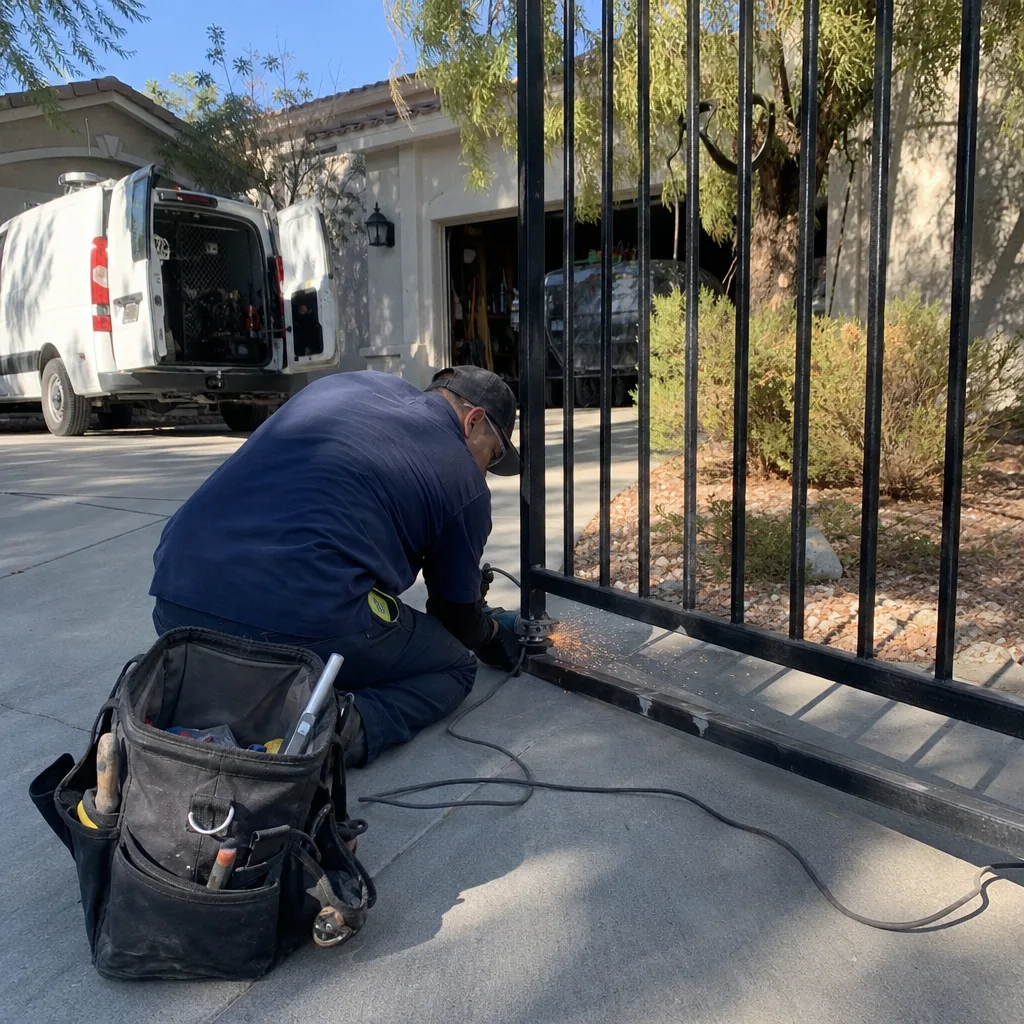
The useful distinction isn’t the symptom itself. It’s the slope of the symptom. A gate that’s been slowly drifting open over six months gives you time. A gate that started grinding on Monday gives you days, maybe hours. Here’s how we separate them without a multimeter.
- Does it get worse by the day, or by the month? Gradual decline means wear. A sharp onset means a failed part, and failed parts usually take neighbors with them.
- Is the behavior consistent? If the gate reverses in the same spot every time, one component is misaligned. If it reverses randomly, the operator’s safety circuit is on the edge of failure and could trip at any position.
- Does it change with load? Test by pressing the gate manually on its track where there’s no pinch hazard. If resistance increases at one spot, stop and call. If it moves freely, the fault is electrical.
- Does it happen on the same cycle? First open of the morning, last close of the night, or all day? First-cycle failures suggest an aging capacitor still warming up. All-day suggests a live fault.
If the gate only fails on the first cycle, you have weeks. If it fails on cycle three, you have days. The rule is simple: any symptom that appears suddenly and repeats is a call-today symptom. Whitney homes with heavy afternoon sun on the operator tend to show first-cycle failures more than cycle-three failures.
Why Intermittent Failures Are More Urgent Than Consistent Ones
Here’s the counterintuitive part. A gate that always fails is easier to diagnose. A gate that fails one time out of ten is the harder case, and the one we treat as more urgent. Here’s why: intermittent failures are almost always a thermal or positional fault, and thermal faults degrade toward failure on a curve, not a line. A component that’s already marginal at 105 degrees will be dead in a few weeks.
On a consistent failure, we drive out, find it, and set it. On an intermittent one, our technician has to reproduce it, and the evidence – a thermal cutoff period, a specific time of day, a particular cycle – lets us get that reproduction faster. On a gate motor, the intermittent symptom usually comes from one of three places:
- The control board’s thermal cutout. It’s designed to protect the motor, but a failing board can start tripping it too early.
- A marginal photo-eye alignment. The beam is barely making contact, so heat expansion in the post – about a sixteenth of an inch moves the receiver enough – breaks the circuit.
- A loose wire termination. The connection vibrates open as the gate runs. Intermittency is positional and mechanical, not electrical, on these.
The important thing for you to know: an intermittent fault that is still building is one we want to see this week. Not next month. Document what happened and when. If you want the record to travel with the job, our gate motor and opener service in Whitney page explains how the written diagnostic and photo record work on every visit.
Heat-Triggered vs. Cold-Triggered Symptoms in Whitney
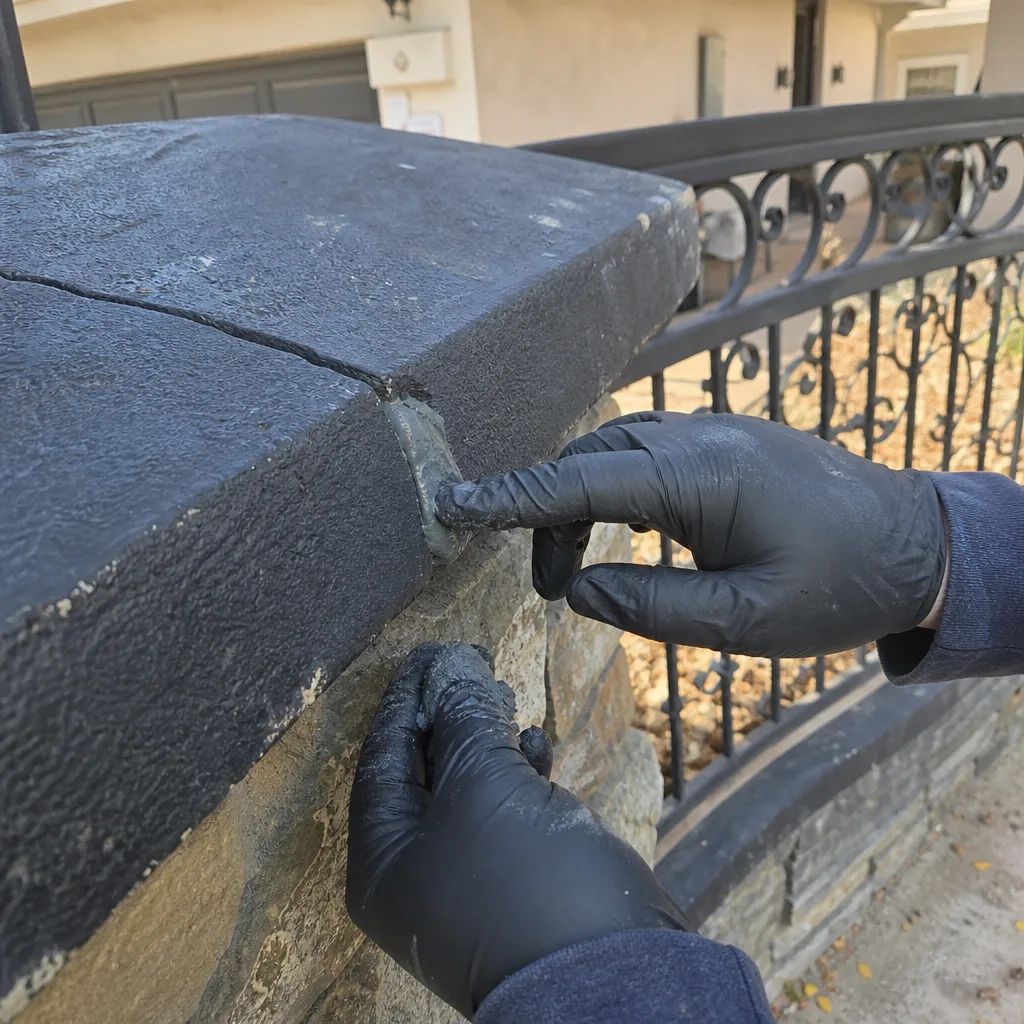
This is where Whitney weather does something that doesn’t happen in most of the country. Our temperature range from roughly freezing February nights to 110-degree July afternoons means the same component fails in opposite conditions. A photo-eye receiver that’s been visually misaligned by a half-inch will fail in the cold (plastic housing shrinks, beam widens) and fail again in the heat (post expands, beam narrows). The gate tells you which by *when* it fails.
Heat-triggered symptoms, in our experience:
- Gate stops mid-cycle only in the afternoon. Board thermal cutout or a capacitor at the edge of its rating.
- Slamming happens only when the gate is hot. Limit switch housing warps and the set point drifts.
- Reversal on the first close after the gate has sat in sun. Photo-eye misalignment from post expansion.
Cold-triggered symptoms:
- Gate won’t start on a cold morning but works by 10 a.m. Capacitor needs warmth, or a limit switch is frozen at its hard stop.
- Battery backup runs the gate slow. The gel cell has lost capacity and the cold shows it.
- Grinding that fades once the gate warms up. Grease has stiffened; the gearbox is fine but under-lubricated.
Same component, opposite symptoms, and the season tells us which to test first. A homeowner in Whitney who notes the temperature at the moment of failure is giving the technician a falsifiable lead. That’s the kind of data that reduces the number of visits.
What to Photograph and Log Before You Call Anyone
Most gate problems we can narrow to one or two components on the phone if the homeowner has four pieces of evidence. We’ve been able to diagnose remotely maybe 40% of Whitney calls this way, which saves you both time and a second visit. Here’s exactly what to capture. No tools needed.
- One wide photo showing the gate and operator. Get the full run. It tells us the operator type and whether we’re looking at a slide gate, swing gate, or dual-leaf.
- One photo of the control panel. Open the lid if it’s a screw-latch. The brand, model, and terminal strip confirm the operator family before we arrive.
- One photo-pair of the photo-eyes. Both sides, taken from the gate’s path. We can see misalignment in a photo; you can’t in person.
- One note with time, temperature, and cycle. “Failed at 4:12 p.m., 104 degrees, third open of the day, reversed at halfway.” That sentence shortens a diagnostic visit by about 20 minutes.
Once you’ve photographed the gate, note the brand. LiftMaster, FAAC, Elite, and Mighty Mule each have characteristic failure patterns, and knowing which one is on your driveway tells us what to bring. Under the Haven Standard, that record is mirrored back to you: our photo log of what we found, what we set, and what we replaced, filed with the job.
Motor Brand Differences That Change the Symptom
A warning sign you see on one brand of gate motor may mean something completely different on another. The brand changes the symptom, and in Whitney we see four families most often. Here’s what each tends to do when it’s failing.
- LiftMaster. Usually shows thermal cutout behavior first. The board protects itself before the gate stops working, so intermittent afternoon shutdowns are the early symptom.
- FAAC. Frequently signals gearbox wear first. A slow grinding at open and a slight motor whine at close usually means the bronze gear is on its way.
- Elite. Limits and photo-eye alignment are the repeat offenders. Slamming on end-of-travel is usually a limit that’s been bumped, not a board failure.
- Mighty Mule. Often the battery and backup circuit first. A slow-open gate with a fresh battery usually has a failing charge circuit, not a dead motor.
The good news is that our technicians work on all nine major automation brands, so we don’t have to guess which family your operator is and we don’t steer you toward a replacement to make the repair fit our inventory. If the repair is a $150 photo-eye realignment, that’s what we quote. The one component we won’t fix on brand alone is a control board that’s been cooked by an out-of-spec surge – that’s the one case where the replacement is the honest answer.
When the Symptom Means Stop Using the Gate
Some symptoms mean “schedule a repair.” Others mean “call now.” We tell Whitney homeowners to stop operating the gate immediately under four conditions, and the safety line is why: a half-open gate is a pedestrian hazard, and a self-closing gate can catch a child or a pet in its path.
- The gate reverses unpredictably. Every reversal is a safety-circuit event, and the next one might not happen.
- The gate grinds and the gate body moves on its track. A worn gear can slip a tooth and suddenly free the gate; on a slope, that’s a runaway gate.
- The photo-eye no longer works. Without it, the gate is running blind. Do not run a blind gate over a driveway where kids play.
- You see a limit or arm bracket that’s cracked. The failure is imminent, and the gate is no longer under operator control.
If you’re unsure whether the symptom is “weeks” or “days,” that’s exactly the question to ask on the phone. Calls are answered by a live person, 24 hours a day.
Common Mistakes to Avoid
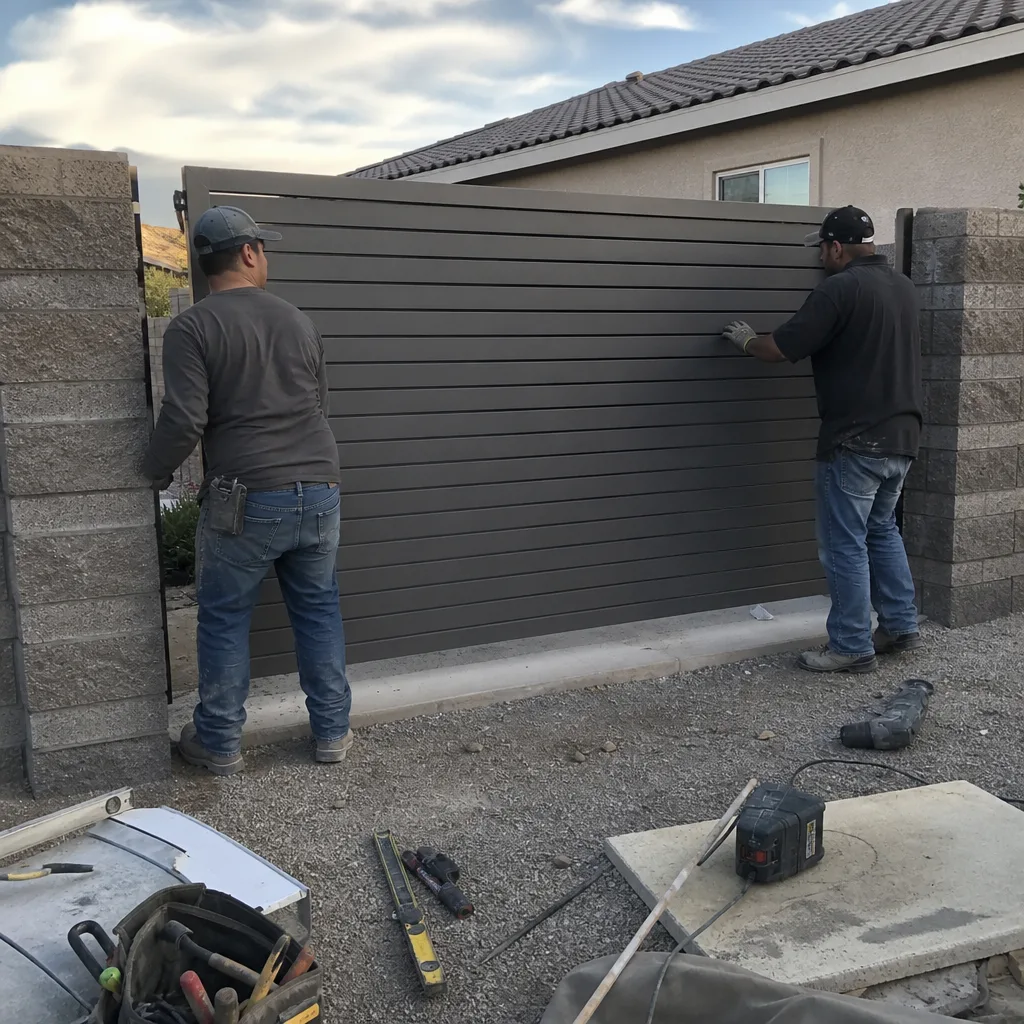
- Blaming the gate for the operator. A slamming gate usually has a failed limit switch inside the operator housing. Repairing the gate and ignoring the operator leads to a repeat failure within weeks.
- Resetting the gate manually and calling it fixed. Cycling power clears a fault code but not the underlying failure. It’s why so many Whitney gates fail the same way twice.
- Replacing the battery when the gate is slow. Slow travel in heat is almost always the capacitor or the gearbox, not the battery. This is the most common wasted repair we see.
- Using WD-40 on the gearbox. It’s a solvent, not a grease. It thins the existing lubrication and the wear accelerates.
- Ignoring a gate that used to close itself and now doesn’t. Self-closing behaviour dropping off is usually a worn spring, and the gate is on its way to falling open on a slope.
- Assuming a new motor solves a photo-eye problem. It doesn’t. The photo-eye realignment repairs more “dead gates” in Whitney than any motor replacement.
- Skipping the documentation. A repair without a photo record and a written price can turn the same symptom into a second bill later, because no one knows what was set.
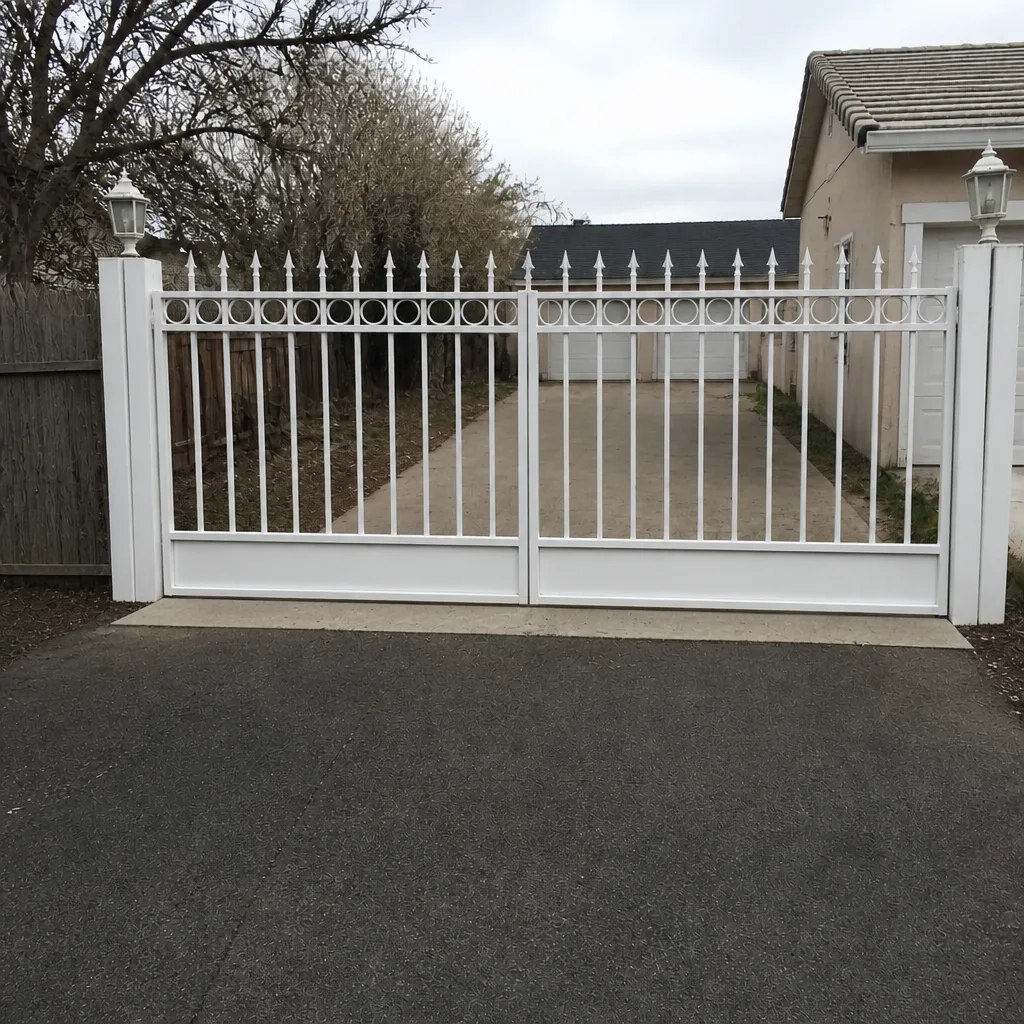
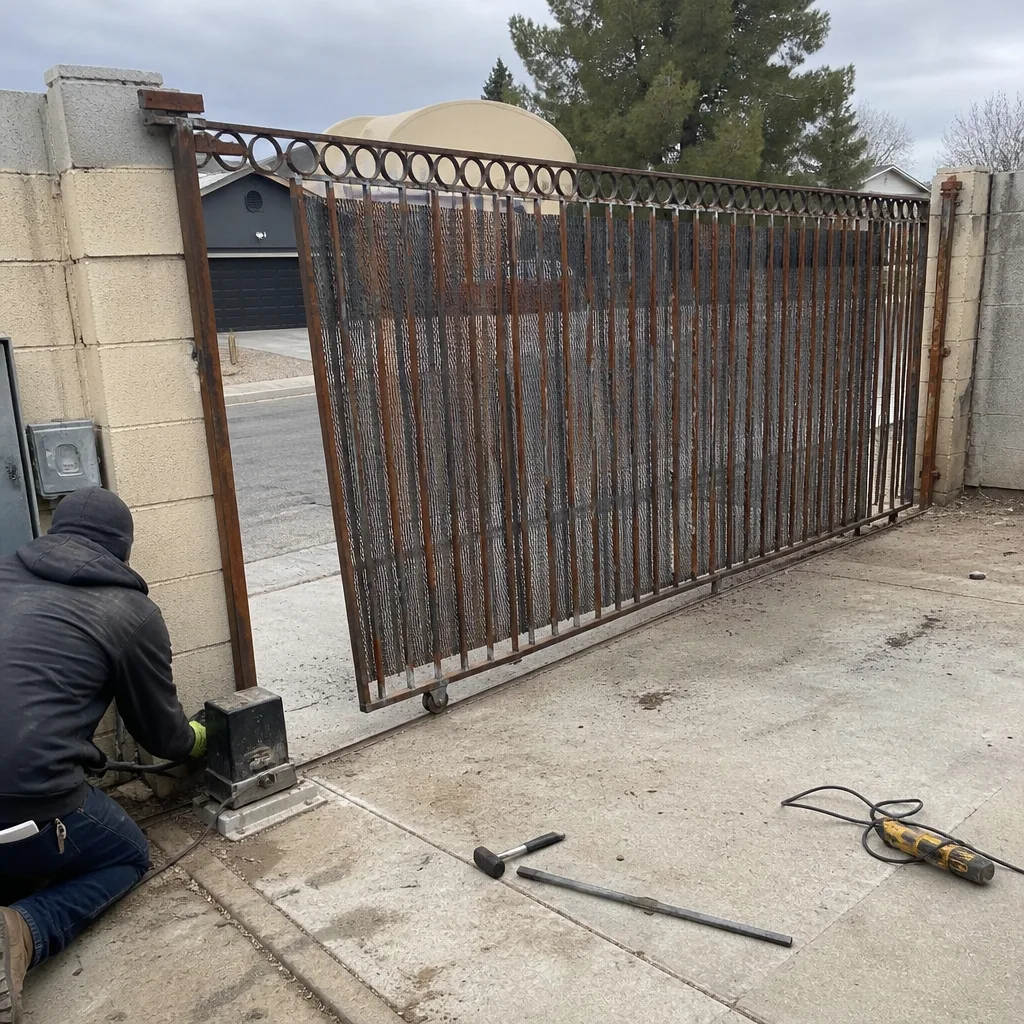
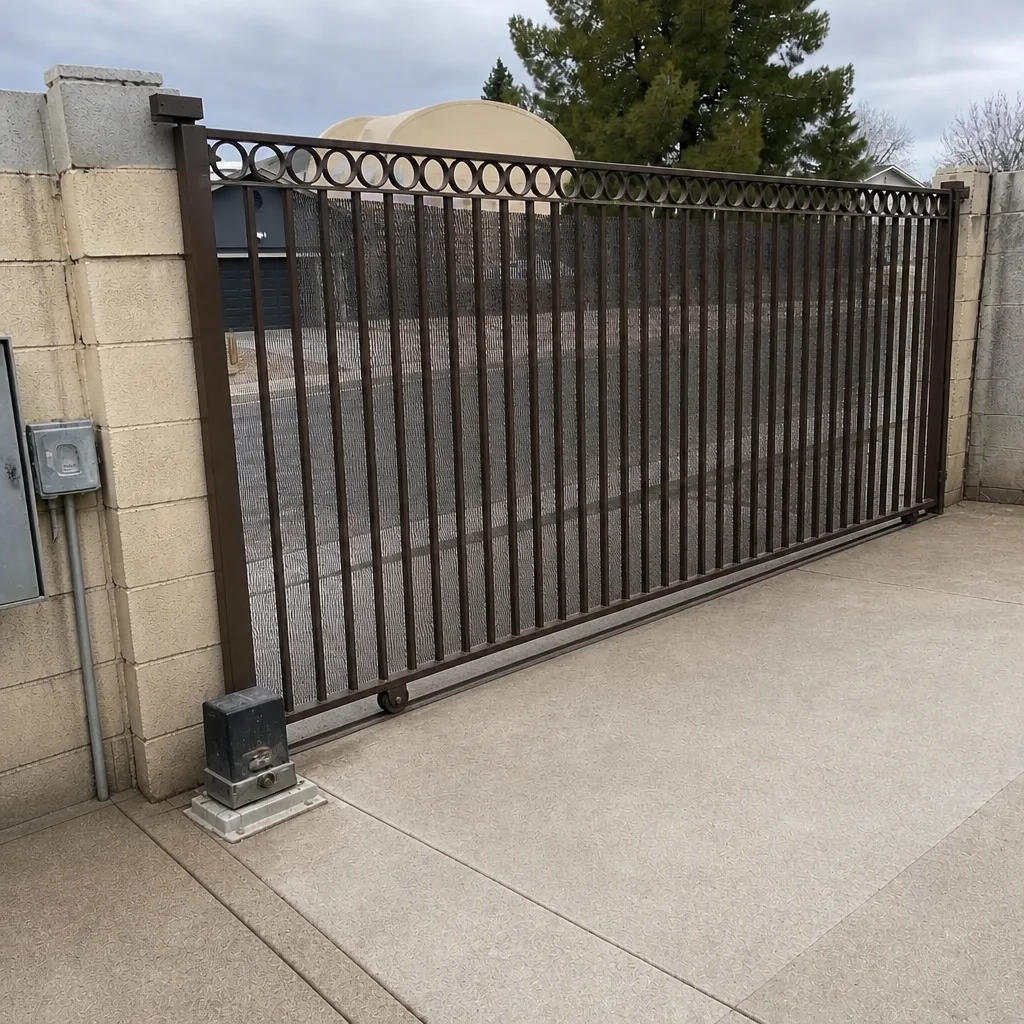
See the difference
BeforeAfter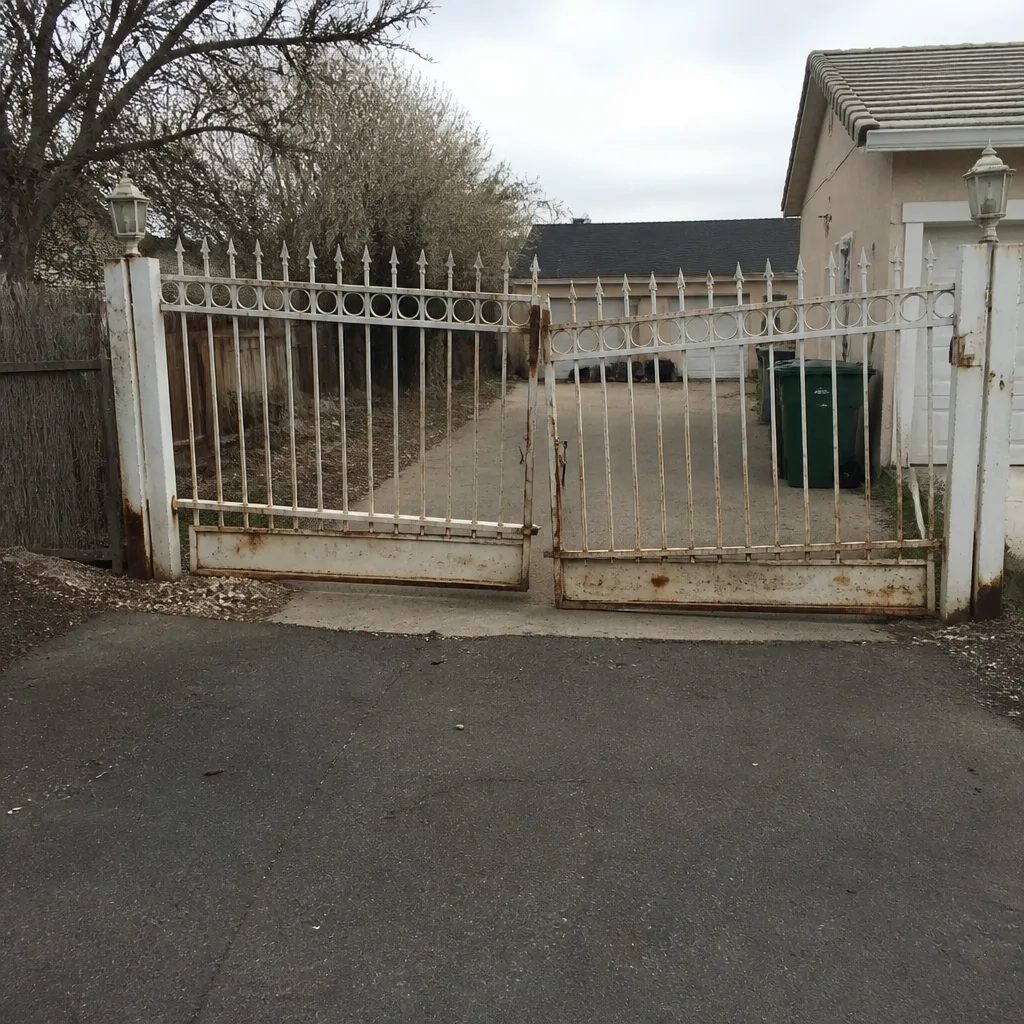 Before
 After
 Before
 After
When to Call a Professional
Call a professional the moment a gate shows grinding, a repeat reversal, or any failure after a recent repair. Gate motors sit at 120 volts AC on the line side and carry a mechanical load that can move a few hundred pounds; that’s not a component to learn on. Beyond the electrical and mechanical risk, most of what we do on an early warning sign is shorter and cheaper than the version of the same repair after the gate has been run into failure for a month. A limit-switch correction today is a ten-minute job with a photo record. The same gate after the gear has stripped is a gearbox. Vance Gate Repair Whitney offers free estimates in Whitney, and our technicians (up to 12 years of experience) can quote the repair price in writing before any work begins, under Clause 1 of the Haven Standard. Call (844) 797-4861 to schedule.
Frequently Asked Questions
The four most common warning signs we see in Whitney are slow travel speed, erratic reversals, grinding at open or close, and partial-travel stops – and each usually points to a specific component rather than the gate itself. Slow travel typically means a failing capacitor or worn gearbox; erratic reversals mean the photo-eye has drifted; grinding means the gearbox or sprocket is worn; partial-travel stops mean a limit switch has failed. Call (844) 797-4861 for a free estimate; we can often narrow the cause from photographs.
Most whitney gate repair calls fall between $150 and $400 for diagnosis and repair, with limit adjustments and photo-eye realignments at the low end and gearbox or board work at the high end. Motor replacement typically runs higher, and the price depends on brand and whether the arm bracket is intact. Vance quotes a flat price in writing before any work begins, so the invoice won’t exceed the quote. Call (844) 797-4861 for an exact quote – estimates are free.
No, and we’d advise against it. Erratic reversals mean the safety circuit is tripping, and the safety circuit is a 120-volt component with a hard mechanical backup. The photo-eye alignment itself is safe to inspect from a distance, but we’d rather the homeowner not lean into the gate path. Our technicians arrive with the diagnostic tools and the safety background to test it correctly. Call us for the earliest available slot.
Because Whitney’s temperature range drives thermal expansion in the gate posts and operator housings, and the same component fails in opposite conditions – heat-triggered failures usually point to the control board or a marginal limit switch, and cold-triggered failures to the capacitor, the battery, or stiffened grease. The timing of the failure narrows the diagnosis faster than anything else. Note the time and temperature when it happens; it’s the most useful thing you can do before the call.
If a symptom is gradual and consistent, you usually have weeks to schedule. If it’s sudden, intermittent, or repeats within a day, treat it as days. Intermittent failures escalate faster than consistent ones because the failing component is on a thermal curve. We’d rather see the gate while it’s still operating than after the arm has dropped on a slope.
Almost certainly. Vance has been repairing gate motors since 2014 across all nine major automation brands, including LiftMaster, FAAC, Elite, Mighty Mule, Ghost Controls, BFT, Linear, Viking, and DoorKing. We don’t steer toward replacement when the repair is the honest answer. Bring photos of the operator and control panel and we’ll confirm the brand before the visit.
The Bottom Line
Gate failures announce themselves. The core skill is reading the symptom against the right component: slamming at travel isn’t aggression, it’s a failed limit; slow travel isn’t age, it’s a capacitor or a gear; an intermittent reversal isn’t a fluke, it’s an early warning. In Whitney, temperature matters as much as the symptom, and a photo log with a time and a temperature gets you a faster, cheaper repair. If you’ve found your symptom in this guide, don’t run the gate into a second failure. Call (844) 797-4861 – Vance Gate Repair Whitney answers live, quotes in writing, and leaves a documented record behind. For a fuller view of what we repair and how, visit our gate installation in Whitney page for the install-side scope, and our Vance Gate Repair Whitney home page for everything else.
Written by the team at Vance Gate Repair Whitney.