
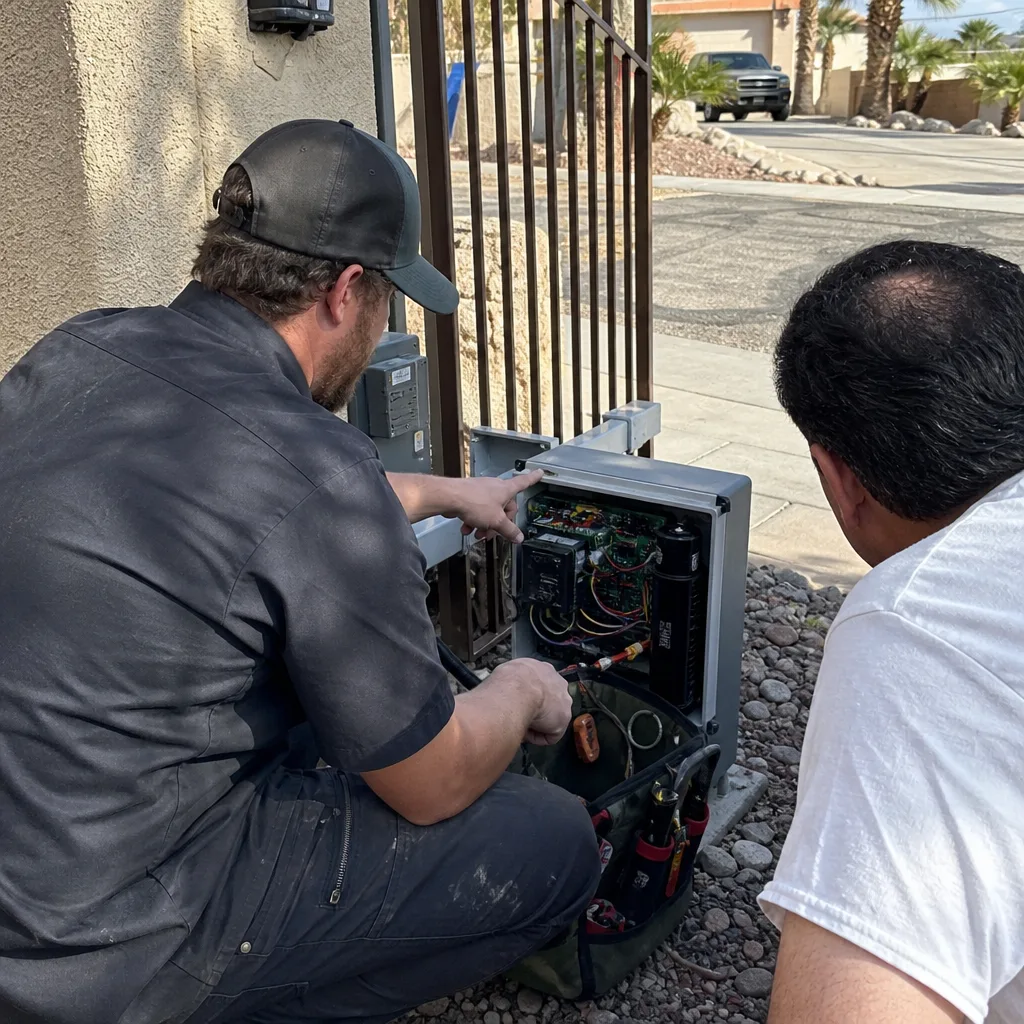
Last updated November 18, 2026
 Wrought iron
 Wood & steel frame
 Farm & ranch
 Sliding driveway gates
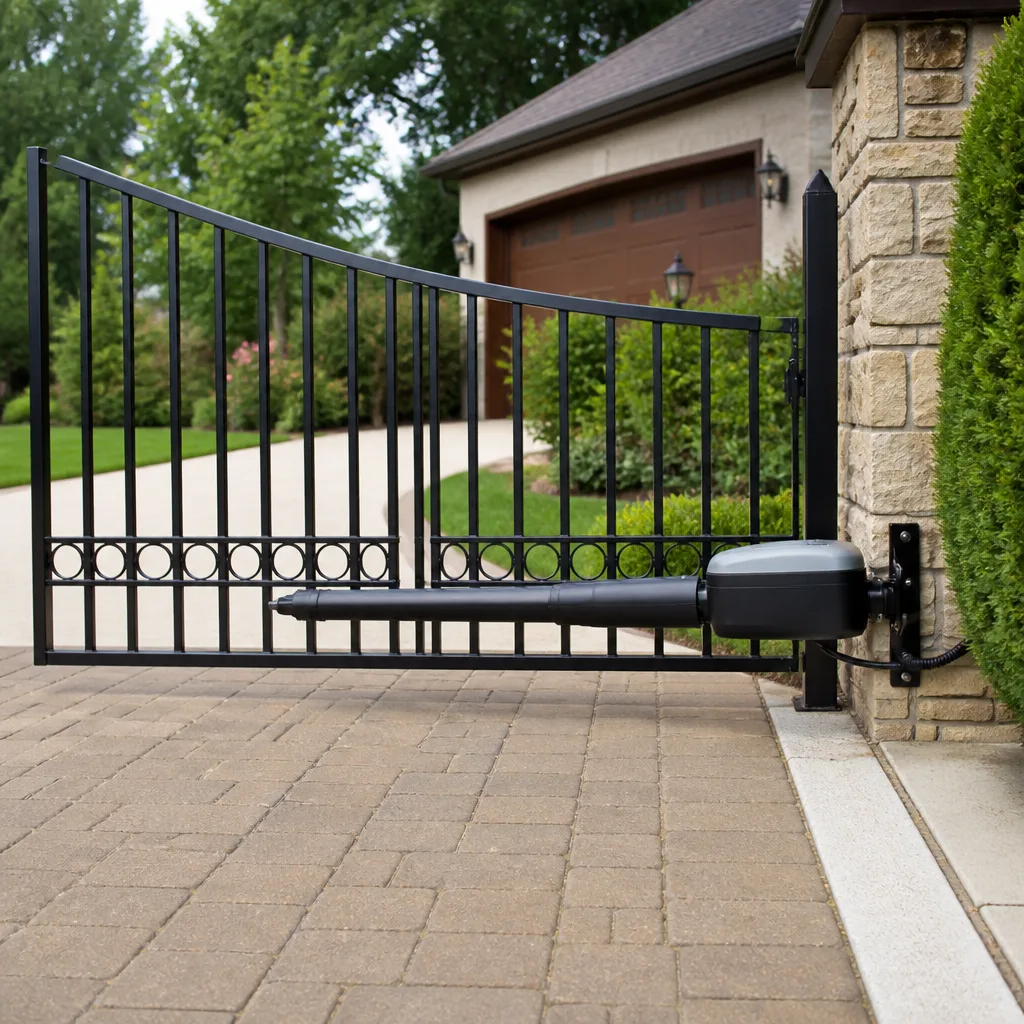 LiftMaster operators
Free on-site gate assessment - hinges, posts, and your LiftMaster or Nice gate operator checked before anything is quoted
The assessment is free and the quote is the invoice.
Get your free estimateHow Long Does Gate Motor & Opener Take? Timelines and What to Expect
Two identical gates. Same motor model, same driveway length, same HOA-approved finish. One motor replacement takes two and a half hours. The other takes a full day. The only difference is whether the first installer left a wiring diagram. We’ve seen this play out more times than we can count, and it changes how we quote every job here in Whitney. This guide breaks a motor and opener job into four phases with honest time ranges, names the specific problems that stretch a job into overtime, and tells you exactly what a technician should leave behind when the work is done.
Quick Answer
A straightforward gate motor and opener replacement typically takes 2 to 3 hours when the existing wiring is documented and the new motor is on site. The same job can run 6 to 8 hours or spill into a second visit when there’s no wiring diagram, the terminal block is corroded, or the motor has to be ordered in. The single biggest variable isn’t the gate. It’s the paperwork the last installer left behind.
Styles & brands we work with
- Wrought iron
- Wood & steel frame
- Farm & ranch
- Sliding driveway gates
- LiftMaster operators
Table of Contents
- The Four Phases of a Gate Motor Replacement
- Phase-by-Phase Time Ranges
- What Extends a Job Unexpectedly
- What a Technician Should Leave Behind
- Parts Lead Time and How to Check Before Scheduling
- The Whitney Factor: Why Documentation Matters More Here
- Choosing a Motor That Fits What’s Already on the Gate
- Common Mistakes to Avoid
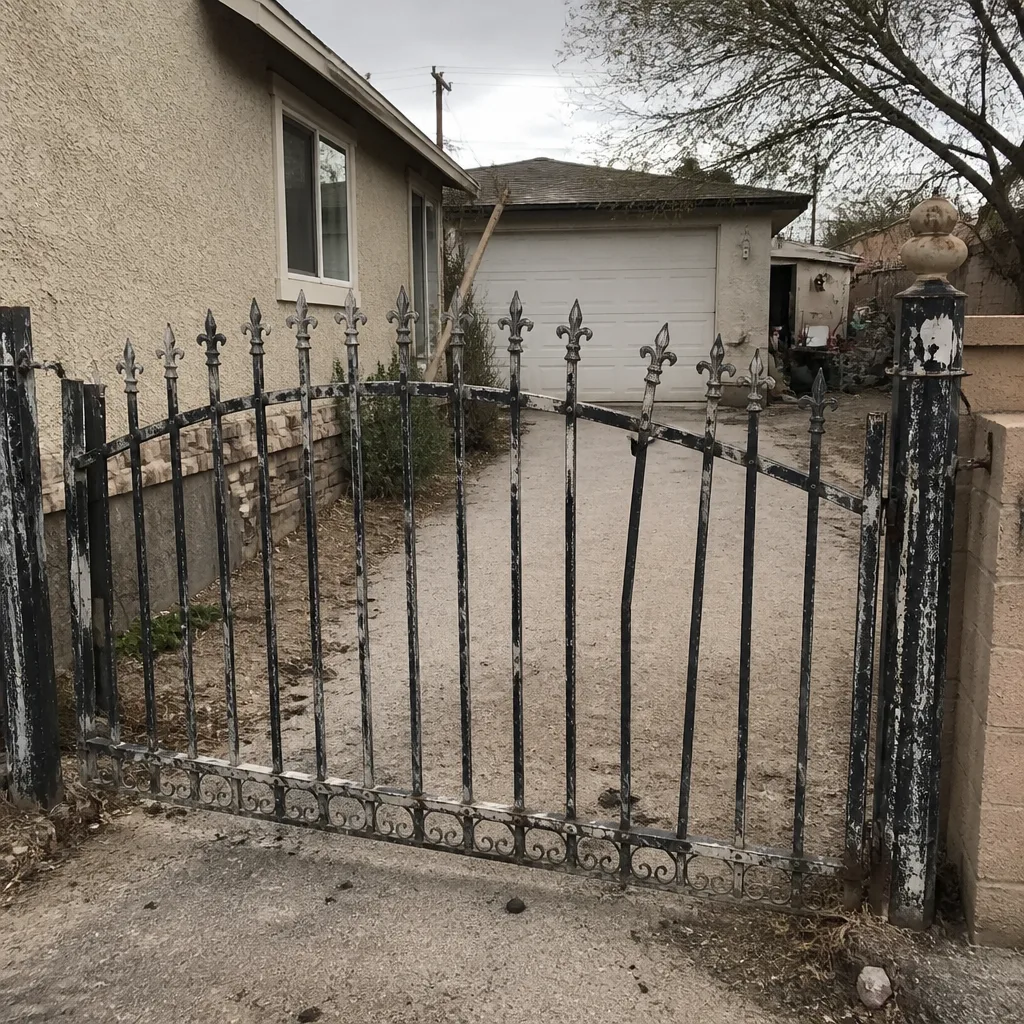 Before
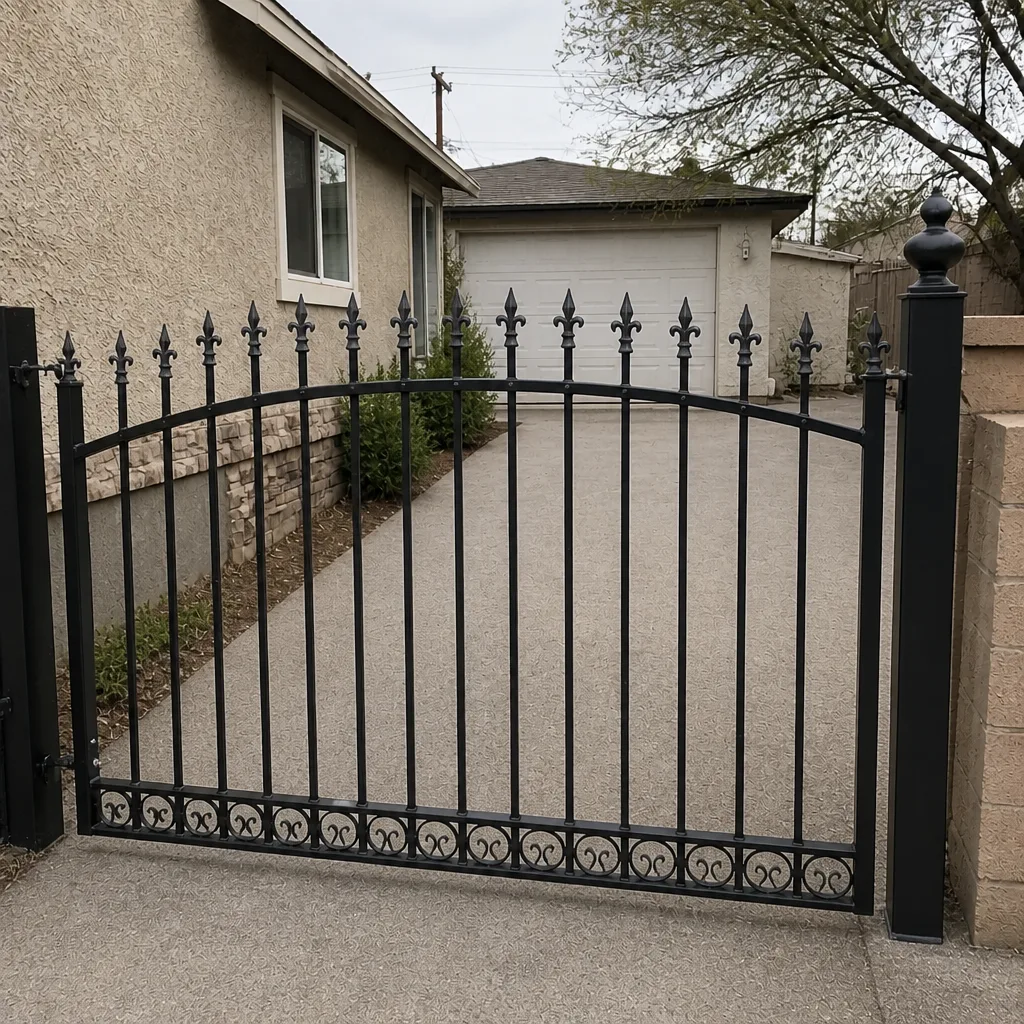 After
The Four Phases of a Gate Motor Replacement
Every swing-gate and slide-gate motor job, whether it’s a LiftMaster, a BFT, a Linear, or a Ghost Controls unit, breaks down into the same four phases. Understanding them helps you read a quote and spot a timeline that’s too optimistic.
- Site assessment and documentation review – reading the existing setup, checking the power run, confirming the gate swings or slides freely.
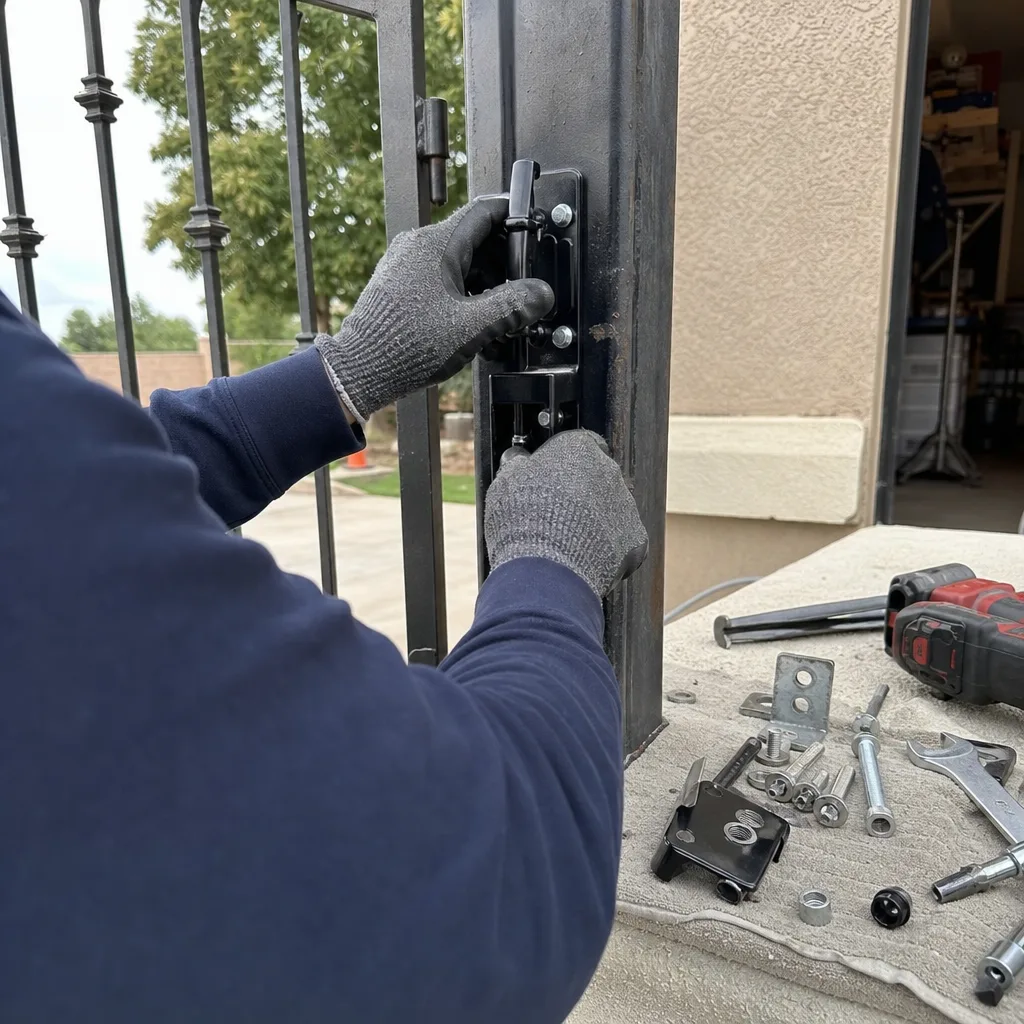
- Motor removal and mounting – pulling the old operator, checking the bracket and arm, mounting the new unit.
- Wiring and control board configuration – landing the conductors on the correct terminals, setting the control board for the gate’s travel and safety devices.
- Commissioning and limit-set – running the gate through full cycles, setting the open and close limits, testing the photo-eye and any safety edges.
Phase one is where the documentation gap shows up first. A technician who can read a wiring diagram and a limit-switch record walks the property once, confirms the as-built, and moves to phase two. A technician facing a coil of unidentified wire walks it twice, tests continuity on every conductor, and often has to trace a buried splice box back to the control panel before touching the motor. That’s the difference between a 15-minute assessment and a 90-minute one, and it happens before a single bolt is loosened.
Phase-by-Phase Time Ranges
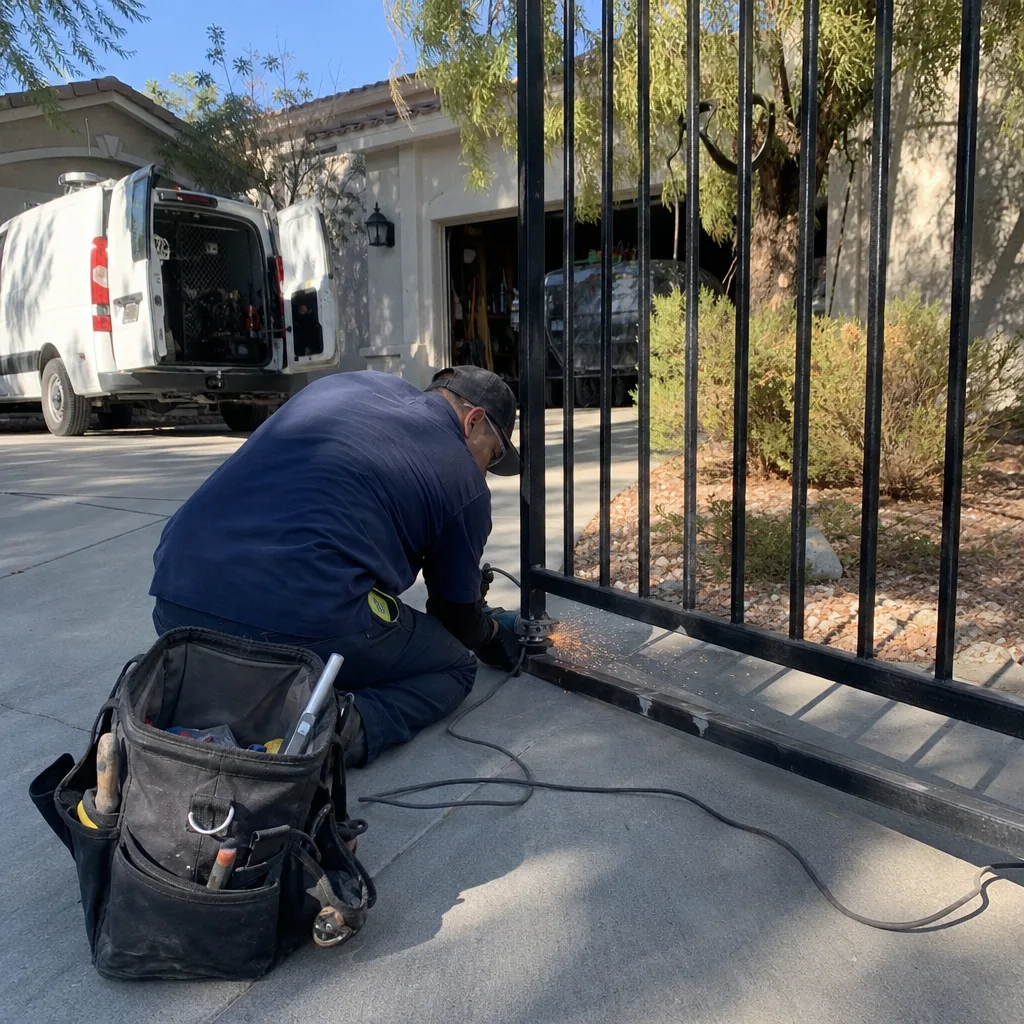
Here’s what each phase actually looks like on a residential swing or slide gate, with the time range we plan for and the time range we’ve seen when the job goes sideways.
- Site assessment and documentation review: 15 minutes with records on file, 90 minutes or more without them. The long version includes tracing the low-voltage run, testing each conductor for continuity, and identifying whether the existing photo-eye is wired to the operator or to a separate access-control panel.
- Motor removal and mounting: 45 to 90 minutes. Mount type drives this range. A bolt-on arm bracket on a steel post is fast. A welded bracket, a rusted-through bolt, or a concrete-embedded post that’s drifted out of plumb adds time to cut, realign, and re-mount.
- Wiring and control board configuration: 30 minutes with a diagram, 3 or more hours without. Non-standard wire colors, a terminal block corroded from years of moisture, or a control board that’s been re-wired by three different people all add time here. This phase is where a Viking or a Linear operator with a clean diagram wins the day.
- Commissioning and limit-set: 30 to 60 minutes. We run the gate through full open and close cycles, set the limit switches, verify the photo-eye beam is unbroken at both travel endpoints, and confirm any safety edge reverses on contact. The limits are read and photographed before and after.
Add it up: a documented job lands around 2 to 3 hours. An undocumented job with a corroded block and a missing splice box easily stretches to 6 to 8 hours, and in a few cases we’ve had to schedule a return visit after locating a short we couldn’t chase in one pass.
What Extends a Job Unexpectedly
We’ve repaired and installed more than 22,000 gates, and the delays repeat. These are the four culprits that turn a two-hour motor swap into a full-day project.
- Corroded terminal blocks. Moisture gets behind the control board cover, oxidizes the terminals, and turns a simple re-land into an hour of cleaning, testing, and sometimes replacing the block itself. On a Whitney gate that faces the afternoon sun and the occasional monsoon-season humidity, this is routine.
- Non-standard wiring colors from previous repairs. The original installer used red for open and black for close; a later repair swapped them; a homeowner’s handyman added a keypad with a third color scheme. Without a diagram, the technician has to verify each conductor by function, not by color.
- Buried splice boxes that don’t match any diagram. A junction box buried in the planter bed, an in-ground splice under the driveway apron, a wire nut wrapped in electrical tape and pushed into the post. Every one of these has to be located and tested, and none of them appear on a clean schematic.
- Gate that doesn’t swing freely. A motor can’t compensate for a hinge that’s seized or a track that’s out of alignment. If the gate drags, the operator will fault out at commissioning and the technician has to diagnose the mechanical issue before the electrical one. That’s a separate problem, and it adds time.
None of this is a mystery after the fact. It’s exactly what shows up in a photograph, in a limit-switch reading, and in a written record of the terminal assignments.
What a Technician Should Leave Behind
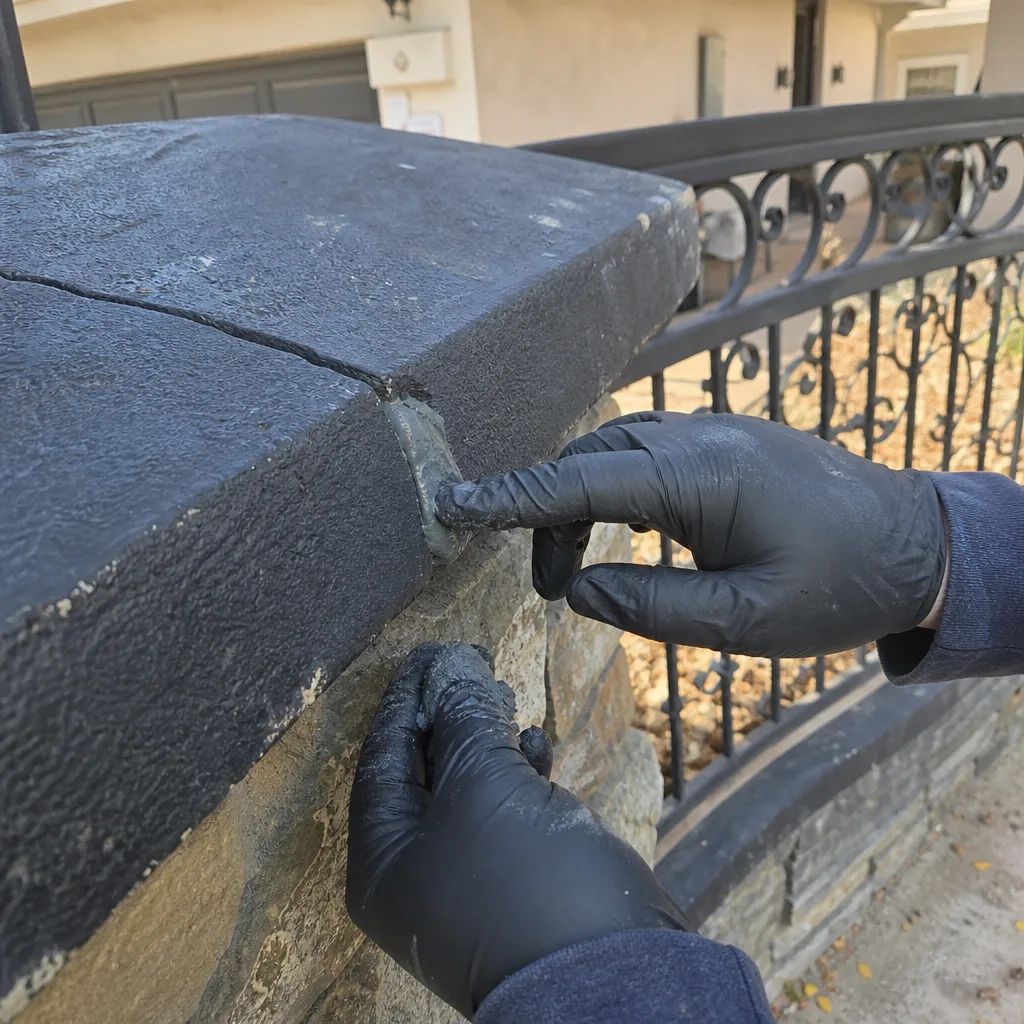
This section is the heart of why timelines vary so wildly. The record a technician leaves behind isn’t paperwork for its own sake. It’s the thing that makes the next job faster, cheaper, and safer.
Under Clause 4 of The Haven Standard (Evidence on every job), every Vance Gate Repair Whitney visit includes a documented photo record at no additional charge. When we swap a motor, that record contains at minimum:
- A printed wiring diagram of the control board terminal assignments as they actually exist on the property, not as they appeared in the manufacturer’s manual.
- A photograph of the control board with the terminal block in frame and the conductor colors visible.
- Limit-switch readings before and after the swap, in the units the board reports (degrees of arm rotation, encoder counts, or physical travel in inches, depending on the operator).
- Motor model and serial number so the next technician knows exactly what’s on the gate without pulling the cover.
- Photographs of the arm bracket, the post mount, and the photo-eye alignment at the end of the job.
Bring that record to the next service call and phase one collapses from 90 minutes to 15. The next technician reads the terminal assignments, matches the wire colors to the photo, confirms the limit readings, and gets to work. Without it, that same call is a morning of reverse-engineering before the motor comes off the mount.
Parts Lead Time and How to Check Before Scheduling
Time on site is only part of the timeline. The other part is whether the motor is in hand. Common residential operators like a LiftMaster swing-gate arm or a Mighty Mule slide operator are usually stocked locally and can be picked up the same week. Less-common models, older BFT or FAAC units, and anything with a discontinued control board can take seven to ten days to source.
Here’s what to ask before scheduling a motor and opener job:
- “Is the motor in stock locally, or is it a special order?” A stock item means a scheduled appointment; a special order means a lead time before anyone picks up a tool.
- “What’s the model and serial number on my existing operator?” With that number, a technician can confirm fit and availability before the visit.
- “If the mounting bracket doesn’t match, is the adapter in stock too?” A new motor that doesn’t bolt to the old bracket is a second delay.
- “What’s the written price?” Under Clause 1 of The Haven Standard (Have it in writing), you get a flat written price before any work starts. No surprise invoice when the receipt is signed.
We service nine major automation brands, so we’re not steering you toward a replacement because the brand on the gate isn’t one we prefer. If the existing motor can be repaired, we say so, and if it needs replacing, we tell you what’s on the shelf and what has to be ordered.
The Whitney Factor: Why Documentation Matters More Here
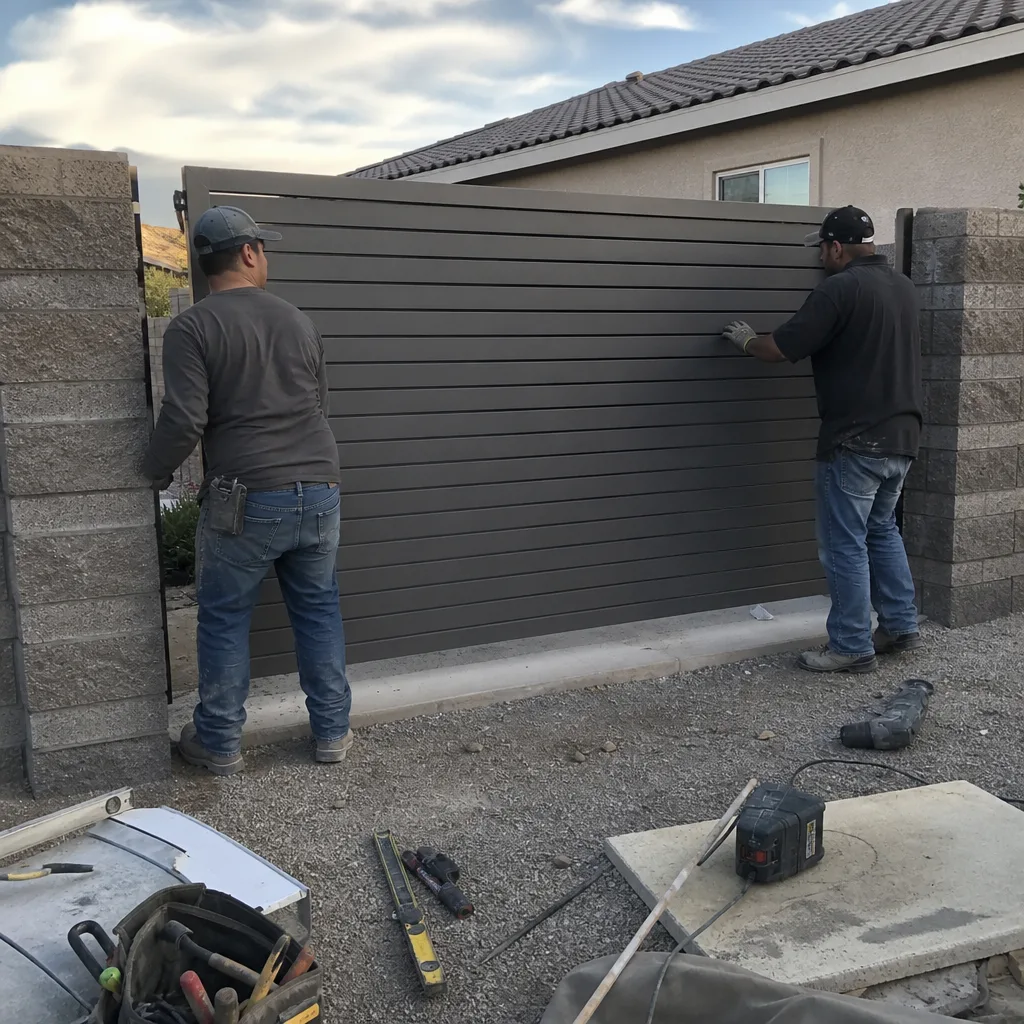
A service visit to a gate in Whitney often means a half-day commitment before the first bolt turns. Drive time, appointment windows, and the reality that a technician can’t run back to the shop for a missing conductor mid-job all push the cost of an undocumented gate higher than it would be in a denser metro.
That’s why we treat on-site documentation as a hard requirement, not a nice-to-have. When a technician only gets one shot at a gate, the wiring diagram they leave behind is what keeps the next visit from being a repeat of the first. It’s also why we photograph the limit settings before and after, and why the customer gets a copy of that record before the technician leaves: if a problem shows up six months later, nobody has to guess what the gate looked like on installation day.
Whitney’s climate adds a specific wrinkle. The summer heat bakes control boards and hardens wire insulation, and the monsoon season pushes moisture into enclosures that were sealed for a drier climate. Both accelerate the corrosion that slows down a re-land. A photo record timestamped to the season tells the next technician what condition to expect, so the assessment phase starts from evidence instead of a blank slate.
If you want to see how this fits into the wider service, the Vance Gate Repair Whitney home page outlines the full scope, and our Gate Motor & Opener in Whitney page covers the technical side of a swap in detail.
Choosing a Motor That Fits What’s Already on the Gate
The fastest job is the one where the new motor matches the old one’s wiring footprint. Matching makes the terminal-by-terminal re-land a five-minute task instead of a rewire. When the replacement is a different brand, phase three grows because the technician has to translate the old diagram to the new board.
We work with LiftMaster, FAAC, BFT, Linear, Viking, Ghost Controls, DoorKing, Elite, and Mighty Mule, so a swap doesn’t have to mean a forced brand change. If the current operator is a BFT and the control board is dead, we can source a BFT replacement that keeps the existing conduit and photo-eye wires in place. If a Linear unit is at end of life and the customer wants a Ghost Controls operator instead, we plan the extra wiring and commissioning time into the quote rather than discovering it on site. Either way, the written price comes before the work starts, and the photo record goes with the customer when we leave.
For gate repair work that isn’t a motor swap, our Gate Repair in Whitney page covers the diagnostic side, and if you’re planning a new build or a rebuild, Gate Installation in Whitney walks through what a full installation involves.
Common Mistakes to Avoid
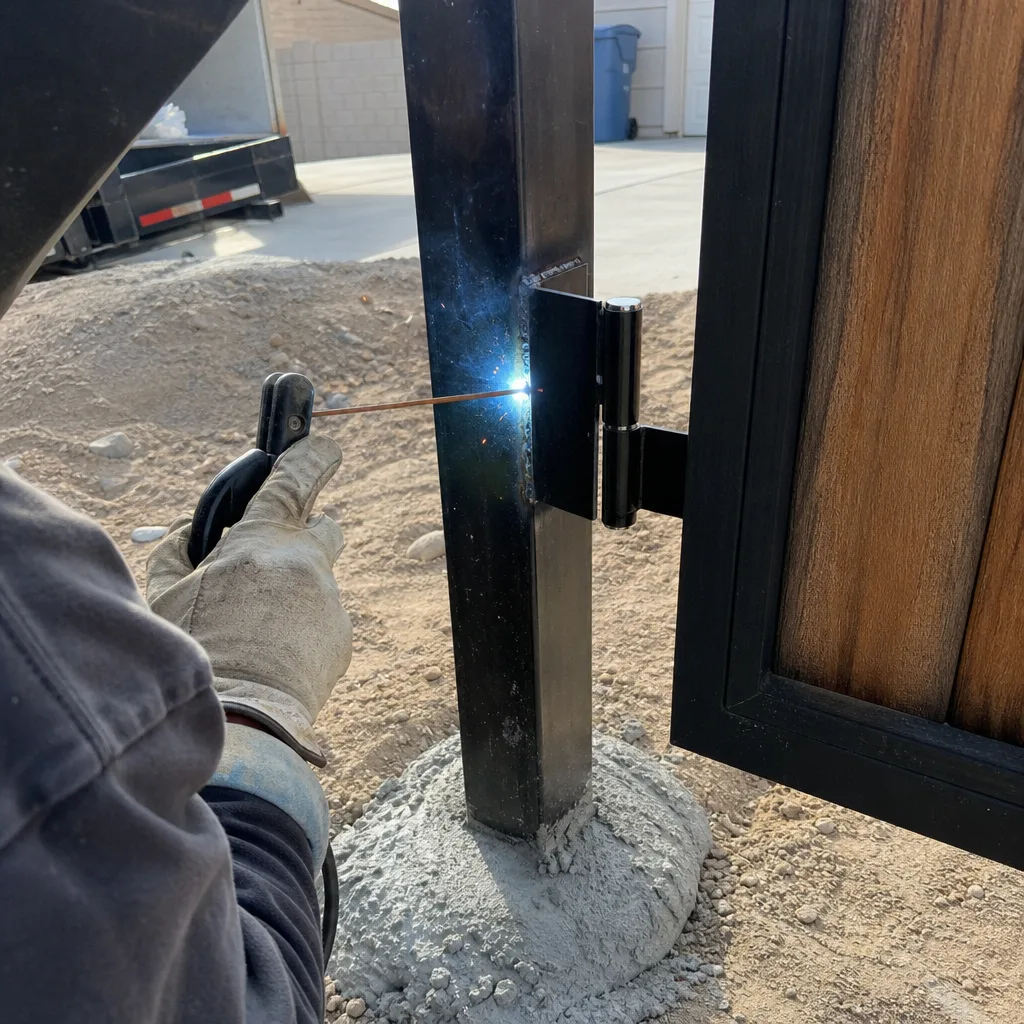
- Accepting a verbal timeline with no written price. A “probably a couple of hours” quote with no paperwork is the setup for a surprise invoice. Ask for the flat price in writing before anyone touches the gate.
- Not asking what the previous installer left behind. If you don’t know whether there’s a wiring diagram, ask the last company for it, or ask the next technician to produce one during the visit.
- Scheduling a motor swap before confirming the model is in stock. A same-week appointment is meaningless if the motor is a special order. Confirm availability first.
- Ignoring a gate that drags or binds. A seized hinge will fault out a brand-new operator during commissioning. Fix the mechanical issue before the motor.
- Assuming a different brand will drop in. A change of brand adds wiring and configuration time. Plan the timeline around it.
- Skipping the photo-eye test after the swap. The infrared beam is a safety device, not a convenience. It has to be verified at both travel endpoints, not just at the close.
- Letting the technician leave without a photo record. The record is what makes the next job faster. If it isn’t handed over, ask for it before the truck pulls away.
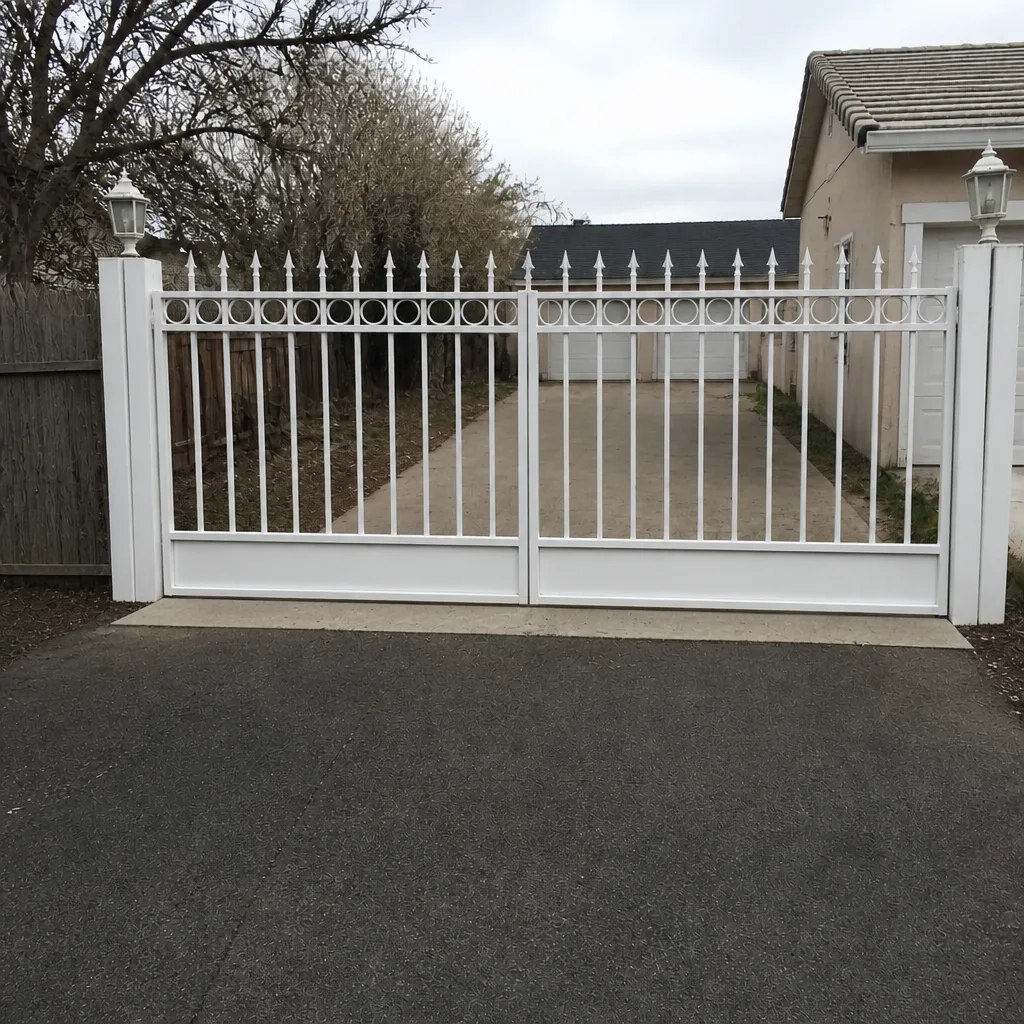
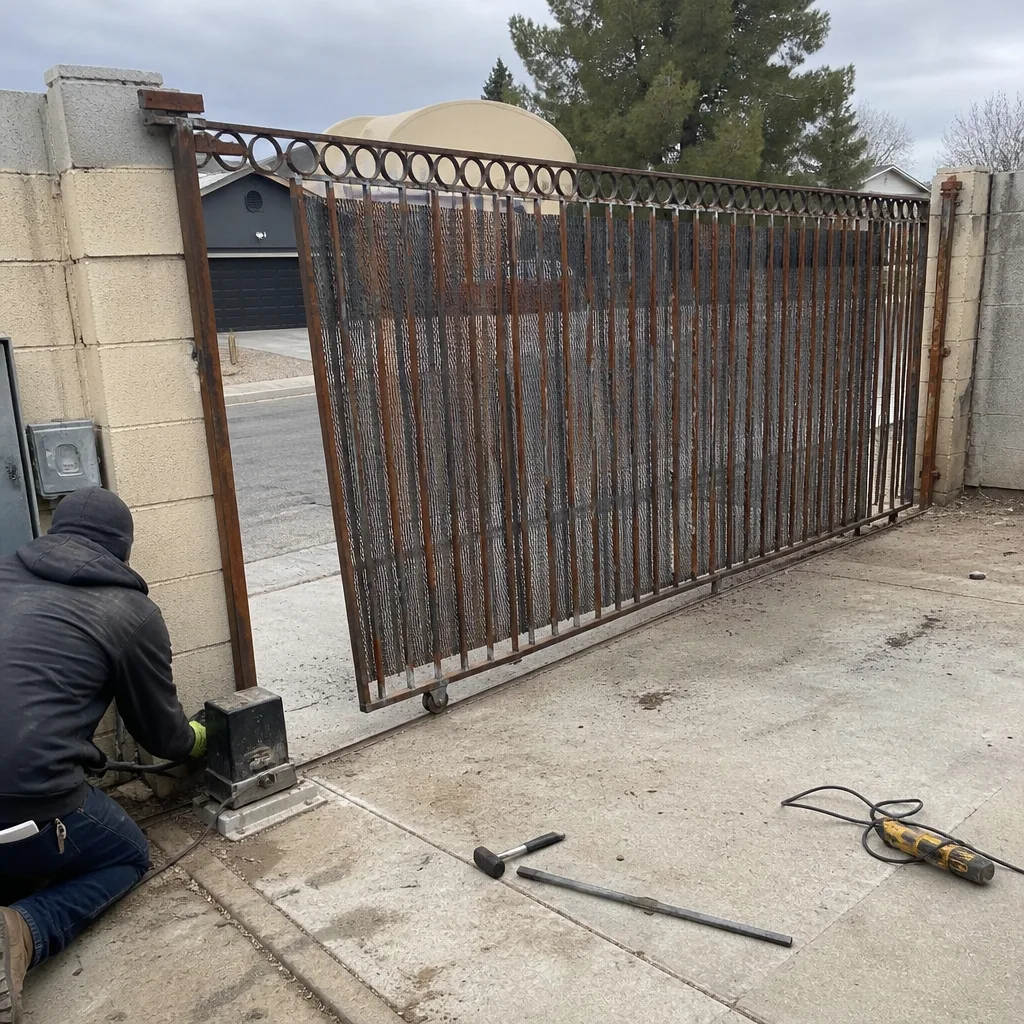
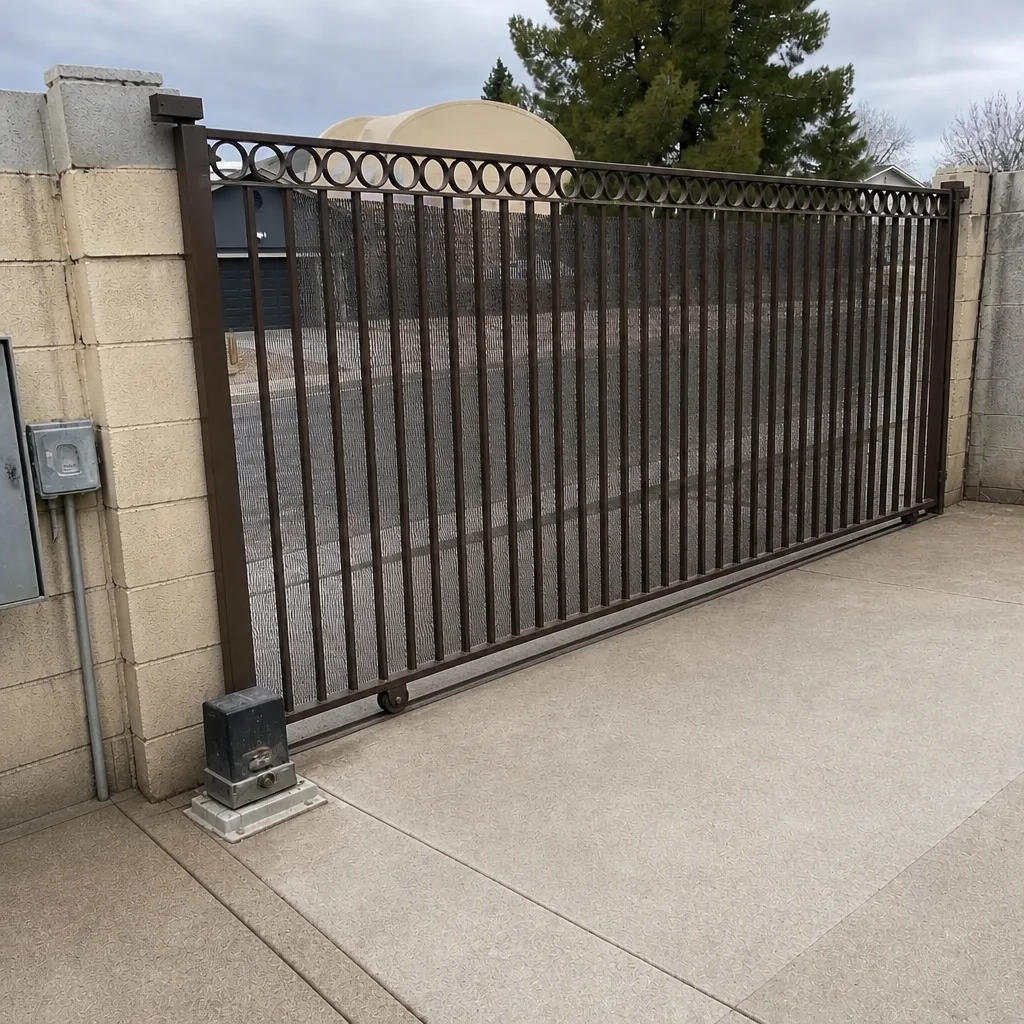
See the difference
BeforeAfter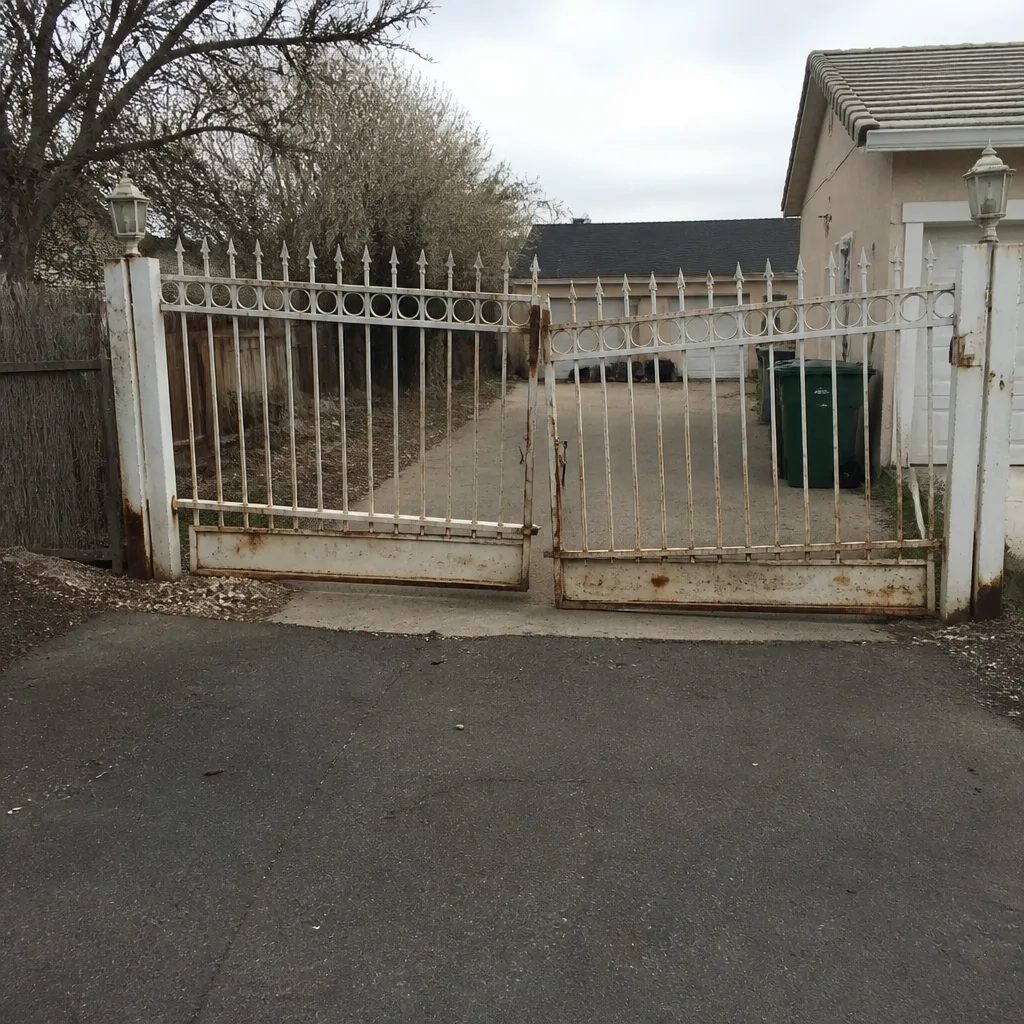 Before
 After
 Before
 After
When to Call a Professional
Gate motor and opener work involves high-torque springs, live control-board circuits, and a gate that can seriously injure someone if the limits aren’t set correctly. Swapping an operator isn’t a homeowner DIY task, and no guide should suggest otherwise. Call a professional if the gate reverses randomly, the operator faults out mid-travel, the motor hums without moving the gate, the photo-eye is intermittent, or the control board shows signs of corrosion or burn marks. Also call if you’ve bought a replacement motor and want it installed and commissioned correctly the first time, with the limits set and the safety devices verified.
Vance Gate Repair Whitney offers free estimates in Whitney. Call (844) 797-4861 and a live person picks up, any hour. Estimates are free, the written price arrives before the work starts, and every job is covered by the 365-Day Done Right Promise.
Frequently Asked Questions
A gate motor replacement typically takes 2 to 3 hours when the existing wiring is documented and the new motor is on site. The same job can take 6 to 8 hours when there’s no wiring diagram, the terminal block is corroded, or the motor has to be ordered. Call (844) 797-4861 for an exact timeline on your gate.
Not usually. Motor and opener replacement is measured, ordered, and scheduled work, not an emergency call. The fastest path is to confirm the model and serial number on your existing operator so we can check stock before the visit. Call (844) 797-4861 and we’ll tell you what’s available and when.
A printed wiring diagram of the control board as it exists on your property, a photograph of the terminal assignments, limit-switch readings before and after, the motor model and serial number, and photos of the arm bracket and photo-eye alignment. Under The Haven Standard, every visit includes that documented photo record at no additional charge. Call (844) 797-4861 to book a visit.
A less-common model, such as an older BFT or FAAC unit, can take seven to ten days to source. Common residential operators like LiftMaster and Mighty Mule are usually stocked locally. Ask before scheduling so the timeline is realistic. Call (844) 797-4861 for availability.
The flat price is written and agreed before any work starts, so a job that runs into a second visit is handled within that written scope. Under Clause 1 of The Haven Standard (Have it in writing), you know the price upfront and there’s no surprise invoice at the end. Call (844) 797-4861 for a written estimate.
We service nine major automation brands, including BFT, Linear, Viking, and Ghost Controls, so we work on whatever motor is already on the property. If a repair is the right call, we say so. Call (844) 797-4861 and we’ll tell you what we found and what it costs.
The Bottom Line
Gate motor and opener replacement timelines come down to documentation. A gate with a wiring diagram and a clean terminal block takes 2 to 3 hours. The same gate without a record can take a full day of reverse-engineering before the motor comes off the mount. Four phases drive the clock: assessment and documentation review, motor removal and mounting, wiring and control board configuration, and commissioning with limit-set. The record a technician leaves behind, including the wiring diagram, the photo log, and the limit readings, is what makes the next job faster and cheaper. If you’re in Whitney and want a written price before the work starts, call (844) 797-4861 for a free estimate.
Written by the team at Vance Gate Repair Whitney.