
Last updated November 18, 2026
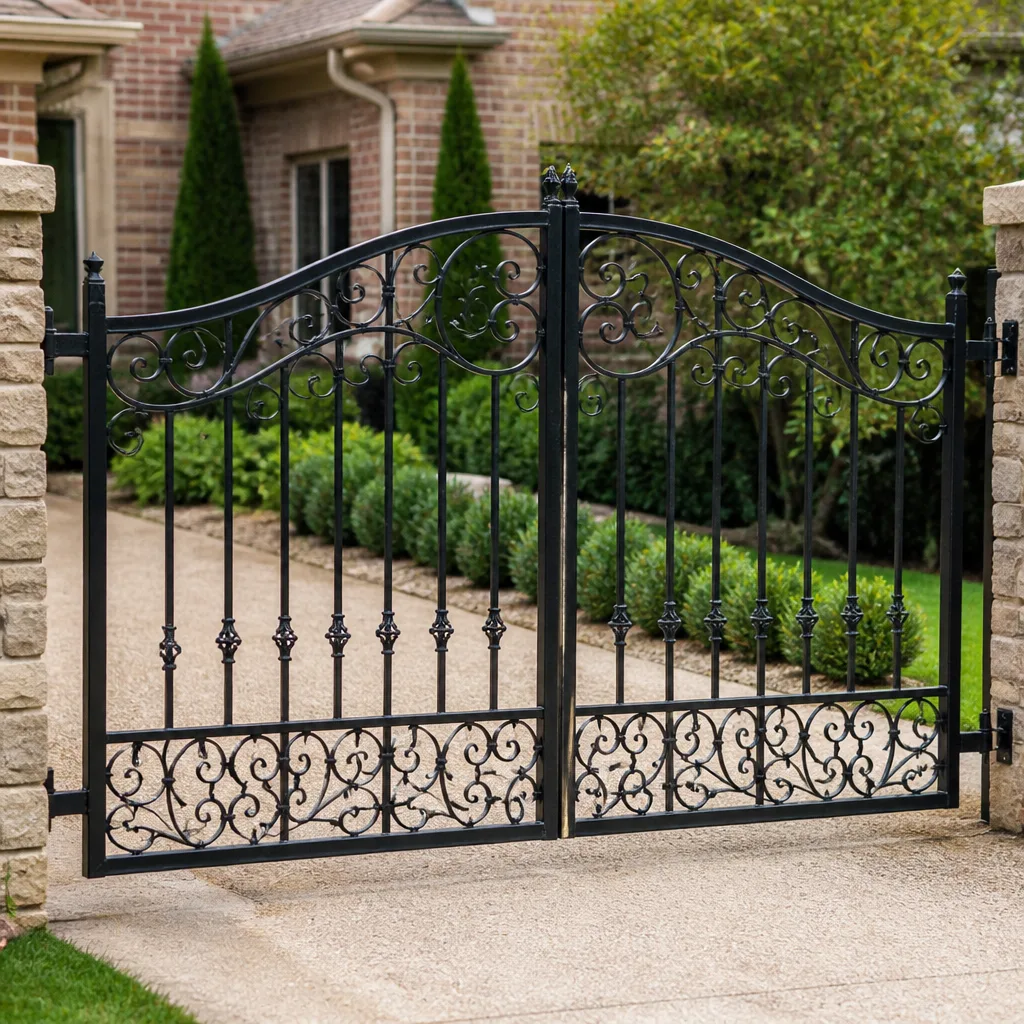 Wrought iron
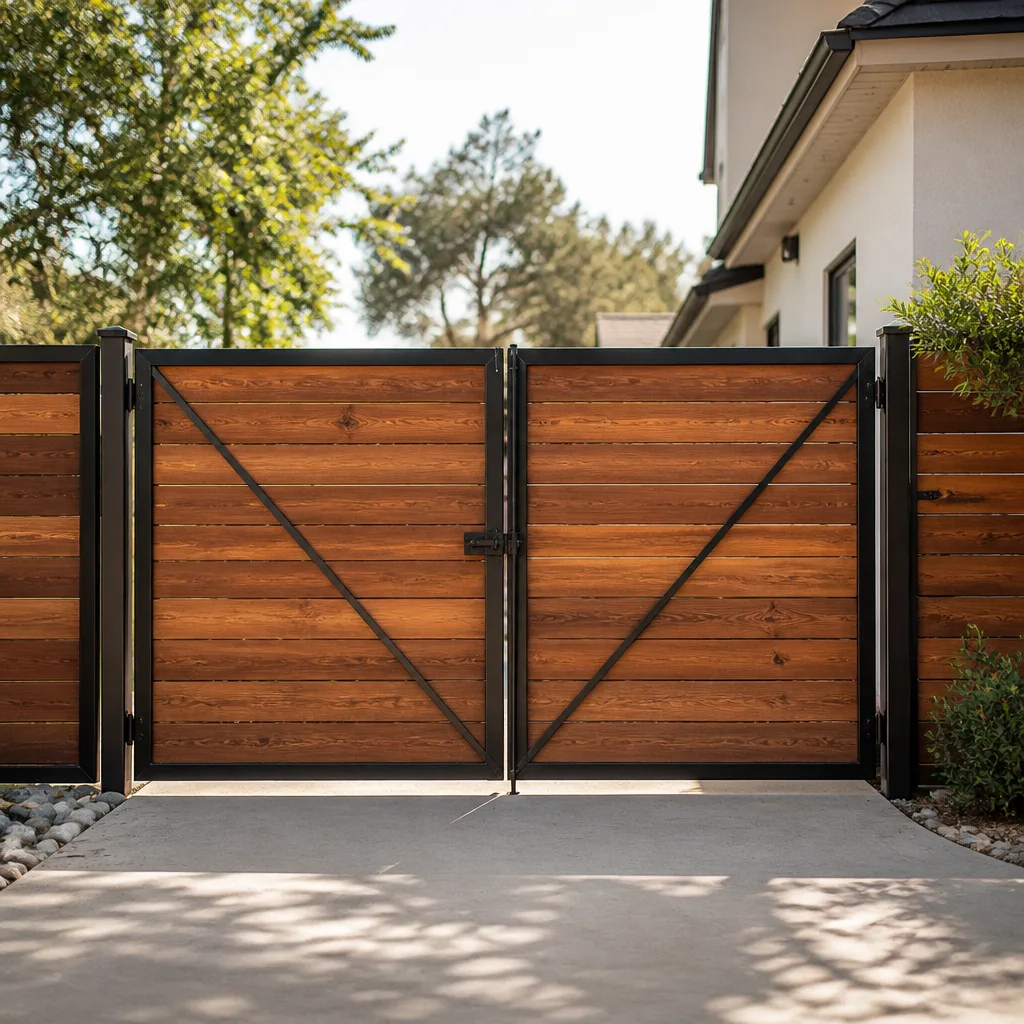 Wood & steel frame
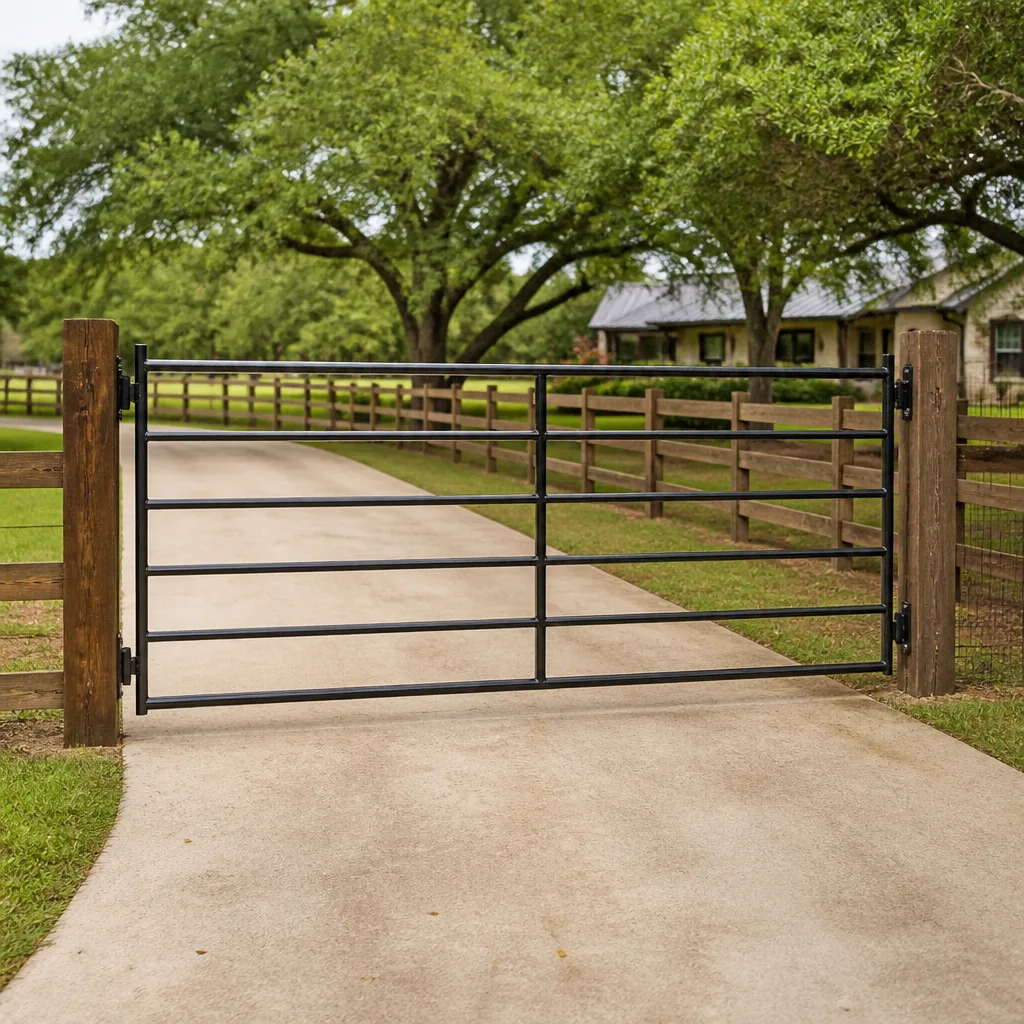 Farm & ranch
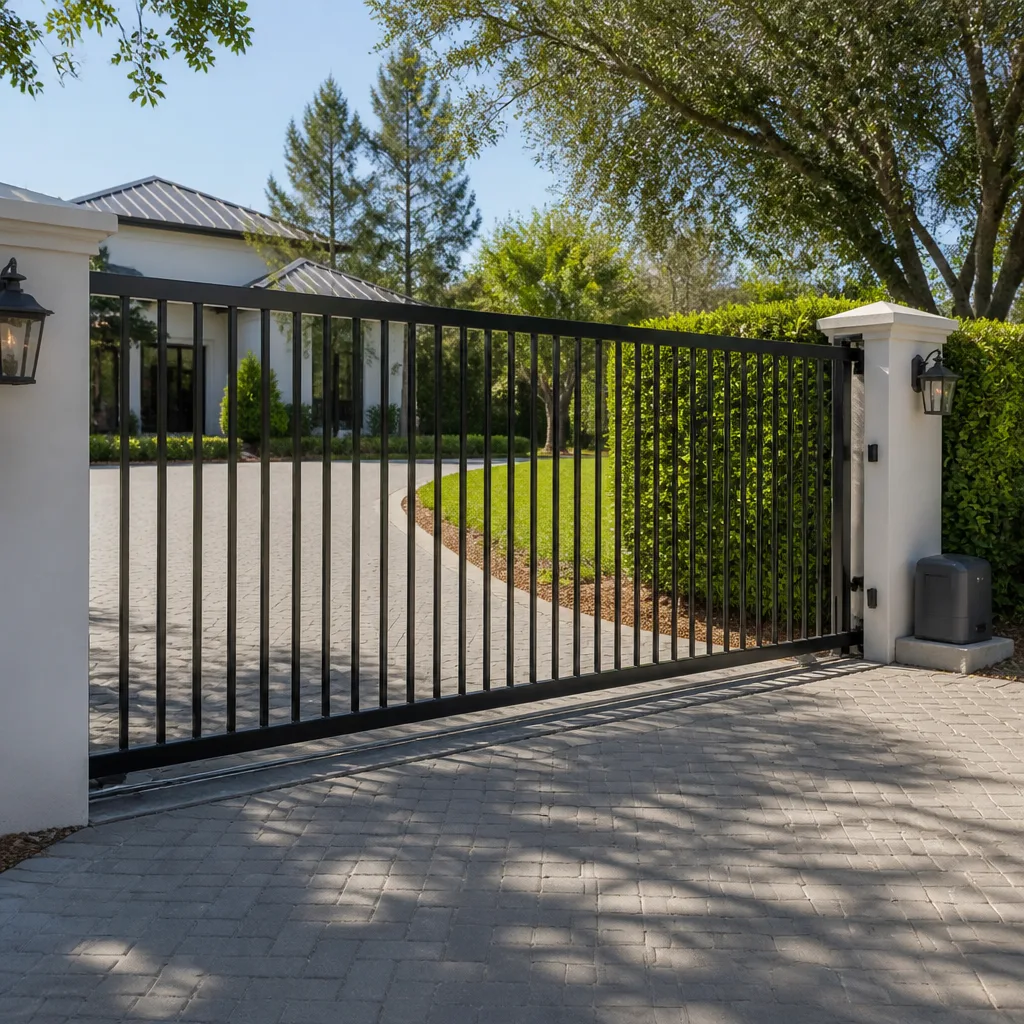 Sliding driveway gates
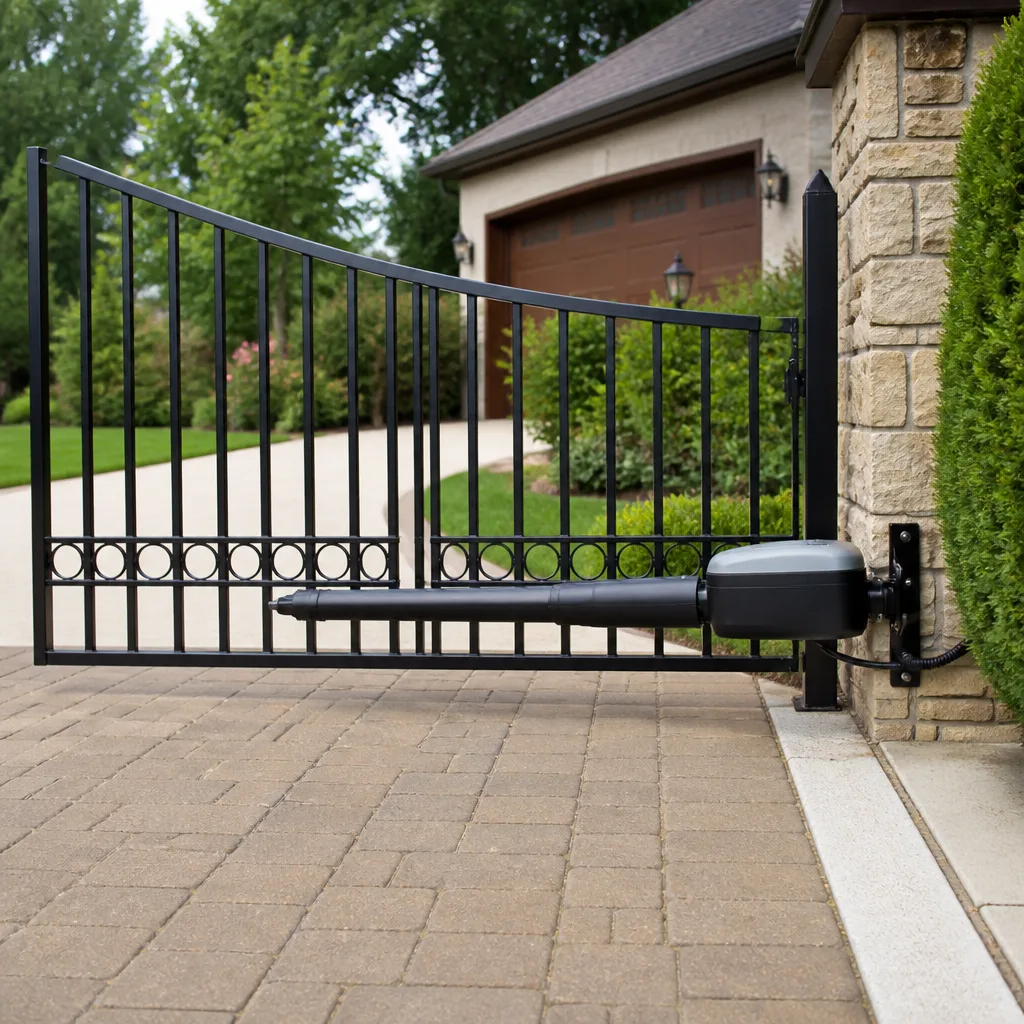 LiftMaster operators
Free on-site gate assessment - hinges, posts, and your LiftMaster or Nice gate operator checked before anything is quoted
The assessment is free and the quote is the invoice.
Get your free estimateHow Long Does Gate Access Control Take? Timelines and What to Expect
A technician who quotes “about an hour” for access-control work has told you nothing useful. The real range runs from 35 minutes for a keypad swap to 6 hours for a multi-credential commercial retrofit, and the difference is never luck. It’s diagnostic depth. A 45-minute visit that skips loop-detector calibration will hand you a gate that fails again in three weeks; a 2-hour documented visit may be the last time you think about the gate for years. In this guide we’ll break down realistic timelines by job type, name the site conditions that stretch a schedule, show you what a technician should be doing at each phase, and explain why 15-20 minutes of documentation is the best money you don’t spend twice in Whitney.
Quick Answer
Most single-gate residential access-control jobs take 45 minutes to 3 hours, with keypad-only swaps landing near the low end and full control-board replacements closer to 2-3 hours. Multi-user credential systems and new loop-detector installations on existing driveways typically run 3-6 hours. Site conditions – buried wire condition, conduit access, and how well the existing board plays with its replacement – are the variables that move those numbers, and they’re knowable before anyone schedules the visit.
Styles & brands we work with
- Wrought iron
- Wood & steel frame
- Farm & ranch
- Sliding driveway gates
- LiftMaster operators
Table of Contents
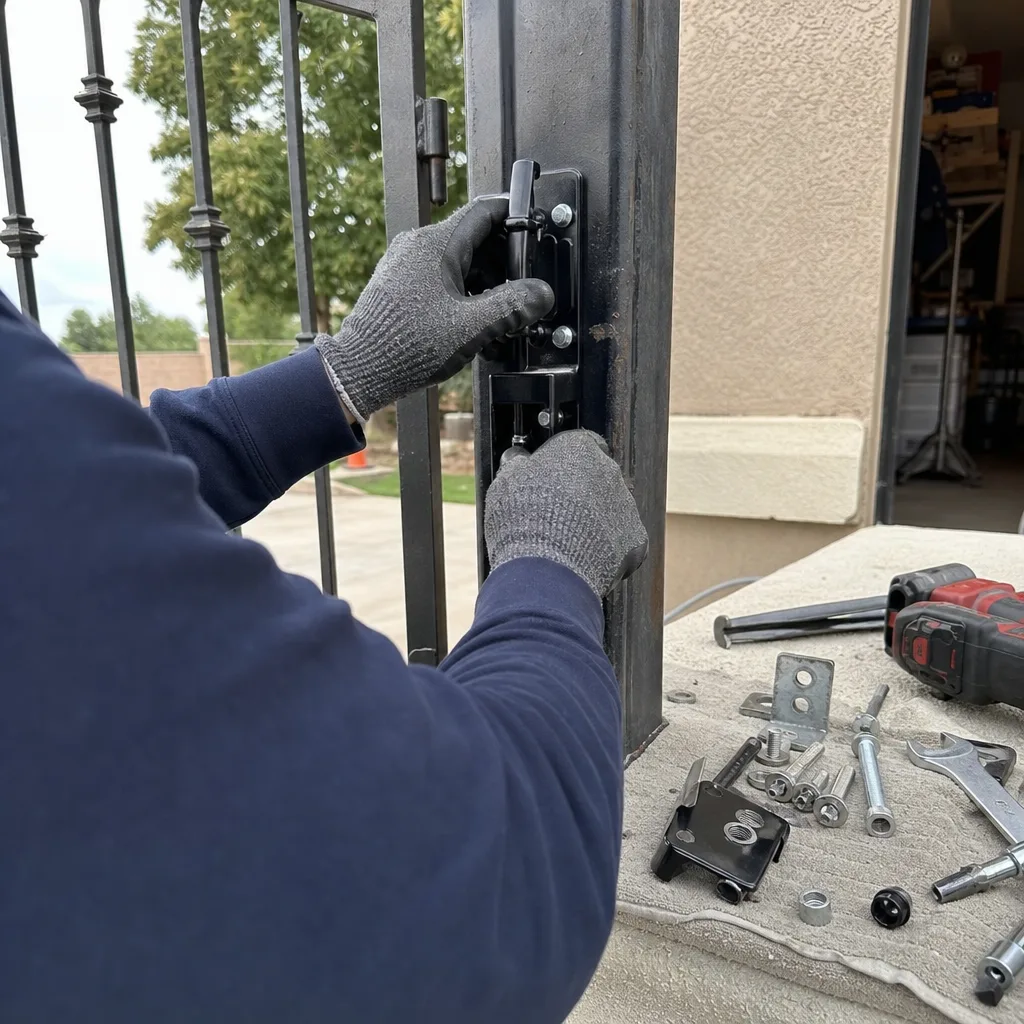
- Timeline by Job Type: What Each Access-Control Job Actually Takes
- Site Conditions That Extend a Timeline
- What a Technician Should Be Doing, Phase by Phase
- What Documentation at Completion Looks Like
- Why Same-Day Completion Is Realistic for Most Whitney Jobs
- What Pushes a Job to a Second Visit
- What Gate Access Control Work Costs in Whitney
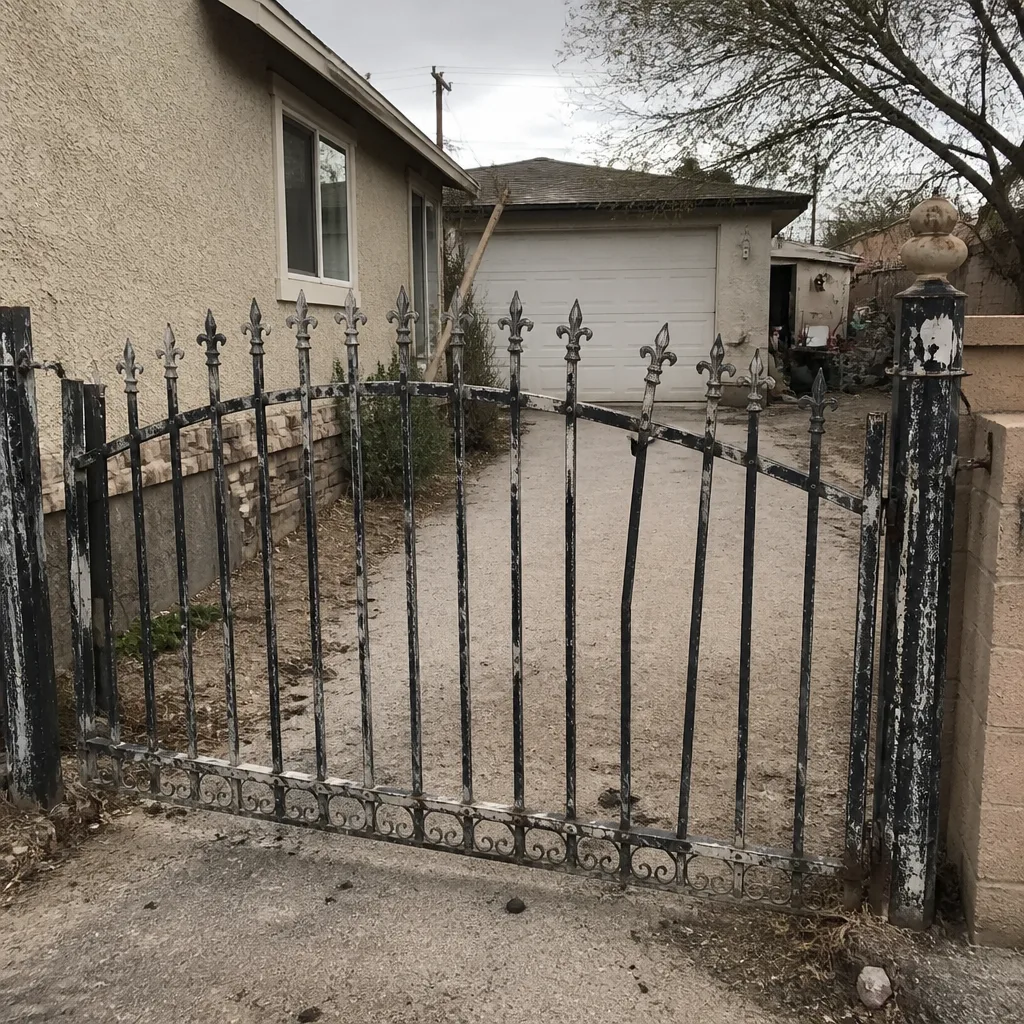 Before
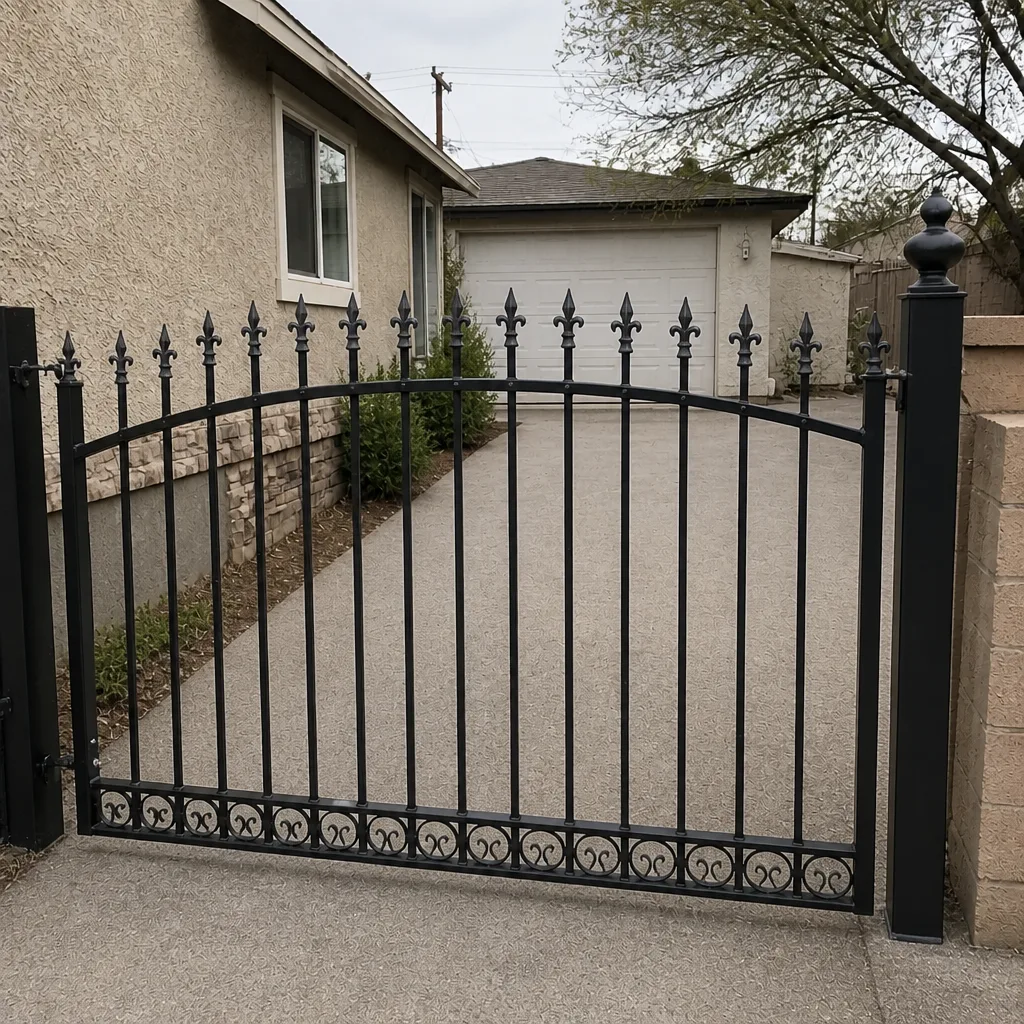 After
Timeline by Job Type: What Each Access-Control Job Actually Takes
The honest way to answer “how long” is to name the job, not the trade. A keypad swap and a control-board replacement share almost nothing beyond a screwdriver. Here’s the breakdown we use when a homeowner in Whitney calls and wants a realistic window before they clear their afternoon.
- Keypad-only swap: 35-60 minutes. Demount old unit, verify voltage at the terminal, wire the new keypad, program one code, test. If the existing wiring is intact, this is a one-visit job.
- Single-keypad addition (new location): 1.5-2.5 hours. Ran wire, mounted, programmed, tested – the time goes into the wire run, not the electronics.
- Control-board replacement: 2-3 hours. Photograph the existing terminations, label every wire, swap the board, re-terminate, then re-set every limit and safety input. The old board brand matters here – a Linear board swapped for a DoorKing board means re-teaching the operator’s limits from scratch.
- New loop detector installation: 2.5-4 hours. Saw-cut, lay the loop, seal, run lead-in wire to the detector, calibrate. Calibration is the part that gets skipped and the part that fails first.
- Multi-user credential system: 4-6 hours. A reader, a controller, software setup, then adding and testing credentials one at a time. Add 20-30 minutes if the software requires a network connection the property doesn’t already have.
Those are working-hour ranges on a job that goes cleanly. In Whitney, we see a good share of properties where the access-control panel shares a post with a LiftMaster or Elite operator whose limits were last set by a different technician with a different idea of “level.” That’s not a disaster – it’s just a scope item to photograph and price before anyone starts.
Site Conditions That Extend a Timeline
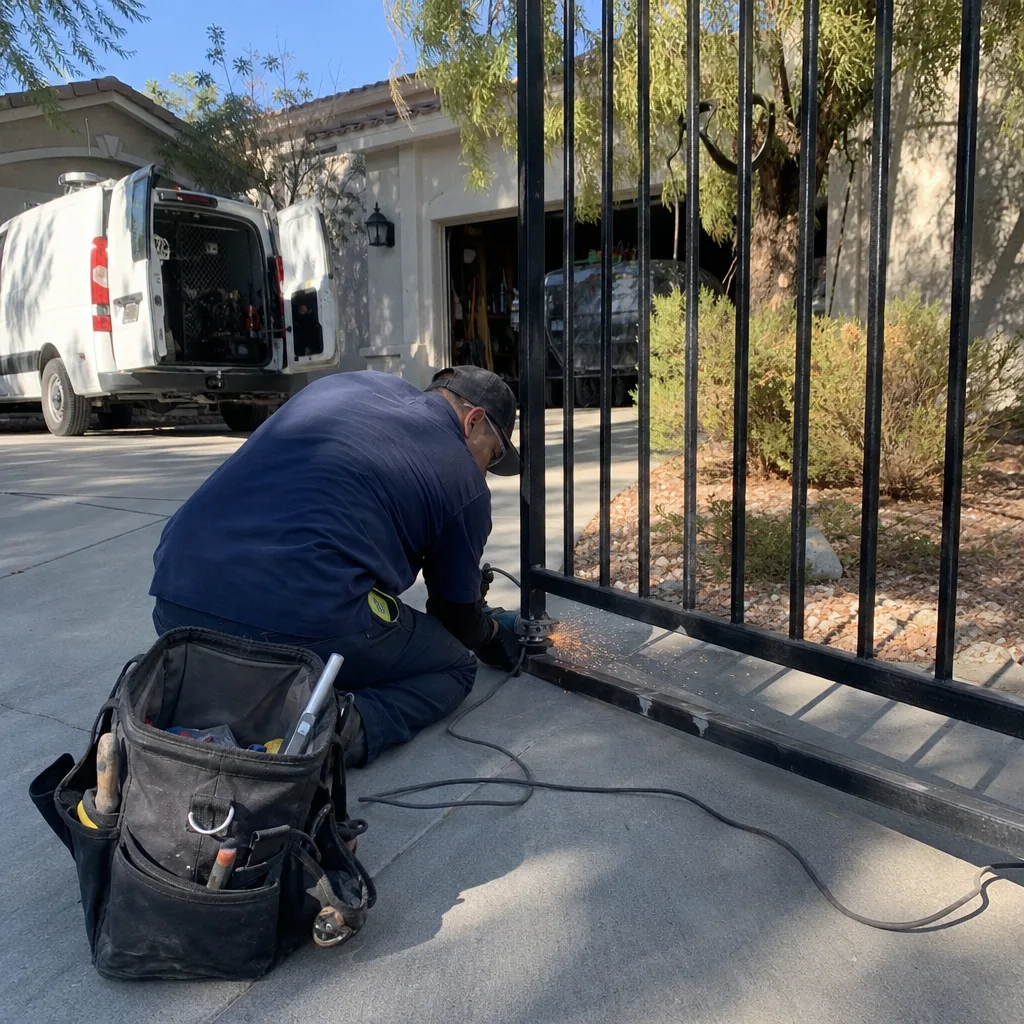
Before you schedule, you can predict most of your own timeline by walking your driveway and answering four questions. The technician will ask the same ones.
- Is the buried wire in good condition? A loop or keypad lead-in that’s been nicked by a shovel or chewed by weather will read as an open circuit. Diagnosing it is fast; repairing it means digging, and that’s measurable extra time – typically 45 minutes to 2 hours depending on soil and run length.
- Is there usable conduit, and can it be accessed? A keypad that already has conduit to the panel is a gift. A direct-buried wire with no conduit means any replacement run is a fresh trench or a surface run, both of which add time and both of which should be quoted in writing first.
- Does the new control board play with the existing operator brand? DoorKing, LiftMaster, and Elite operators each have their own accessory-voltage conventions and safety-input wiring. A like-for-like swap is fast. A cross-brand swap is slower because the technician has to re-verify every input against the new board’s documentation.
- Is power already at the panel? A panel with a live 120V circuit is a 20-minute connection. A panel that needs a new dedicated circuit is an electrician’s job, and that’s a separate appointment that can push your gate work to a second day by design, not by surprise.
One more Whitney-specific factor: our summer heat bakes surface-run wire and softens adhesive on loop sealant. A loop that was laid in July with the wrong sealant will lift within a season. If your existing loop was installed in peak summer and is already coming up, expect the technician to spend an extra 15-20 minutes on proper sealing or to recommend a re-pour.
If your panel is part of a broader gate problem, it’s worth reading our guide to Gate Repair in Whitney before you book the access-control appointment – sometimes the control board is fine and the operator is the actual fault.
What a Technician Should Be Doing, Phase by Phase
A timeline is only useful if you can recognize productive work. Here’s what a competent access-control visit looks like from the homeowner’s side of the gate. If any phase is missing, ask why.
- Phase 1: Walk and read (10-15 minutes). The technician walks the gate, reads the existing board’s model plate, photographs every wire termination, and confirms power. If nobody photographs before touching anything, that’s a warning sign.
- Phase 2: Diagnose in writing (10 minutes). Before tools come out, the scope and flat price should be confirmed against what’s actually there. Under Clause 1 of The Haven Standard, that price is written and handed to you before any work starts – if a technician starts unscrewing a keypad before you have the price in hand, stop them.
- Phase 3: Isolate and protect (5-10 minutes). Kill power at the breaker, tag the circuit, disconnect the operator arm if the gate is heavy. This phase never gets skipped by a careful technician, and it protects both the gate and the person working on it.
- Phase 4: Install or replace (30 minutes to 3 hours). The bulk of the job. Watch for two things: labeled wires, and the technician referencing a diagram rather than guessing at terminals.
- Phase 5: Re-set every limit and safety input (15-30 minutes). Photo-eye alignment, reverse-sensor test, limit-switch re-teach. This is the phase that separates a gate that lasts from a gate that calls you back in three weeks.
- Phase 6: Document and demonstrate (15-20 minutes). Photograph the finished wiring, record the part numbers installed, hand you the photo log, and demonstrate the credential working – then watch you use it once yourself.
If the phases are running long and the technician is still on Phase 4, that’s a site condition (see above), not a red flag. If the technician is on Phase 6 in 40 minutes total, something was skipped.
What Documentation at Completion Looks Like
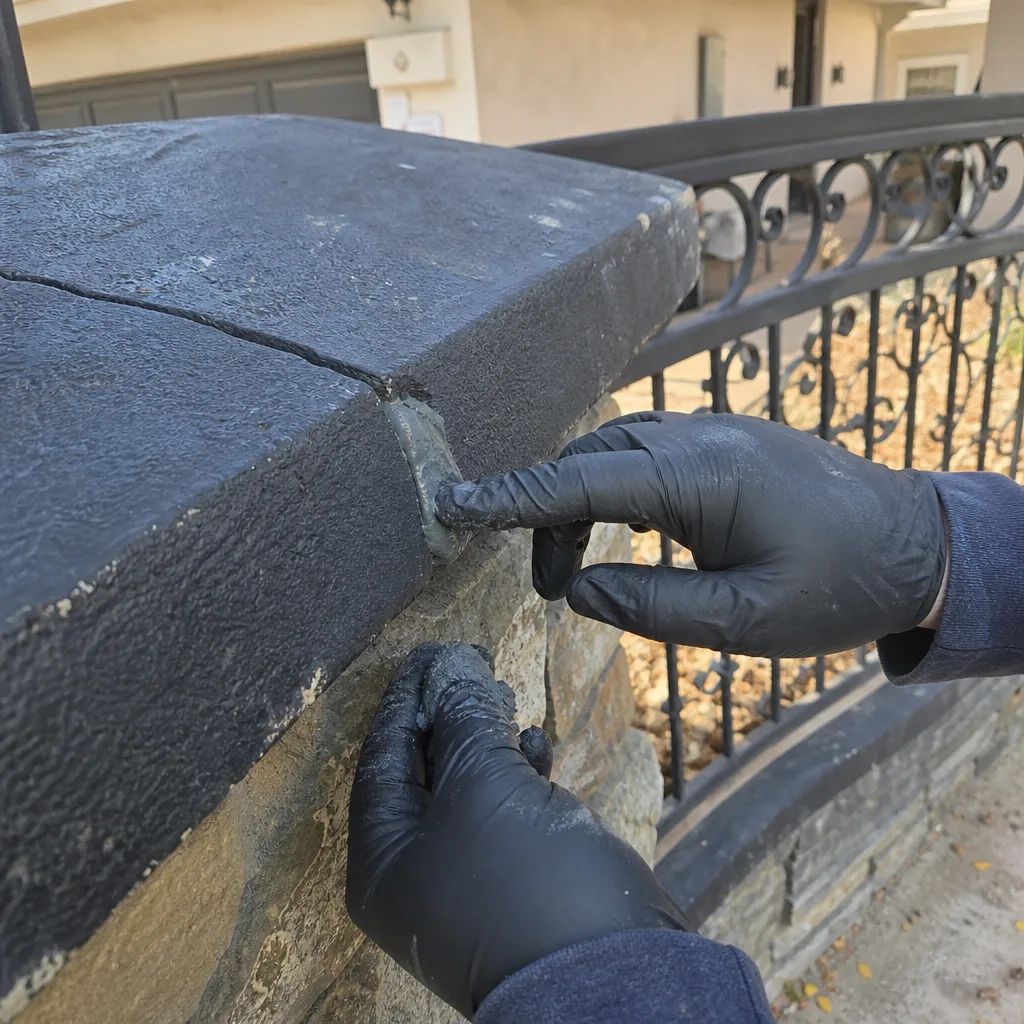
Documentation adds 15-20 minutes to every job and saves the homeowner far more than that the first time anything goes wrong. What you should receive:
- A photo log of what was found, what was adjusted, and what was installed – not a single before-and-after, but the specific terminations and limit-switch positions.
- A written record of the part number installed on the control board, keypad, or reader, so a future technician doesn’t have to open the enclosure to identify it.
- A wiring diagram updated to reflect any new accessory or re-terminated input.
- The flat price you agreed to before work started, with no line items added after the fact.
Under Clause 4 of The Haven Standard (Evidence on every job), every Vance visit leaves a documented photo record at no additional charge. That habit came out of commercial access-control work, where a missing diagram means the next technician starts from zero and the customer pays to rediscover a problem that was already solved. It’s the same logic on a residential gate in Whitney – you shouldn’t pay twice for the same knowledge.
If your documentation habit is the thing you want more of, our Gate Motor & Opener in Whitney service uses the same record-keeping on every operator job.
Why Same-Day Completion Is Realistic for Most Whitney Jobs
For single-gate residential access-control work, same-day completion is the norm, not the exception. The jobs that go clean in one visit are:
- Keypad swaps where the existing wiring is intact
- Control-board replacements on a like-for-like brand
- Credential-reader additions on a property with an accessible panel
- Loop-detector replacements where the conduit is usable
Those jobs run 1-3 hours of working time. Scheduling pressure comes from parts, not labor: a DoorKing or Elite board that has to be ordered is not same-day, and a LiftMaster keypad that isn’t on the shelf means a return trip. When we quote a job, part availability is part of the timeline, and it’s part of the written price.
What Pushes a Job to a Second Visit
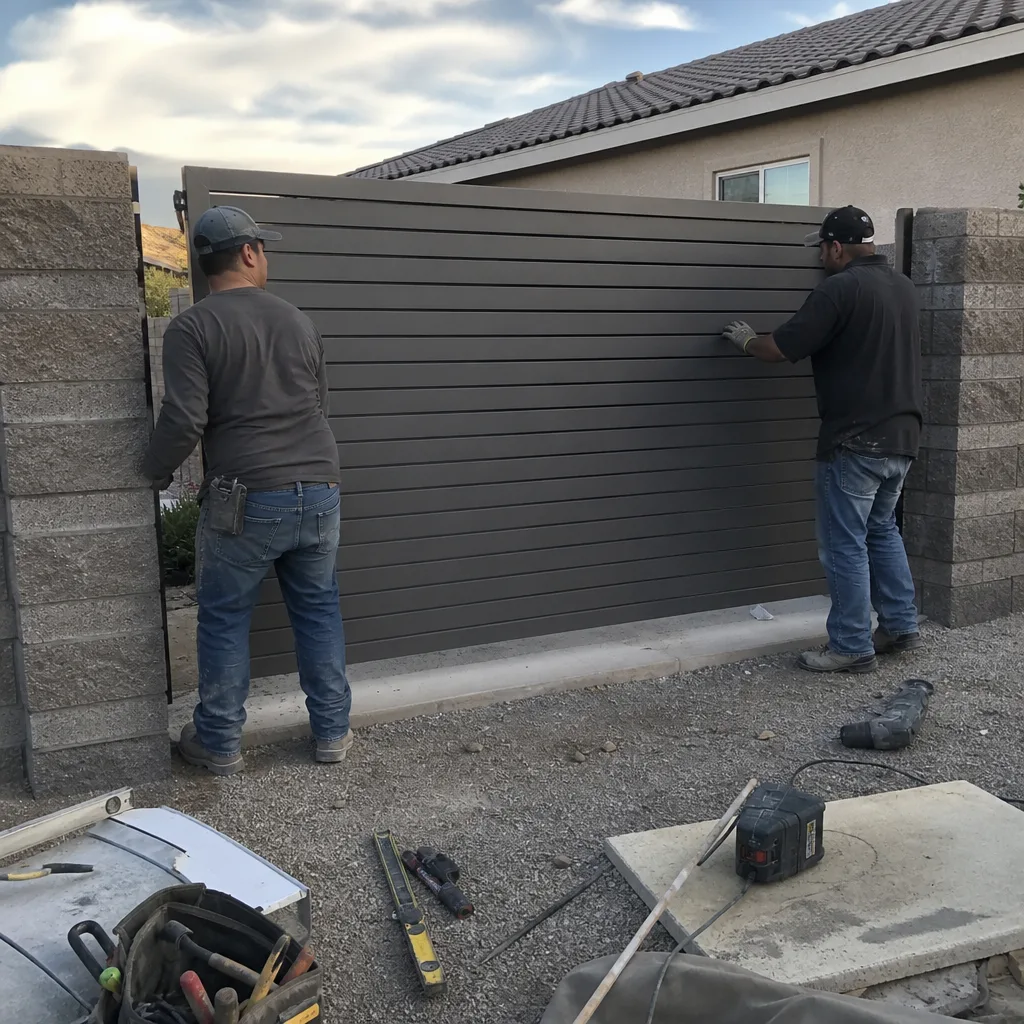
Second visits are not failures – they’re scope changes, and they should be named in writing before they happen:
- Ordered part. Cross-brand board swaps, unusual reader models, and credential software that requires a license purchase all add a trip.
- Buried wire damage. Diagnosed same-day, repaired after a trench or surface run is priced.
- Electrical work. A new dedicated circuit is an electrician’s scope, and the gate job resumes after.
- Structural repair. A post that’s lost its footing or a hinge that’s failing under a newer, heavier gate arm – that’s gate repair work first, access control second.
- Software or network setup. Multi-user systems that require IT involvement on the property.
The Gate Installation in Whitney page covers what new-gate timelines look like – those are measured, ordered, and scheduled rather than same-day, because the work is structural first.
What Gate Access Control Work Costs in Whitney
Prices below are working ranges for the Whitney market and are quoted in writing before work starts. Every job is priced to the specific property, not to a generic menu.
- Keypad swap: $160-$320
- Keypad addition (new location, wire run): $280-$520
- Control-board replacement: $320-$680
- Loop detector install or replace: $340-$740
- Multi-user credential system: $700-$1,800
- Diagnostic visit (applied to repair if booked): $95-$150
The second fear after the price is the invoice being bigger than the quote. Under Clause 1 (Have it in writing), the flat price is written and handed over before any work begins – if the scope changes mid-job, the change is priced and approved before the tool comes back out. If you have a written estimate from another company and want a free second opinion, bring the paperwork to us. We review it at no cost. For broader service coverage, the Vance Gate Repair Whitney home page lays out every category we handle.
Common Mistakes to Avoid
- Accepting a verbal estimate. A verbal price is a price that can’t be reviewed, disputed, or shown to a second technician. Ask for it in writing before anyone opens a panel – every time.
- Skipping the loop-detector calibration. A detector that’s installed but not properly calibrated will false-trigger in a Whitney summer heat wave and then fail intermittently in the cooler months. Calibration is not optional and is not a “we’ll come back to it” item.
- Assuming a control board is universally swappable. A DoorKing board replacing an Elite board is a different job than a like-for-like swap, with different wiring conventions and a different timeline. Ask what brand was there before.
- Not keeping the photo log. The documentation is for you, not for the technician’s file. If a credential stops working six months later, the photo log shortens the diagnostic by half.
- Booking a multi-user system without confirming network access. Credential software that needs a property network needs it on the day, not after. Confirm it in advance; otherwise expect a return trip.
- Choosing a company by price alone. The 45-minute keypad swap that skipped the reverse-sensor test costs more in the second visit than any quote difference.
- Ignoring a soft click-clunk from the operator during access testing. That sound is usually the limit switch being nudged, and catching it during installation is a 10-minute fix; catching it after the gate jams is a service call.
See the difference
BeforeAfter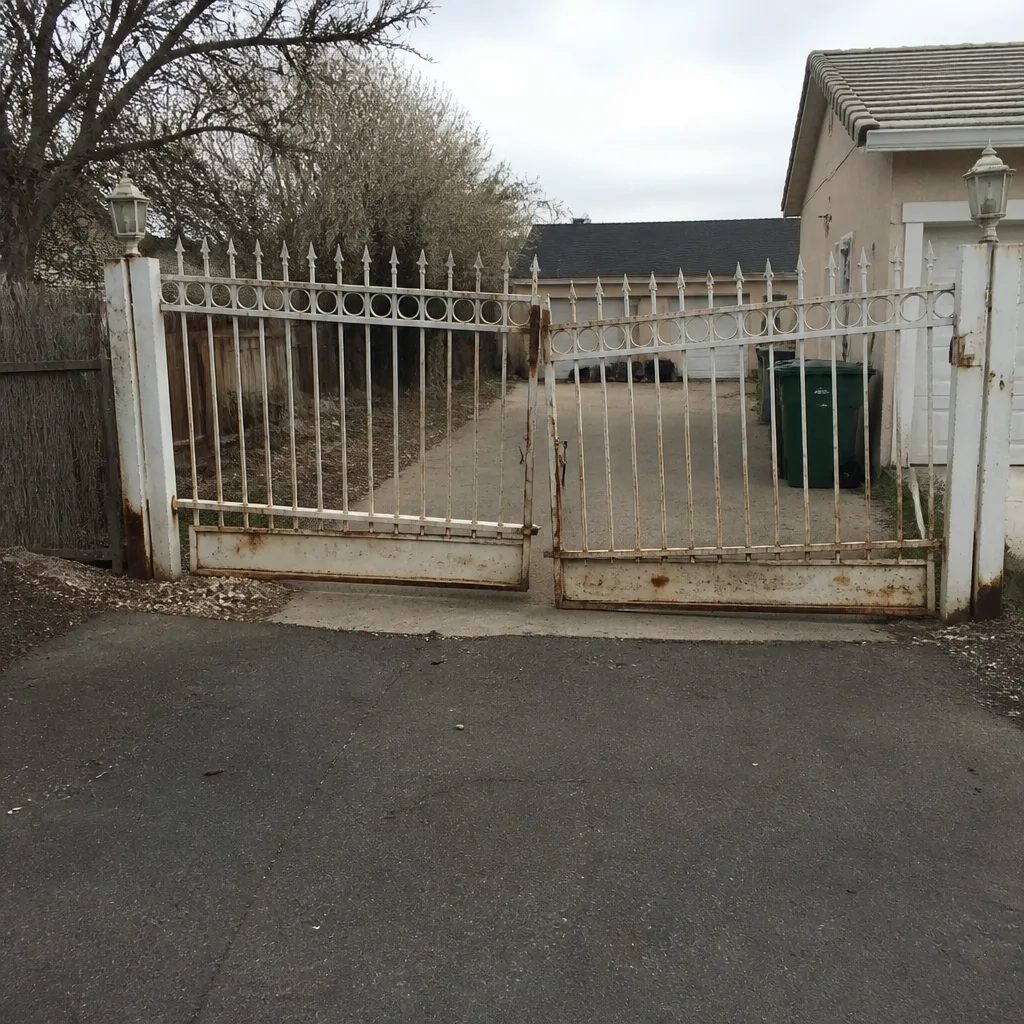 Before
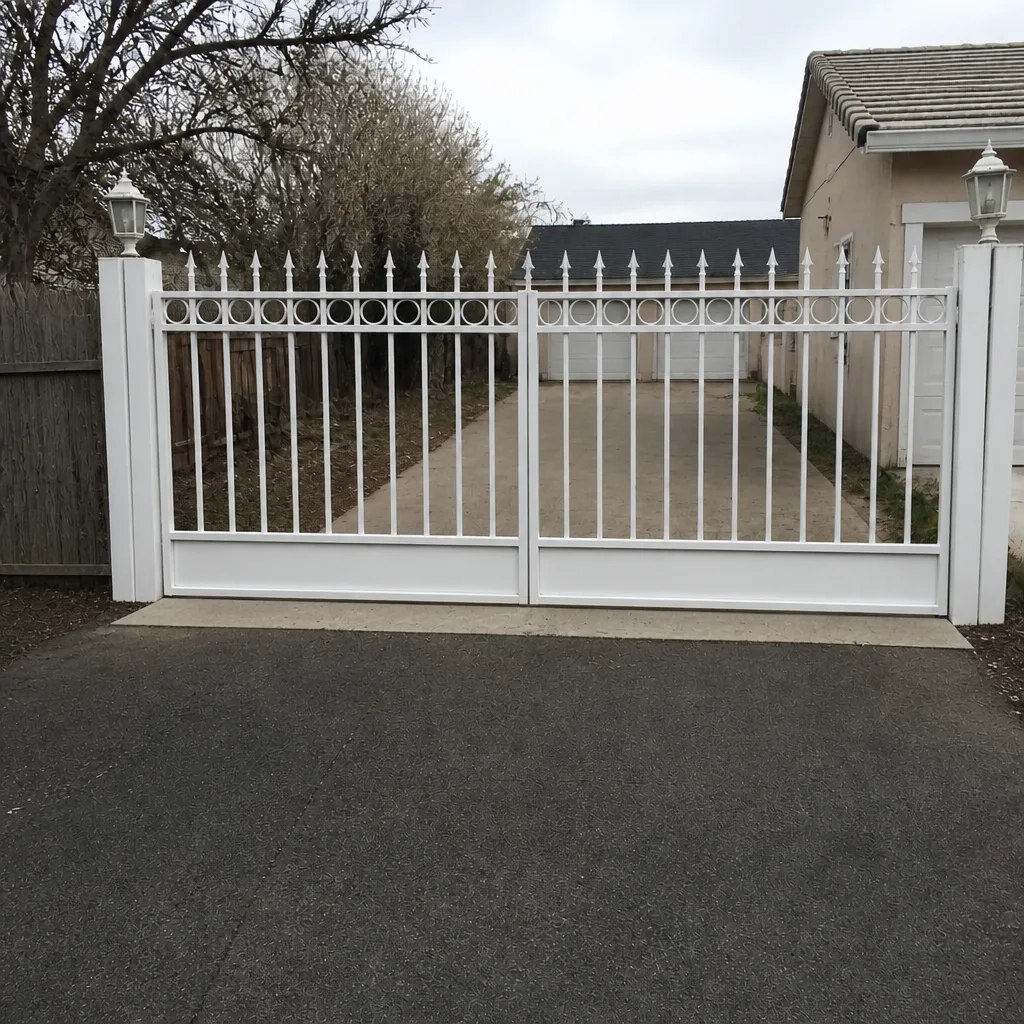 After
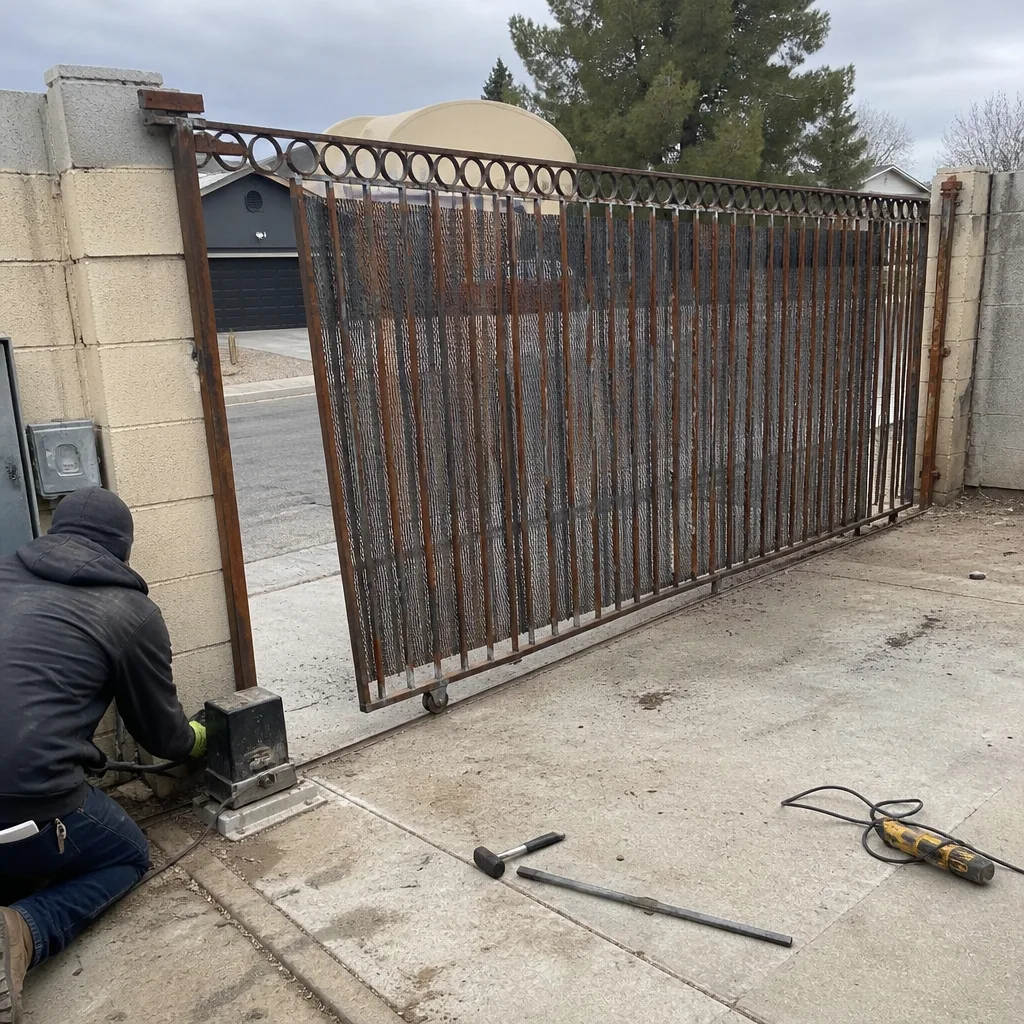 Before
 After
When to Call a Professional
Access-control wiring carries line voltage and ties into a gate operator whose safety inputs – photo-eyes and reverse sensors – are load-bearing for the people who walk through that gate every day. If your control board shows burn marks, a burnt smell, or a repeated breaker trip, stop testing it and call us; that is not a homeowner-diagnosis situation. If the gate runs over a person, a pet, or a car and the photo-eye doesn’t stop it, the safety input is compromised and the gate should be treated as out of service until an access-control technician has re-verified it. If your credentials stop working intermittently, or you’re adding a second user and don’t know whether the board supports it, that’s a quick diagnostic. Vance Gate Repair Whitney offers free estimates in Whitney – call (844) 797-4861, the phone is answered by a live person 24 hours a day.
Frequently Asked Questions
Most residential jobs take 45 minutes to 3 hours, with keypad swaps on the low end and control-board replacements at 2-3 hours; multi-user credential systems and new loop detectors typically run 3-6 hours. Site conditions – buried wire, conduit access, and existing board brand – are the variables that move the number. Call (844) 797-4861 for an exact window based on your property – estimates are free.
Same-day completion is realistic for most single-gate residential access-control jobs in Whitney – keypad swaps, like-for-like control-board replacements, and loop detector installs where conduit is usable. What pushes a job to a second day is ordered parts or electrical work, not labor, and both are named before scheduling. Call (844) 797-4861 and we’ll confirm the window and price before we arrive.
A reader, a controller, software setup, and one-by-one testing of every credential you’re issuing. That’s the 4-6 hour job on our list, and it costs $700-$1,800 in Whitney depending on reader type and whether network access exists on the property. Every pass is demonstrated on-site before we leave. Call (844) 797-4861 for a written scope – it’s free.
Yes – safety edges, photo-eyes, and reverse sensors are part of every access-control installation, and they’re re-tested before we hand you the photo log. A new dedicated 120V circuit is an electrician’s scope and is quoted separately; we don’t disguise it as part of the gate work. Call (844) 797-4861 and we’ll walk through what your property needs – free estimate.
Usually, yes – both brands are among the nine automation platforms we service, and the credential reader typically works with the existing board as long as the accessory voltage is confirmed on-site. The diagnostic visit confirms compatibility before anything is ordered; that’s why the diagnostic is applied to the repair when you book it. Call (844) 797-4861 for a free quote.
Keypad swaps in Whitney typically run $160-$320, quoted in writing before any work starts. If the existing wiring needs repair, that’s scoped and priced before the technician touches a tool. You won’t get a surprise line item at the end – that’s Clause 1 of The Haven Standard. Call (844) 797-4861 for an exact quote, free of charge.
The Bottom Line
Access-control timelines are diagnostic timelines. Keypad swaps run 35-60 minutes; control-board replacements 2-3 hours; multi-user systems 4-6 hours. Site conditions – wire condition, conduit access, brand compatibility, existing power – are the variables, and they’re knowable before you schedule. What separates a job that holds up from one that calls you back in three weeks is the phase most timelines skip: re-setting every limit and safety input, and documenting the work. On a Whitney gate, that 15-20 minutes of documentation is the thing that keeps the number on the invoice equal to the number on the quote – the first time and every time after.
If you’re ready to schedule a visit, call (844) 797-4861 for a free estimate. A live person answers 24/7, the price is in your hand before any work starts, and every visit leaves a photo record of what was found, what was set, and what was installed.
Written by the team at Vance Gate Repair Whitney.