
Last updated November 18, 2026
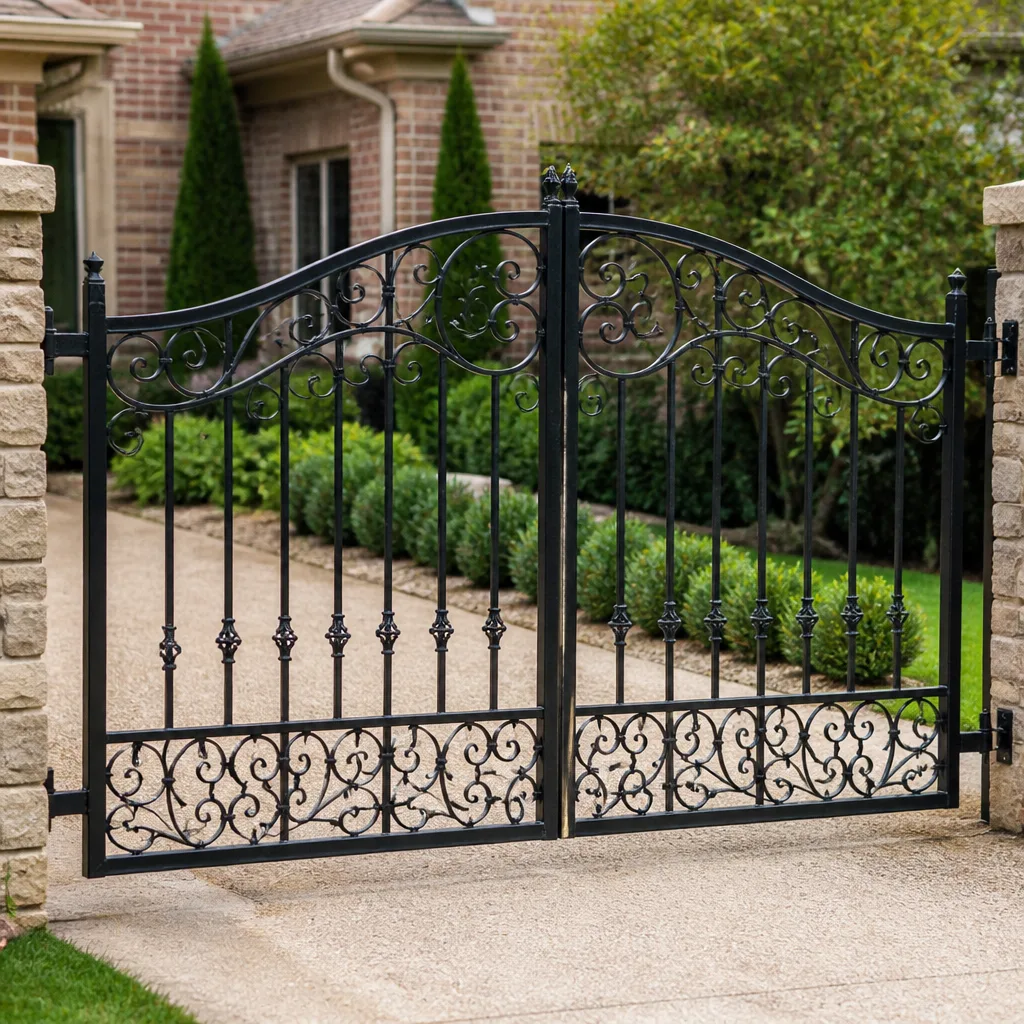 Wrought iron
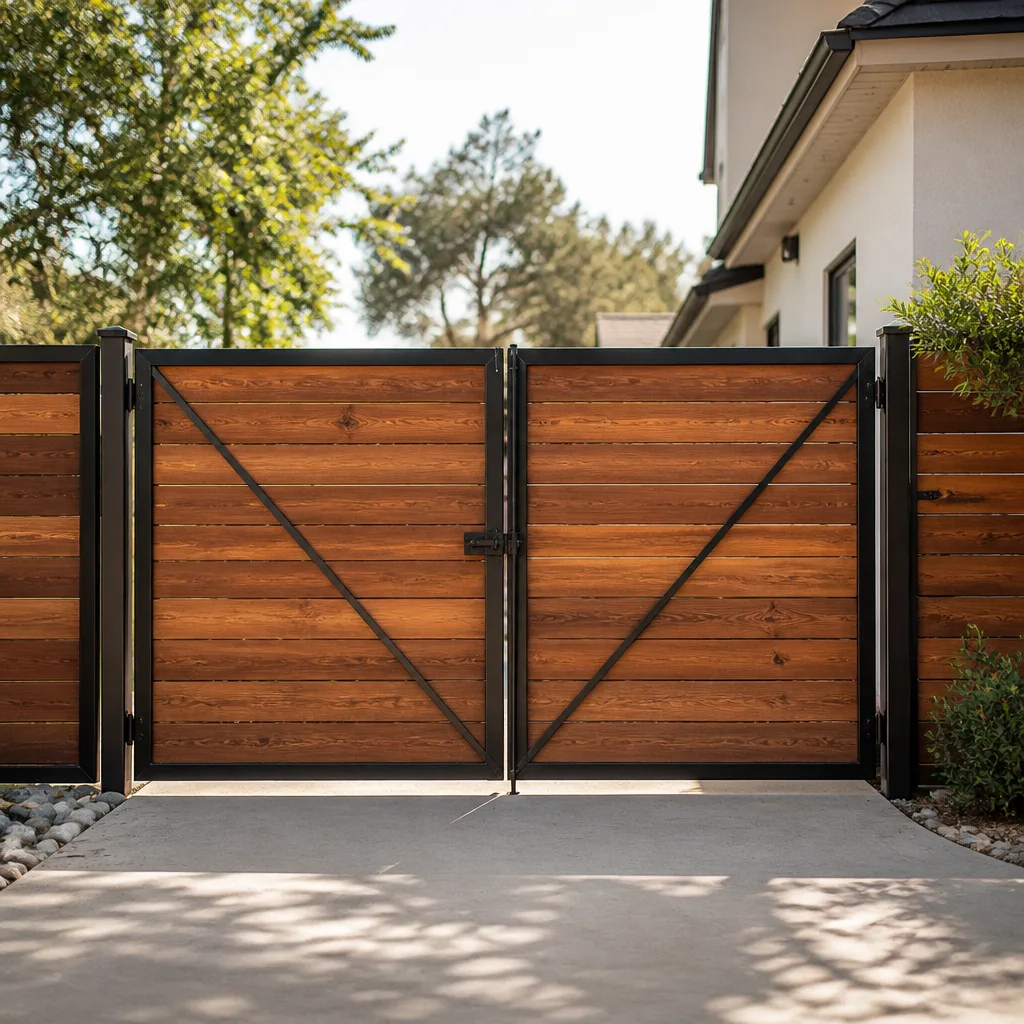 Wood & steel frame
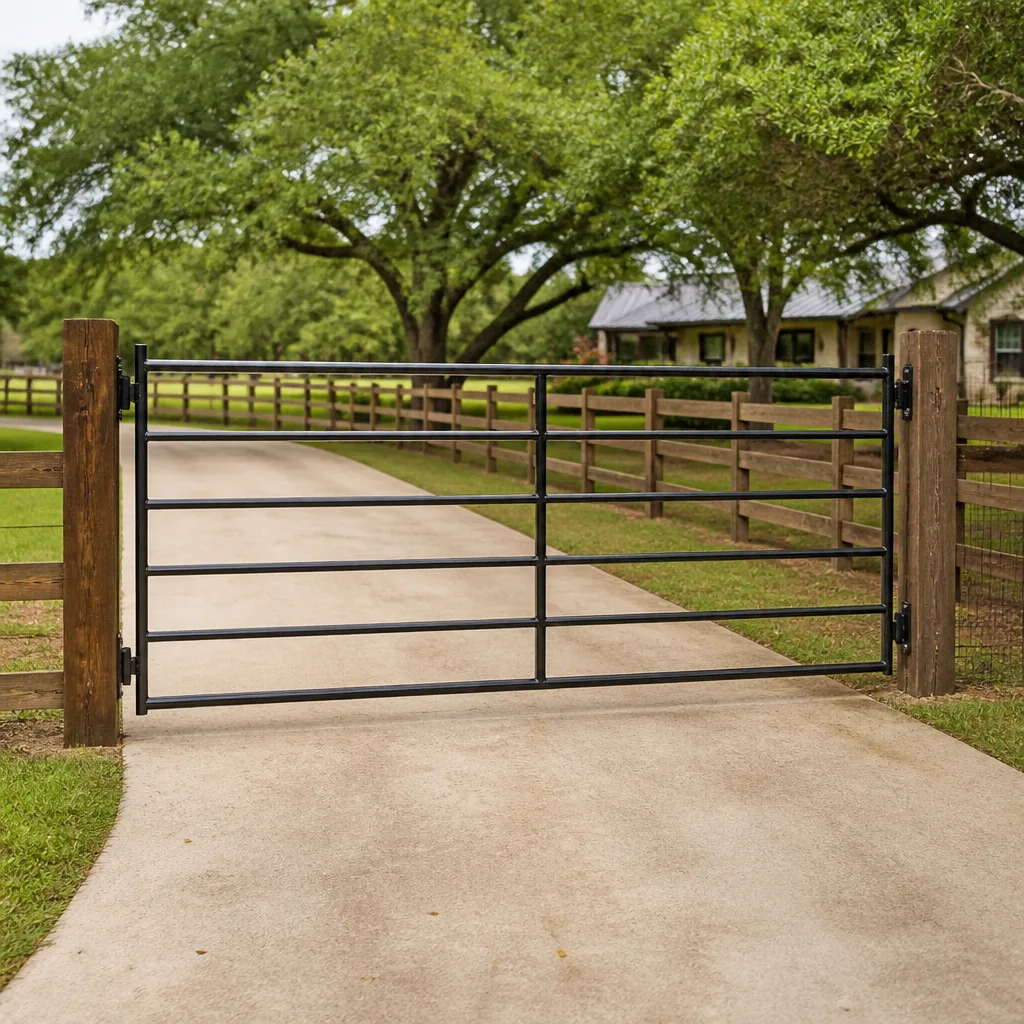 Farm & ranch
 Sliding driveway gates
 LiftMaster operators
Free on-site gate assessment - hinges, posts, and your LiftMaster or Nice gate operator checked before anything is quoted
The assessment is free and the quote is the invoice.
Get your free estimateHow Long Does Gate Installation Take? Timelines and What to Expect
A single-leaf swing gate can be mechanically hung in four hours. Yet the same project routinely takes two to three weeks from signed contract to first remote press, and the gap has nothing to do with how fast the installer works. The hours belong to concrete cure windows, the days belong to permit desks and utility mark-outs, and the calendar belongs to whichever of those two finishes last. Most estimates you’ll read online talk only about the four-hour part. This guide breaks the whole job into four phases with realistic day counts for each, so you can plan around the real schedule instead of the brochure version. We do this work in Whitney, and we’ve watched the same three or four bottlenecks stretch projects that looked simple on paper.
Quick Answer
Gate installation usually takes two to three weeks from contract to working remote: roughly three to ten business days for permit and utility clearance, at least three to seven days of concrete cure before the gate can be hung on new posts, one to two days for mechanical installation, and a half day to two days for electrical and access-control commissioning. The physical install itself is the shortest part. If the posts are set into caliche in Whitney and need extra depth, add several days to the front end of that schedule.
Styles & brands we work with
- Wrought iron
- Wood & steel frame
- Farm & ranch
- Sliding driveway gates
- LiftMaster operators
Table of Contents
- Phase 1: Permits and Utility Clearance
- Phase 2: Post-Setting and Concrete Cure Time
- Phase 3: Mechanical Installation Day
- Phase 4: Electrical and Access-Control Commissioning
- How Gate Type Changes the Mechanical Window
- What a Written Project Schedule Should Show
- The Most Common Cause of Delay in Whitney
- Common Mistakes to Avoid
 Before
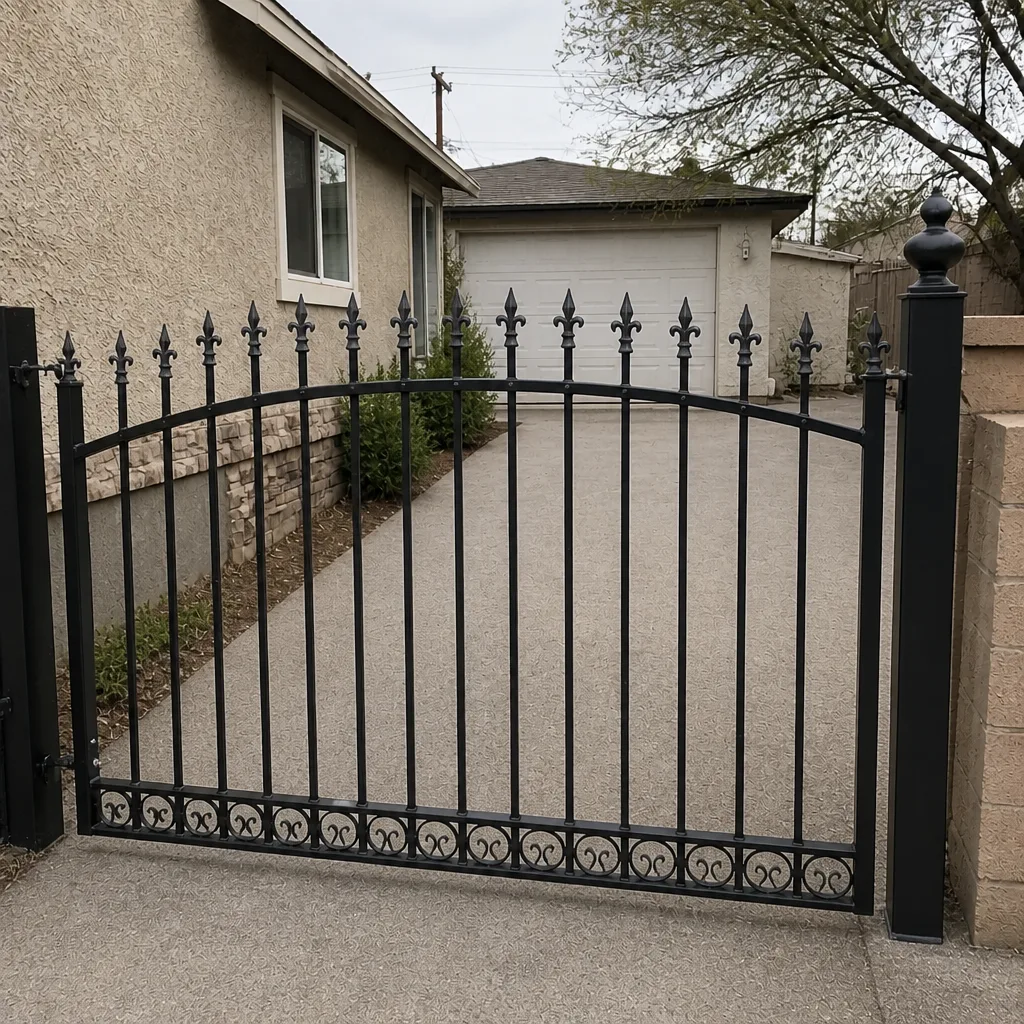 After
Phase 1: Permits and Utility Clearance (3-10 Business Days)
Before anyone digs, two things have to happen, and both of them happen off-site. The first is a utility mark-out. In Nevada, that means calling 811 and waiting for the locate crews to mark gas, water, power, and telecom lines across the trench line. That wait alone is usually two to five business days, and if the proposed footing lands near a marked line, the design may shift, which restarts the clock. We can’t compress this and neither can any other installer. Skipping the mark-out is the fastest way to void a warranty and the slowest way to explain a severed irrigation main to your neighbor.
The second is a permit. Whether your gate needs one depends on height, setback, and how the gate ties into the property line. A driveway gate in Whitney typically falls under local zoning review when it’s over a certain height or when it swings into a right-of-way, and the review desk can take anywhere from a couple of days to two weeks depending on backlog. Ask the installer up front who pulls the permit. If the answer is vague, that’s usually a sign the permit isn’t being pulled, and the inspection that never gets scheduled becomes the problem that shows up at resale.
A realistic front-end window for a Whitney project is three to ten business days. Plan for the long end and you’ll be pleasantly surprised. Plan for the short end and you’ll spend a week wondering why nothing is happening in your yard.
Phase 2: Post-Setting and Concrete Cure Time (3-7 Days)
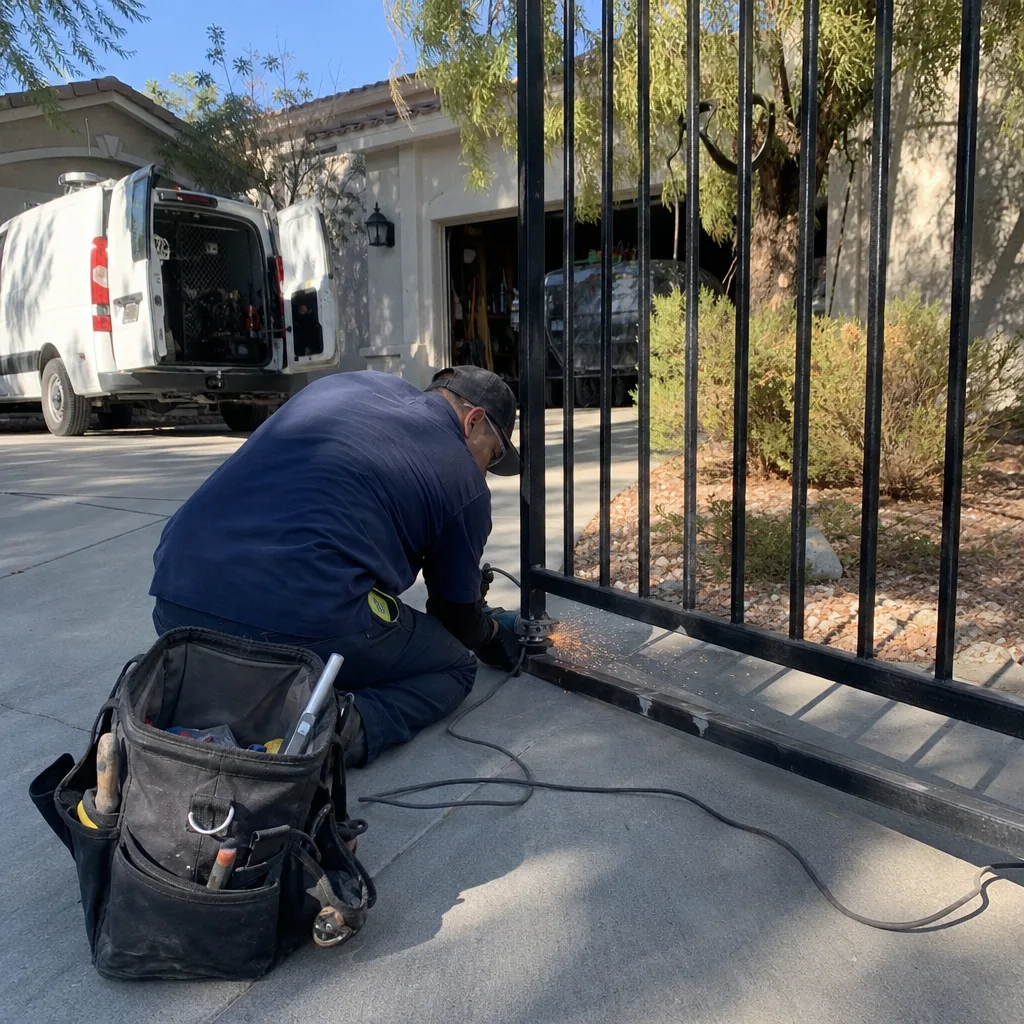
This is the phase most quotes leave out entirely. A swing gate hung on posts that are still wet will sag, drag, and misalign within a month, and a slide gate on a wet track slab will find every low spot in the pour. Concrete needs to reach enough compressive strength to hold hardware before the gate goes on, and that takes days, not hours. For a standard footing in stable soil, three to five days is common. Deeper footings or heavier gates push toward seven.
The scheduling trick here is that post-setting and the rest of the project don’t have to be sequential. Set the posts, then let the cure run while the permit inspection happens and the operator and access-control hardware get staged. A well-planned job uses the cure window productively instead of parking on it. If your installer plans to hang the gate the same day the posts are poured, ask why. There are corner cases where it’s fine, but they’re fewer than you’d think.
One thing to know about cure time: hot weather accelerates it and cool weather slows it. Whitney summers push cure along quickly but also stress fresh concrete, so the pour usually happens early morning and gets covered. Winter work in Whitney is easier on the concrete but the permit desk is often slower. Either way, the calendar absorbs it.
Phase 3: Mechanical Installation Day (1-2 Days)
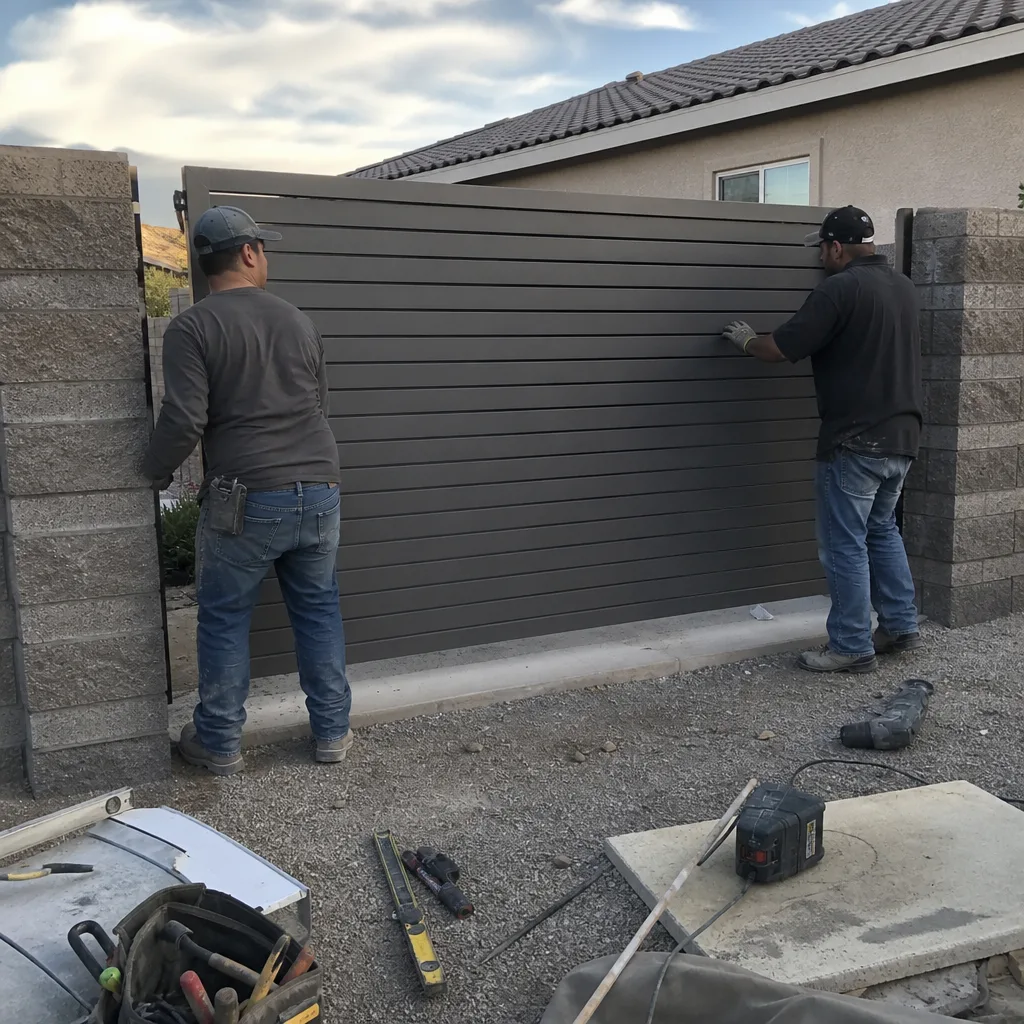
The part everyone pictures is genuinely the shortest part. Once posts are cured and the site is ready, a single-leaf swing gate is a half-day to a full day for a crew that knows the property. A double-leaf swing with two operators runs a full day to a day and a half. A slide gate on an existing track can be a day; a slide gate on a fresh track slab runs longer because the slab has its own cure window layered on top of the post cure. We’ve installed more than 22,000 gates, and the pattern is consistent: mechanical install is a day, everything else is the calendar.
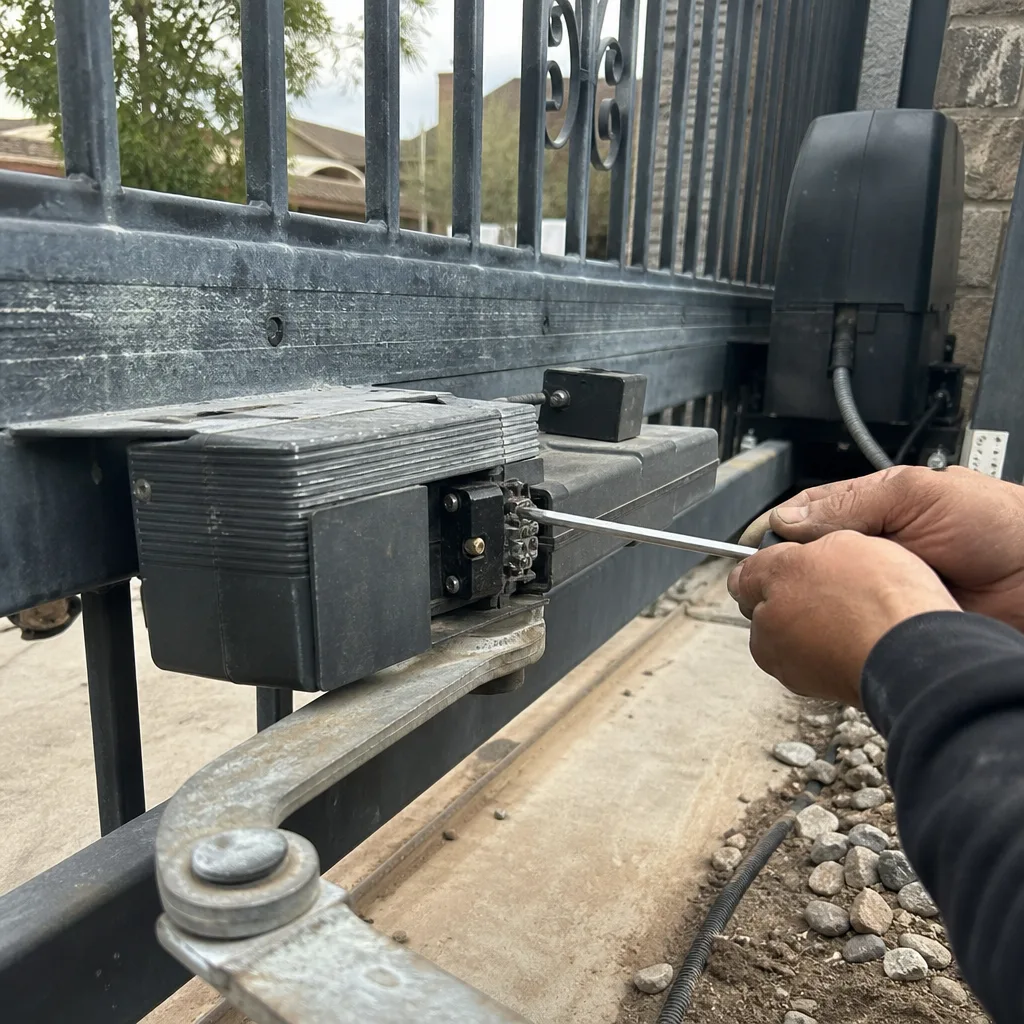
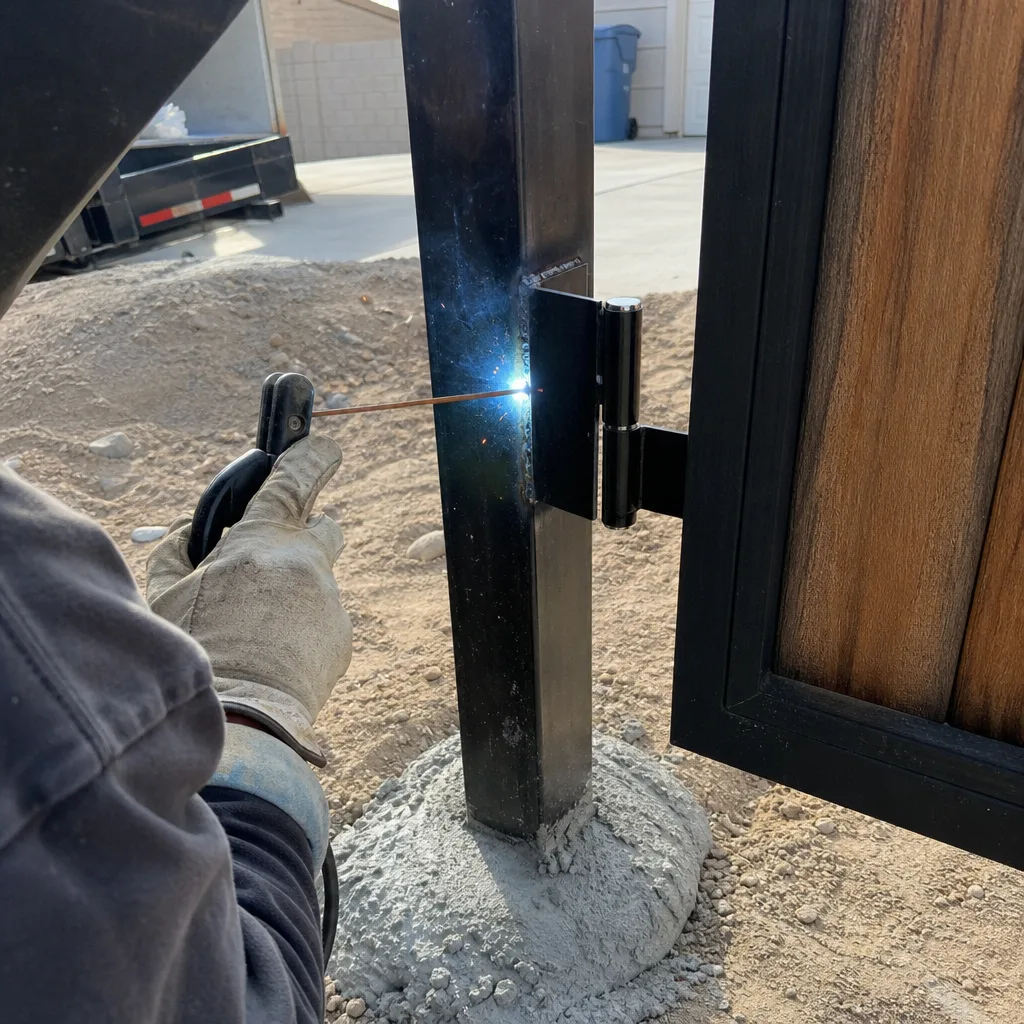
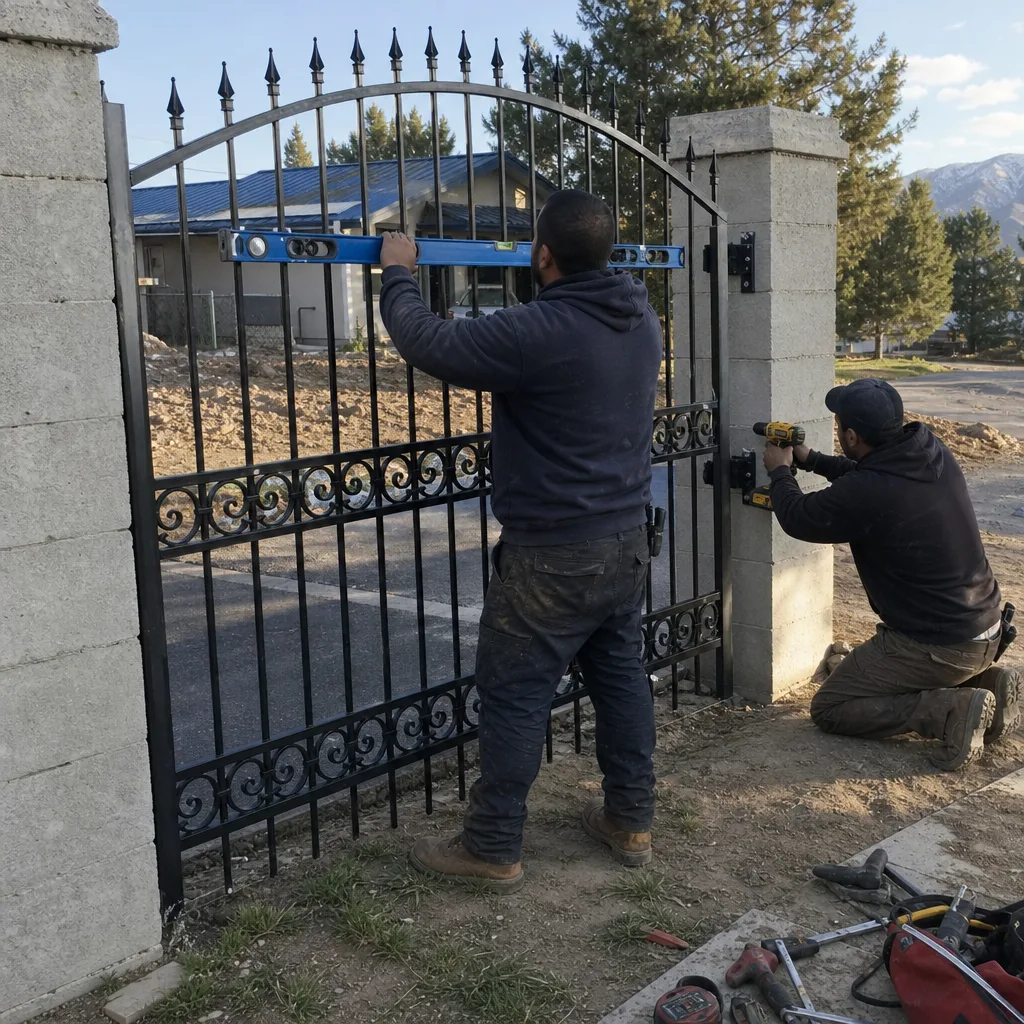
Mechanical install covers hanging the gate, setting the hinges or carriage, checking the level and plumb of every post, and confirming the gate swings or slides through its full arc without binding. Then the operator goes on and the physical stops and limit switches get set. That’s the part where a careful installer earns their keep, because a limit switch set two degrees too far will burn out a motor months later. We photograph the new limit position on every install so the next technician knows exactly where it was left.
On a rebuild or replacement gate, mechanical day gets shorter, often four to six hours, because the posts and power are already there. It’s the fresh-install projects where the timeline stretches, and it’s almost never the installation day itself.
Phase 4: Electrical and Access-Control Commissioning (½-2 Days)
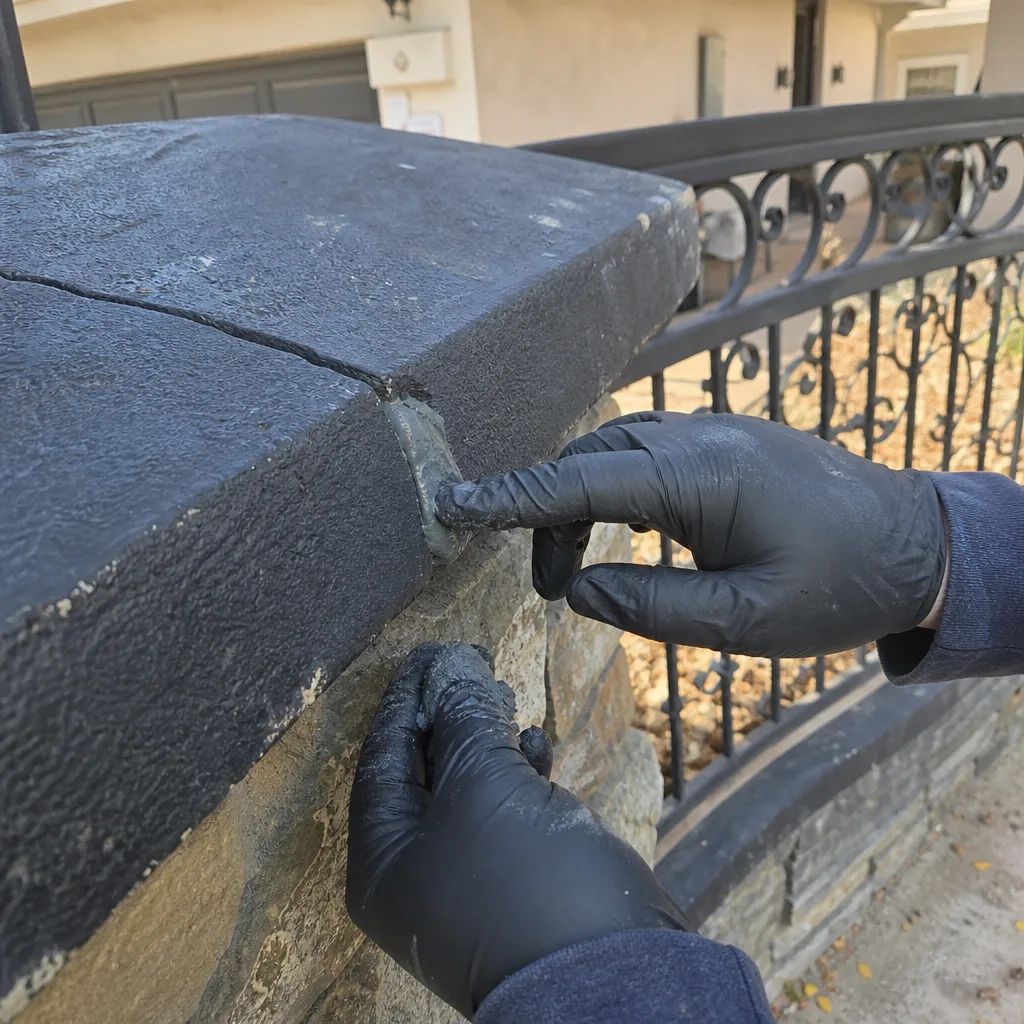
The operator needs power, and power is its own small project. If a dedicated circuit already exists near the gate, you’re looking at a few hours of connection and testing. If a new circuit has to be run from the panel, that means trenching, conduit, and an electrician, and that work can add a day or more depending on distance and soil. It’s separate from the gate installer’s labor and usually separate on the invoice too. Budget for it explicitly.
Commissioning is where access control gets dialed in. Depending on what the customer wants, that may include:
- Setting the operator’s open and close limits and travel speed
- Pairing remotes and programming keypad codes
- Wiring and aiming photo-eyes (the infrared beam that reverses the gate if something crosses the path)
- Adding safety loops or edge sensors for a slide gate
- Connecting a telephone entry system like DoorKing if the property needs one
- Testing manual release so the gate can be opened by hand during a power outage
- Documenting the wiring diagram and leaving a photo record with the homeowner
A straightforward swing gate with one operator and a keypad is a half day. A double gate with two operators, entry system, and safety edges can stretch to two days if the wiring is complicated. A Ghost Controls DIY-friendly operator on an existing gate is often done in an afternoon. The variable is almost always how much wire has to be pulled, not how much hardware gets bolted on.
How Gate Type Changes the Mechanical Window
Gate type matters more on the front end of the schedule than on mechanical day itself. The differences show up in footing size, cure time, and how much access-control hardware the gate can physically carry.
- Swing gate, single leaf: the simplest install. Two posts, one operator arm, half to one day of mechanical work once cured. Footing is standard depth; cure window is usually at the short end.
- Swing gate, double leaf: two leaves, often two operators, longer wiring runs to tie them together. Mechanical install runs one to one and a half days. Footings are the same depth per post but the cure window stays short.
- Slide gate: needs a concrete track slab along the full travel path, which means a bigger pour and a longer cure. Mechanical install is a full day on its own, often longer if the slab is fresh. Slide gates are the right call where the driveway is sloped or where the gate would swing into traffic, but they add two to three days to the overall timeline.
- Bi-fold gate: space-saving, mechanically complex, and dependent on tight tolerances. We see these mostly on commercial and tight-residential lots. Mechanical install runs closer to a day and a half, and commissioning takes longer because more moving parts have to be synchronized.
None of these change the total project dramatically, but they matter when you’re planning around a moving date or a contractor schedule. A slide gate on a new slab in Whitney is realistically a three-week project; a swing gate on existing posts can be ten days.
What a Written Project Schedule Should Show
A written schedule is not a Gantt chart hanging in a trailer. It’s a page you’re handed before signing that names the phases, the dates, and the dependencies. Here’s what should be on it, and if it isn’t, ask why:
- Permit status and expected issue date. Who is pulling it, when it’s expected, and what happens if it slips.
- Utility mark-out date. The Nevada 811 request date and the expected window for marks to appear.
- Post-setting date and cure window. The day concrete is poured and the earliest date the gate will be hung.
- Mechanical install date. A real date, not “week of.”
- Electrical responsibility. Whether the circuit is being run by the gate installer, a separate electrician, or the homeowner.
- Commissioning and hand-off date. When the homeowner gets the remotes, the codes, the manual release walkthrough, and the photo log.
- The written price. Every line item above priced in dollars, not “TBD,” not “call for quote.”
Under The Haven Standard, our flat written price and the schedule arrive before any work starts. If a competitor’s quote lists “installation” as one line and leaves the rest blank, that’s the document you should push back on. The gate installation in Whitney page lists the line items we cover as standard.
The Most Common Cause of Delay in Whitney: Caliche Soil
Whitney sits on ground that includes caliche, the calcium-carbonate hardpan layer that runs under much of the Las Vegas Valley. It’s rough on gate installs, and it’s the single cause of delay we see more than any other. Caliche doesn’t auger cleanly; a standard post hole that would take fifteen minutes in loamy soil can take an hour or more, and it often needs a breaker attachment or a trencher. When footings hit a caliche layer, they need to go deeper or wider, which means more concrete volume and a longer cure.
A realistic Whitney schedule accounts for caliche from day one. If the installer hasn’t asked about soil conditions before quoting, the written price you get may not survive the first hole. When we quote an install in Whitney, we note whether the estimate assumes standard soil or caliche, and if caliche turns up unannounced, that’s stated as a possible add before any digging starts, not discovered at the end. Same goes for a fence line that crosses an old irrigation line or landscape boulders. Those things slow the job and change the price. They should be in the document.
There’s a secondary delay unique to Whitney: gate placement near the property line often overlaps with easements and utility corridors. A mark-out that comes back with a gas line six feet from where the swing arc lands can shift the design entirely. This is why we insist on the 811 call even when a homeowner says the last installer skipped it. The ten business days you spend waiting is cheaper than the six weeks you’ll lose if the footing has to move after the concrete is poured.
Common Mistakes to Avoid
- Skipping the 811 mark-out. It averages three to ten business days and voids most warranties if it’s skipped. If your installer suggests going without to save time, that’s the time you save the least and lose the most.
- Hanging the gate on day-old concrete. Post cure is a real window, not a formality. A gate hung on wet posts sags within a month and costs more to fix than to have waited.
- Forgetting the power run in the budget. A new circuit to the gate is a separate line item, often a separate trade, and can add $400 to $1,500 depending on distance. That number should be in the written quote, not in a surprise invoice.
- Assuming a slide gate is a weekend project. The track slab alone needs a cure window. Slide-gate installs in Whitney routinely run 2.5 to 3 weeks, not ten days.
- Buying the operator before the site is measured. A Linear or Viking operator sized for one gate can’t be swapped for a heavier one without re-doing the wiring. Get the site measured first, then order the hardware.
- Leaving no written record. A limit-switch position or wiring diagram that isn’t documented is a problem the next technician has to rediscover. Every install should end with a photograph of what was adjusted and a record of the part numbers installed.
- Not asking who pulls the permit. If the answer is unclear, the permit likely isn’t being pulled, and the missed inspection surfaces at resale.
See the difference
BeforeAfter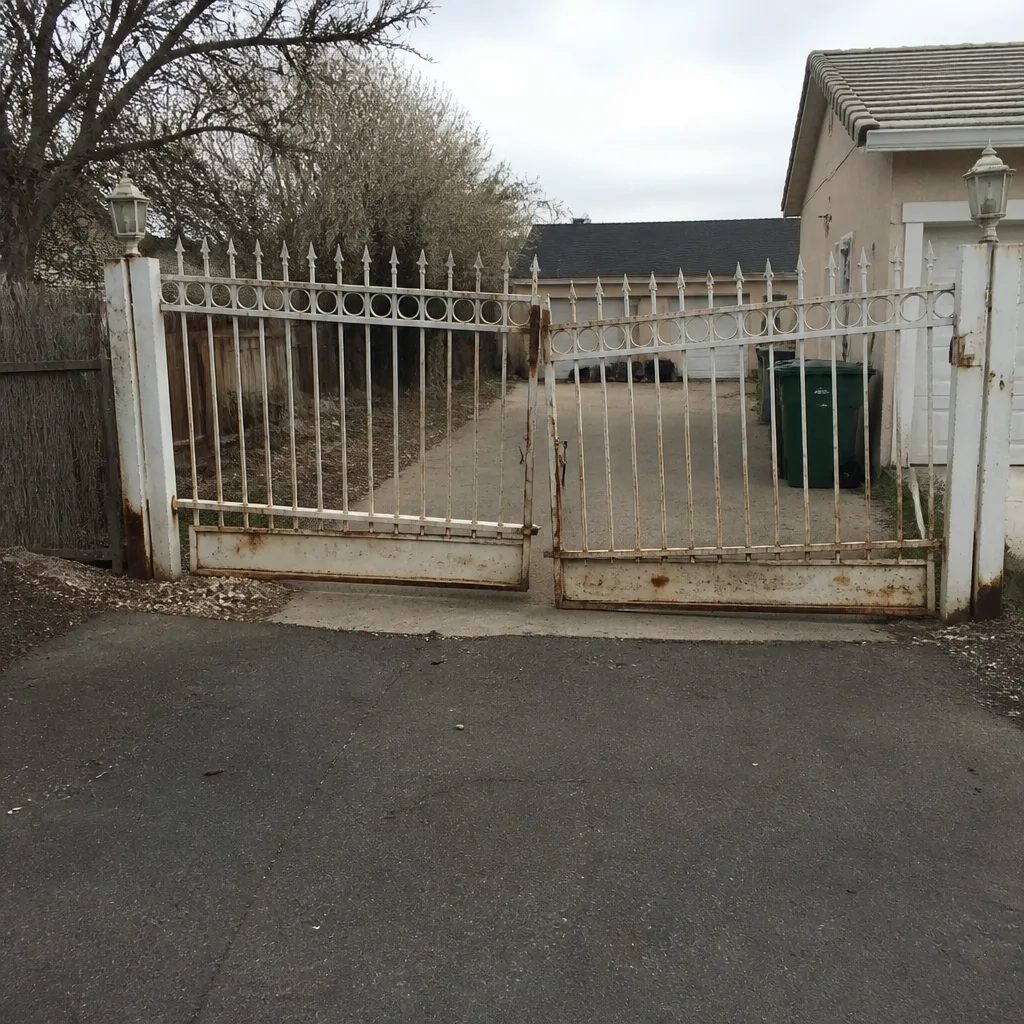 Before
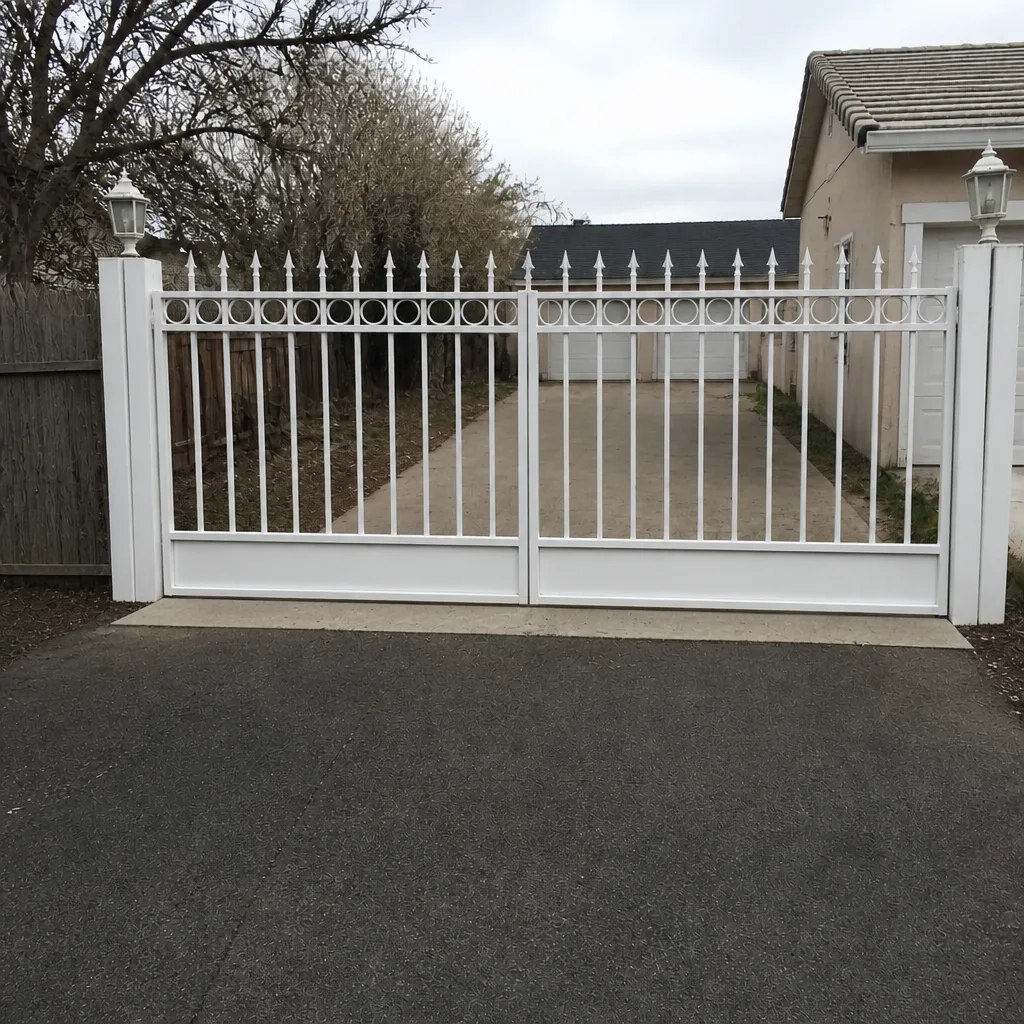 After
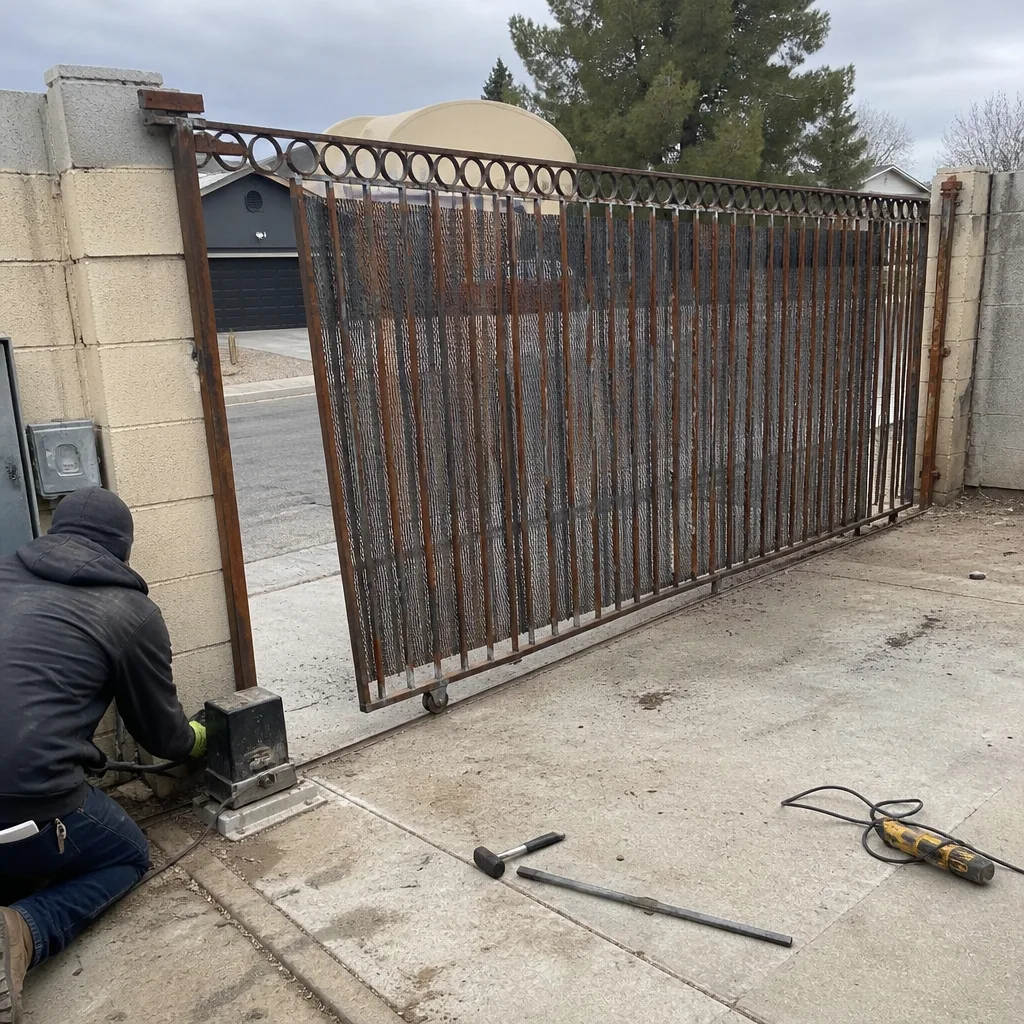 Before
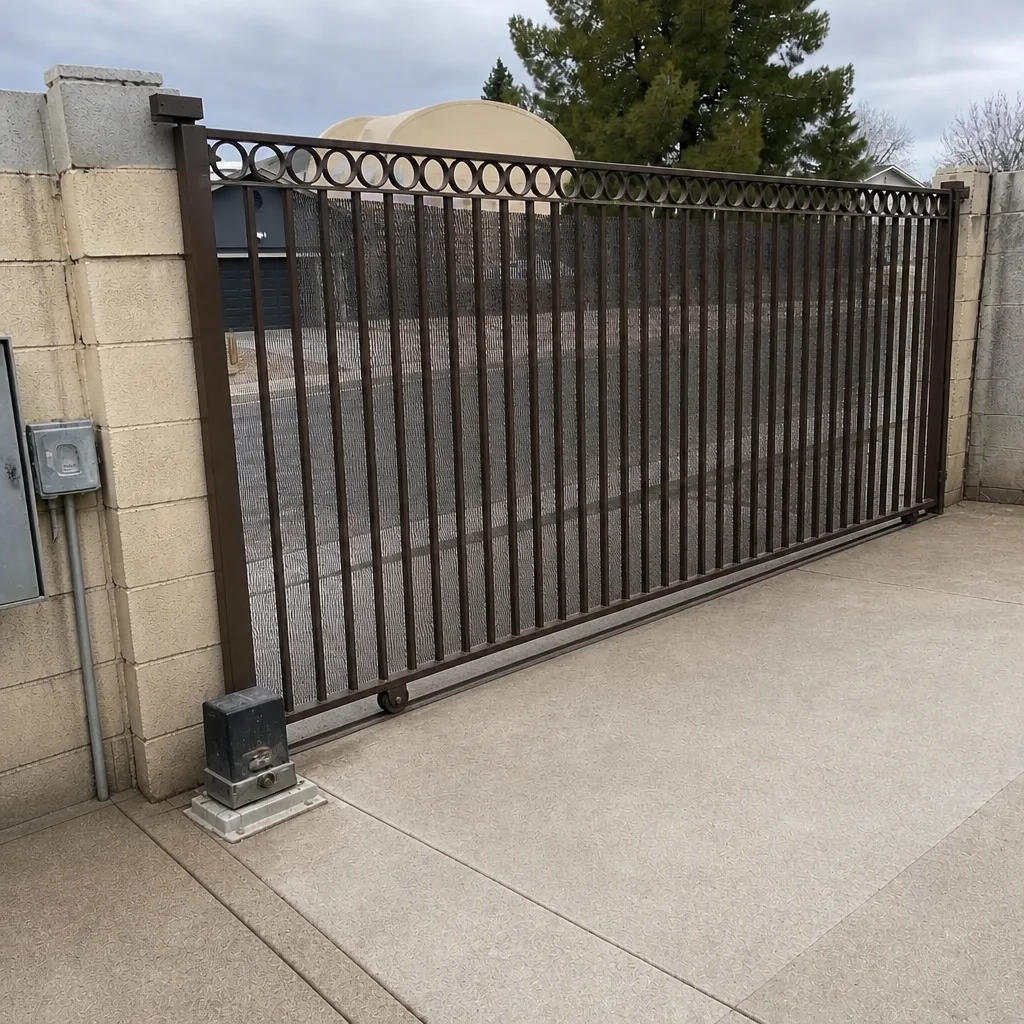 After
When to Call a Professional
Call a professional the moment the project involves an operator, an electrical circuit, or a gate over roughly four feet tall in a residential setting. Those are the three areas where a do-it-yourself install goes wrong in expensive ways: motor burn-out from limit switches set by feel, wiring pulled without conduit, and footings sized by eye that fail within a season. In Whitney, caliche raises the bar further. A post that looks fine in softer ground will move in hardpan once the gate weight and wind load are on it. If your existing gate needs work rather than a full install, our gate repair in Whitney team can diagnose that separately. For a full install, or a motor swap on existing hardware, our gate motor & opener specialists handle the commissioning side. Vance Gate Repair Whitney offers free estimates in Whitney. Call (844) 797-4861 and a live person will answer, day or night.
Frequently Asked Questions
Plan for two to three weeks from signed contract to working remote, and three weeks plus if the project involves a slide gate, a new power run, or caliche under the footings. The mechanical install itself is one to two days. The rest is permit, utility mark-out, and concrete cure. For a quote specific to your property, call (844) 797-4861; estimates are free.
Only if the posts are already in cured concrete, power is already at the gate, and the hardware is already on-site. In that case, a swing-gate operator swap or a rebuild is genuinely a one-day job. A fresh install with new footings cannot be a one-day job because the concrete cure window alone takes days. Anyone promising a fresh install in a day is either skipping the cure or skipping the permit.
Concrete needs several days to reach the strength required to hold a gate without sagging or shifting. Hanging early saves a few hours on the front end and costs the homeowner a realignment and re-hang within a month or two. For a standard swing post, three to five days is normal. Deeper footings, or footings in Whitney’s caliche, run toward seven.
Yes, if the install involves digging new footings, and it should. The 811 mark-out averages three to ten business days depending on locate crew volume. Skipping it voids most manufacturer warranties on the gate and operator, and it’s the fastest route to severing a gas line or irrigation main. There is no shortcut here that doesn’t cost more later.
We service and install across nine major automation brands, including LiftMaster, FAAC, BFT, Linear, Viking, Ghost Controls, DoorKing, Elite, and Mighty Mule. We don’t steer customers toward a replacement brand when the existing operator can be repaired. If your property already has a Linear or a Ghost Controls operator, we can work with what’s there. Call (844) 797-4861 to talk through your specific setup.
A full installation includes the 811 mark-out, permit coordination, site measurement, footing excavation and concrete, post-setting and cure, mechanical install of the gate and hardware, operator installation, access-control commissioning (remotes, keypad, photo-eyes, safety edges), a manual release test, and a photo record of the completed work left with the homeowner. Electrical work to run a new circuit is usually separate. Every price is quoted and agreed in writing before work starts.
The Bottom Line
The installation itself takes one to two days. The project takes two to three weeks. The gap lives in permits, utility mark-outs, concrete cure windows, and, in Whitney, caliche that adds depth and volume to every footing. Plan against the long end of each window and you’ll spend your project ahead of schedule rather than chasing it. Ask for a written schedule before signing, ask who pulls the permit, and ask whether the quote accounts for the soil on your lot. Those three questions separate an accurate timeline from an optimistic one. For the full picture on our side of the trade, see our Vance Gate Repair Whitney home page or call us at (844) 797-4861 for a free estimate. A live person answers, 24 hours a day, and the written price arrives before any work starts.
Written by the team at Vance Gate Repair Whitney.