
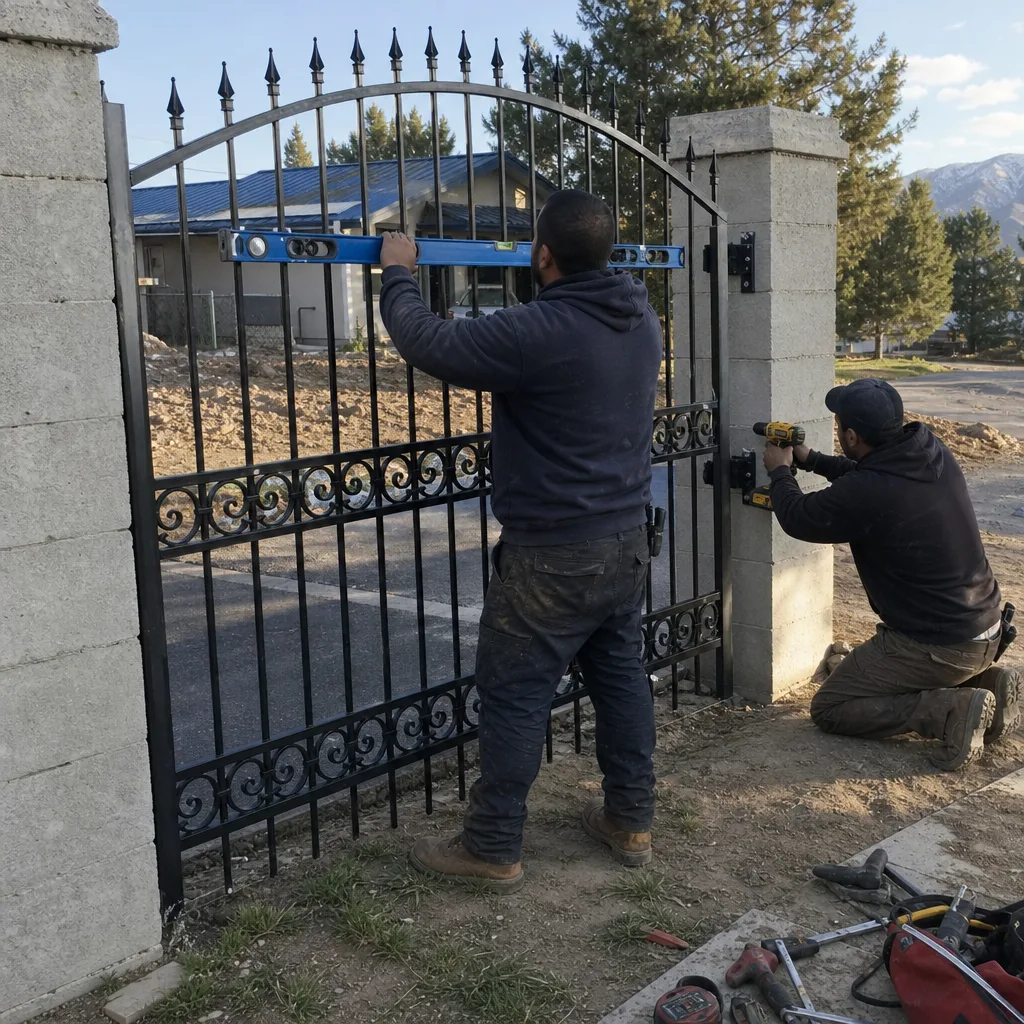
Last updated November 18, 2026
 Wrought iron
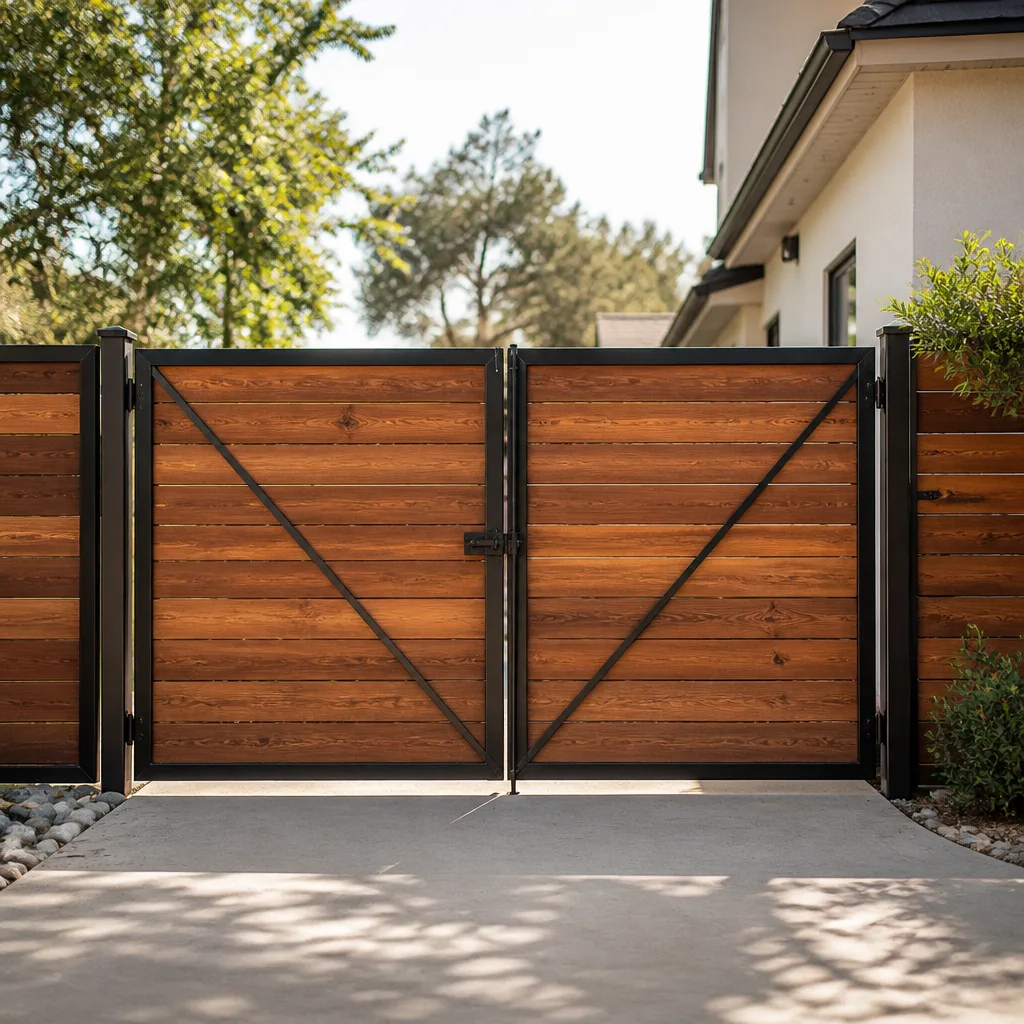 Wood & steel frame
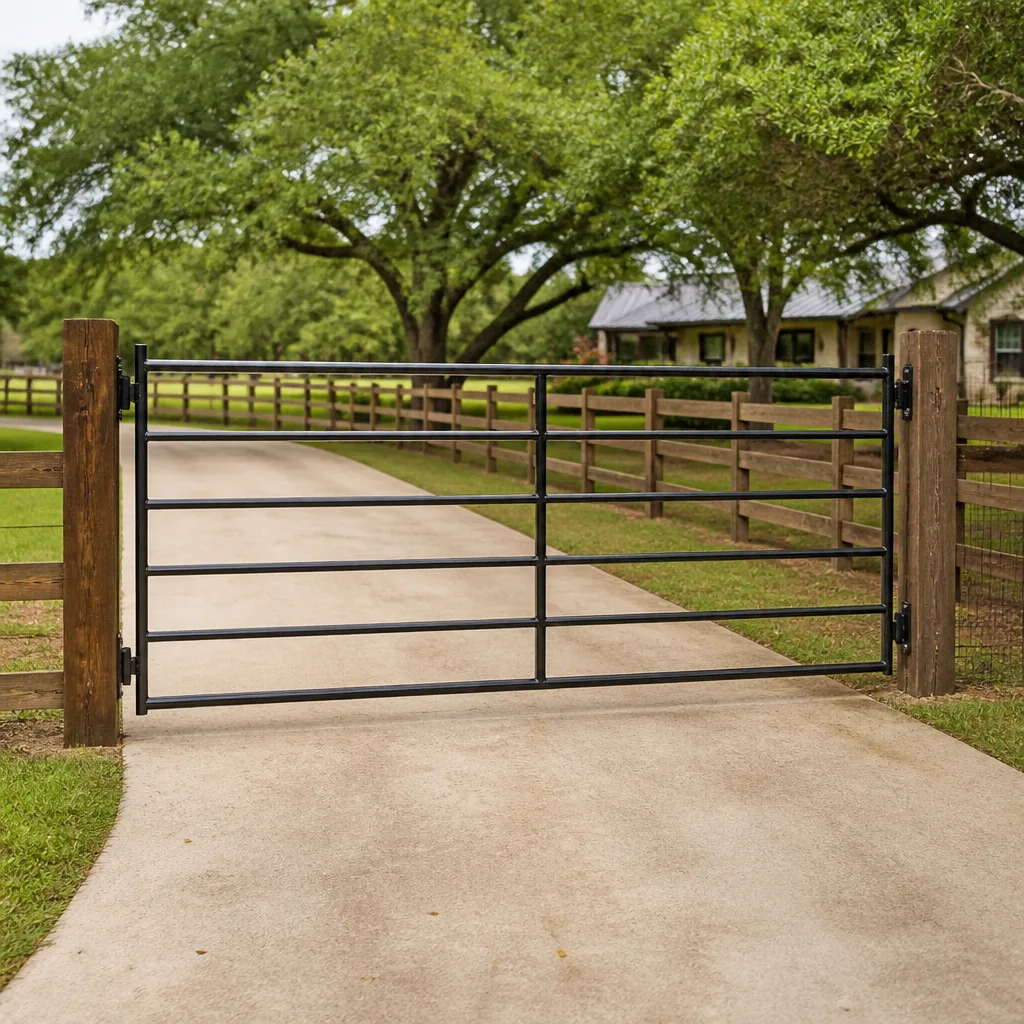 Farm & ranch
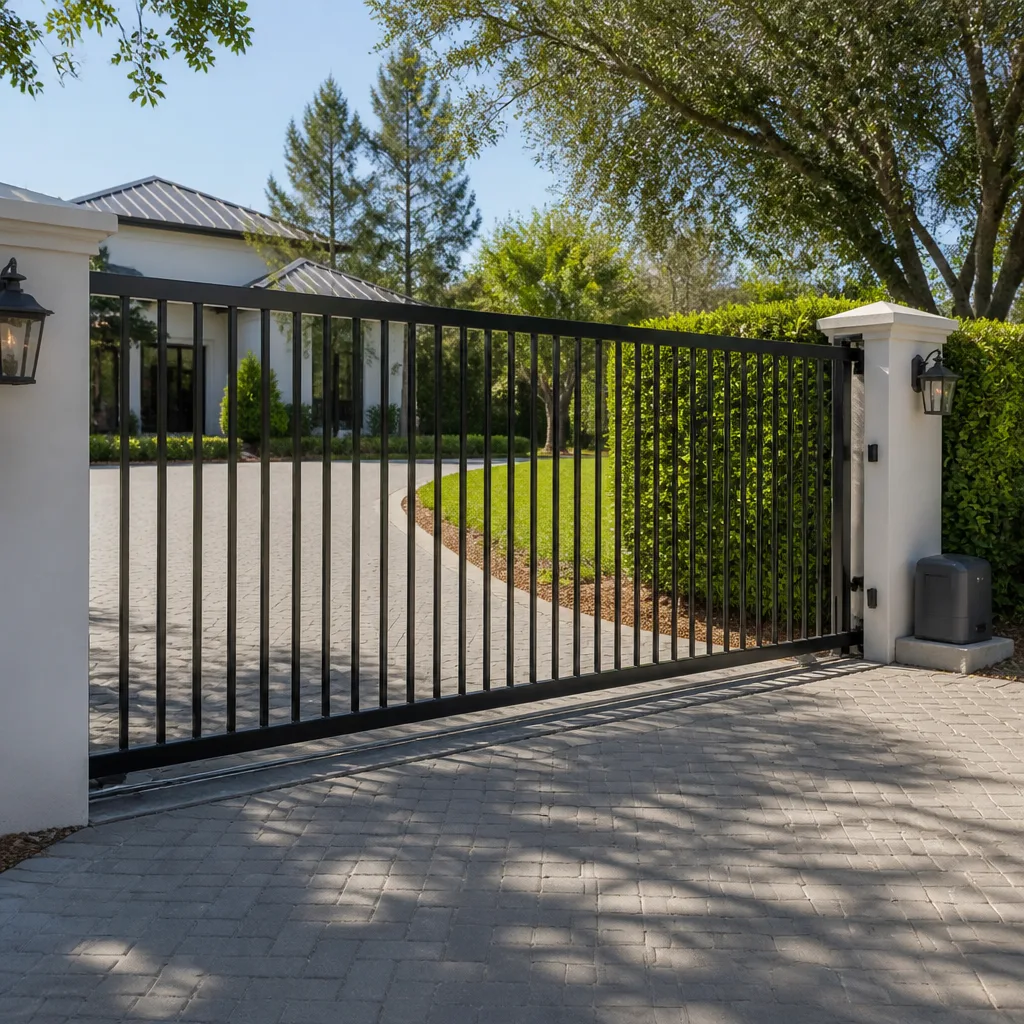 Sliding driveway gates
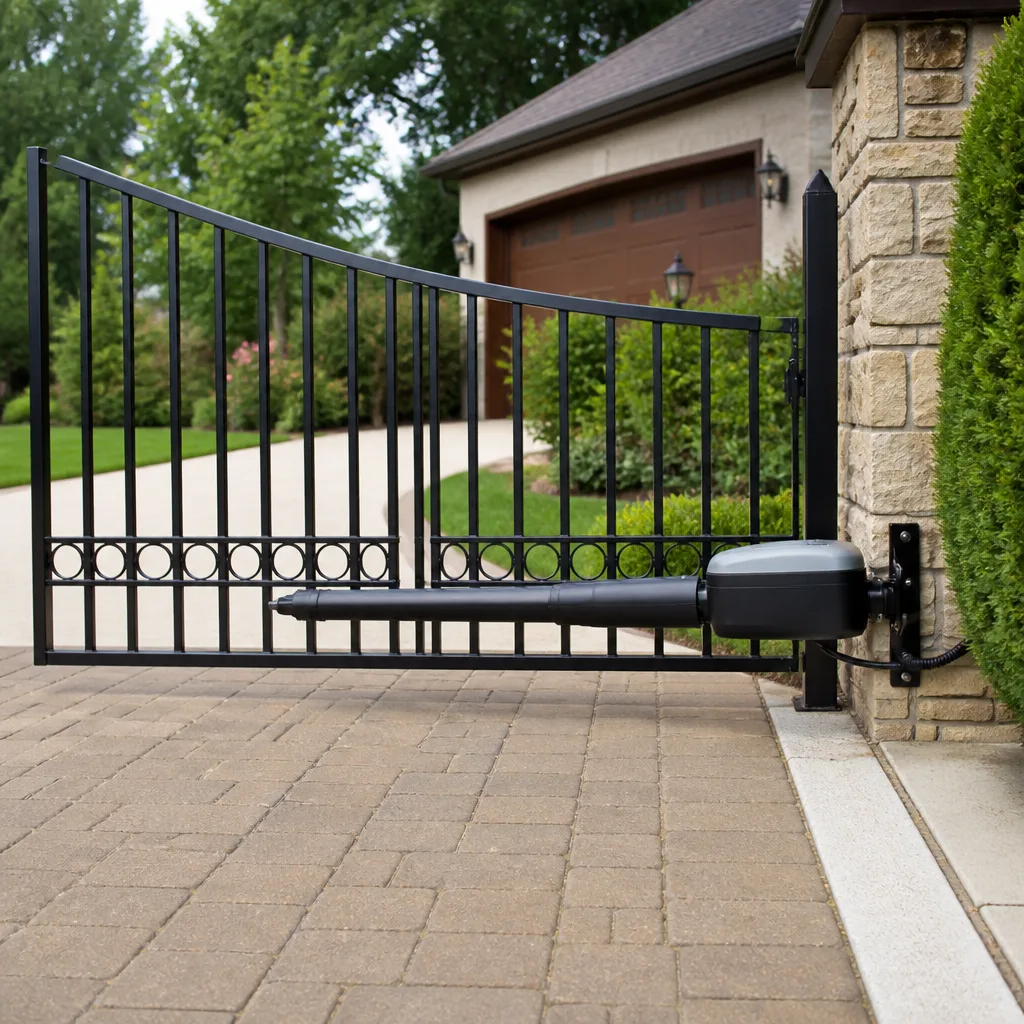 LiftMaster operators
Free on-site gate assessment - hinges, posts, and your LiftMaster or Nice gate operator checked before anything is quoted
The assessment is free and the quote is the invoice.
Get your free estimateGate Repair Warning Signs Every Homeowner Should Know
A gate that hesitates for half a second before it moves is not warming up. In our experience, that pause usually means the operator is pulling about 20% more current than it should, and that number climbs a little every week until something gives. We’ve stood in driveways across Whitney where the homeowner said the gate “always did that” right up until the morning it stopped mid-travel and blocked the car in. This guide names the specific sounds, behaviors, and readings that mean a repair is coming, separates the safety problems from the expensive ones, and shows you how to describe what you’re seeing so a technician arrives with the right part.
Quick Answer
The most important gate repair warning signs are a gate that hesitates or moves slowly, grinding or clicking noises, a gate that reverses for no reason, a photo-eye that no longer stops the gate, and visible damage to hinges, rollers, or the operator arm. Any gate that no longer reverses when something crosses its path is a safety failure, not a maintenance item, and should be treated as an emergency.
Styles & brands we work with
- Wrought iron
- Wood & steel frame
- Farm & ranch
- Sliding driveway gates
- LiftMaster operators
Table of Contents
- Five Audible Warning Signs and What They Mean
- Why “It Works Fine Most of the Time” Costs More
- The 60-Second Visual Check You Can Do Without Tools
- Safety Failures Versus Repair-Cost Failures
- How to Describe a Symptom So the Right Parts Arrive
- What Whitney Heat and Wind Do to Gate Hardware
- What a Documented Repair Record Should Contain
- Common Mistakes to Avoid
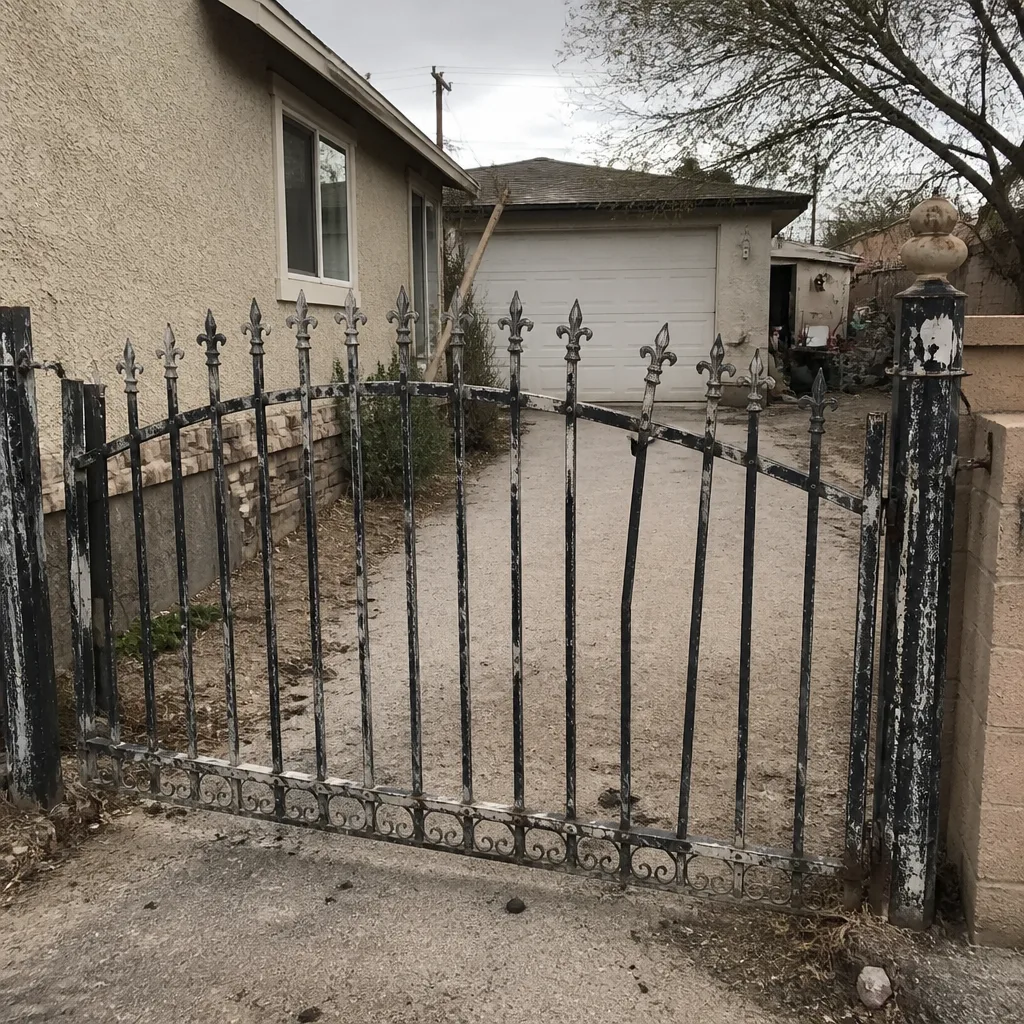 Before
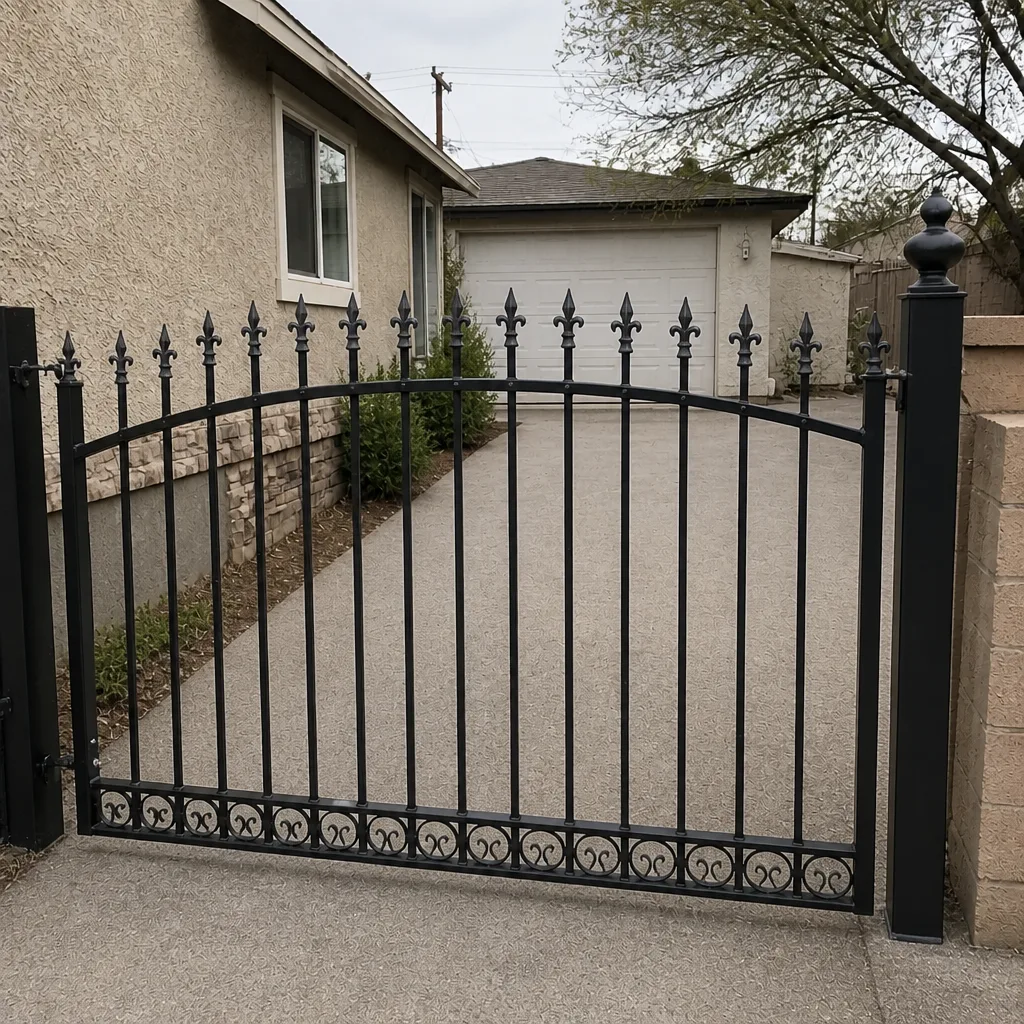 After
Five Audible Warning Signs and What They Mean
Sound is the earliest evidence a gate gives you. Most of the gates we work on in Whitney announce a problem weeks before they fail, and each sound maps to a specific mechanical or electrical condition. Here are the five we hear most, and what each one points to.
- Grinding during travel: worn hinge bearings, dry rollers, or a track that has shifted out of alignment. Grinding means metal is wearing metal, and left alone it becomes a replaced hinge set instead of a greased one.
- A single loud click at the start of movement: often a failing start capacitor or a binding operator arm. The click is the motor straining against resistance it shouldn’t have.
- Buzzing from the operator housing: a jammed limit switch, a stuck relay, or a control board that thinks the gate is somewhere it isn’t.
- Rhythmic clunking on a sliding gate: a worn roller or a bent track section. Clunking gets louder as the roller flattens.
- Continuous motor hum with no movement: the gate is stuck and the operator is trying anyway. This one is urgent because a motor that hums without turning overheats and can burn out the winding entirely.
If you recognize any of these, the sound is the symptom and the underlying condition is what gets repaired. On LiftMaster and FAAC operators we frequently find the limit switch set past travel, which produces a distinctive buzz on every cycle until it’s reset and photographed.
Why “It Works Fine Most of the Time” Costs More
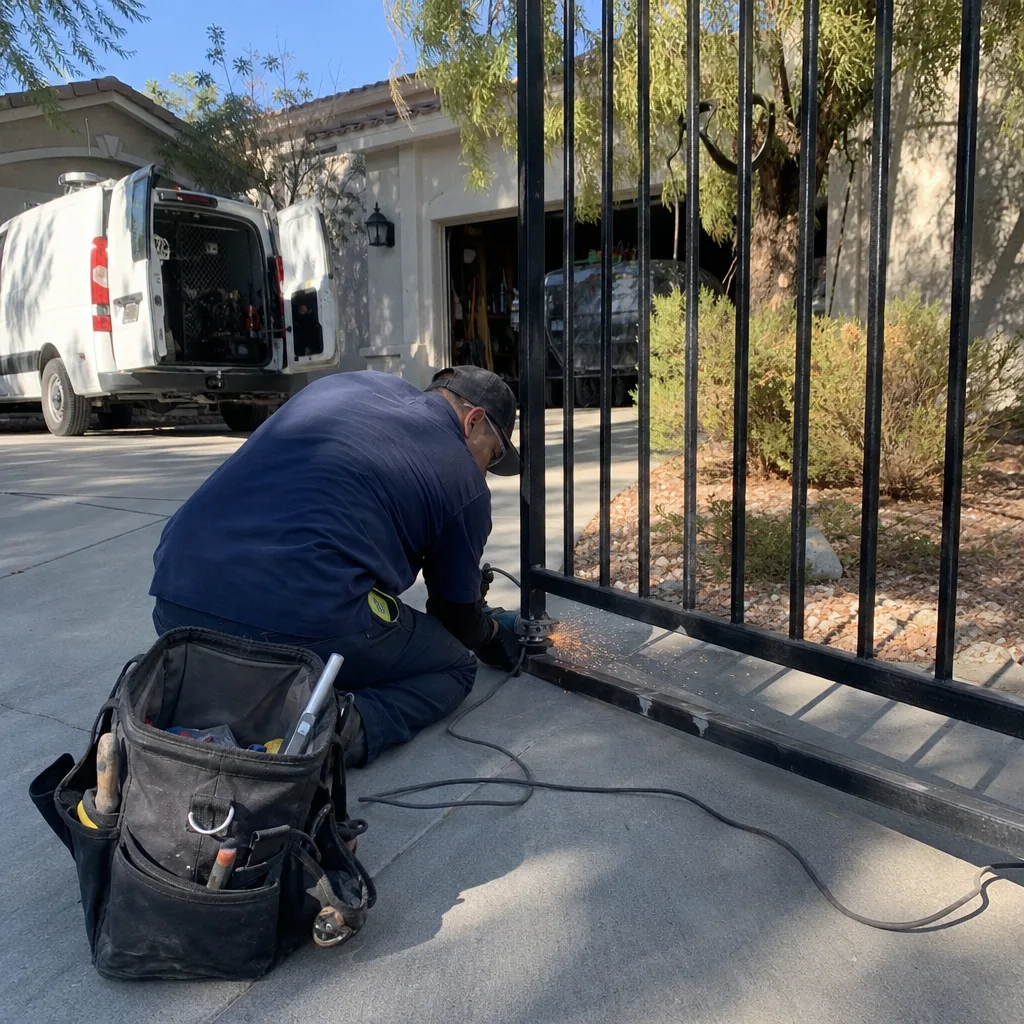
A gate that stops completely is inconvenient but honest. It tells you exactly when the failure happened. A gate that reverses occasionally, or stalls only on hot afternoons, is a more expensive failure still in progress. Intermittent faults usually trace to a marginal component: a photo-eye that loses alignment when the concrete expands, a control board with a failing relay, a battery backup that no longer holds a charge.
What happens next is predictable. The homeowner learns to work around it, cycling the gate twice or nudging the remote. The component degrades further. By the time the gate fails for good, the intermittent fault has often damaged a second part. We’ve seen a single misaligned photo-eye turn into a burned-out control board because the operator kept trying to close against a phantom obstruction for months. In Whitney, where summer heat pushes gate hardware hard, we run into this pattern more than almost any other. A gate that “mostly works” is a repair bill that grows while you wait.
The 60-Second Visual Check You Can Do Without Tools
You don’t need to take anything apart to spot most developing problems. Walk the gate line and look for these six things. It takes about a minute and no tools.
- Listen and watch the photo-eye. The small infrared sensor near the gate path should have a steady indicator light. A flickering or dark light means the beam that stops the gate is compromised.
- Check the ground under the gate. Fresh scrape marks or a groove worn into the concrete means the gate is dragging, not gliding.
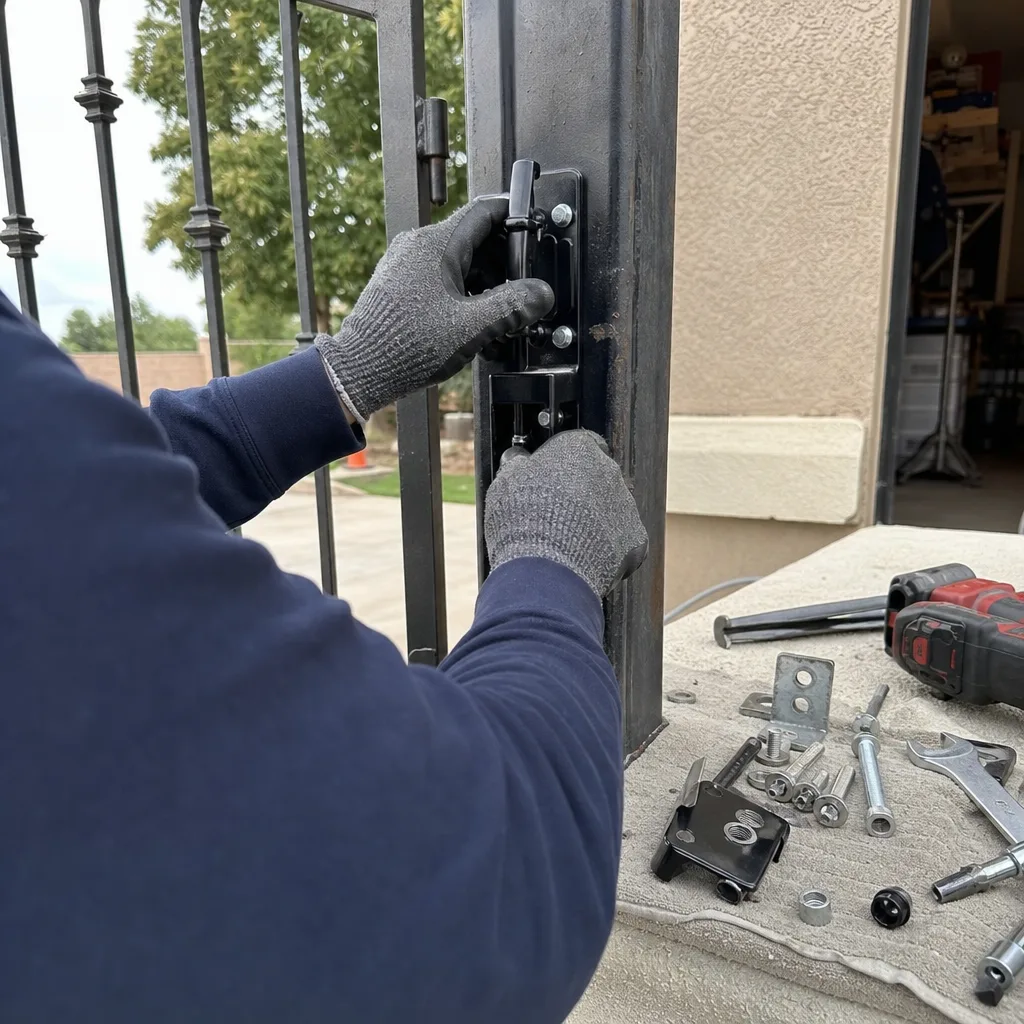
- Look at the operator arm and its bracket. Loose bolts, visible bends, or rust streaks at the pivot point signal a strain that will fail.
- Inspect hinges and rollers. Rust, missing grease caps, or a roller that no longer sits square in the track are early wear indicators.
- Open the operator cover if it lifts off easily and look for the manual release. It should move freely. A release that’s stuck is a warning the operator has been under load it doesn’t like.
- Note the gate’s position at rest. A gate that doesn’t sit flush at either end of travel has a limit-switch problem developing.
Photograph what you find. A photo of a dragging gate or a flickering eye light is exactly what a technician needs to arrive prepared.
Safety Failures Versus Repair-Cost Failures
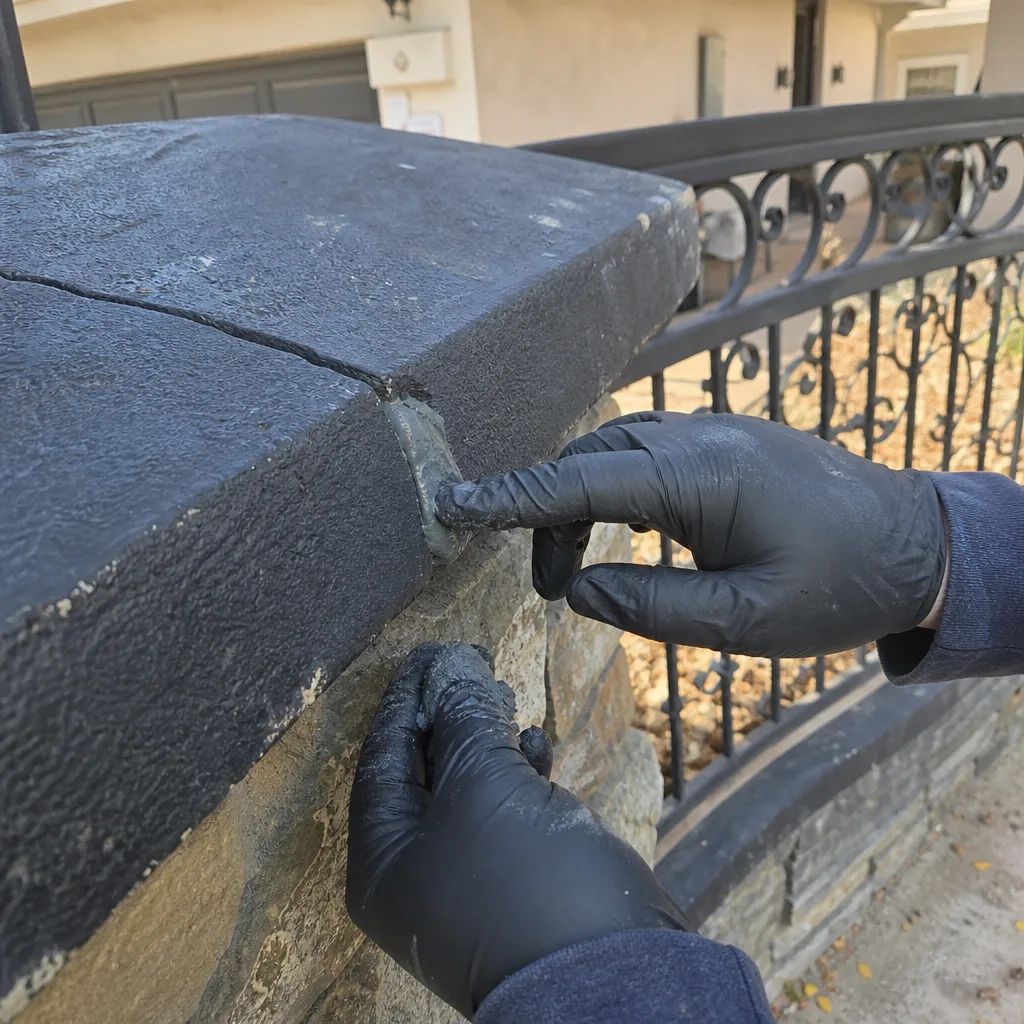
Not every warning sign carries the same weight. Some mean a bill. Some mean the gate could hurt someone. You need to know which is which, because the second category shouldn’t wait for a convenient weekday.
| Warning sign | Category | What to do |
|---|---|---|
| Photo-eye no longer reverses the gate | Safety | Stop using the gate until it’s fixed |
| Gate closes with obvious force on an object | Safety | Stop using the gate until it’s fixed |
| Entrapment sensors not responding | Safety | Stop using the gate until it’s fixed |
| Grinding, clunking, slow travel | Cost | Schedule repair, don’t ignore it |
| Intermittent reversing | Cost | Schedule repair before it spreads |
| Frayed wiring inside the operator | Safety (electrical) | Stop using the gate until it’s fixed |
Obstruction sensor failure is the biggest one. If your gate no longer stops when something crosses its path, the gate is a hazard to anyone on the driveway – a child, a pet, a delivery driver. That’s not a maintenance item. It’s a same-day call, and we treat it that way.
How to Describe a Symptom So the Right Parts Arrive
The single biggest reason a gate repair takes two visits instead of one is a vague symptom description. “The gate is acting weird” tells a technician nothing. “It pauses for a second when it opens, especially in the afternoon” tells them to bring a capacitor and a limit switch. Here’s how to describe what you’re seeing with enough precision that the right parts show up.
- Name the phase. Does the problem happen on open, on close, or at both? “Reverses on close but opens fine” narrows the field fast.
- Name the trigger. Does it happen every cycle, only when hot, only after rain, or only from one remote? Each points to a different component.
- Name the timing. A one-second delay is a different problem than a five-second one.
- Name the sound. Click, buzz, grind, or clunk – the trade distinguishes them because they map to different parts.
- Name the brand and model if you can read it. A LiftMaster slider and a Mighty Mule swing gate have different service paths and different parts.
We can service whatever motor is on your property – Elite, FAAC, LiftMaster, and others – so the brand on the housing isn’t a barrier to booking. What matters is that the technician knows what to expect before arriving. That’s why we send a written scope and price before the visit.
What Whitney Heat and Wind Do to Gate Hardware
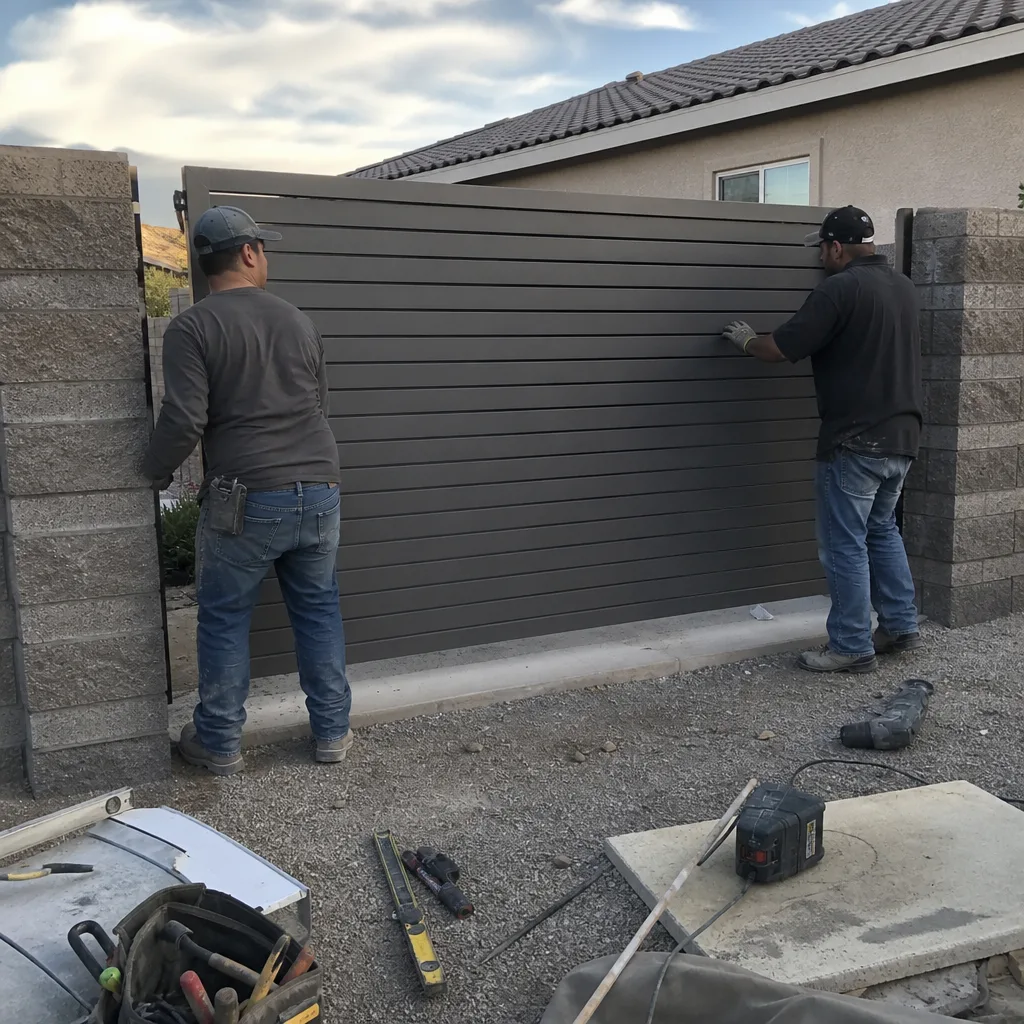
Where we work in Whitney, the environment does part of the damage for you. Summer heat and the swing between hot days and cool nights expand and contract metal, and that cycling loosens bolts and shifts limit switches over time. Wind has a secondary effect on every swing gate: it loads the operator arm on every gust, and a gate with a marginal bracket will show the strain first.
In practice, the Whitney conditions mean a few things for your maintenance check:
- Limit switches drift more often, which produces the hesitation and buzzing we described above.
- Hinge bearings dry out faster, so grinding starts earlier than most homeowners expect.
- Photo-eye alignment can shift when the concrete under the sensor expands, which can trip a false-obstruction fault.
- Track sections on sliding gates can bow slightly, creating a dragging gate that gets worse over a season.
These aren’t reasons to replace the gate. They’re reasons to inspect it with the specific local pattern in mind. If you’re in Whitney and your gate has started hesitating, the symptom is local and we’ve seen it before. A gate repair in Whitney visit should account for the local conditions, not just the symptom.
What a Documented Repair Record Should Contain
One habit separates a repair that holds from a repair that has to be redone: documentation. Every visit should leave a written record of three things – what was found, what was done, and what it cost. Without that, the next technician starts from zero, and you pay twice to rediscover the same problem.
We’ve made this a rule, not an option. Our Vance Gate Repair Whitney home page describes the standard, which we call The Haven Standard. In short:
- Written price before any work starts. The flat price is handed over before a tool comes out of the case. No “call for a quote,” no surprise invoice at the end.
- Photo record on every visit. What was found, what was set, what was installed – photographed and left with you, and filed in the job record.
- 365-Day Done Right Promise. If the repair isn’t right within one full year, we make it right at no additional charge.
Why this matters in the warning-sign context is simple: the warning signs we listed above are the reason to document. If a technician resets a limit switch and doesn’t write down the new position or photograph it, the next person has to guess. If they do document it, the next repair is faster and cheaper. We’ve treated that as the baseline since 2014, and if you’ve got a written estimate from another company, you can bring it to us for a free second opinion before you sign anything.
Common Mistakes to Avoid
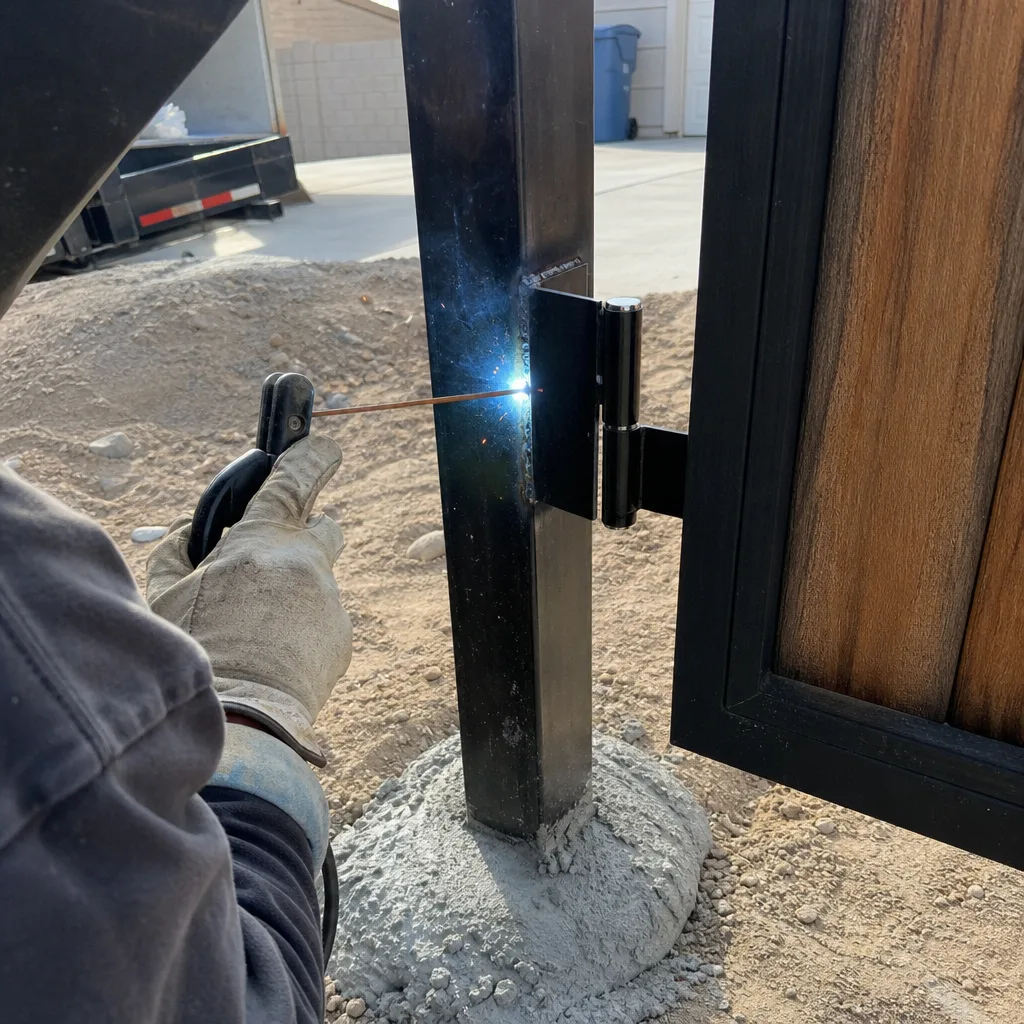
- Treating the hesitation as normal. A gate that used to move immediately but now pauses is telling you the operator is working harder. Ignoring it costs more than fixing it.
- Greasing everything in sight. Lubricant on the wrong parts of a sliding gate attracts grit and worsens the dragging. Ask which points need it before you touch a grease gun.
- Adjusting the photo-eye yourself. Nudging the eye until the light stays steady can mask a beam that’s no longer crossing the path. That’s a safety item, and it needs a proper alignment and test.
- Assuming a single slow cycle is weather. In Whitney, a slow cycle often means the operator is drawing more current, not that the day is warm. It’s a check, not a pass.
- Replacing the whole operator when a part is at fault. Limit switches, capacitors, and brackets fail before motors do. The parts are often the cheaper fix, and we service whatever brand is already installed.
- Calling out the wrong diagnosis. “It’s broken” leads to a second visit. A specific description of when, how, and what it sounds like leads to a one-visit fix.
- Hiring without a written price. If the number isn’t in writing before the work starts, you’ve given up the only leverage you have. Insist on it.
See the difference
BeforeAfter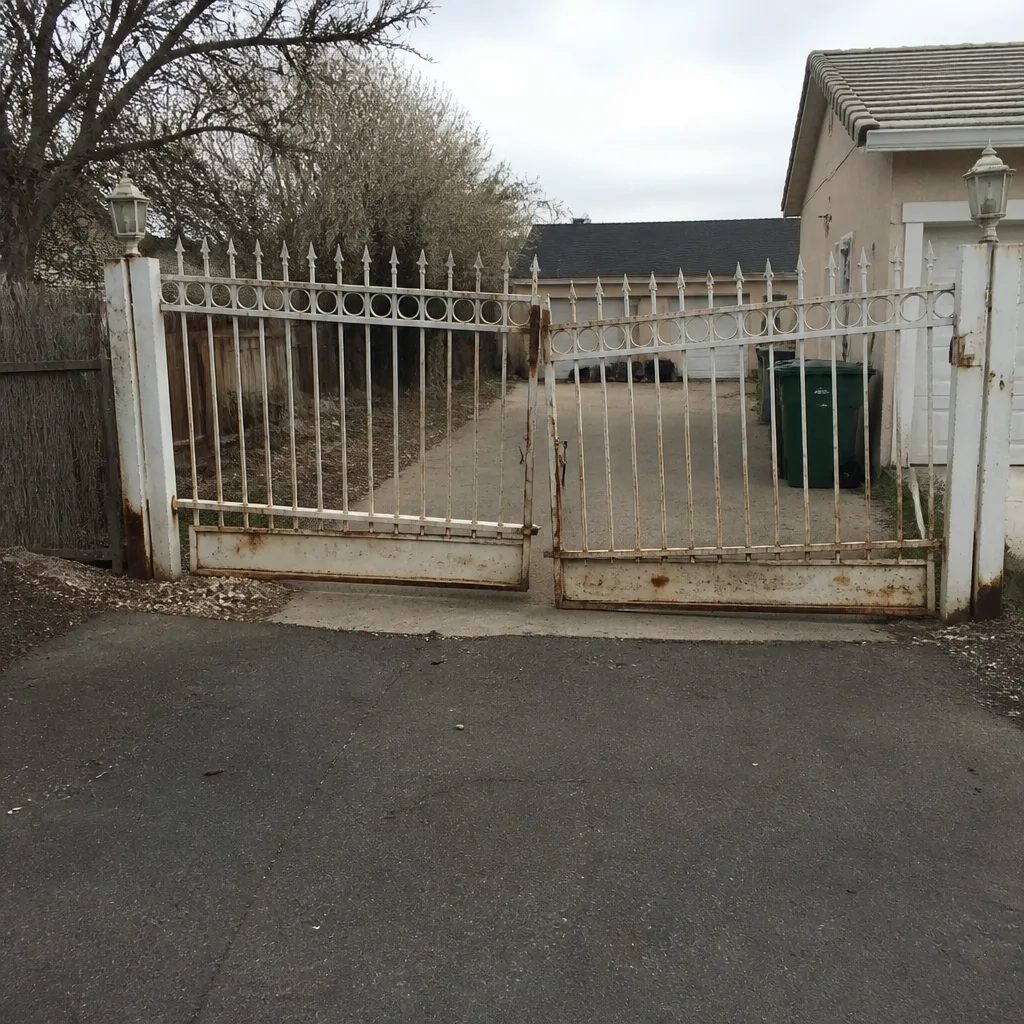 Before
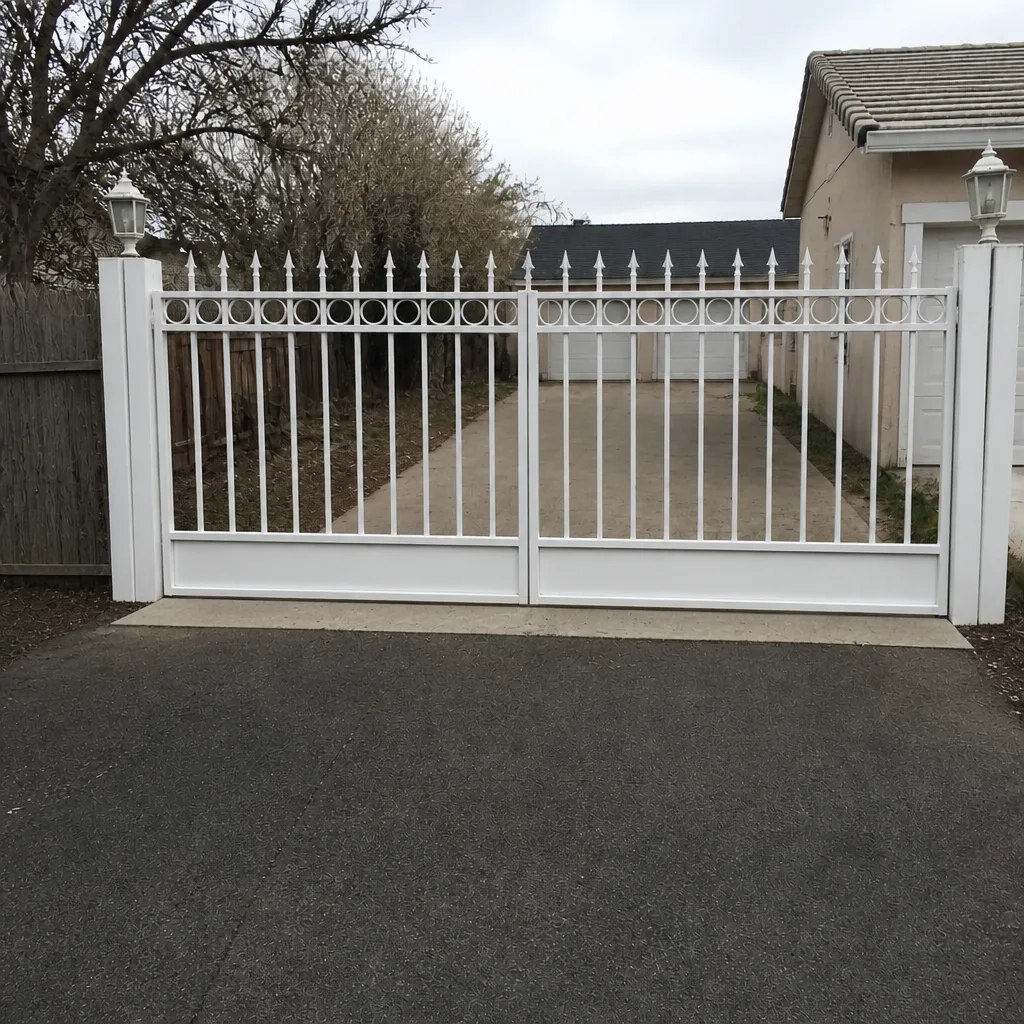 After
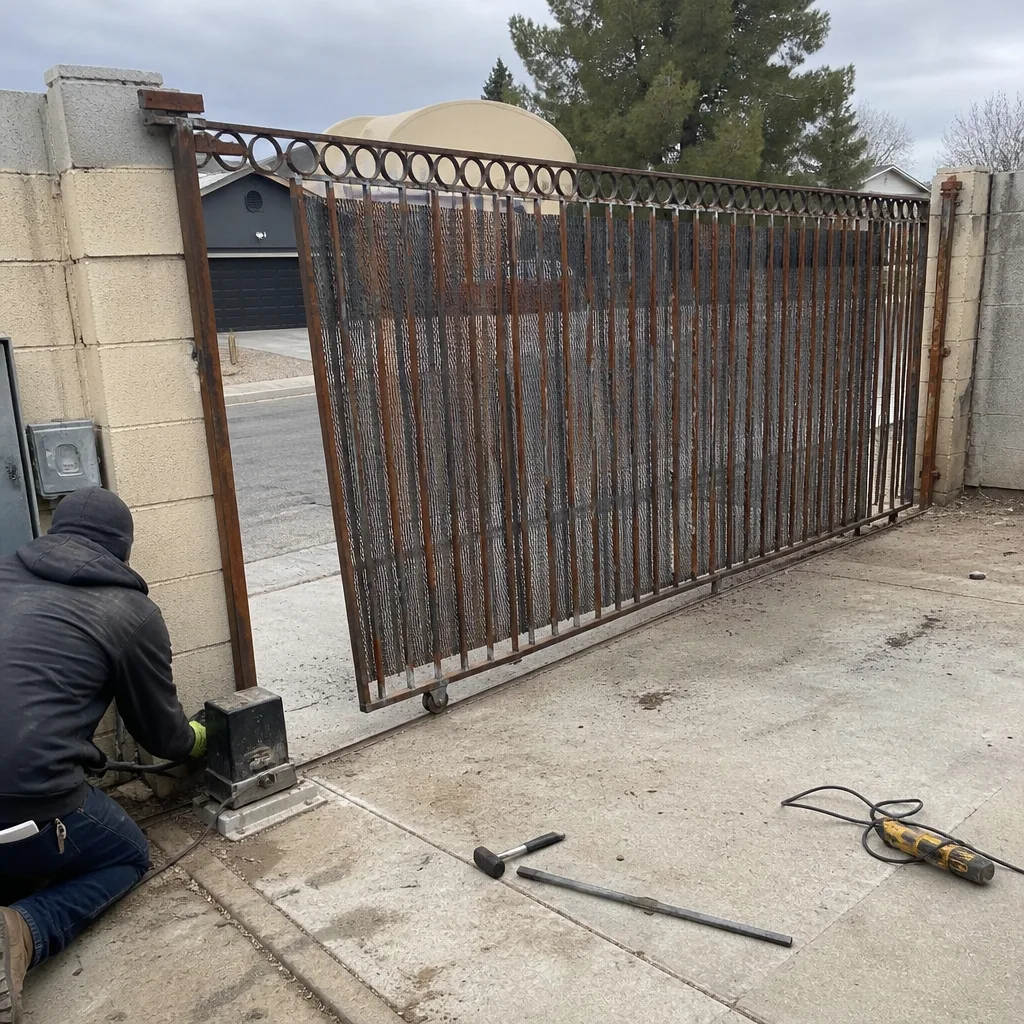 Before
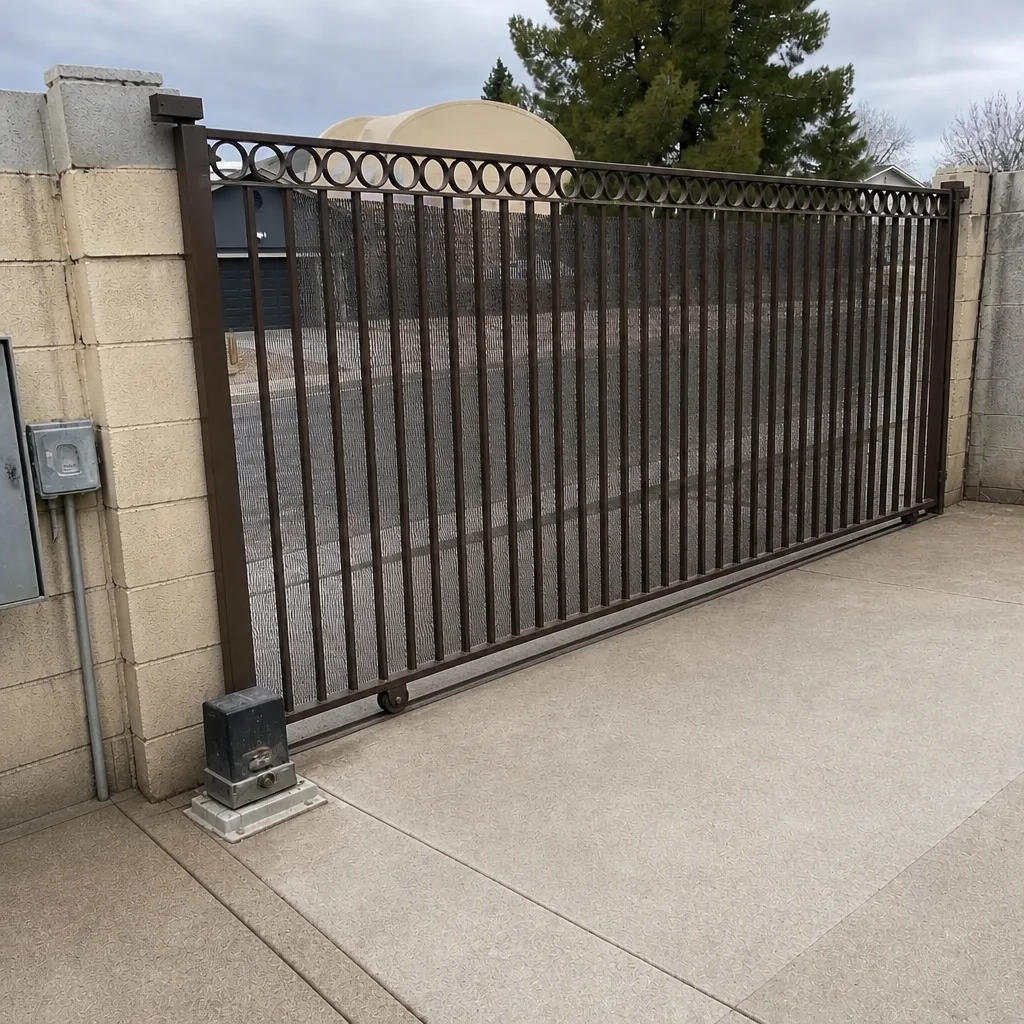 After
When to Call a Professional
You should call us when the gate reverses for no reason, when the photo-eye no longer stops it, when the operator hums without moving, or when you see frayed wiring inside the housing. Those are the scenarios where a DIY fix can hurt someone or turn a cheap repair into a replaced motor. The high-tension parts inside an operator and the live mains wiring are not a homeowner job – a trained technician handles them with the right tools and meters, and we do. If you’re not sure whether your situation qualifies, describe what you’re seeing. Vance Gate Repair Whitney offers free estimates in Whitney – call (844) 797-4861 and a live person answers any hour, day or night. If you’re considering a full replacement instead of a repair, our gate installation in Whitney page covers the schedule, and if a motor is the issue, that falls to gate motor & opener in Whitney.
Frequently Asked Questions
Most gate repair visits in Whitney run between $150 and $450, depending on the part and the labor. A limit-switch reset sits at the low end; a motor or control-board replacement sits higher. You get the flat price in writing before any work starts, and if it’s not right within a year, we make it right at no extra cost. Call (844) 797-4861 for an exact quote – estimates are free.
Yes. A gate that won’t close or reverses on close is usually a safety issue, and we treat it as a same-day call. A live person answers the phone 24 hours a day. Call (844) 797-4861 and describe when it happens and what you hear, and we’ll get a technician out.
It’s an early warning, not an emergency. A pause before movement usually means the operator is drawing more current and the cause is a failing capacitor, a strained arm, or a drifting limit switch. Left alone, it damages the motor. It’s cheaper to fix at the pause stage than after the motor burns out.
A full installation covers the gate, the operator, the safety edges and photo-eye, and the power run to a dedicated circuit. Every installation is measured on site, and you get a written, itemized price before any work is scheduled. We don’t promise same-day service on installations – the work is measured, ordered, and scheduled. Call (844) 797-4861 for a free measure and a written price.
Yes. On both repairs and new installs, we handle the low-voltage wiring to the safety edges and photo-eyes and coordinate the 120V power run to the operator. Every safety device is tested on site and photographed before we leave. If you’re not sure what your gate needs, call (844) 797-4861.
If you’ve got a written estimate from another gate company, bring it to us and we’ll review it at no cost – the scope, the line items, and whether the diagnosis matches the symptoms you’ve described. You don’t have to sign anything, and the written price we give you is good after the review. Call (844) 797-4861 to set it up.
The Bottom Line
Gate failure almost never arrives without warning. It arrives as a pause, a grind, a flicker, a gate that works “most of the time” but not every time. The five sounds, the sixty-second visual check, and the safety-versus-cost distinction in this guide give you enough to know when to watch and when to call. When you do call, describe what you’re seeing with the precision that gets the right parts to the driveway on the first visit. And ask for the written price before any tool comes out – it’s the single habit that protects you from paying twice. Our technicians in Whitney have up to 12 years of experience, and every visit leaves a photo record and a written price behind.
Written by the team at Vance Gate Repair Whitney.
Call (844) 797-4861 for a free estimate in Whitney. A live person answers 24/7, and the written price is in your hands before any work begins. You can also start with our gate repair page or read about our installation service for full replacements.