
Last updated November 18, 2026
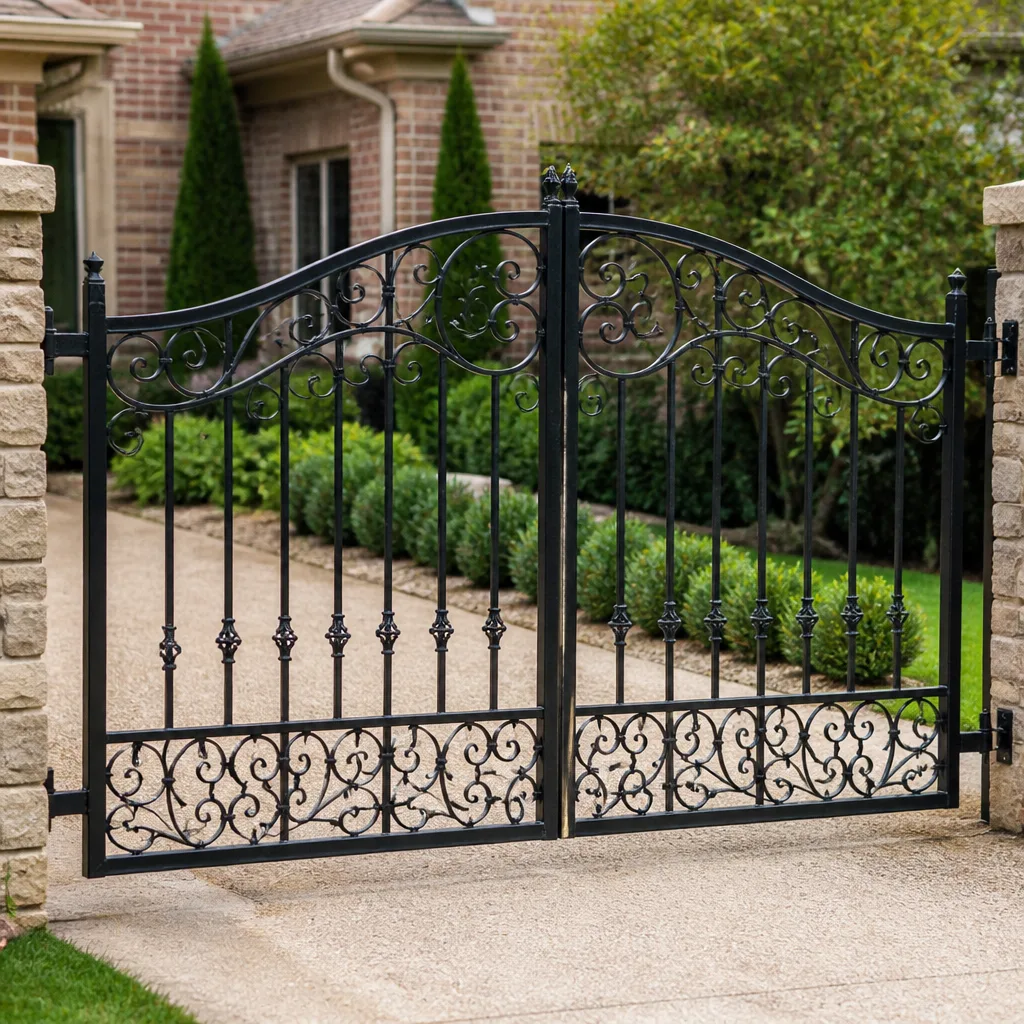 Wrought iron
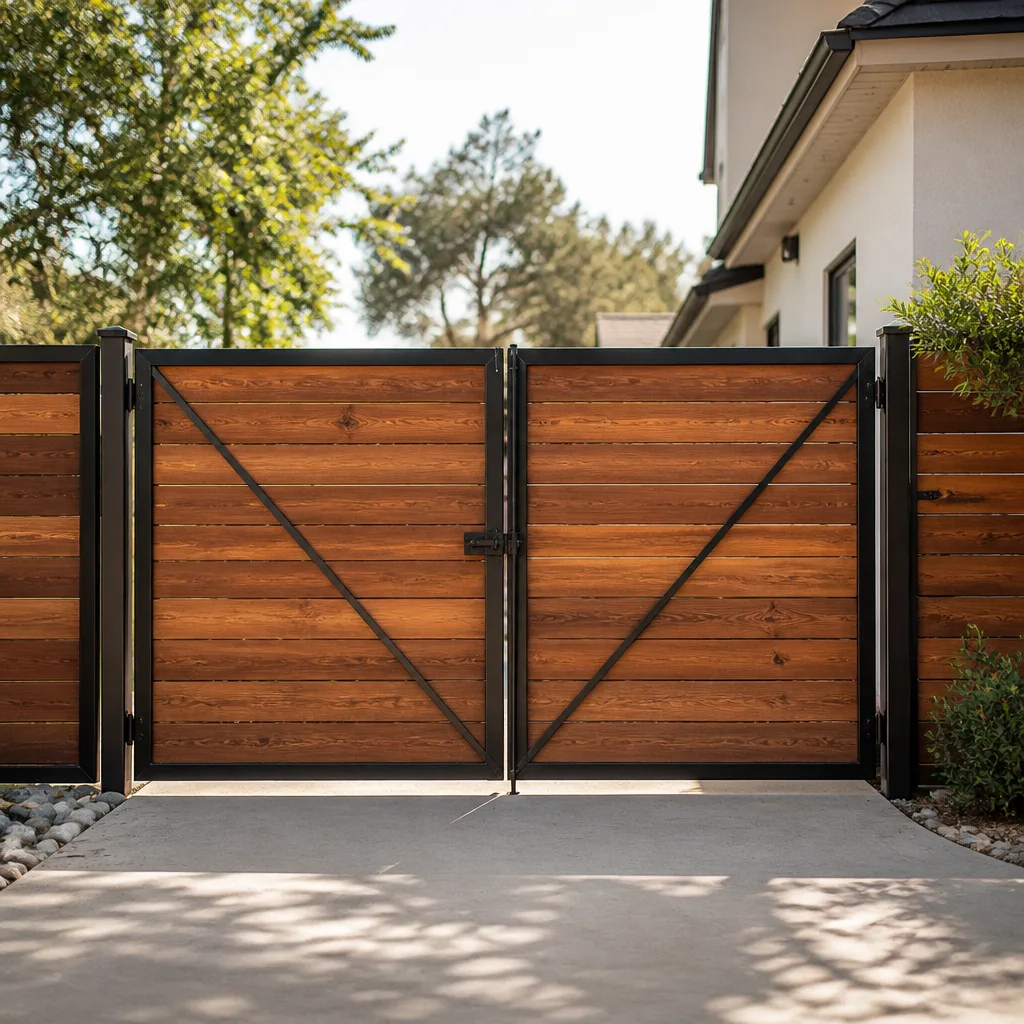 Wood & steel frame
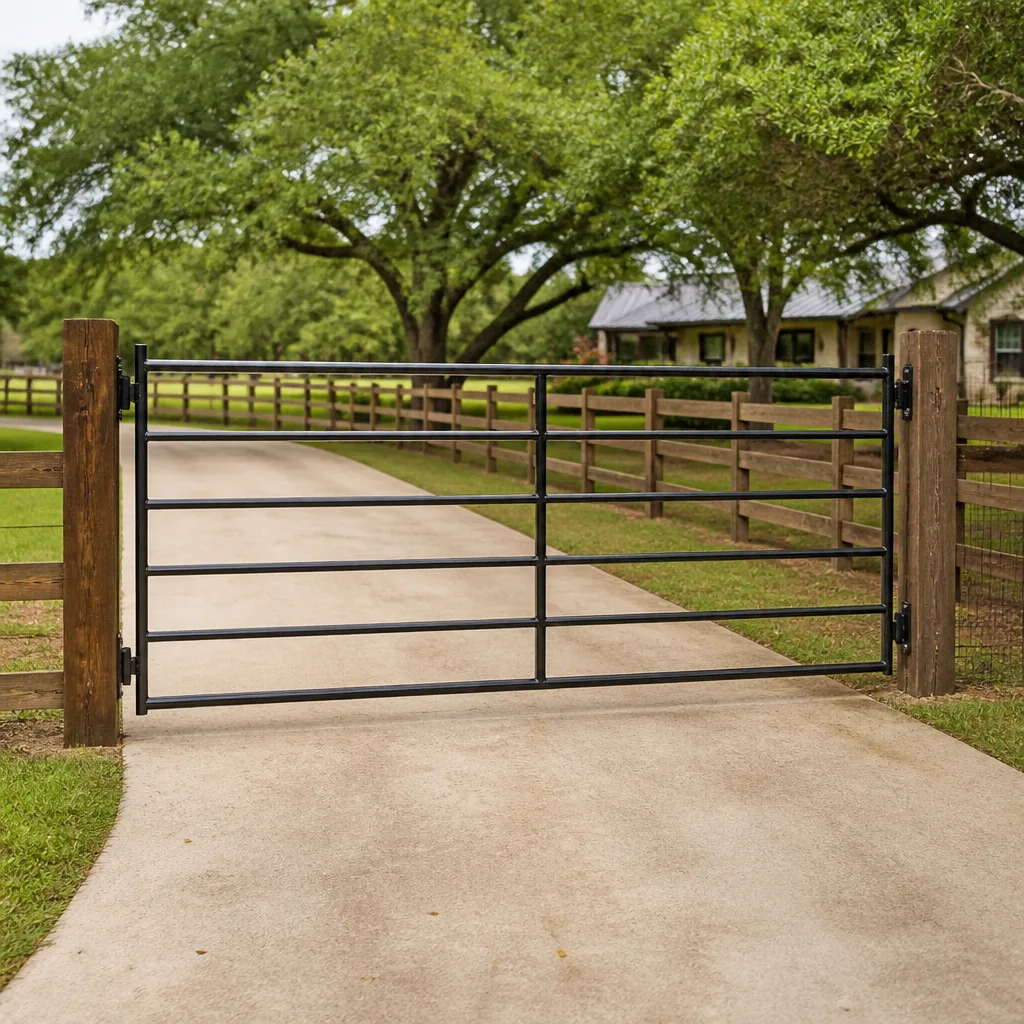 Farm & ranch
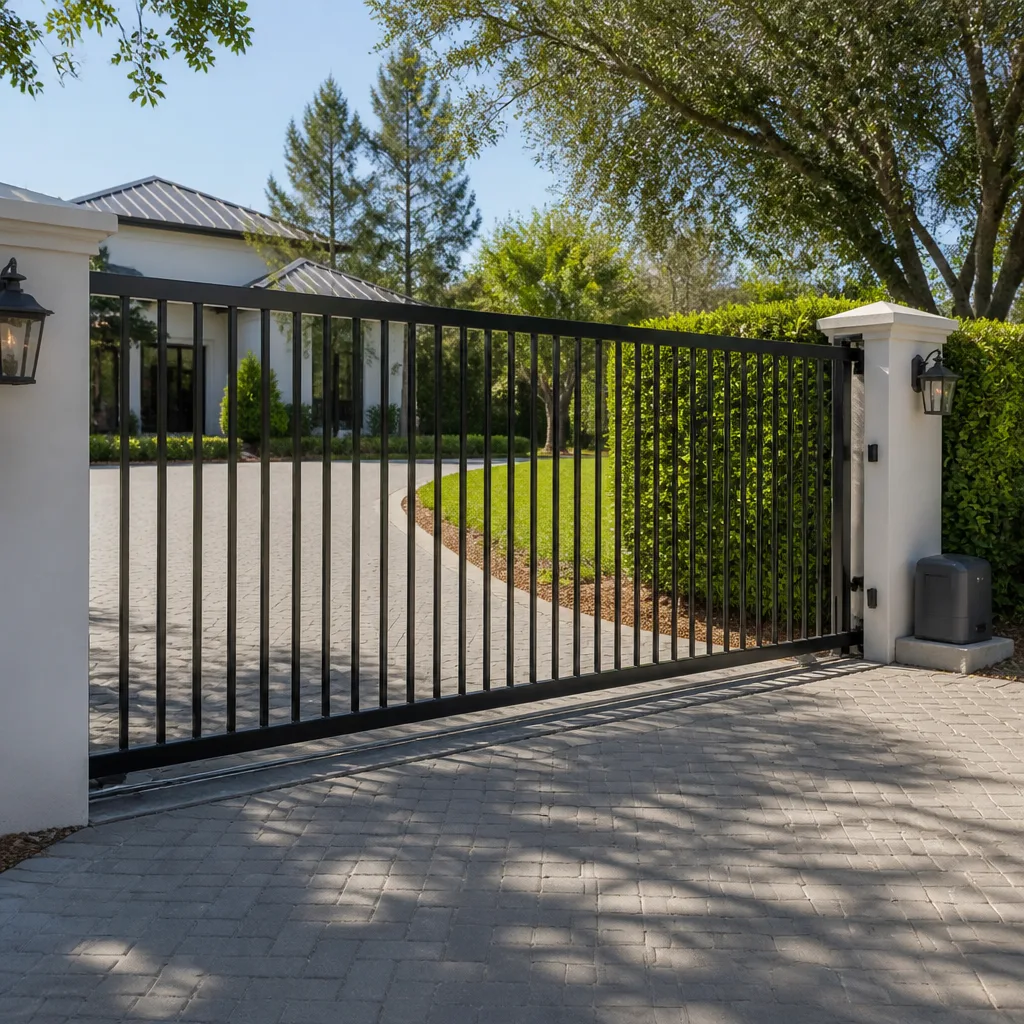 Sliding driveway gates
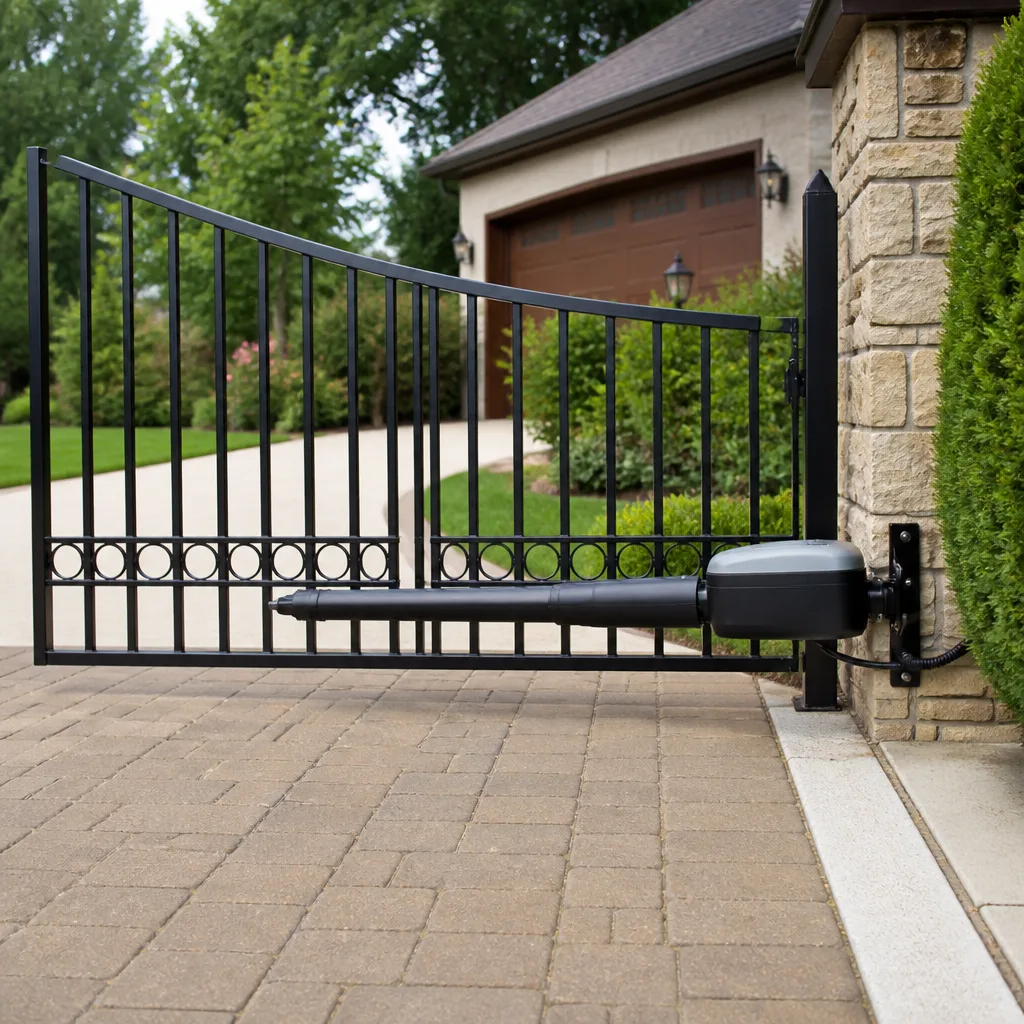 LiftMaster operators
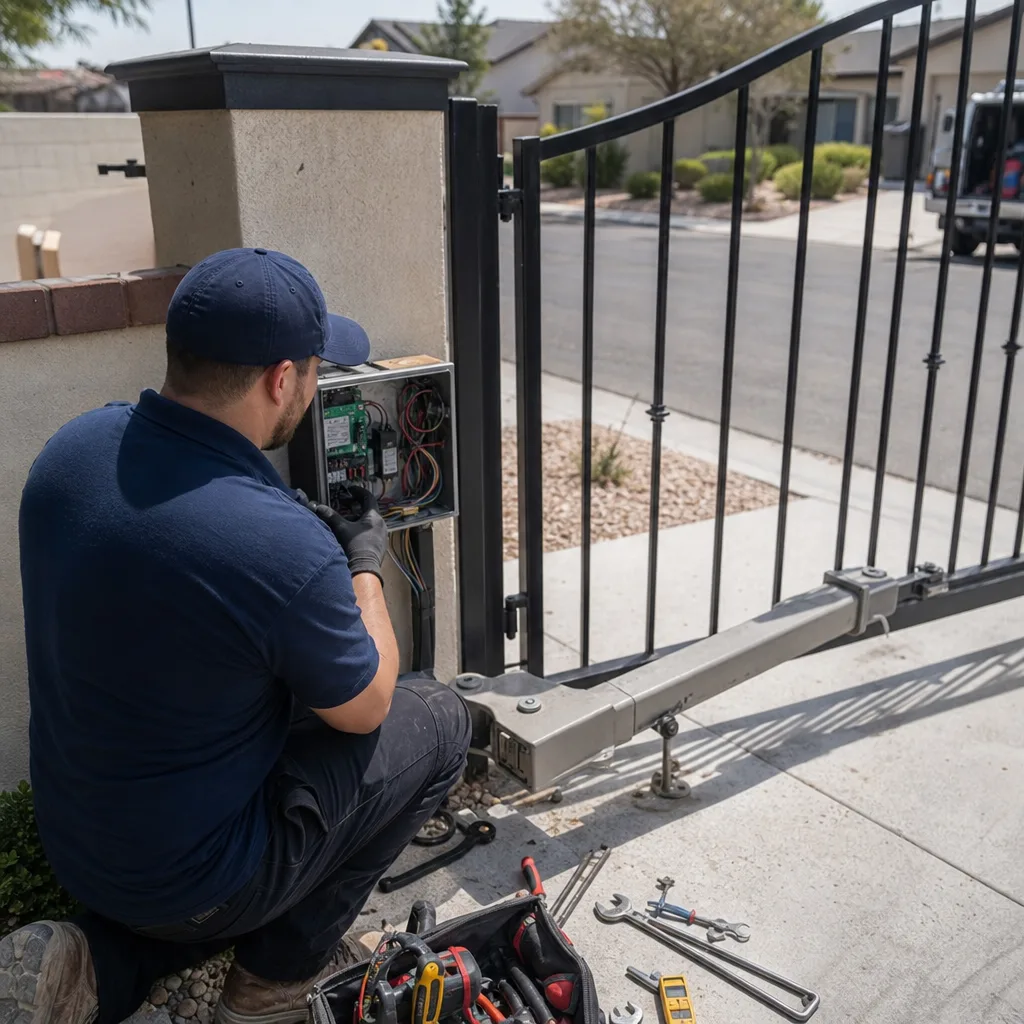
Free on-site gate assessment - hinges, posts, and your LiftMaster or Nice gate operator checked before anything is quoted
The assessment is free and the quote is the invoice.
Get your free estimateGate Motor & Opener Warning Signs Every Homeowner Should Know
A gate motor that grinds is already failing. The warning sign worth acting on came three months earlier, when the gate that used to open in 14 seconds started taking 18 and nobody noticed. In our experience servicing automated driveways around Whitney, the expensive failures almost never arrive without warning. They arrive without an audience. This guide separates the signs that announce themselves from the silent ones that only show up in the data, explains what each sound and fault code actually means, and shows you how to build a simple baseline so you catch the second category early. Most of it you can check yourself in ten minutes.
Quick Answer
The most valuable gate motor warning signs are the quiet ones: a cycle time that creeps up, an amp draw that climbs, a backup battery that holds less charge each month, and limit positions that drift. Noises, smells, and fault lights matter, but they usually appear after a problem is already established. Catch the metric-based signs and you’ll spend far less on repairs.
Styles & brands we work with
- Wrought iron
- Wood & steel frame
- Farm & ranch
- Sliding driveway gates
- LiftMaster operators
Table of Contents
- The Two Kinds of Warning Signs (And Why One Matters More)
- What Each Sound Tells You About the Failure
- How to Build a Baseline for Your Gate
- The Fault Code Homeowners Ignore Most
- Battery Backup and Power Signs
- The Documentation Warning Sign
- Brand-Specific Quirks Worth Knowing
- Common Mistakes to Avoid
 Before
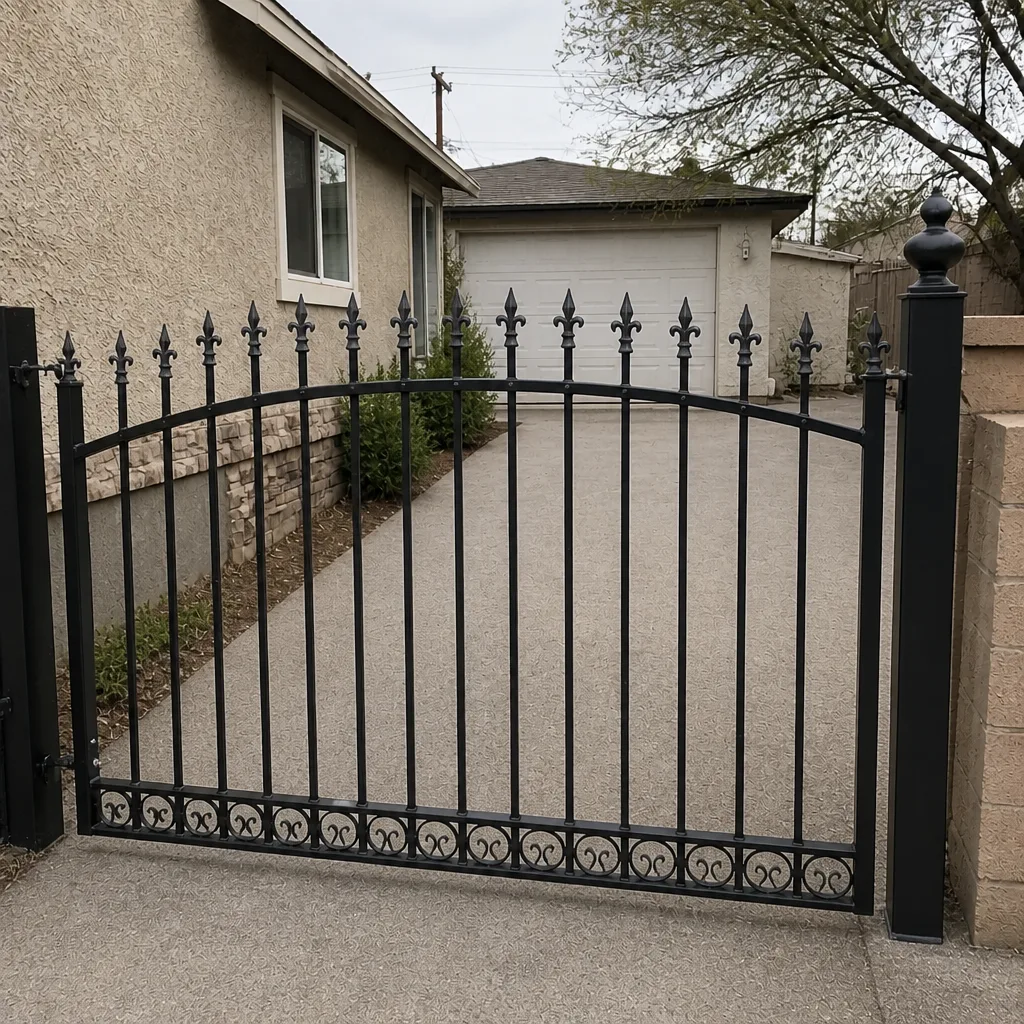 After
The Two Kinds of Warning Signs (And Why One Matters More)
Gate motor problems fall into two groups, and homeowners tend to watch the wrong one.
Symptomatic warnings are the ones your senses pick up: grinding, squealing, a burning smell, sparking at the control box, a fault light blinking in a pattern you don’t recognize. They’re obvious. They’re also late. By the time a gate motor grinds loudly enough for you to notice from the kitchen, the damage has usually been building for weeks or months.
Metric-based warnings are the ones that live in numbers. Cycle time. Amp draw. Battery runtime under load. Limit-switch position. None of these announce themselves. You have to look, and you have to have something to compare against.
We’ve seen this pattern repeat across Whitney driveways, especially on the larger swing gates common in the hillside neighborhoods where wind load adds real resistance to every cycle. A motor fighting consistent wind stress will show rising amp draw long before it starts making noise. The homeowner who tracks that number replaces a $60 part. The homeowner who waits replaces a $500 motor.
If you only remember one thing from this guide: a gate that works but works harder is telling you something. That’s the sign worth acting on.
What Each Sound Tells You About the Failure
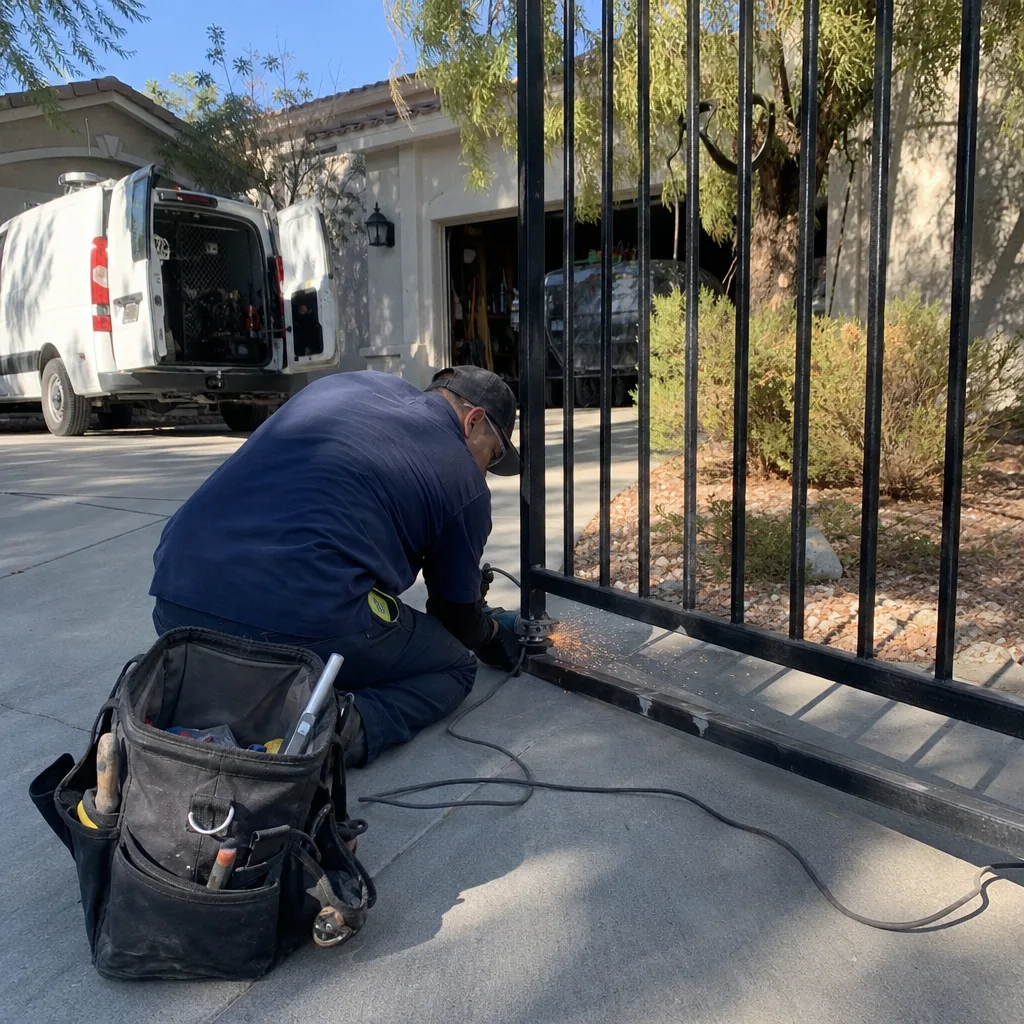
Every noise maps to a specific mechanical fault. Here’s the translation, drawn from thousands of service calls:
- Grinding – rack or gear wear. On a sliding gate, this usually means the drive gear is chewing into a worn rack section. On a swing gate, it’s often the gearbox itself or a failing worm drive. Not something to run “until it stops.”
- Clicking that repeats without the gate moving – a failing capacitor on a single-phase motor, or a starter relay that’s cycling without latching. The motor is trying to start and can’t.
- High-pitched whine that rises with speed – bearing wear. Often the first bearing to go is on the output shaft, and it tends to fail faster in dusty conditions.
- Intermittent hum with no movement – thermal overload tripping, or a stuck contactor holding current without engagement. The motor is drawing locked-rotor current and getting hot fast. Stop cycling the gate and call someone.
- Loud clunk at the end of travel – limit switch set too far, or a mechanical stop that’s been struck repeatedly and is now cracked or loose.
- Squealing on the track or rollers – lubrication failure, or rollers that have flat-spotted. Cheap fix, expensive if ignored because it loads the motor.
If you hear any of these, note where in the cycle it happens and how long it’s been going on. That information is worth real money when you talk to a technician, because it points straight at the subsystem to inspect.
How to Build a Baseline for Your Gate
You can’t spot drift without a starting point. Building your baseline takes ten minutes once, and three minutes per quarter afterward. Here’s the process:
- Time a full cycle on a cool morning. Use your phone’s stopwatch. Time from the moment the gate begins to move until it fully latches, then time the close. Write both numbers down with the date.
- Measure battery voltage under load. With a multimeter on the battery terminals, trigger the gate and watch the reading as the motor runs. Compare that number to a resting reading taken the day before. A big drop under load means the battery is weakening.
- Record the limit positions. On most control boards, there’s a diagnostic readout showing how far the gate has travelled during each cycle (in counts). Photograph that reading. It should be nearly identical every cycle. If it’s drifting, something in the drive train is slipping.
- Note any fault codes at the board. Not just the ones that stop the gate. All of them.
- Repeat quarterly. Same cool morning, same conditions, same method.
That’s it. A cheap notebook or a photo album on your phone does the job. Our technicians do exactly this on commercial sites, and it’s the habit we carried into residential work: “what we found, what we set, what we installed,” photographed and left with you. Under the Haven Standard, that photo record is included on every visit at no additional charge. If you’d rather have the baseline done for you the first time, our gate motor and opener service in Whitney covers exactly this kind of diagnostic.
The Fault Code Homeowners Ignore Most
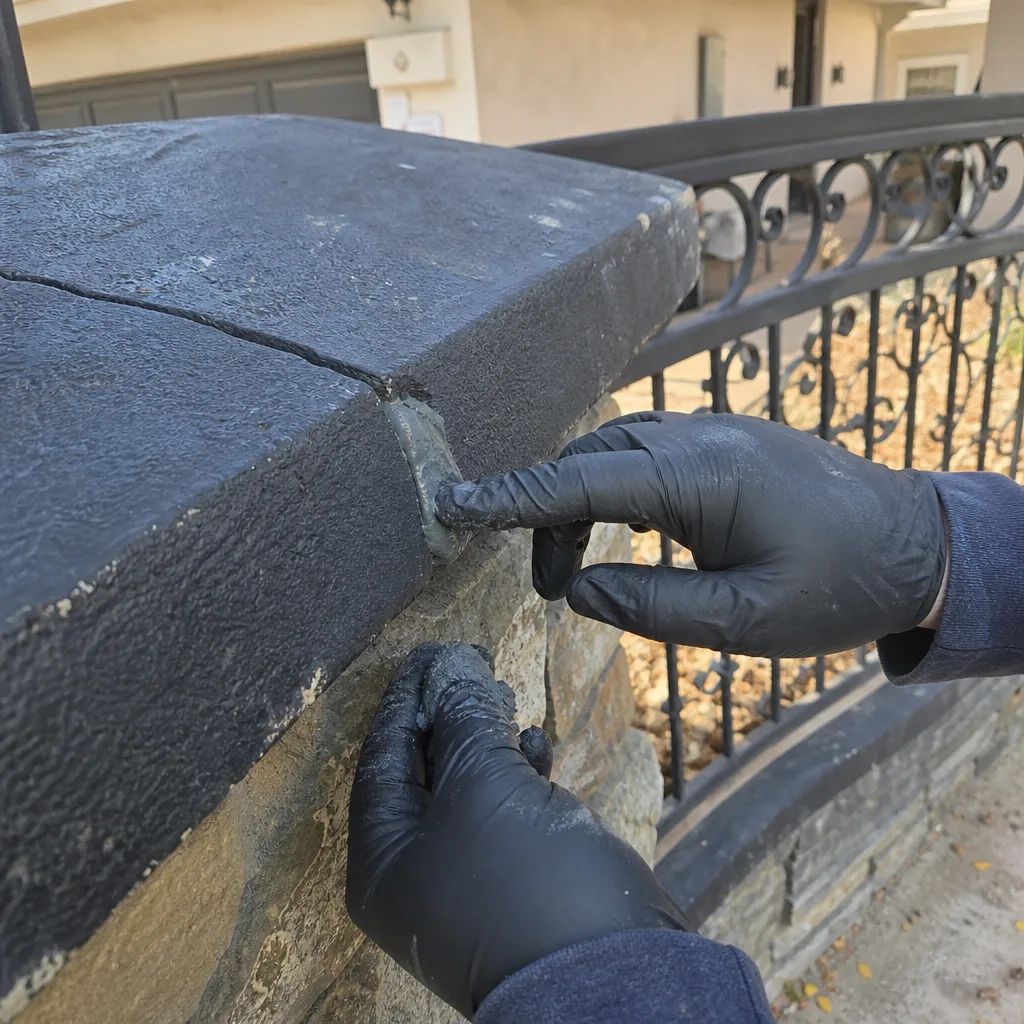
“Obstacle detected” on a gate with no obstacle in its path. This one shows up constantly, and it almost never means what homeowners think it means.
Here’s what’s actually happening. Your control board monitors current draw each time the gate moves. When the motor pulls more current than the board’s preset threshold, the board reads that spike as resistance and assumes something is blocking the gate. So it stops and reverses. It’s a safety feature doing its job.
The question is why the motor is drawing more current. The common answers, roughly in order of frequency:
- Worn rollers, wheels, or track causing mechanical drag
- A failing motor winding or capacitor producing less torque for the same voltage
- A misaligned photo-eye (the infrared beam that stops the gate if something crosses the path) causing a false trigger that the board reads as an obstacle event
- A loose or corroded ground connection adding resistance to the circuit
- A control board threshold that has drifted or was set too tight from the start
See the pattern? Only one of those is actually a sensor problem. The rest are motor health indicators. If your gate fires “obstacle detected” at the same spot in the cycle on repeated attempts, and there’s nothing in the way, you’re looking at a mechanical or electrical problem, not a misaligned sensor. Clearing the code without finding the cause just delays the failure. Our gate repair service in Whitney routinely runs an amp-draw test as a first step on these calls, because the number at the board tells us where to look before we open anything up.
Battery Backup and Power Signs
DC-powered gate operators in Whitney run on a backup battery, and that battery’s health is one of the best early indicators of overall gate condition. Here’s what to watch:
- Runtime dropping steadily. Time how many full open/close cycles your gate completes after the mains power is removed (or the breaker flipped). A healthy battery handles a measured number of cycles. If that number halves in a few months, the battery is going.
- Longer recharge times. After a power outage test, the battery should return to full charge in a predictable window. Stretching recharge times mean the battery is past its useful life.
- Gate stopping mid-travel after outages. If the gate can’t complete a full cycle on battery power, the battery isn’t holding enough reserve to close the gate safely.
- Control board low-voltage faults. Boards on LiftMaster and Elite systems in particular will throw a low-battery or charging fault before the battery fully fails. Log those.
Cold snaps matter here. Nevada mornings that dip near freezing cut lead-acid battery capacity sharply, so a battery that tests fine in July can limp in January. Measure it in the season you actually need it to work.
The Documentation Warning Sign
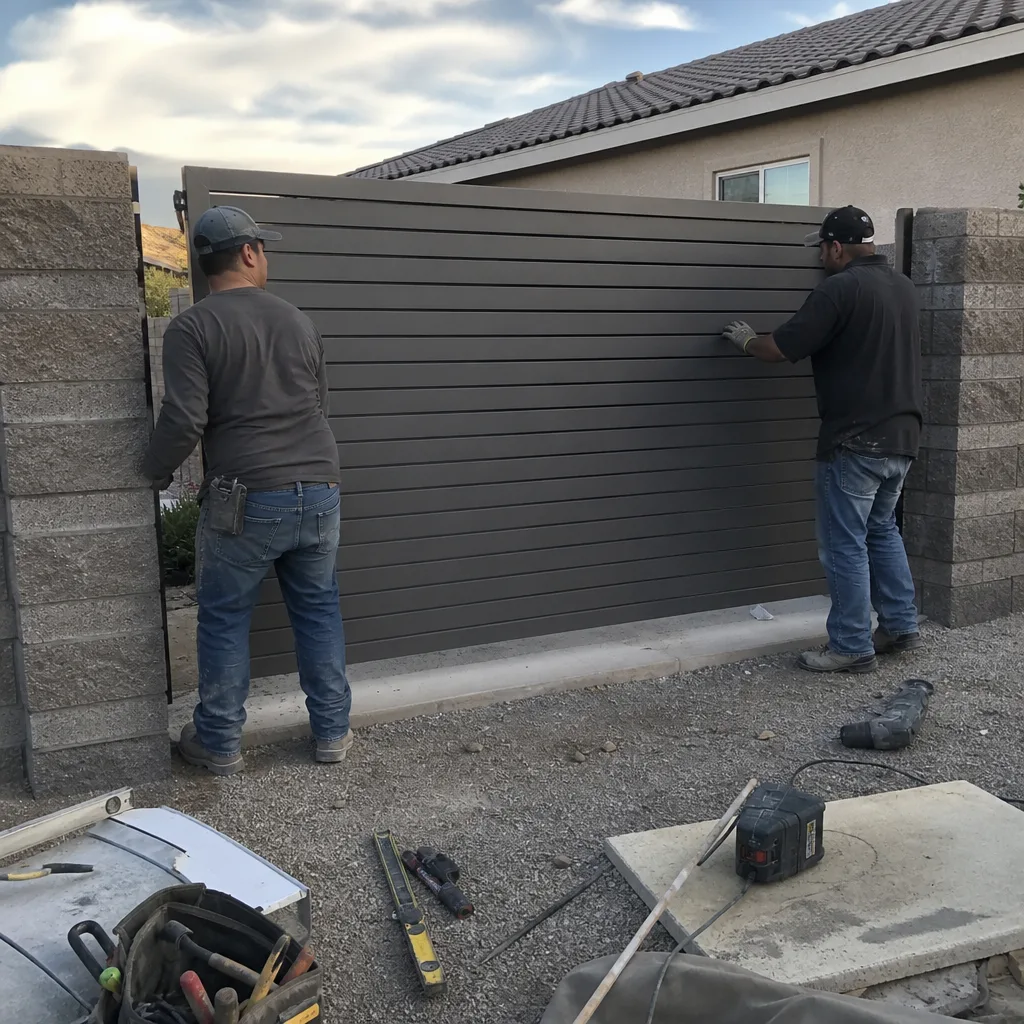
This one doesn’t show up on the motor, but it’s just as important. If you cannot find the following, you have a documentation gap that will cost you money on the next service call:
- Wiring diagram for your existing control board
- Motor serial number
- Brand and model of the operator
- Any photo record from the last technician who touched the system
Why does this matter? Because a technician arriving at an undocumented gate has to start from zero. Find the board, trace the wiring, identify the motor, measure limits without a reference. That discovery time is billed as labor, and it grows the more non-standard the original install was. On a documented gate, the same technician starts with a wiring diagram in hand and a photo record of the last baseline, and goes straight to the fault. The job costs less and it goes faster.
We see this gap constantly on gates installed by homeowners or by companies that left behind a handshake instead of paperwork. Filling it takes about twenty minutes if you have photos from a previous visit. If you don’t, our team can build it from scratch: full wiring diagram, photographed limit readings, serial numbers on file. That record gets handed to you and filed in the job record. It’s the reason we service nine major automation brands, from DoorKing to Mighty Mule, without steering you toward a replacement you don’t need.
Brand-Specific Quirks Worth Knowing
Every automation brand has its own characteristic failure modes. A few to keep in mind:
- LiftMaster residential operators tend to show control board capacitor failures as intermittent stalling rather than outright refusal. The gate will run fine for a week, then fail twice in one day, then run fine again. That pattern alone points to the capacitor.
- DoorKing commercial-style controllers throw specific fault codes tied to limit switch faults that can look like sensor failures to a homeowner. If your DoorKing throws a limit fault after a power surge, have someone read the board before replacing sensors.
- Elite swing operators are notorious for arm bracket fatigue on heavier gates, which shows up first as cycle-time creep and later as a gate that doesn’t reach full position. The bracket is a much cheaper fix than the arm itself.
- Mighty Mule DC operators, common on lighter residential driveways, are extremely sensitive to battery condition. Half the “not working” calls we get on Mighty Mule systems are a battery that needs replacing, not a motor.
If you know your brand, you can read the signs faster. If you don’t, find the serial number plate and photograph it. Brand and model are the first things any technician needs. If you’re considering a replacement or a first-time install, our gate installation page for Whitney covers the brand selection side, and it’s worth reading before you choose a motor.
Common Mistakes to Avoid
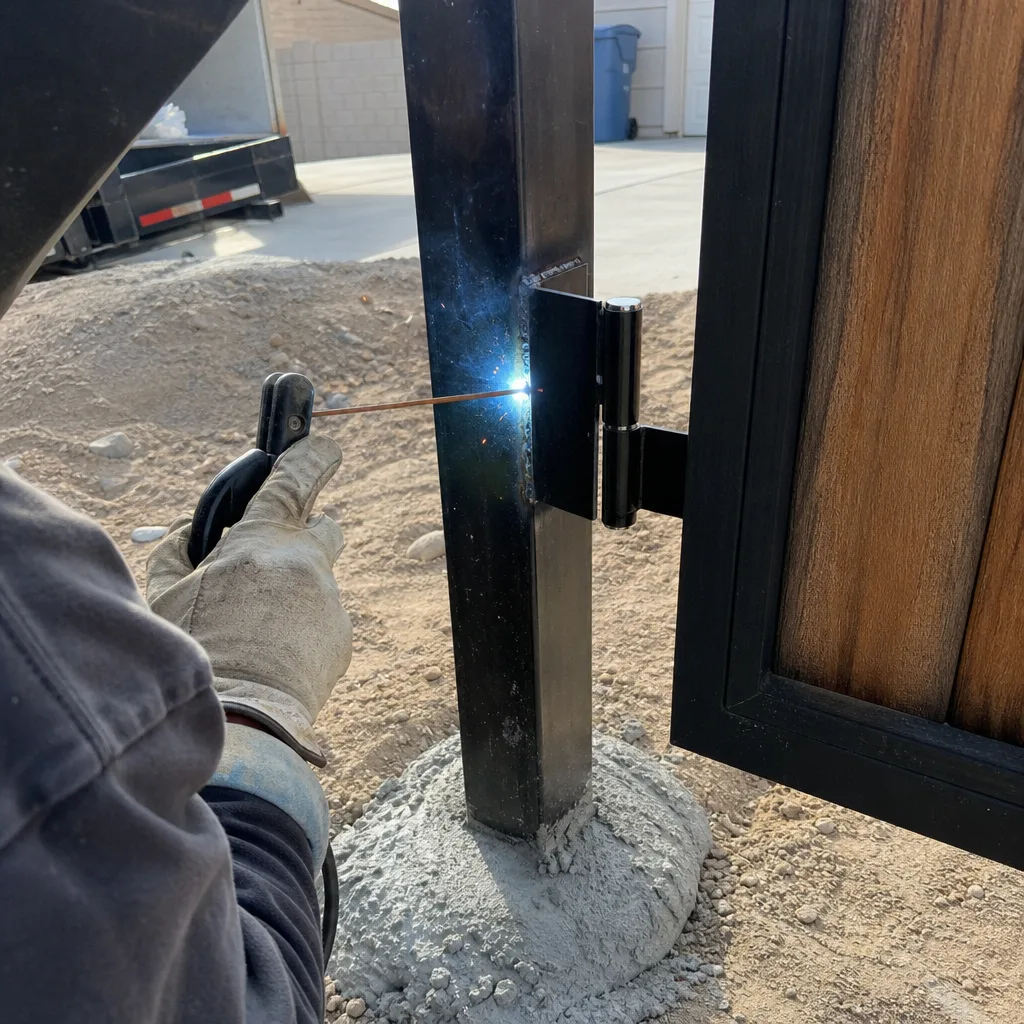
- Running the gate “until it stops.” Every cycle on a compromised motor costs a little more than the last. The part that fails completely is often ten times the price of the part that’s failing now.
- Clearing fault codes without investigating. The code exists because something tripped it. Clearing it without the amp-draw test just resets the clock.
- Setting limit switches by feel instead of by reading. Limit switches aren’t vague. They have exact positions, and eyeballing them by “when it looks right” causes the gate to slam at travel or stop short, both of which stress the drive train.
- Replacing the battery without measuring. A battery that fails measured performance has failed. A battery that hasn’t been measured might be fine. Buy the test before you buy the part.
- Ignoring wind exposure specific to Whitney hillsides. Gates installed on exposed lots face constant cyclic wind load. That’s not a repair problem, but it is an inspection and lubrication schedule problem. Recheck your baseline more often if your gate catches the wind.
- Letting a technician leave without a written record. A verbal “all set” is worth nothing on the next visit. Under the Haven Standard, our technicians leave a photographed record on every job. Insist on it from whoever you hire.
- Assuming a loud motor is the only warning. The quietest failures are the expensive ones. If you don’t have cycle times and amp readings, you don’t have early warning.
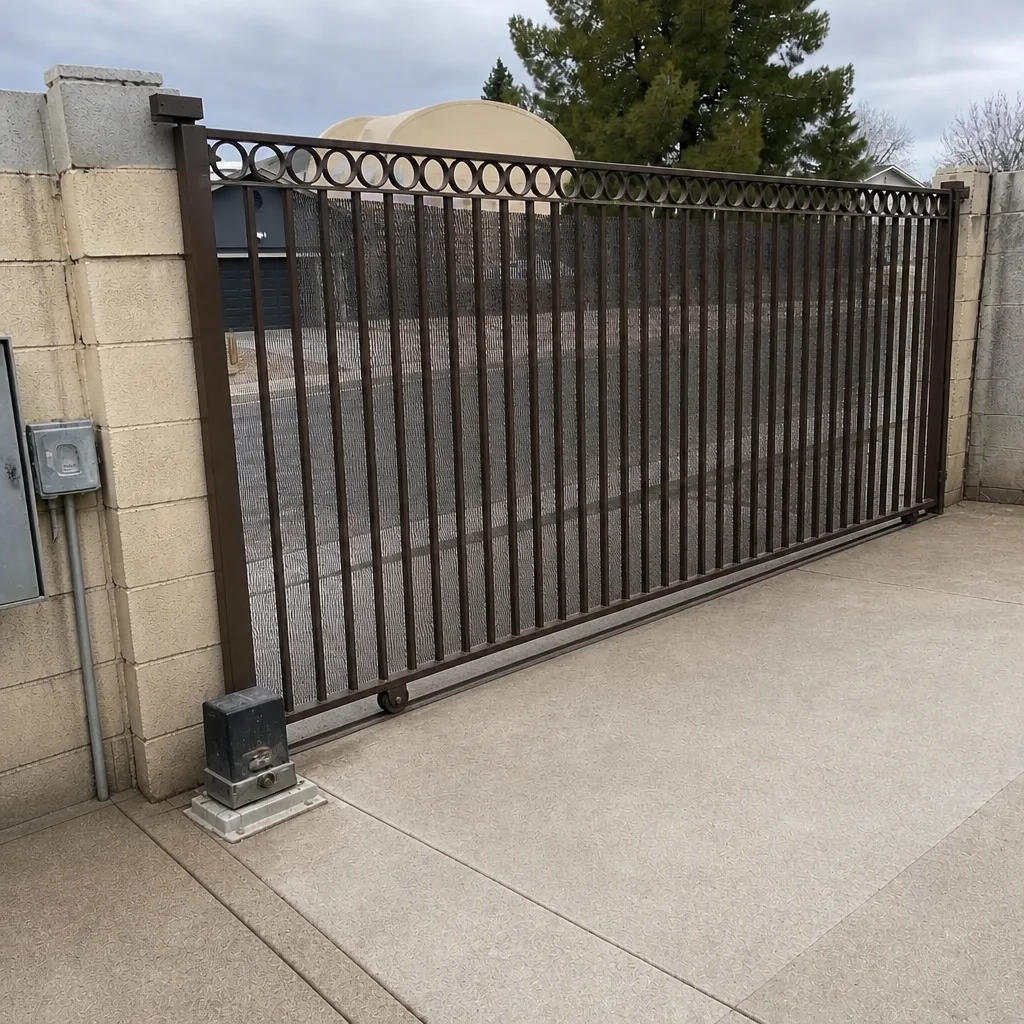
See the difference
BeforeAfter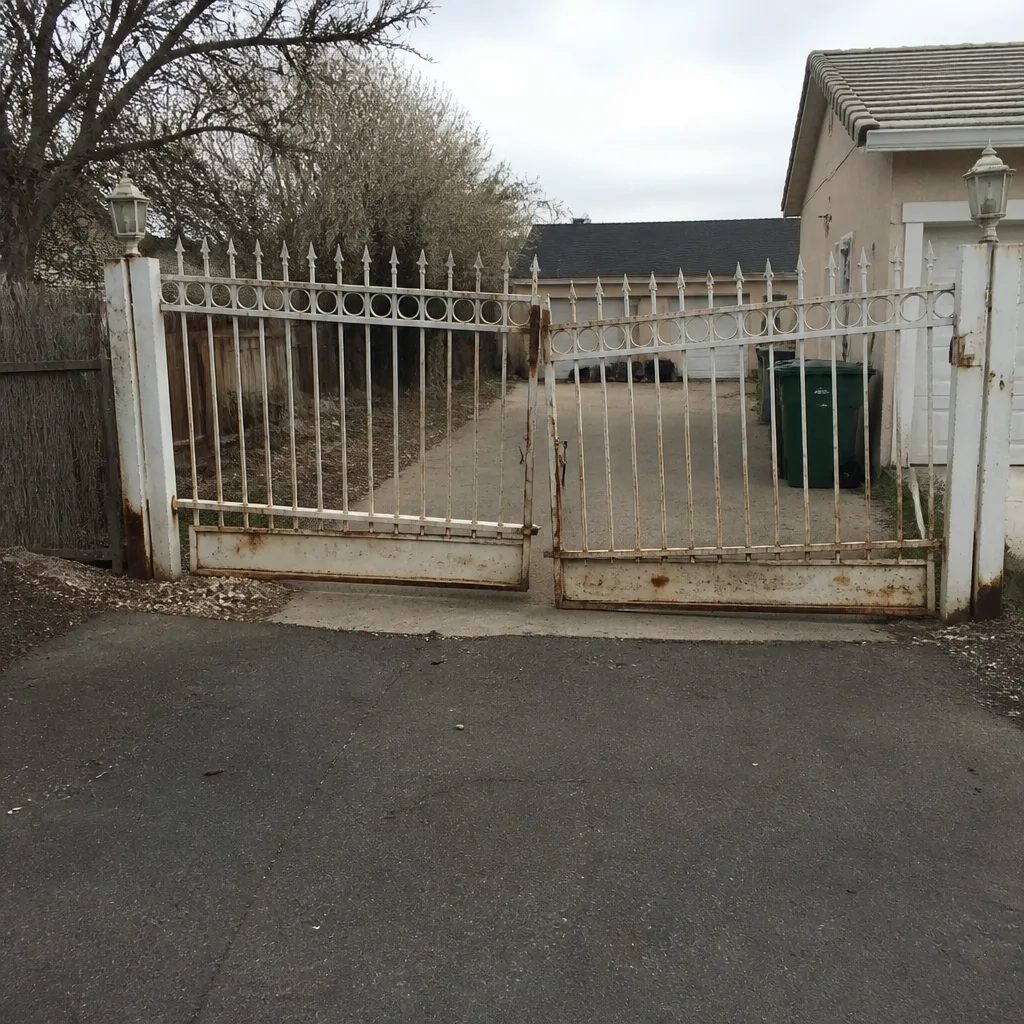 Before
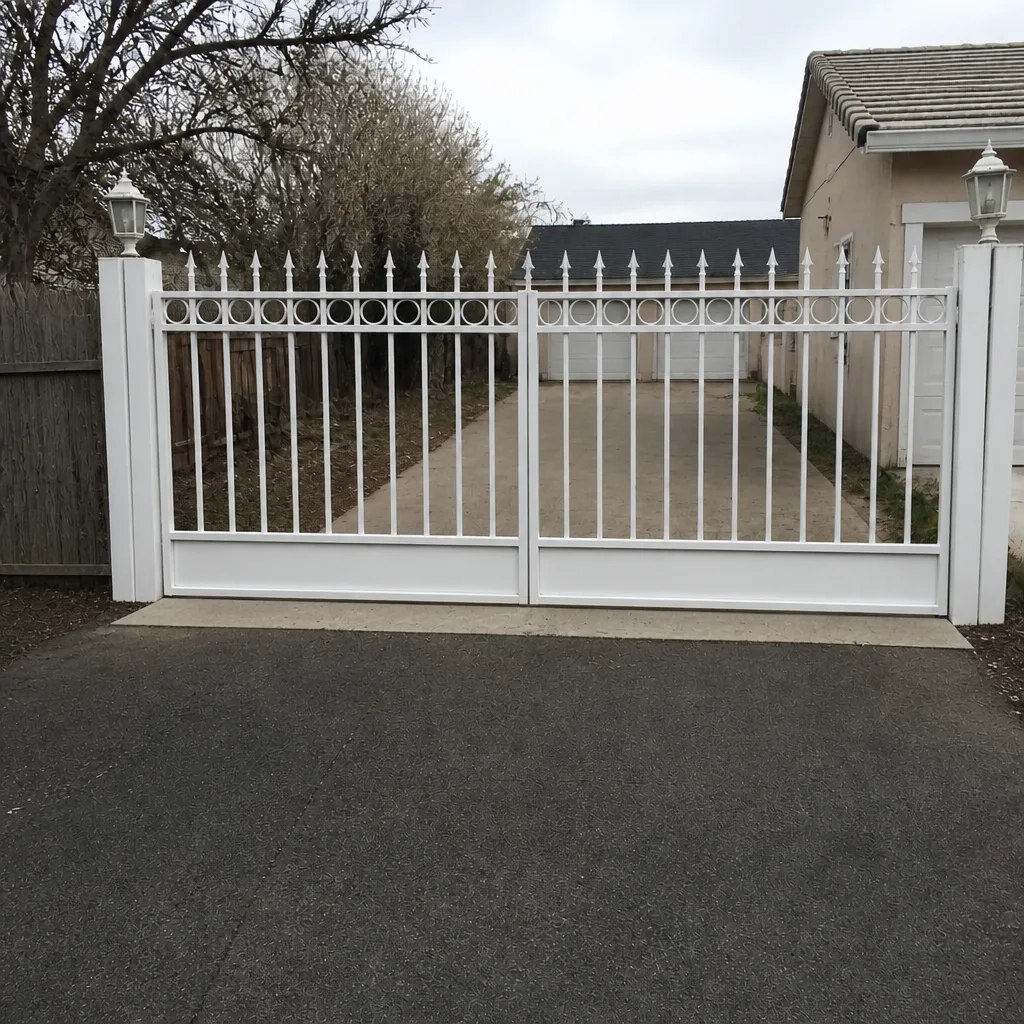 After
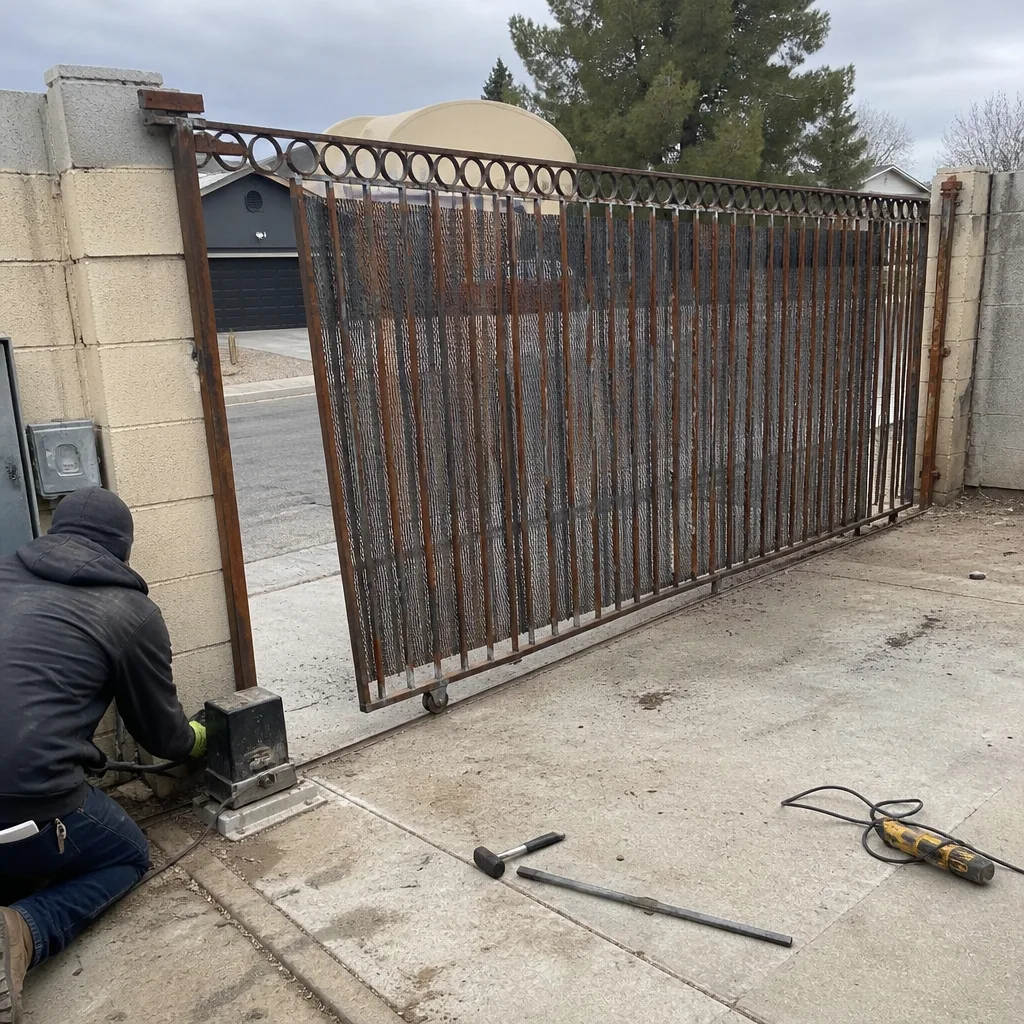 Before
 After
When to Call a Professional
Some of this guide is DIY-friendly. Some of it is not. Call a professional immediately if you see sparking at the control box, smell burning insulation, hear a motor humming without motion while the gate is supposed to be moving, or see physical damage to the motor housing, drive arm, or gearbox. High-voltage circuits and drive-train components that can release stored mechanical energy under load are not places for homeowner diagnostics. If the gate fails to reverse when you block the photo-eye (the infrared beam running across the gate path), stop using the gate entirely until it’s serviced. Our Vance Gate Repair Whitney home page covers everything we handle, and our whole team can be reached 24/7 by phone. Vance Gate Repair Whitney offers free estimates in Whitney and a free second opinion on any written estimate from another gate company, no strings attached.
Frequently Asked Questions
Rising cycle time. Time your gate on a cool morning, then time it again three months later. If a gate that opened in 14 seconds now takes 18, the drive train is adding resistance and you have time to fix the cause before it becomes a full failure. Call (844) 797-4861 for a free estimate on the diagnostic if you want a baseline done by a technician.
Usually not. That fault means the board is reading more motor current than its preset threshold, which is almost always a mechanical or motor issue (worn rollers, a weakening capacitor, a failing winding) rather than a sensor failure. A misaligned photo-eye can cause it, but that’s the less common cause. Call us for an amp-draw test before you replace any sensors.
Residential gate motors typically last 8 to 15 years on light-duty cycles, with the low end on gates that cycle dozens of times a day and the high end on gates that open a few times daily with regular lubrication. Battery backups last 3 to 5 years, capacitors often 5 to 7. If your motor is close to the end of its window and cycle time is climbing, get a documented inspection rather than waiting for a total failure. Free written estimate from our team at (844) 797-4861.
Sometimes. If your baseline hasn’t moved and the gate is quiet, you have room. If cycle time is creeping upward, amp draw under load is rising, or a fault code is repeating, you’re on a timer. The deltas are the whole point, and we’ve seen a lot of gates in Whitney fail during the first hard wind event after a season of unnoticed drift. Call us at (844) 797-4861 for a free written estimate and let the numbers decide.
Have a technician rebuild that documentation on the next visit. It takes about twenty minutes and it saves hours on every service call afterward. Any gate company that won’t put this in writing is leaving you worse off than a company that will. Our team does this under the Haven Standard on every job, and we’ll review any other company’s written estimate for free.
Almost certainly. We service nine major automation brands and don’t steer homeowners toward a replacement when a repair is the right answer. Whether your operator is a DoorKing, an Elite, a Mighty Mule, or anything else, we can read the board, find the fault, and give you a written price for the repair. Call (844) 797-4861 to schedule a free estimate.
The Bottom Line
The warning signs that matter aren’t the ones you hear. They’re the ones that show up in your baseline: cycle time, amp draw, battery runtime, limit positions. Build the baseline once, check it quarterly, and you’ll catch failing gates long before the grinding starts. Noises and fault codes matter, but they tend to arrive after the failure is already costing you money. Every repair is safer, cheaper, and faster when documented. That’s why our technicians leave a photographed record on every job under The Haven Standard: written price before work starts, a photo record before anybody leaves, and the 365-Day Done Right Promise standing behind every completed repair.
If your gate shows any of the signs in this guide, call Vance Gate Repair Whitney at (844) 797-4861 for a free estimate. A live person answers 24 hours a day, and the written price is in your hands before anyone picks up a tool.
Written by the team at Vance Gate Repair Whitney.