
Last updated November 18, 2026
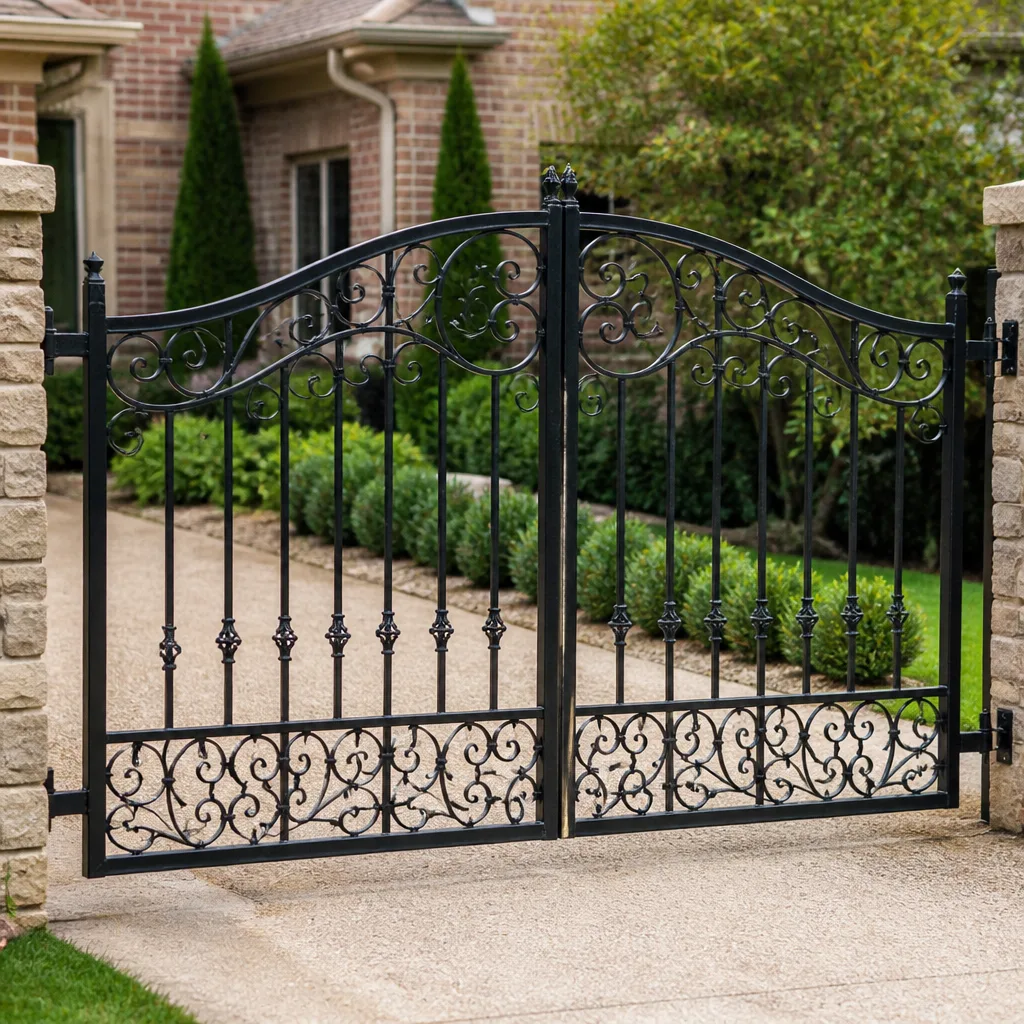 Wrought iron
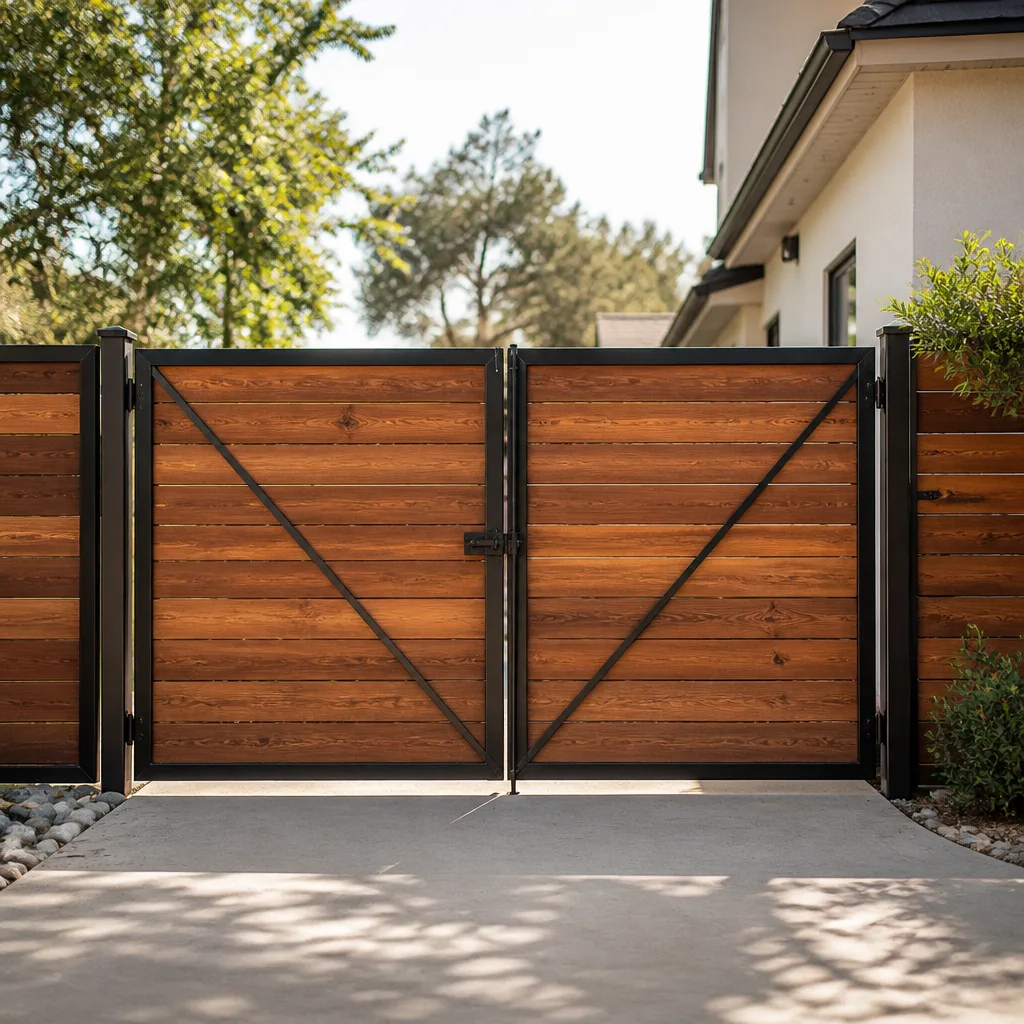 Wood & steel frame
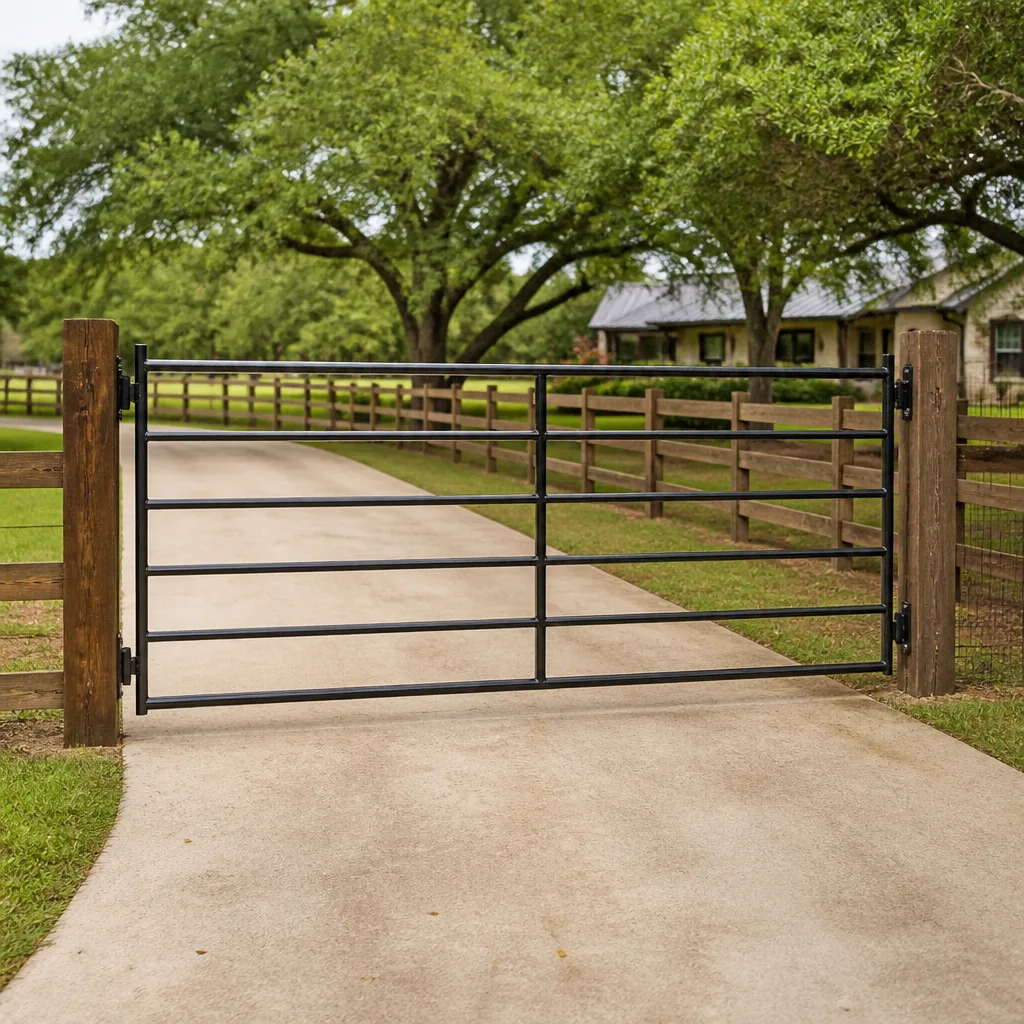 Farm & ranch
 Sliding driveway gates
 LiftMaster operators
Free on-site gate assessment - hinges, posts, and your LiftMaster or Nice gate operator checked before anything is quoted
The assessment is free and the quote is the invoice.
Get your free estimateGate Parts & Welding Maintenance Schedule: What to Do and When
Most gate maintenance schedules are built on the calendar, and that’s the first thing we’d change. Metal fatigue and corrosion move too slowly for quarterly inspections to tell you much, but a once-a-year check misses the window where a hairline weld crack at a hinge point is still a five-minute fix instead of a full separation. The correct trigger for structural gate components isn’t a month on the wall, it’s a cycle count. On a busy residential driveway, the welds at your hinge points hit their first real inspection milestone roughly every 18 months. This guide explains how to count cycles, what a proper hinge inspection involves, how to maintain each metal surface, and what to record so a future repair quote doesn’t start from zero. We do this work every day in Whitney.
Quick Answer
Inspect gate welds at hinge points every 15,000 operating cycles, which on a typical busy residential driveway works out to about every 18 months. Surface maintenance (cleaning, touch-up coating, lubrication) happens on a separate, shorter schedule – usually every 3 to 6 months depending on material and climate. Electrical and automation checks stay on their own cadence and shouldn’t be mixed into the structural schedule. Cycle count drives the structural work; material type and weather drive the surface work.
Styles & brands we work with
- Wrought iron
- Wood & steel frame
- Farm & ranch
- Sliding driveway gates
- LiftMaster operators
Table of Contents
- Why Cycle Count Beats the Calendar
- How to Estimate Your Gate’s Cycle Count
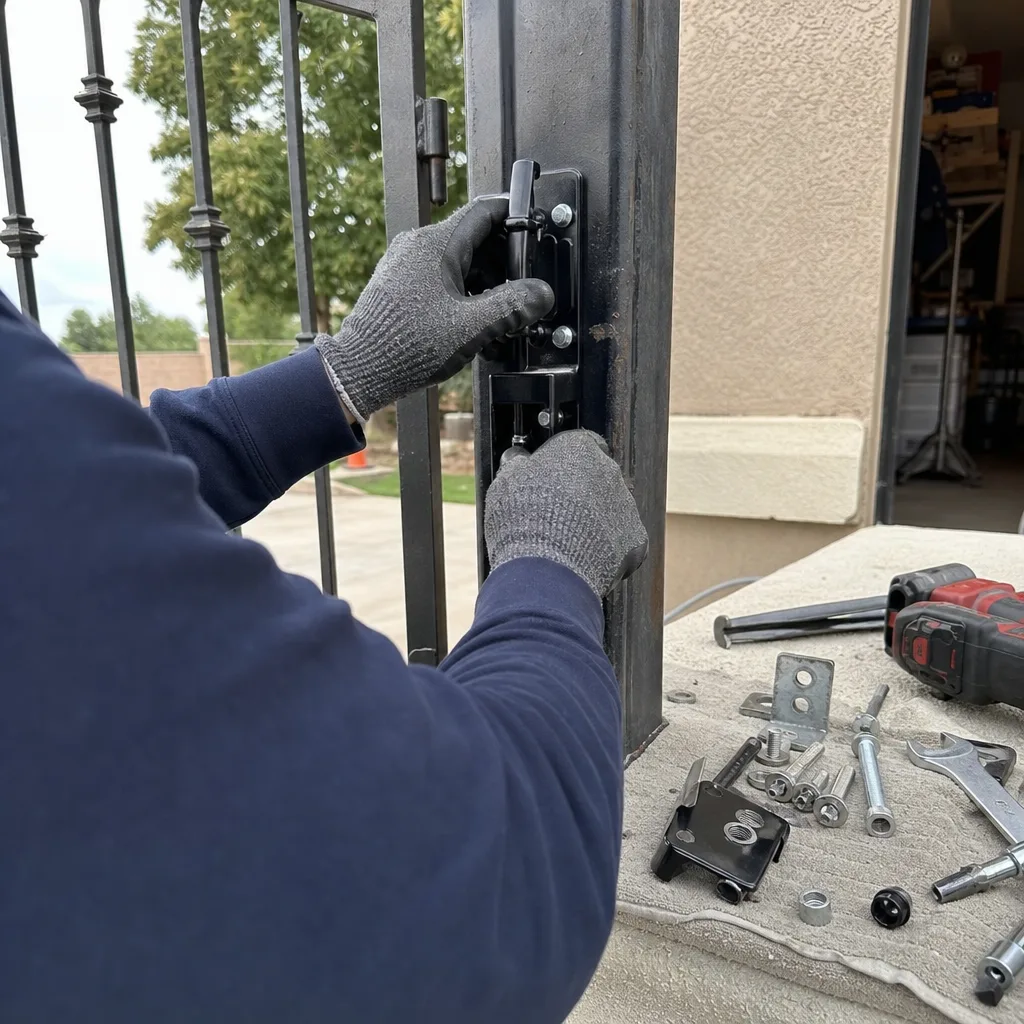
- What a Hinge-Point Inspection Actually Involves
- Surface Maintenance by Material Type
- Lubrication: When It Helps and When It Hides a Problem
- What a Structural Maintenance Record Should Capture
- The Full Schedule at a Glance
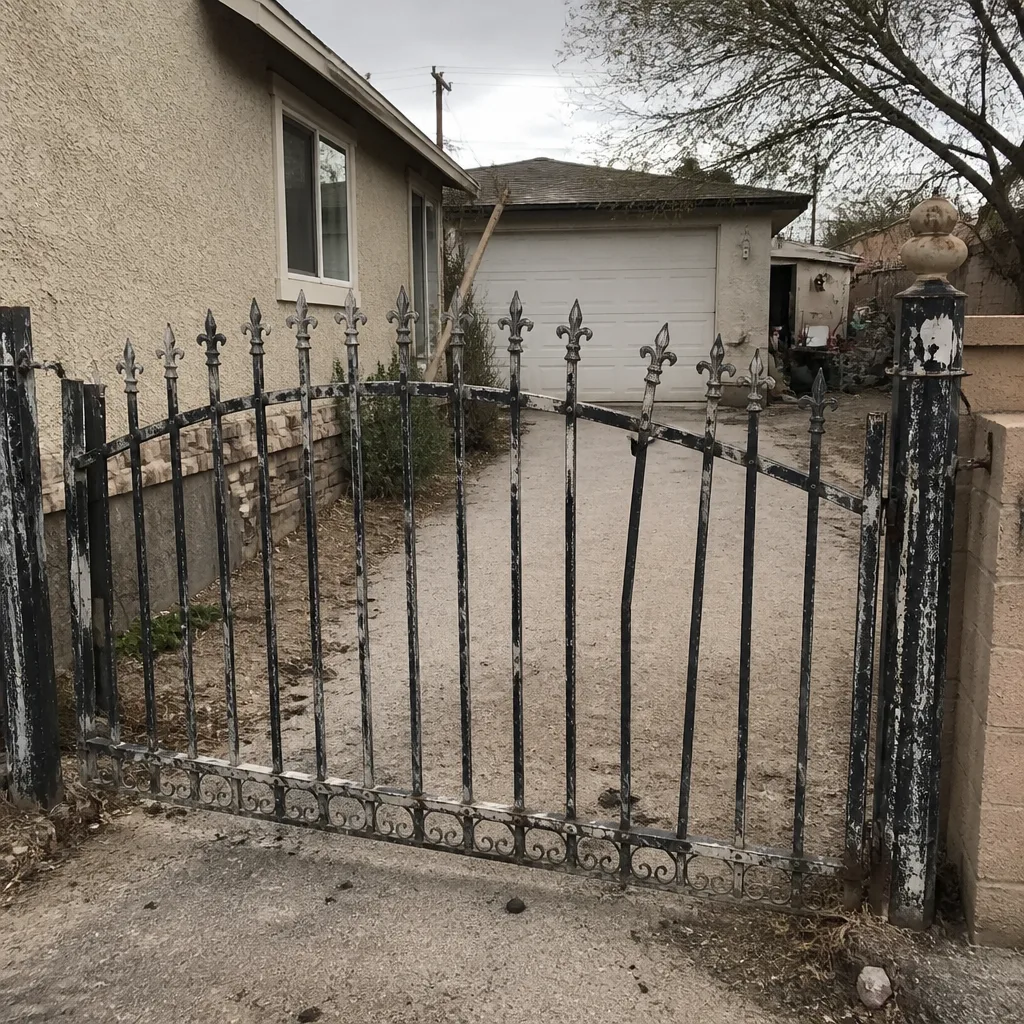 Before
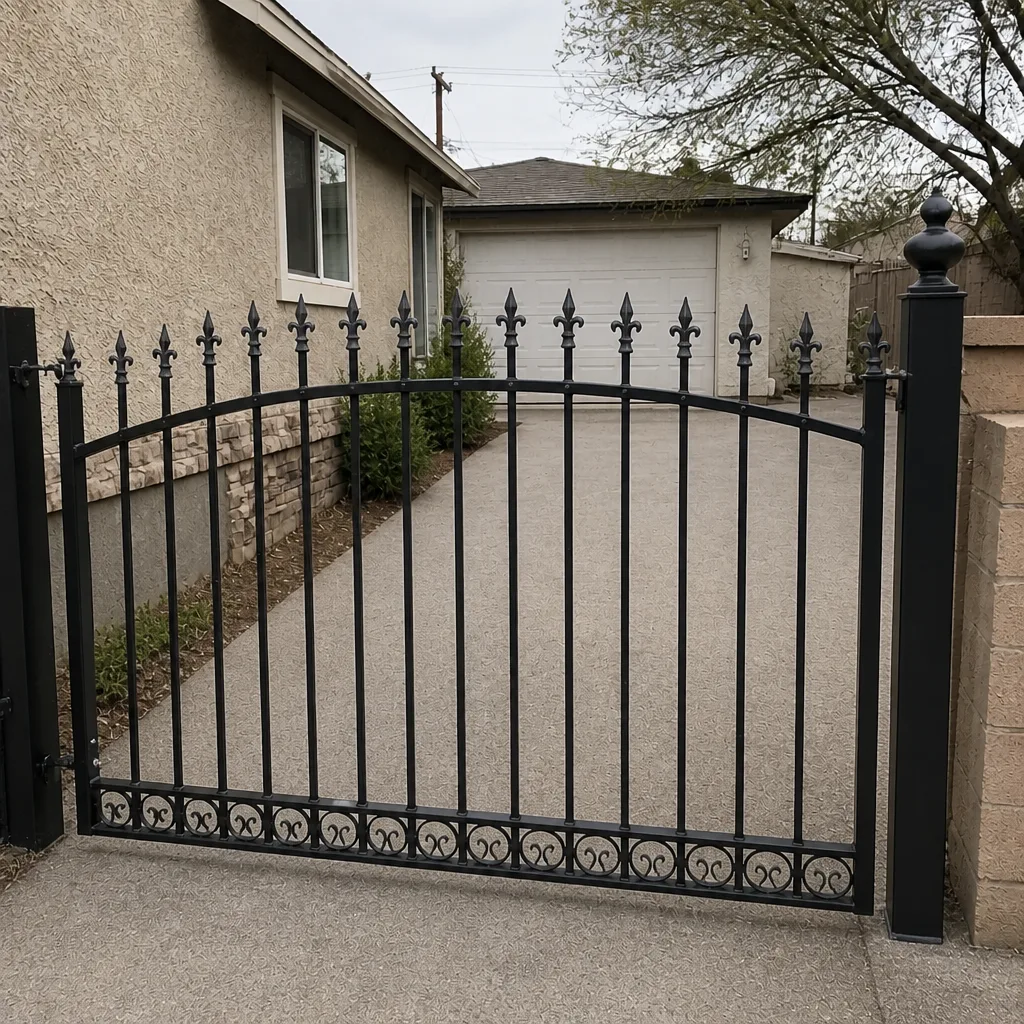 After
Why Cycle Count Beats the Calendar
A gate on a quiet cul-de-sac and a gate on a driveway with two commuters, a dog walker, and a delivery van every afternoon live completely different mechanical lives. Put both on an annual inspection schedule and one gets checked too often while the other gets checked too late. The number that actually matters is how many times the gate has opened and closed – that’s the load the welds, hinges, and rollers have absorbed.
For structural components specifically, experience points to 15,000 cycles as the right inspection interval. That’s not a manufacturer’s spec stamped on a plate; it’s the interval where weld cracks at hinge points reliably start showing up under real residential load. At 27 cycles a day, 15,000 cycles is a little over 18 months. At 60 cycles a day – a busy household with kids, pets, and regular visitors – you’re at that milestone in under nine months.
Corrosion follows a different clock. In Whitney, summer heat and the occasional monsoon-season humidity push surface oxidation faster than a coastal climate would, but slower than a salt-air environment. That’s why surface maintenance stays on a shorter, weather-driven schedule while the structural inspection stays cycle-driven. Two separate clocks, two separate lists. Mixing them into one annual “gate service” visit is how cracks get missed.
How to Estimate Your Gate’s Cycle Count
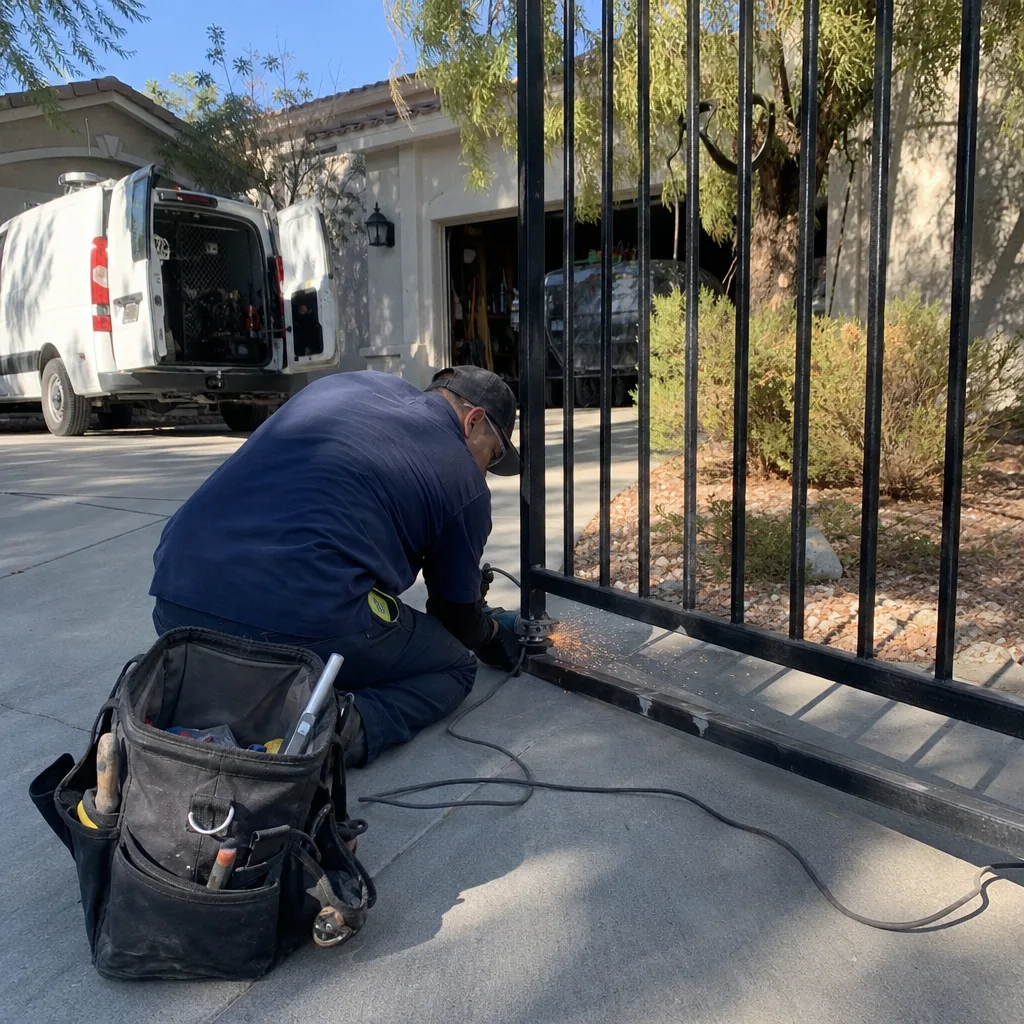
You don’t need a cycle counter to get a usable number. A rough daily estimate multiplied by days gives you a schedule you can actually follow. Here’s the method we walk homeowners through:
- Count one full open-and-close as one cycle. An open only, or a close only, doesn’t count separately.
- Estimate daily cycles. A single commuter household typically runs 4 to 6 cycles a day. Add 2 for each additional driver. Add 2 to 4 if you have regular deliveries, landscapers, dog walkers, or kids coming and going.
- Multiply by days of actual use. Most driveways run 6 days a week, not 7. Use 312 days as a working figure.
- Divide 15,000 by your daily cycle number. That gives you the number of operating days until your first hinge inspection.
A quick example: 8 cycles a day, 6 days a week, gets you to about 1,875 operating days – roughly 18 months of real-world use before the first structural inspection milestone. That lines up closely with what we see in Whitney on household gates with moderate traffic. If you have an automated gate running on a LiftMaster or FAAC operator, check whether the control board tracks cycle counts. Many do, and pulling the number from the board is more accurate than estimating. If you’re not sure how to read it, that’s a reasonable thing to ask us about during a visit – see our Gate Motor & Opener in Whitney page for what that service covers.
What a Hinge-Point Inspection Actually Involves
“We checked the hinges” can mean anything from a glance to a proper assessment. A real hinge-point inspection has three parts, and skipping any one of them leaves you guessing about weld condition.
The load test. With the gate partially open and the operator disconnected (or in manual mode), the gate is moved by hand through its swing. The technician is feeling for binding, hesitation, or a hinge that catches partway through the arc. A healthy hinge-point weld allows smooth travel with minimal resistance. A failing one produces a subtle hitch that most homeowners never notice and that no amount of lubrication will fix.
The visual crack inspection. This is magnified, close-up, at every weld toe – the line where the weld meets the base metal. Cracks start there. They look like a fine dark line at first, often with a tiny rust bloom tracking along it. In Whitney we regularly find early cracks at the bottom hinge on street-facing gates because that weld carries the most load during the last few degrees of closing.
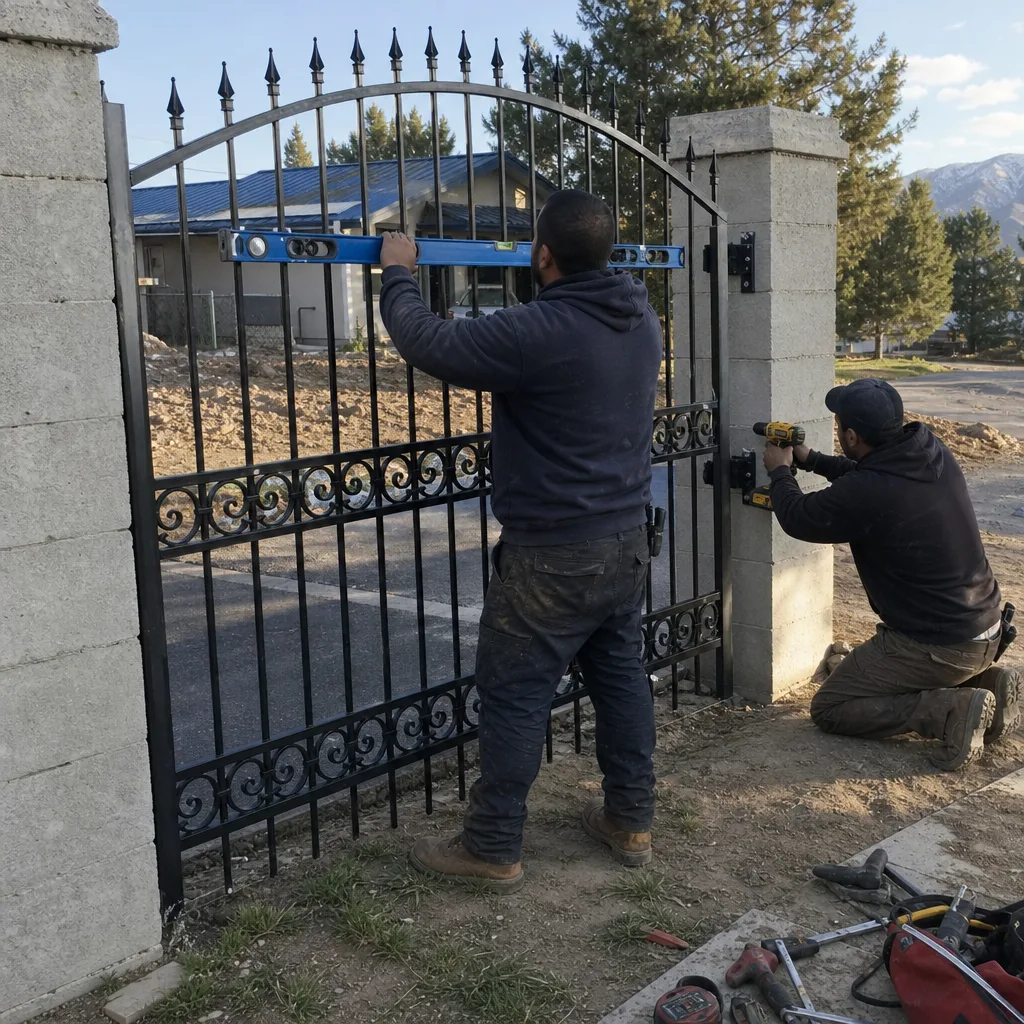
The vertical drop measurement. The gate is opened to full swing and the gap between the bottom of the gate and the ground is measured at the outer edge. This number gets recorded. Next inspection, it gets measured again. A drop of more than about a quarter inch between visits indicates the hinge point is deforming – either the weld or the hinge pin itself – and needs attention before it becomes a separation.
These three steps take about 15 minutes on a standard swing gate. They should be documented every time. If you’re weighing repair against replacement after an inspection, our Gate Repair in Whitney page covers how we make that call.
Surface Maintenance by Material Type
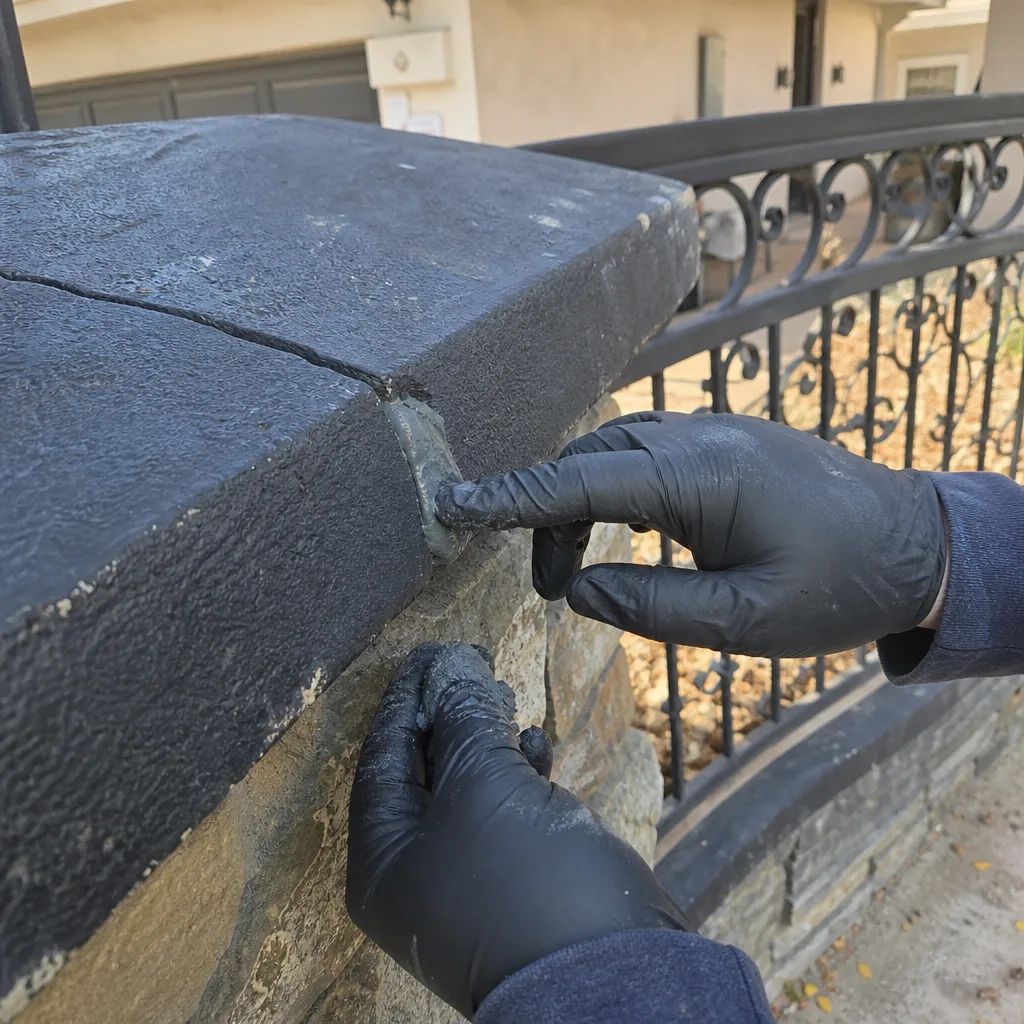
Surface treatment gets lumped together as “painting the gate,” but each metal type needs a different product and a different interval. Using the wrong one wastes money and can accelerate corrosion.
Raw Steel
Raw or primed steel is the highest-maintenance surface. It oxidizes as soon as the primer wears through at contact points – hinge pins, latch strikes, and where the gate frame meets the ground. Clean with a wire brush at any rust spot, apply a rust-converting primer, then topcoat. Interval: inspect every 3 to 4 months, re-coat any bare or oxidized area immediately. In Whitney’s heat, exterior steel on a sunny exposure will need touch-up more often on the south side of the gate than the shaded side.
Galvanized Steel
Galvanized coating is sacrificial – it corrodes slowly to protect the steel underneath, and it shows that wear as a dull gray to white powder (white rust). Don’t scrub it off aggressively. Clean with a mild detergent and soft brush, and apply a galvanized-specific coating if the zinc layer thins to the point you can see the steel. Interval: inspect every 6 months. Avoid any acidic cleaner on galvanized surfaces; it eats the zinc faster than the weather will.
Powder-Coated Steel or Aluminum
Powder coat is durable but brittle at sharp edges and weld seams, which is exactly where it chips. Inspect those seams every 4 to 6 months. A chip that exposes bare metal under a coating is a corrosion starter. Touch up with a matching color coat within a week of finding it. On aluminum, use an aluminum-appropriate product – standard steel touch-up paint can react with the aluminum and make the spot worse.
Bare Aluminum
Aluminum forms its own protective oxide layer, so bare aluminum is lower-maintenance than raw steel. Clean it every 6 months with mild detergent and water. Don’t use steel wool or a wire brush – it embeds steel particles that then rust and stain the surface. If you see white pitting, that’s the start of galvanic corrosion and it’s worth having assessed before it deepens.
For any gate that’s being installed fresh, surface treatment decisions get made before the gate is on the hinges. Our Gate Installation in Whitney page covers how we specify materials for the exposure a gate actually sees.
Lubrication: When It Helps and When It Hides a Problem
Lubrication is the most over-applied and least understood part of gate maintenance. It helps in one specific situation and masks a serious problem in another, and most homeowners can’t tell which one they’re in.
Maintenance lubrication is what you do on a healthy gate to prevent wear. It goes on bearing surfaces – hinge pins, roller axles, latch mechanisms – on a schedule, whether or not anything feels wrong. The right product depends on the component; typically, a lithium-based or silicone-based lubricant for hinge pins and a dry-film or PTFE spray for tracks and rollers where grit collects. A light coat, not a heavy one. Interval: every 3 to 4 months on moving contact points.
Diagnostic lubrication is what you do when something is binding or noisy, and it’s the one that causes trouble. If a hinge suddenly starts squealing and a shot of lubricant quiets it, that tells you the pin is worn enough to have developed play – the noise was the symptom, not the cause. If a hinge point is binding and lubricant makes it feel better temporarily but the hitch returns within weeks, that’s a hinge problem heading toward weld failure. Lubricating it turns down the warning light without fixing the fault.
Here’s the distinction that matters. Maintenance lubrication follows a schedule. Diagnostic lubrication follows a symptom. If you find yourself reaching for the grease gun more than once between scheduled maintenance intervals, that’s your signal to get the hinge points inspected, not to lubricate more often. Repeated lubrication of a noisy hinge is the gate equivalent of turning up the radio to drown out a bearing noise.
Never lubricate a weld directly. Weld areas should be clean and dry so cracks remain visible. A greasy weld hides exactly the fine dark line you’re looking for.
What a Structural Maintenance Record Should Capture
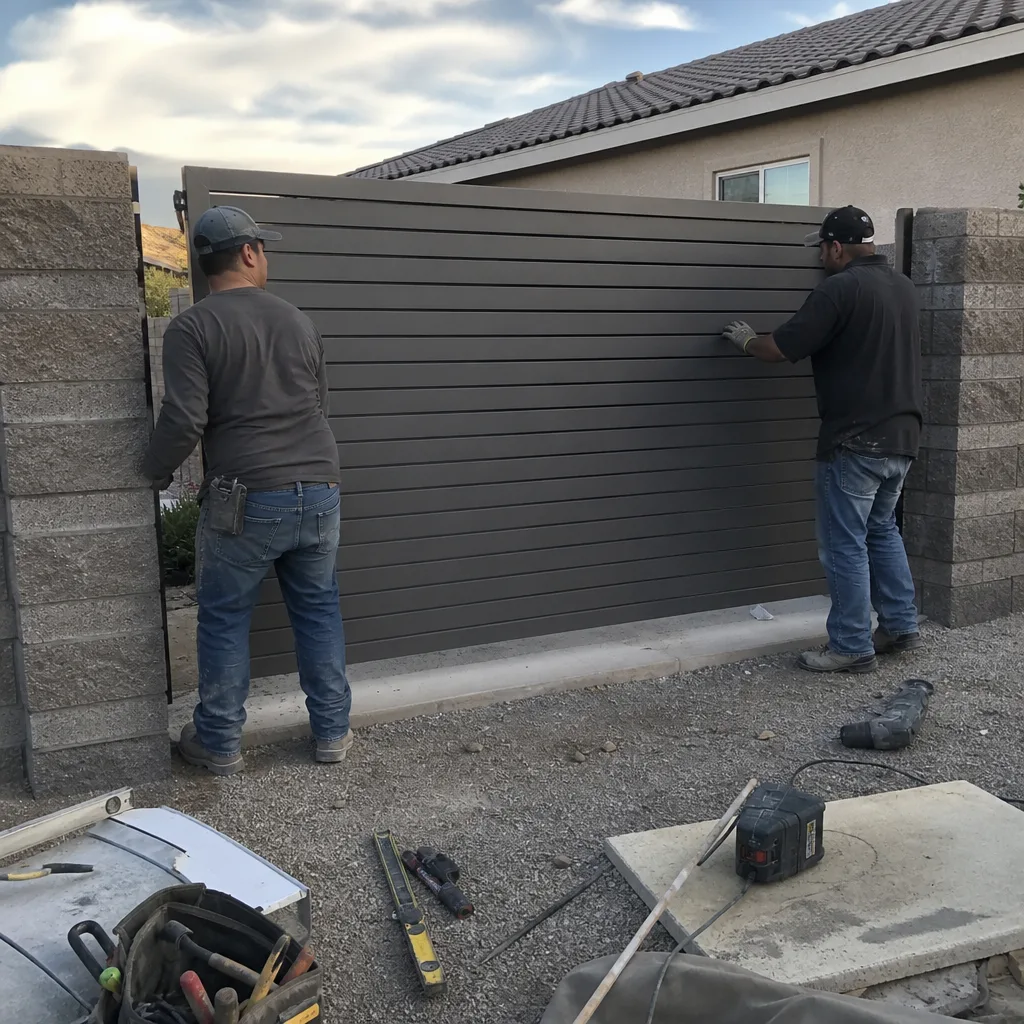
Here’s where most homeowners lose money without realizing it. A future gate repair quote, especially for a weld repair, requires the technician to first figure out what the previous work was and what condition the structure is in. Without a record, they start from scratch, and you pay for that discovery time.
A useful structural maintenance record includes these fields:
- Date of inspection and cycle count at inspection. Both the calendar date and the estimated or measured cycles.
- Hinge-point condition, per hinge. Which hinge points were inspected, whether any cracks were found, and if so, their location and size.
- Vertical drop measurement at the outer edge of the gate, taken at full open position. This is the single most useful number for tracking structural change over time.
- Photographs of every weld area inspected. Close-up, dated.
- Photographs of any surfacing wear – chip, rust spot, or coating failure – with the location noted.
- Any parts installed or replaced, with the part number. Not a description like “hinge replaced” but the actual part number.
- Adjustments made during the visit, including any limit-switch settings if the operator was touched.
That record should live with the homeowner and get left behind on every visit. If a gate in Whitney changes hands between families and the record goes with the paperwork, the next technician inherits the history instead of guessing at it. Under The Haven Standard, we leave a photographic record at every visit for exactly this reason. When you have this record from the previous inspection, a weld-repair quote can be written from evidence rather than from scratch.
The Full Schedule at a Glance
Here’s the complete structural maintenance schedule broken into its two separate tracks. Note that the calendar items and the cycle items don’t line up, which is the point.
- Every 3 to 4 months: Surface inspection on raw steel and any high-wear points. Lubricate hinge pins, roller axles, and latch mechanisms (maintenance lubrication).
- Every 4 to 6 months: Surface inspection on powder-coated steel and aluminum at weld seams and edges. Touch up any coating chip.
- Every 6 months: Surface inspection on galvanized steel and bare aluminum. Clean, assess coating condition.
- Every 15,000 cycles (about 18 months on a busy driveway): Full hinge-point inspection – load test, magnified visual crack inspection, vertical drop measurement. Record all three. This is the structural milestone; it’s not a calendar item.
- On any symptom: Binding, squealing that returns after lubrication, visible rust bloom at a weld toe, or a gate that no longer swings freely. These trigger an inspection ahead of schedule.
For the electrical and automation side – operator cycles, limit switches, safety photo-eyes – those sit on their own inspection cadence and aren’t covered by the structural schedule above. If you’re unsure whether a symptom belongs to the structure or the operator, our Vance Gate Repair Whitney home page is the starting point for figuring out which service applies.
Common Mistakes to Avoid
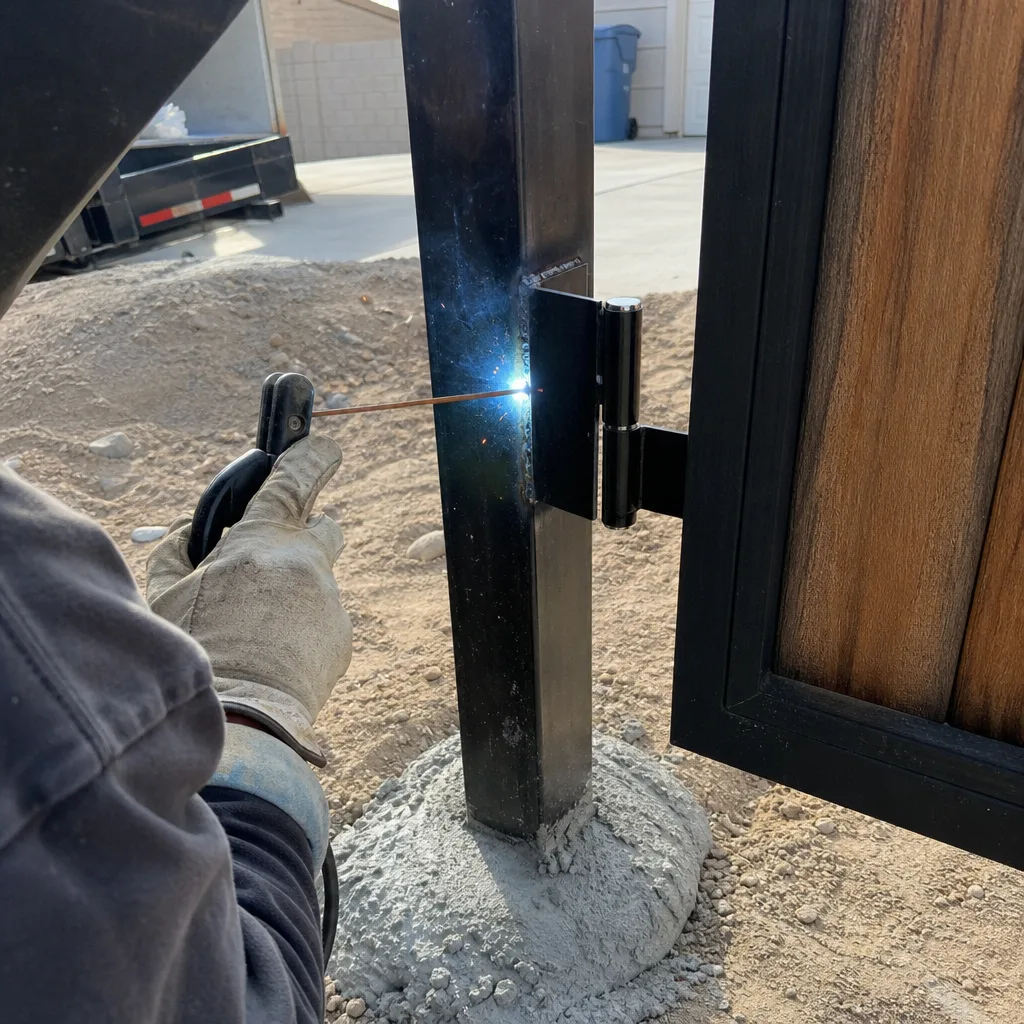
- Lubricating a noisy hinge instead of inspecting it. If the squeal returns within a few weeks, the hinge is worn and the weld at that point is carrying extra load. Turn down the symptom and you’re turning off the warning.
- Running an annual “gate service” that combines structural and electrical checks. The two don’t share a cadence. The structural check should follow cycle count, the electrical check follows its own schedule, and combining them into one visit means one of the two gets skipped most years.
- Ignoring the vertical drop number. It’s the most useful structural measurement on the gate because a quarter-inch change between inspections is measurable and unambiguous. Track it or you’re guessing.
- Using steel wool or a wire brush on aluminum. It embeds steel particles that rust and stain the surface, and creates a galvanic corrosion site that gets worse over time.
- Painting over a crack instead of repairing the weld. Paint fills the crack line and hides it until the weld separates fully. Surface work should never happen before structural inspection.
- Accepting a verbal “hinges look fine” during an inspection. A proper inspection produces a load test finding, a crack assessment, and a vertical drop number, and puts them in writing. Verbal is not documentation.
- Letting two or three years pass without a hinge inspection on a gate that’s in daily use. At moderate household traffic that’s 30,000 to 45,000 cycles, well past the point where cracks should have been caught while they were still small.
See the difference
BeforeAfter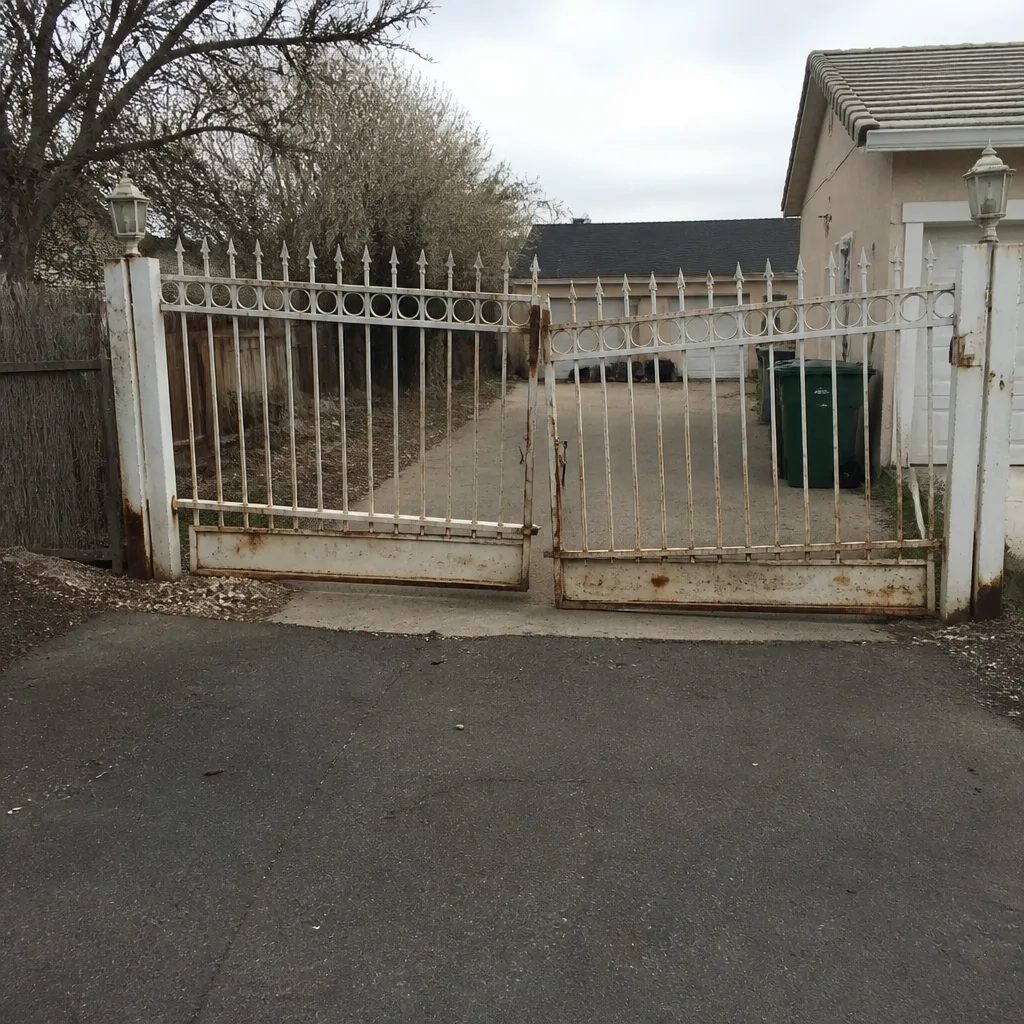 Before
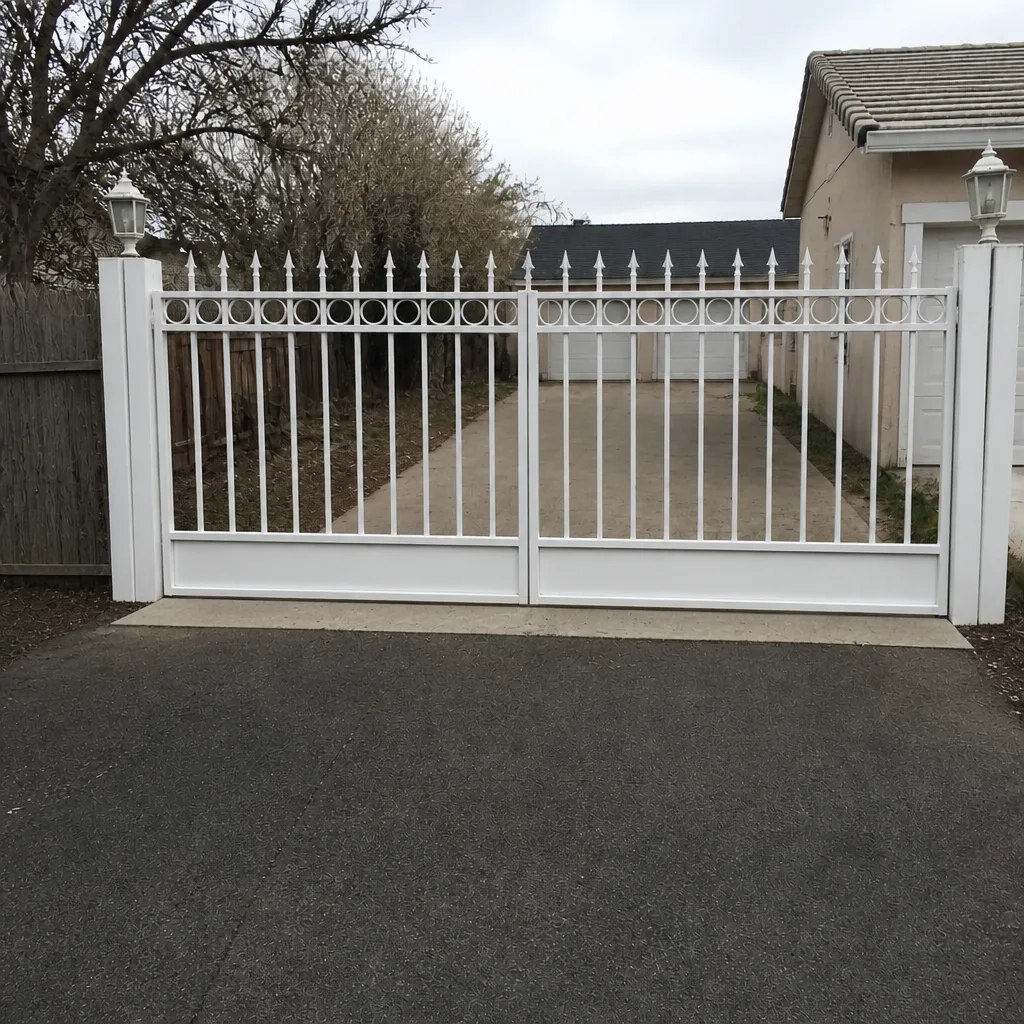 After
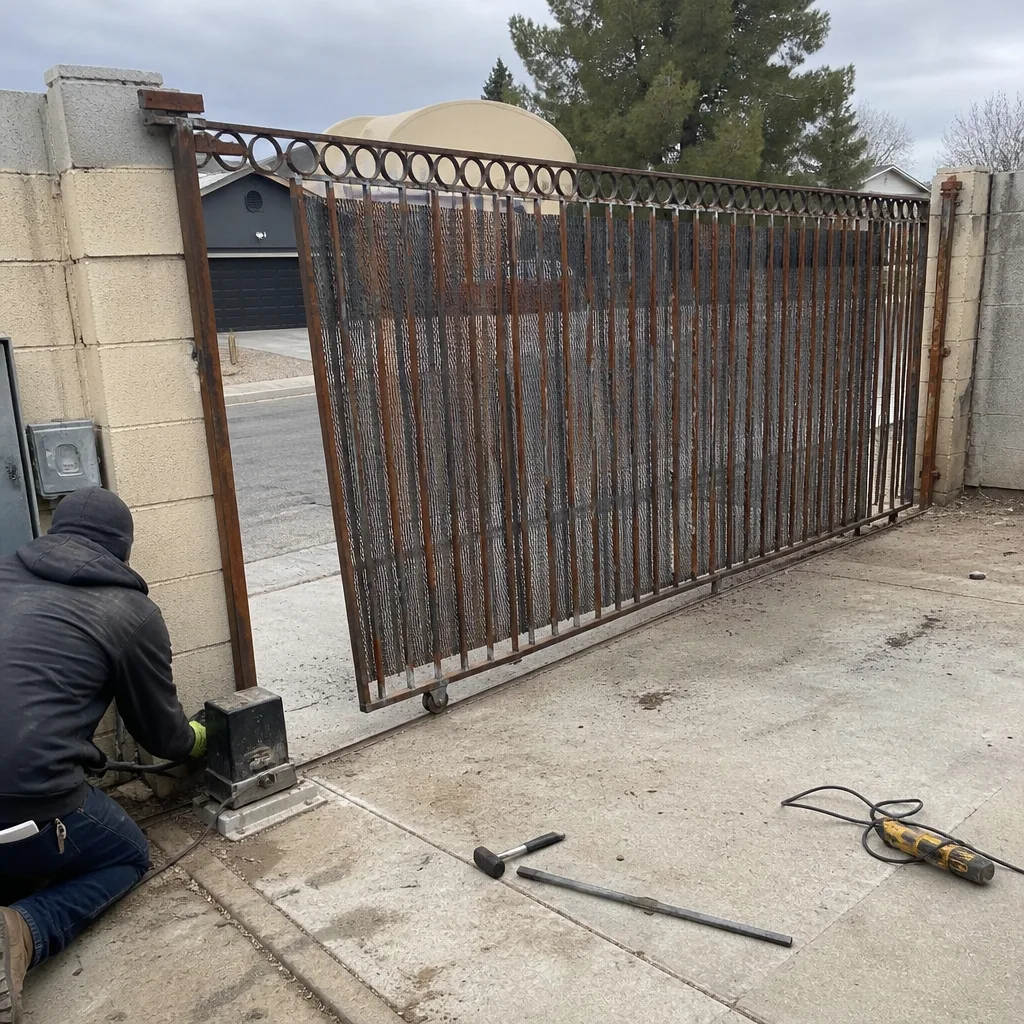 Before
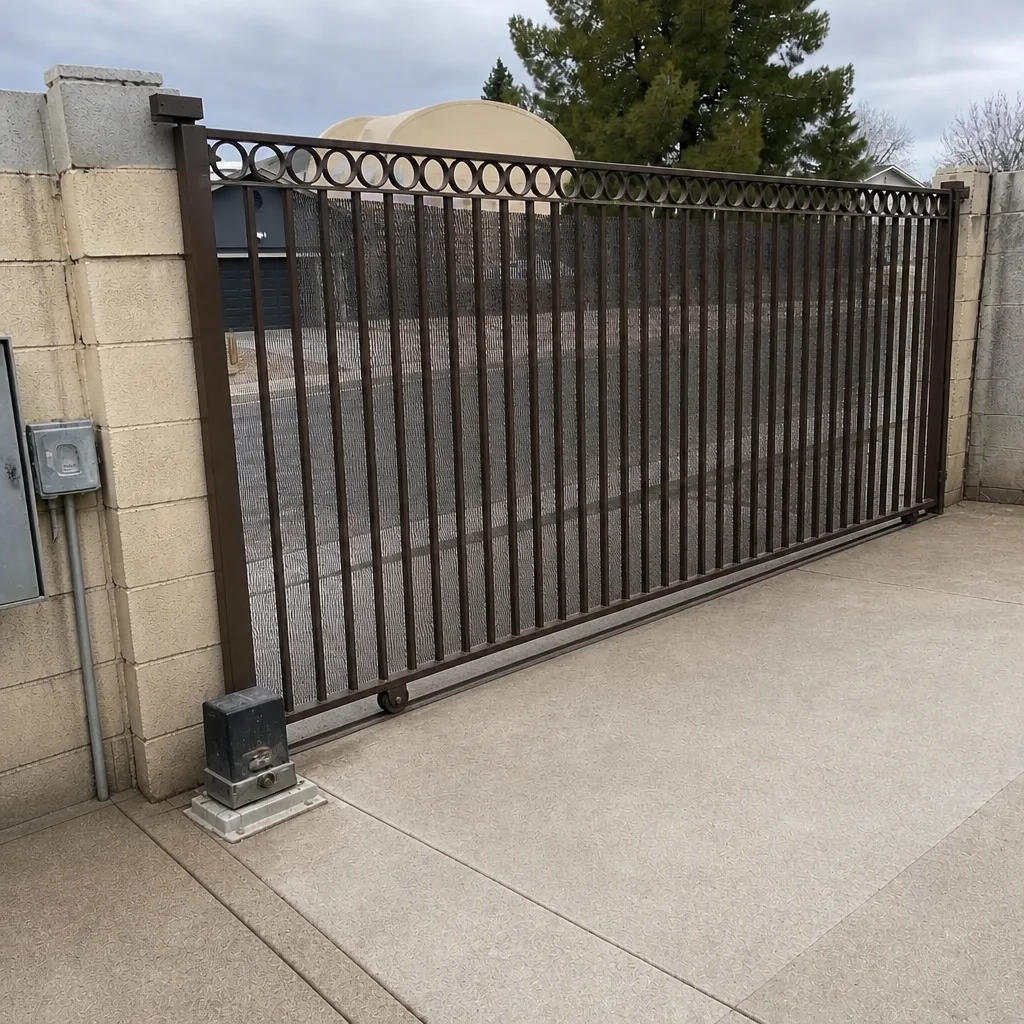 After
When to Call a Professional
Some structural work is safe to inspect and document yourself. Weld repair is not one of those things. Failing welds at hinge points carry load during every gate cycle, and a gate that separates under load can fall – onto a vehicle, a person, or a pet. If you find a dark line tracking along a weld toe, a weld with visible rust bloom, or a vertical drop that’s changed more than a quarter inch between inspections, that’s a professional assessment, not a home repair. The gate should be taken out of service (manually operated or locked open) until a technician has assessed it. The same applies to any gate that has developed a hitch during its swing or that has become noticeably harder to move by hand.
If you’re not sure whether something qualifies as urgent, call and describe it. We answer the phone 24/7. For structural work specifically, we’d rather hear about a suspected crack than have it sit. Vance Gate Repair Whitney offers free estimates in Whitney – call (844) 797-4861 – and every visit leaves a photographed record of what we found and what we did.
Frequently Asked Questions
Every 15,000 operating cycles at the hinge points. On a typical busy residential driveway that’s roughly every 18 months, but the number to track is cycles, not the calendar. A gate with heavy daily traffic can hit 15,000 cycles in under nine months, and a quiet gate might take two years. Surface maintenance – cleaning, coating touch-up, lubrication – follows a shorter 3 to 6 month schedule and is a separate track.
Lubricate once. If the binding or squeal is gone and stays gone, it needed lubrication. If it returns within a few weeks, or if there’s a hitch during the swing that doesn’t smooth out, the hinge pin is worn and the weld at that point is carrying extra load. In that case, get a hinge-point inspection before lubricating again. Repeated lubrication is masking the symptom, not fixing the cause. Call (844) 797-4861 if you’re not sure which case you have.
Clean it with mild detergent and a soft brush every 6 months, and watch for white powder (white rust) where the zinc coating is thinning. Avoid acidic cleaners. Whitney’s summer heat and monsoon-season humidity accelerate oxidation on exterior surfaces, so pay close attention to hinge pins and ground contact points, which are the first places the zinc layer wears through.
No – it means the maintenance is different, not less. Powder coat is durable but brittle at weld seams and edges, so chips are common there. Inspect those seams every 4 to 6 months, and touch up any chip within a week of finding it. A chip that exposes bare metal starts corrosion immediately, and on aluminum a steel-based touch-up product can make it worse.
A useful record includes the inspection date, cycle count at inspection, per-hinge condition and any crack findings, the vertical drop measurement at full open, dated close-up photos of every weld inspected, any parts installed with part numbers, and any adjustments made. That record should stay with the homeowner. With it, a future weld repair quote can be written from evidence rather than from scratch, and you don’t pay twice to rediscover a problem.
No – and this is a load-bearing repair, not a cosmetic one. A weld at a hinge point carries the full weight of the gate every time it swings, and an under-strength repair can separate under load with serious consequences. The gate should be taken out of service until a trained technician has assessed it. Get a written quote before any work starts, so you know what’s being repaired before the tool comes out. Call (844) 797-4861 for a free estimate in Whitney.
The Bottom Line
Gate structural maintenance runs on cycles, not the calendar. Estinguish welds at hinge points every 15,000 cycles – roughly 18 months on a busy residential driveway, sooner on a heavy-traffic gate. Surface maintenance runs separately, every 3 to 6 months depending on material and exposure to Whitney’s heat and seasonal humidity. Lubricate on a schedule for maintenance, but never to cover a symptom; if a hinge squeals and stays quiet only for weeks, get it inspected. And keep a written, photographed record on every visit so the next repair quote comes from evidence rather than from scratch. That’s what our Haven Standard documentation is built for, and it’s why we work the way we do.
If your gate is due for a hinge inspection, or you’re not sure when the last one was done, we’ll come take a look, put the findings in writing, and hand you the record before we start any work. Vance Gate Repair Whitney – call (844) 797-4861 for a free estimate. We answer the phone 24/7, with a live person.
Written by the team at Vance Gate Repair Whitney.