
Last updated November 18, 2026
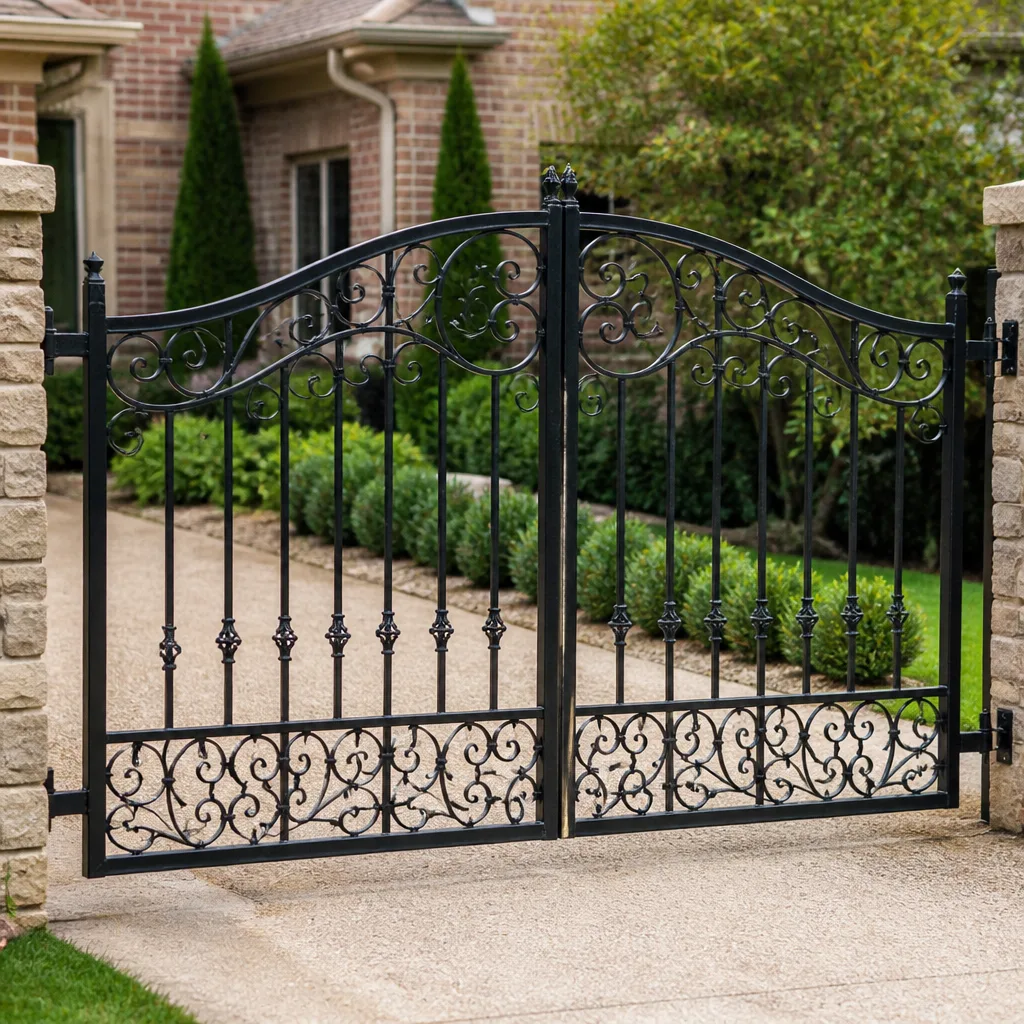 Wrought iron
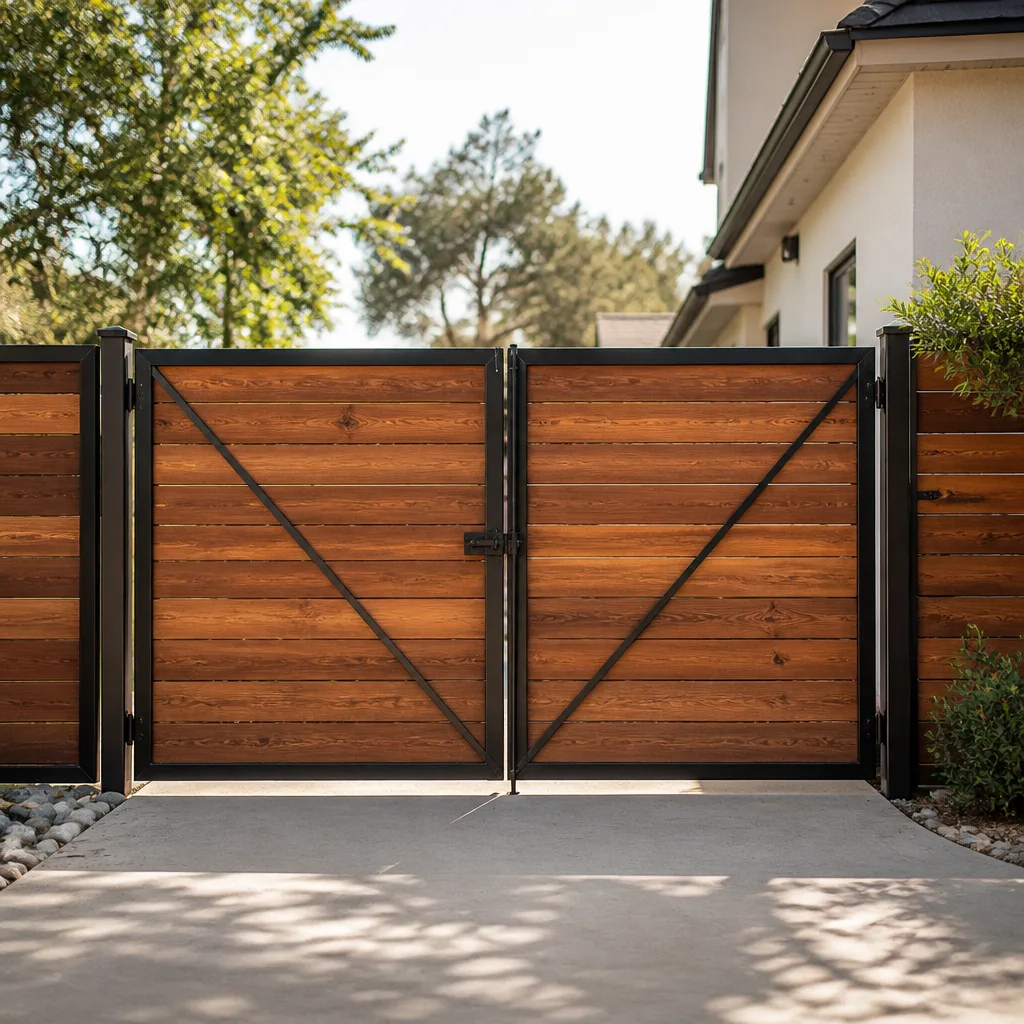 Wood & steel frame
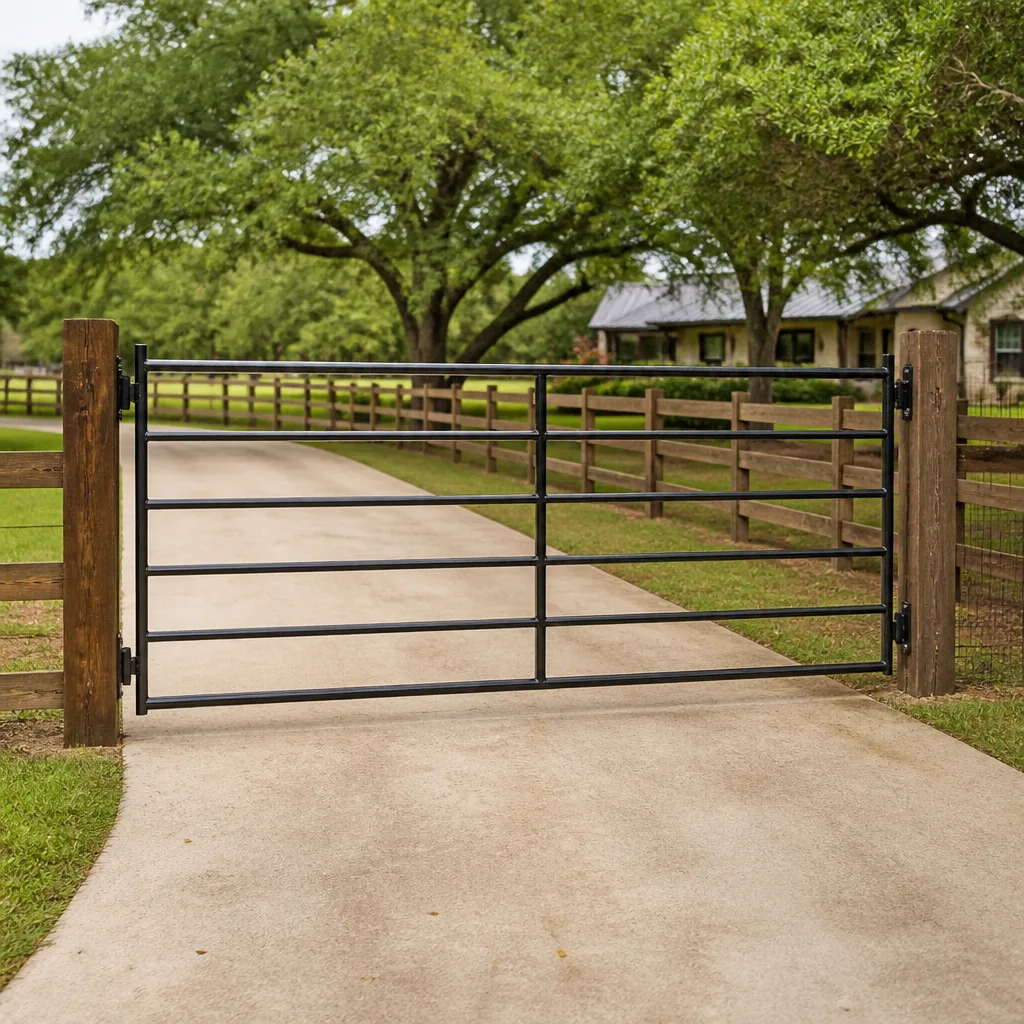 Farm & ranch
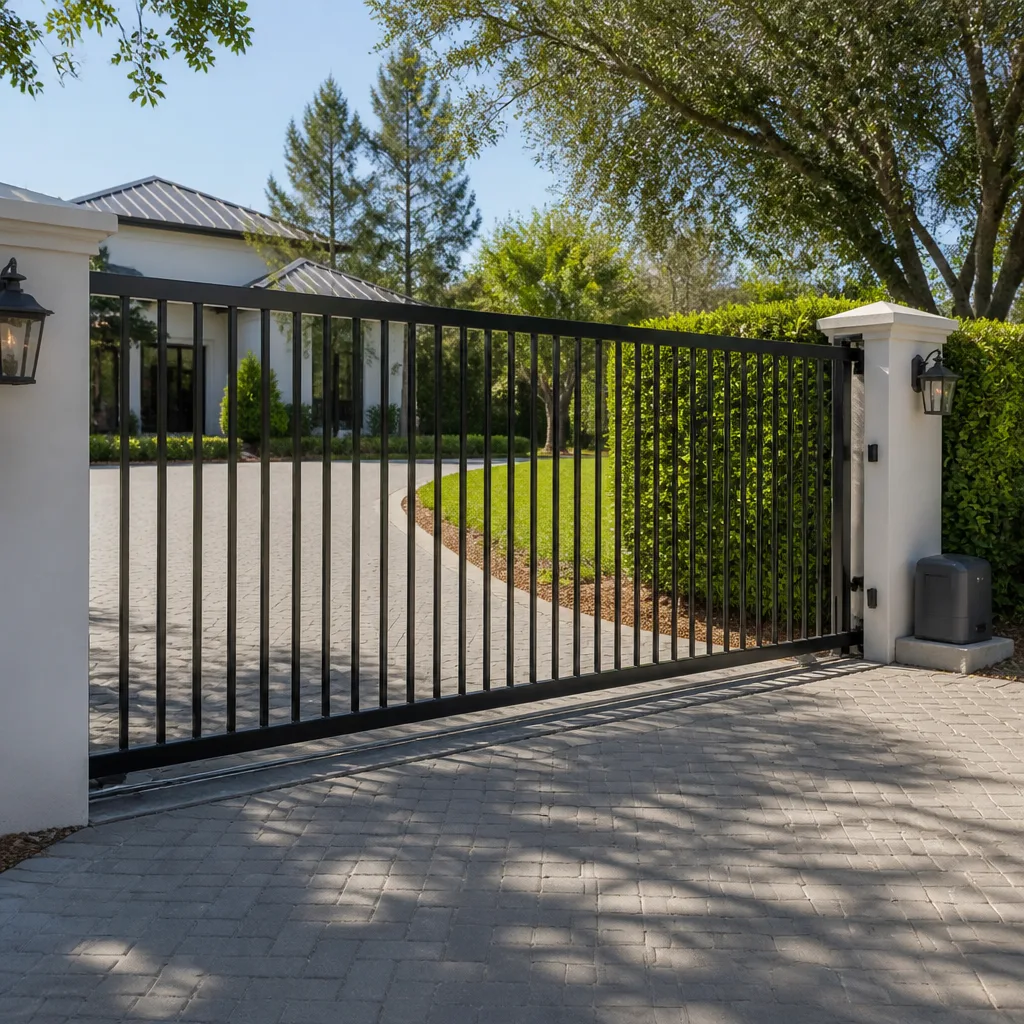 Sliding driveway gates
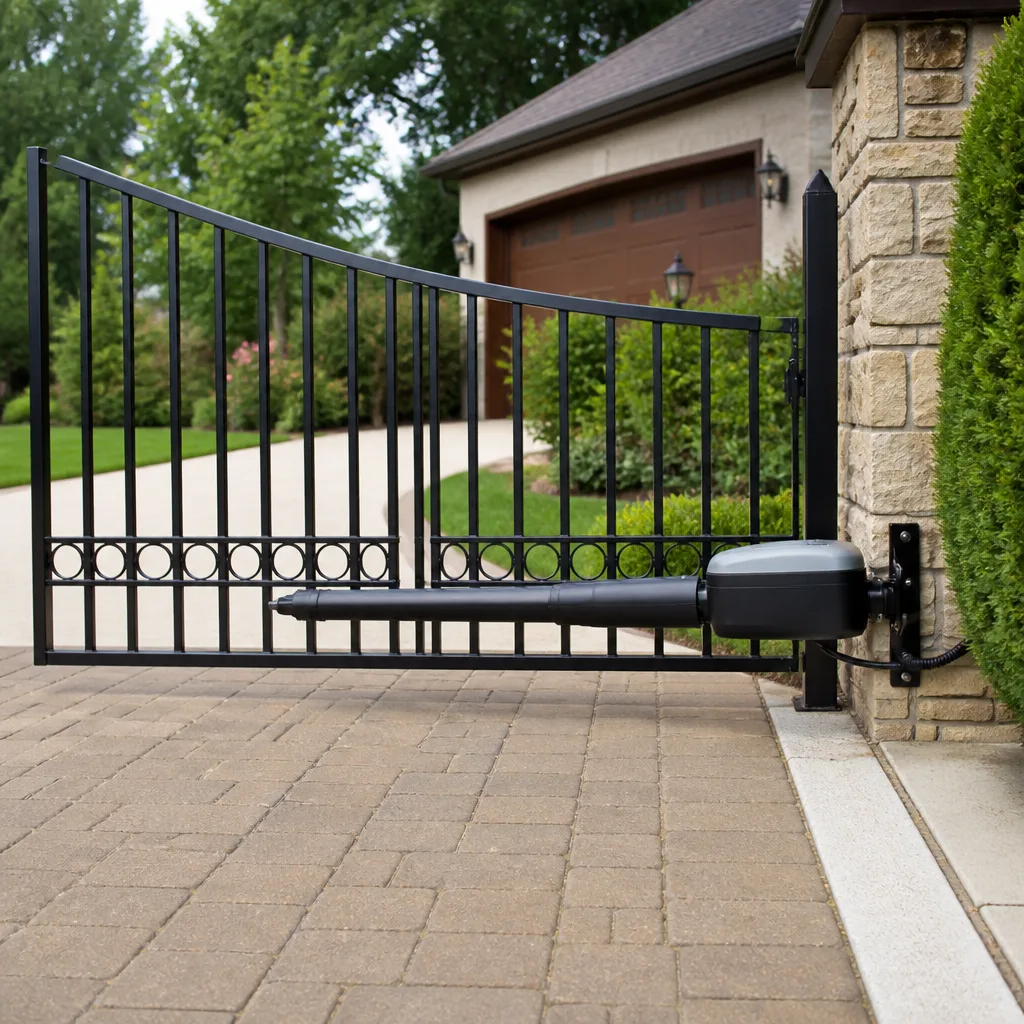 LiftMaster operators
Free on-site gate assessment - hinges, posts, and your LiftMaster or Nice gate operator checked before anything is quoted
The assessment is free and the quote is the invoice.
Get your free estimateThe Complete Gate Parts & Welding Guide for Whitney Homeowners
A gate hinge rated for coastal salt air and a hinge rated for high-UV desert installation are both sold as “exterior grade.” In Whitney’s climate, they perform about 8 years apart in lifespan. That gap is the whole story of gate parts in this valley: the label on the box tells you almost nothing about what survives here. Between the summer sun that bakes powder coat into chalk, the alkaline soil that eats welds at ground contact, and a local supply chain that rarely stocks the exact part you need, Whitney homeowners end up making material decisions most gate guides never mention. This guide maps the four structural zones of a driveway gate, explains which weld types belong in a field repair versus a shop, covers part-number cross-referencing, and shows you what actually holds up in Whitney.
Quick Answer
The parts that fail first on a Whitney driveway gate are the hinge welds and the bottom rail, driven by UV degradation and alkaline soil corrosion at the post base. Field repairs should use stick (SMAW) or flux-cored MIG welding for dirty, windy outdoor conditions, while shop fabrication favors MIG or TIG for cleaner joints. Powder coat over properly prepped steel outlasts paint over raw steel by roughly 5 to 8 years in high-UV desert exposure, and matching a discontinued part means reading the casting marks and dimensioning the hardware rather than hunting the original brand.
Styles & brands we work with
- Wrought iron
- Wood & steel frame
- Farm & ranch
- Sliding driveway gates
- LiftMaster operators
Table of Contents
- The Four Structural Zones of a Driveway Gate
- MIG vs Stick vs TIG: Which Weld Belongs Where
- Material Selection for Whitney: Powder Coat vs Galvanized vs Paint
- Soil-Contact Corrosion at Post Bases
- How to Read a Part Number When the Manufacturer Is Gone
- Field Repair vs Shop Fabrication: What Changes
- The Local Parts Supply Problem in Whitney
- A Maintenance Schedule That Fits This Climate
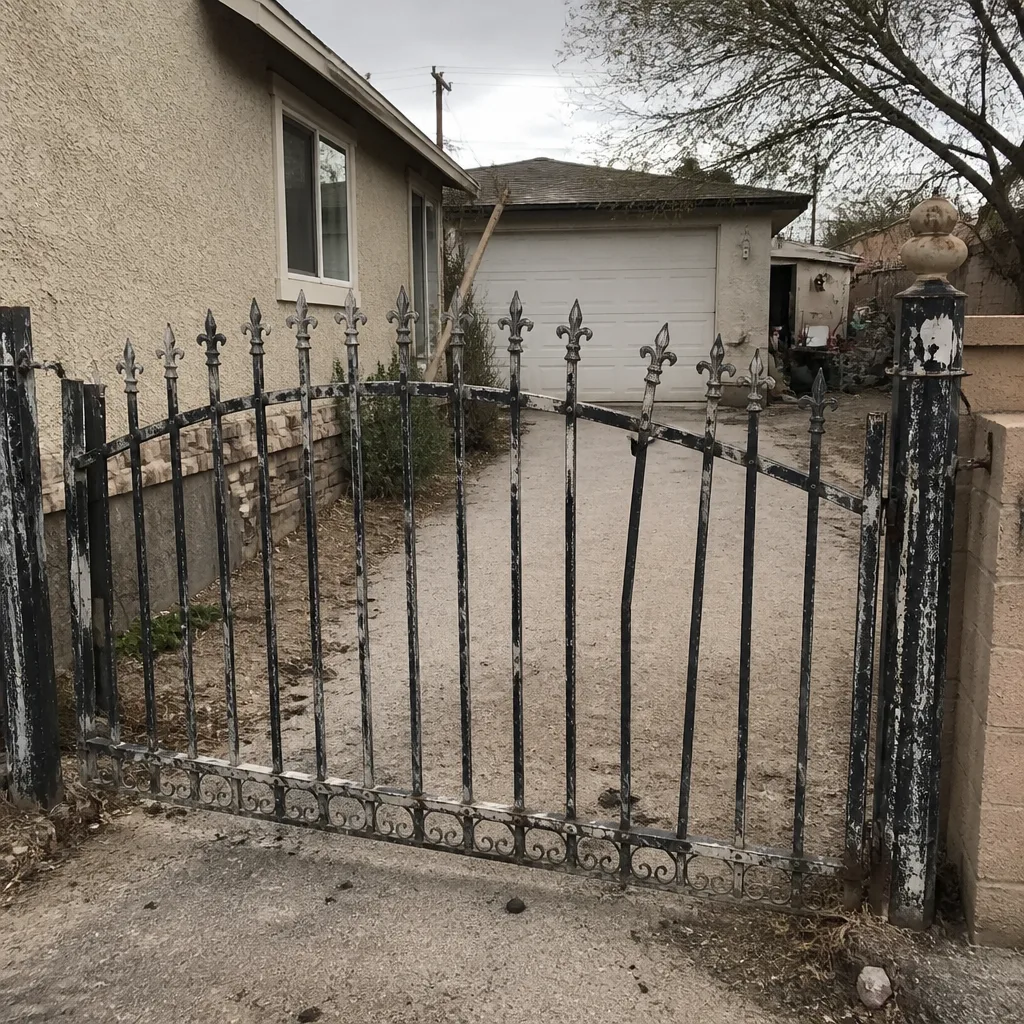 Before
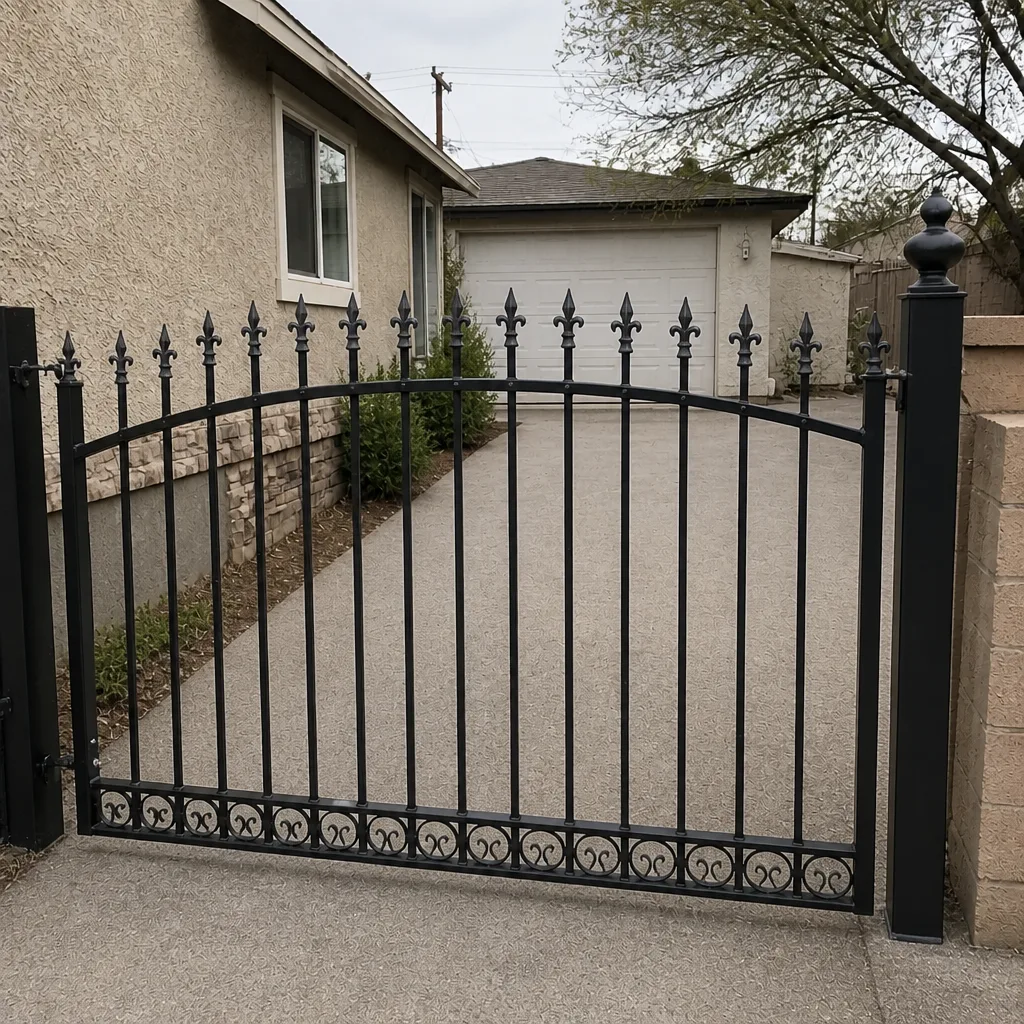 After
The Four Structural Zones of a Driveway Gate
Every swing or slide gate breaks down into four load-bearing zones, and each one fails on a different timeline in Whitney. Knowing the zones tells you where to spend money and where to just watch.
- Frame: The welded perimeter and internal rails. Fails from UV-driven coating breakdown, then rust creep at the joints. In Whitney, expect coating failure on the sun-facing side years before the shaded side shows anything.
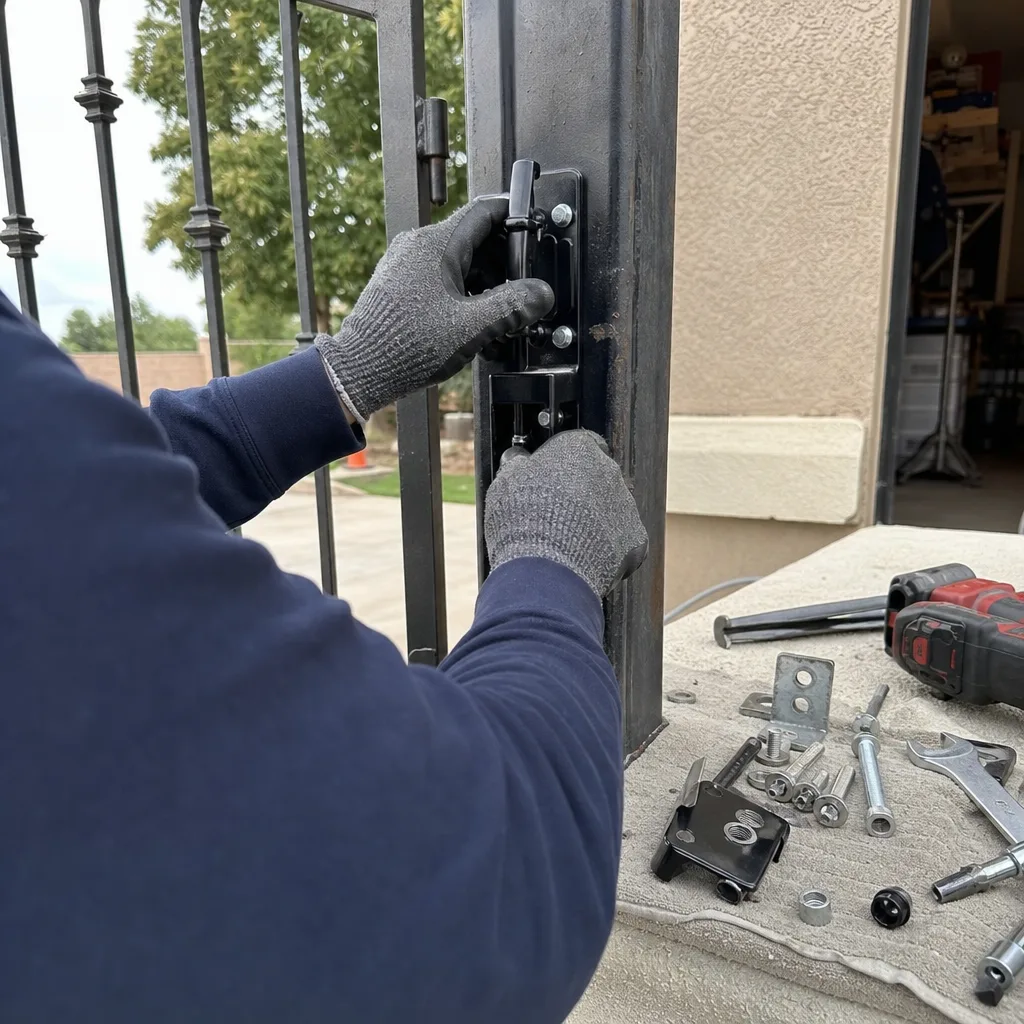
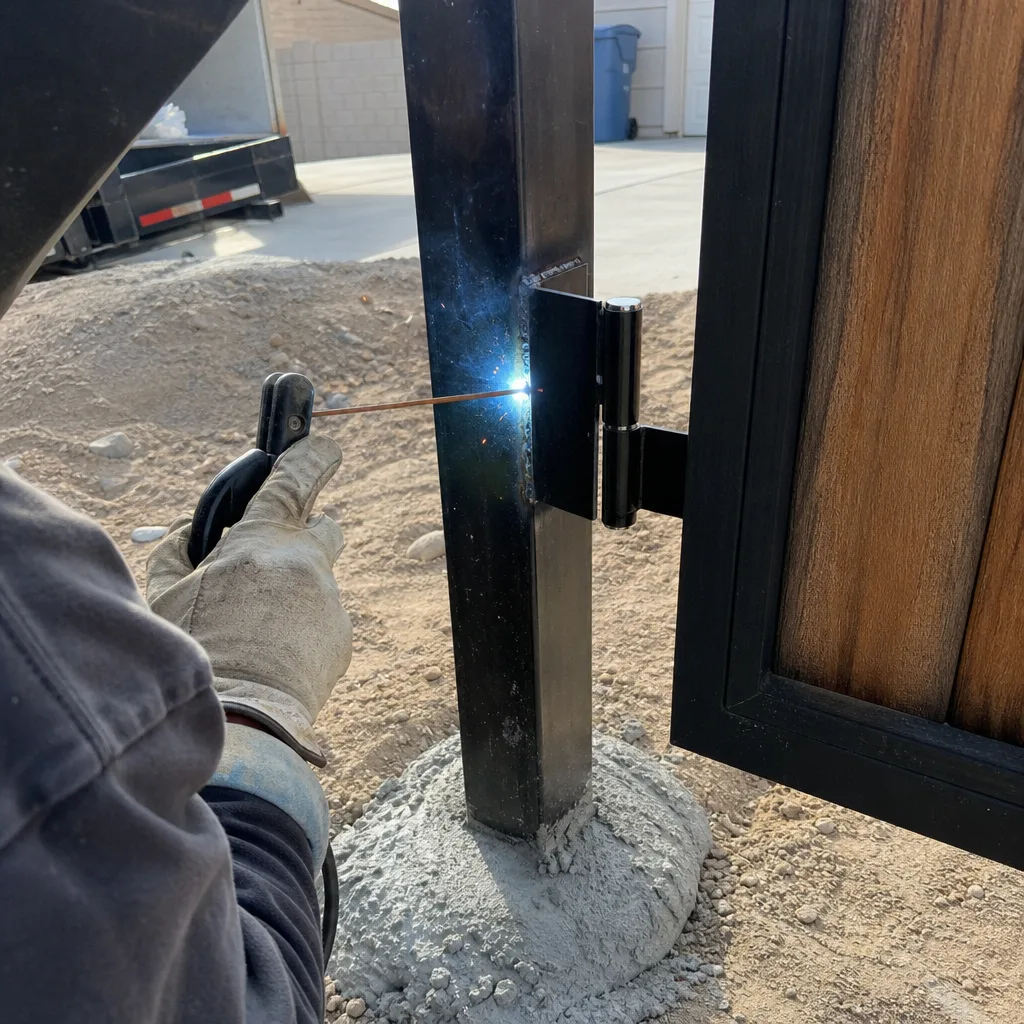
- Hinge points: The highest-stress zone on any swing gate. Hinge welds crack from cycling load and heat expansion. This is the zone we repair most often on Whitney gates.
- Latch hardware: Mechanical latches, magnetic catches, and the strike plate. Fails from misalignment more than corrosion, usually after a hinge weld has shifted the gate a quarter inch.
- Bottom rail: The lowest member and the one closest to irrigation spray, splash-back, and soil. On Whitney properties with drip lines near the gate, the bottom rail corrodes from the outside in.
Which zone fails first? On most Whitney swing gates we inspect, the hinge welds go before anything else, followed closely by the bottom rail on gates set near irrigated landscaping. The frame itself usually outlives both. That order matters because a cracked hinge weld is a cheap fix if you catch it early and a gate-replacement conversation if you let the post plate tear out. For structural repairs of this kind, our Gate Repair in Whitney service covers weld assessment and hinge reinforcement.
MIG vs Stick vs TIG: Which Weld Belongs Where
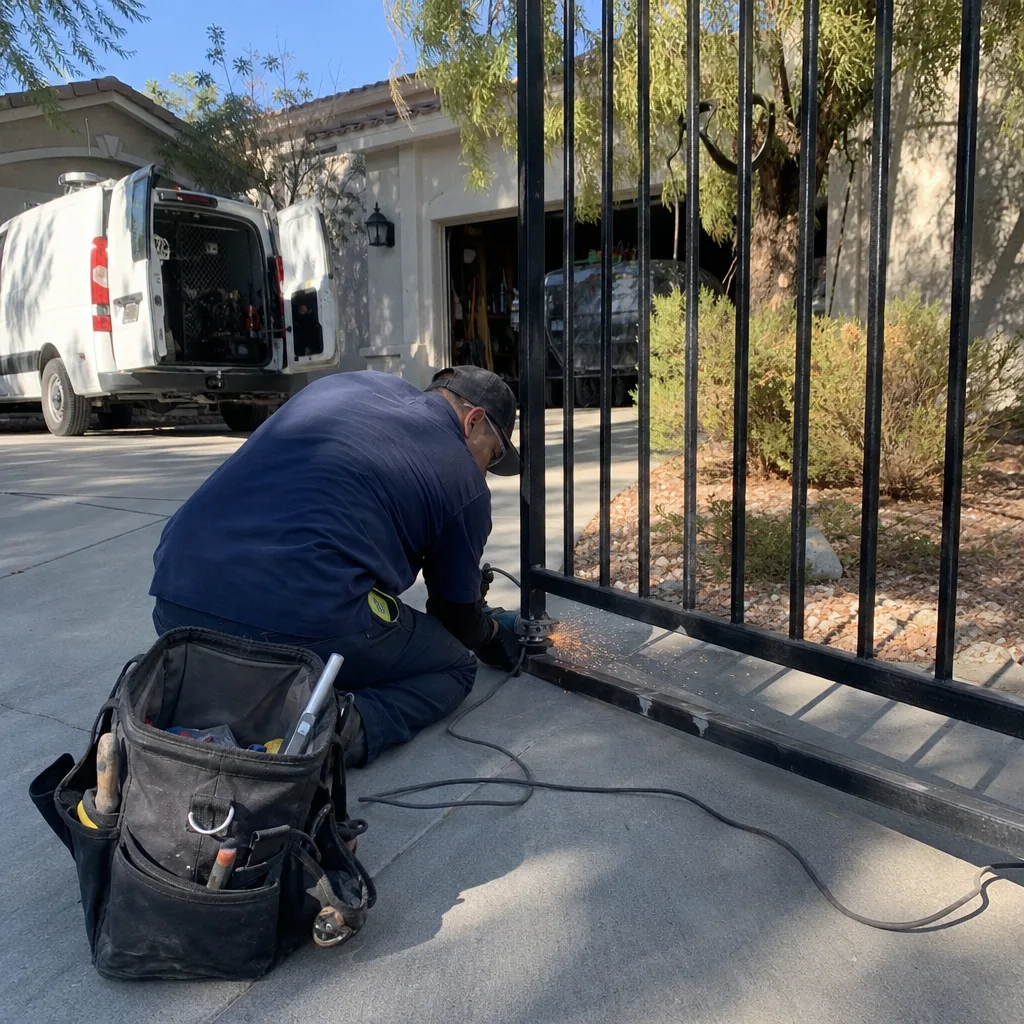
Three welding processes show up in gate work, and each has a place. Using the wrong one is how a repair fails in a year.
- Stick welding (SMAW): The field-repair workhorse. It tolerates wind, dirt, rust, and imperfect fit-up, which describes most outdoor gate repairs in Whitney. Slower and messier than MIG, but it holds on galvanized and weathered steel where a cleaner process would struggle.
- Flux-cored MIG (FCAW): A middle path for field work when you need more deposition speed than stick. Handles the wind that would blow away a gas-shielded MIG puddle. Common for bottom-rail and post-base repairs.
- Gas-shielded MIG (GMAW): The shop standard for clean, new fabrication. Fast, tidy, and easy to control on fresh mill scale. Poor choice outdoors in a breeze.
- TIG (GTAW): Reserved for thin-wall tube, ornamental aluminum, and stainless hardware where appearance matters. Slow and fussy for structural steel, but the right call on a decorative gate where the weld will be seen.
The practical rule: field repair on an existing Whitney gate usually means stick or flux-cored, because the steel is weathered, the wind is up, and the joint is dirty. Shop fabrication of a new gate or a replacement section means MIG on steel and TIG on thin or decorative stock. A technician who shows up with only one process and forces it onto every joint is telling you something about their range. If the weld decision matters to your project, the team at Vance Gate Repair Whitney will name the process and photograph the finished joint before leaving.
Material Selection for Whitney: Powder Coat vs Galvanized vs Paint
This is where Whitney’s climate exacts its tax. UV exposure here is brutal, and the coating system you choose determines how many years you get before rust starts.
- Powder coat over prepped steel: The best residential choice for UV resistance. A proper powder coat cures into a thick, uniform film that resists chalking and holds color for years. Expected service life in Whitney’s sun: roughly 8 to 12 years before a recoat is worth considering, depending on sun exposure and finish quality.
- Galvanized steel (hot-dip): Excellent corrosion protection, especially at ground contact, but the zinc surface chalks and dulls under UV and doesn’t hold paint well without special prep. Great for posts and structural members, less ideal as a visible finish.
- Paint over raw steel: The lowest-cost option and the shortest-lived. In Whitney’s UV, a single-stage paint over raw steel can chalk and fail in as little as 2 to 4 years, and once moisture gets under a paint edge, rust creep starts at the lap.
The lifespan difference between powder coat and paint is real money over a gate’s life. A powder-coated gate that lasts a decade before recoat beats a painted gate recoated three times in the same window, especially when you count the labor. For galvanized posts that will sit in Whitney soil, powder coat or a zinc-rich primer over the galvanized surface gives you the corrosion protection of zinc with the UV resistance of a proper topcoat. If you’re weighing a full replacement versus re-coating what you have, our Gate Installation in Whitney team can measure the existing gate and tell you which path the metal actually supports.
Soil-Contact Corrosion at Post Bases
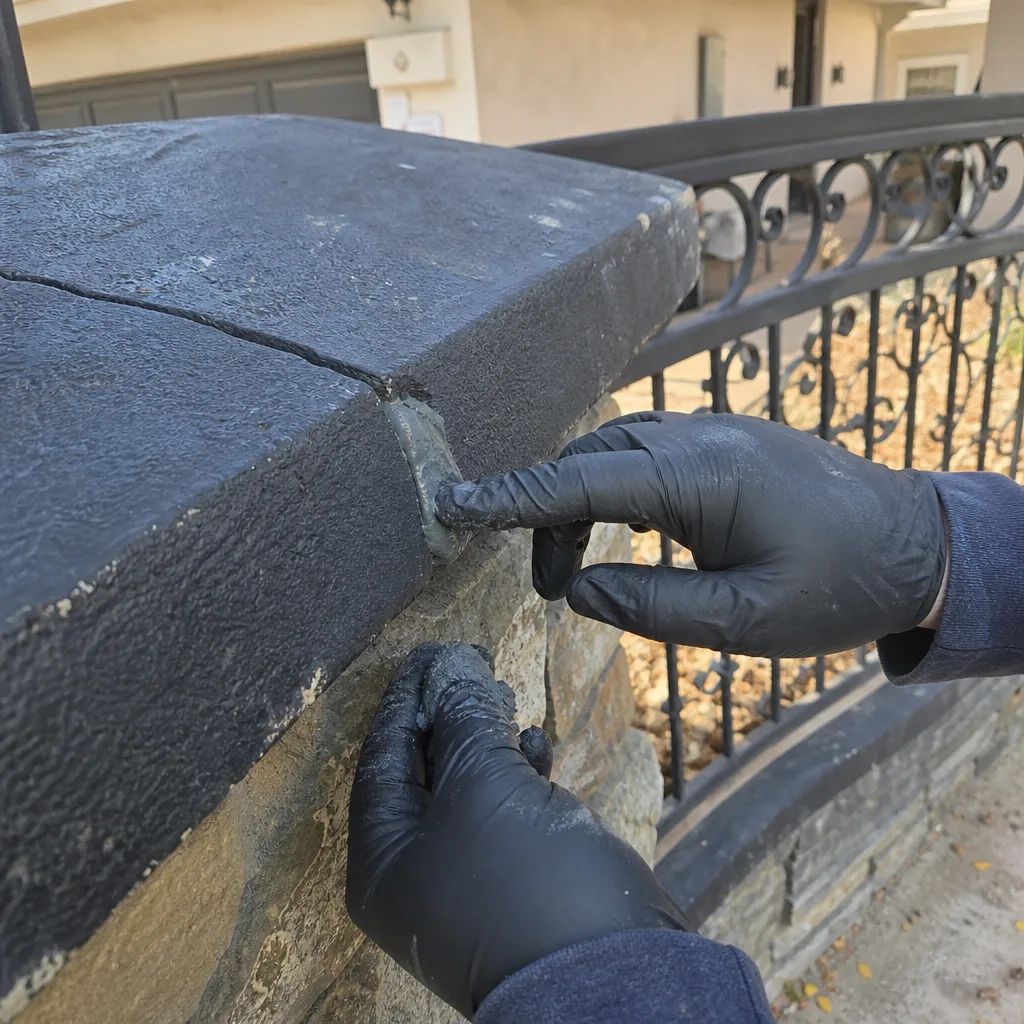
Whitney’s soil runs alkaline, and alkaline soil plus irrigation water plus bare steel equals corrosion at the post base. This is the failure mode homeowners miss because it happens below the sightline.
Early stage: You’ll see white or powdery zinc oxide bloom around the weld collar, a chalky ring at the soil line, and paint lifting in a narrow band just above grade. The weld itself is still sound. This is the cheap window: clean, prep, and recoat before the section thins.
Terminal stage: The steel at the soil line pits and thins, the weld collar develops a visible crack, and the gate post starts to lean or the gate sags on one side. At that point the metal has lost section, and a weld repair means cutting out the compromised steel, not laying a bead over rust.
What a real weld repair at the post base involves: excavating around the base, cutting back to sound metal, fitting a new collar or sleeve, welding with a process suited to the field conditions, then coating the repair and the surrounding steel so the fix doesn’t become the next corrosion point. If the section loss is deep, the post gets replaced rather than patched. We’ve seen Whitney gates where a base repair done over active rust failed within a single season. Done right, with the corrosion removed first, it holds. If your gate post is already leaning, that’s a structural call worth a professional inspection rather than a patch.
How to Read a Part Number When the Manufacturer Is Gone
Manufacturers discontinue hardware constantly, and the gate on your Whitney property may carry a brand that no longer sells the exact part. Fortunately, part numbers and casting marks give you enough to cross-reference.
- Find the casting mark or stamp. Hinges, latches, and roller assemblies usually carry a manufacturer code and a model number cast or stamped into the metal. Clean it and photograph it in raking light.
- Measure the critical dimensions. Pin diameter, plate hole spacing, throw, and mounting offset. These numbers match a compatible replacement more reliably than a model name.
- Match the load rating and material. A hinge rated for a light ornamental gate won’t carry a heavy tube-steel driveway gate. Note the gate weight and leaf width.
- Cross-reference by specification, not brand. A good parts source can match dimensions and rating across brands even when the original is off the market.
This is why documentation pays off. When we service a gate fitted with a Ghost Controls or Mighty Mule operator and original hardware, we photograph the part number and the dimensions before removal, so the replacement is a measured match rather than a guess. If a future technician has that record, they don’t have to rediscover your gate from scratch. For automation and operator parts, the Gate Motor & Opener in Whitney service handles cross-referencing across the major brands, including DoorKing, Elite, and FAAC.
Field Repair vs Shop Fabrication: What Changes
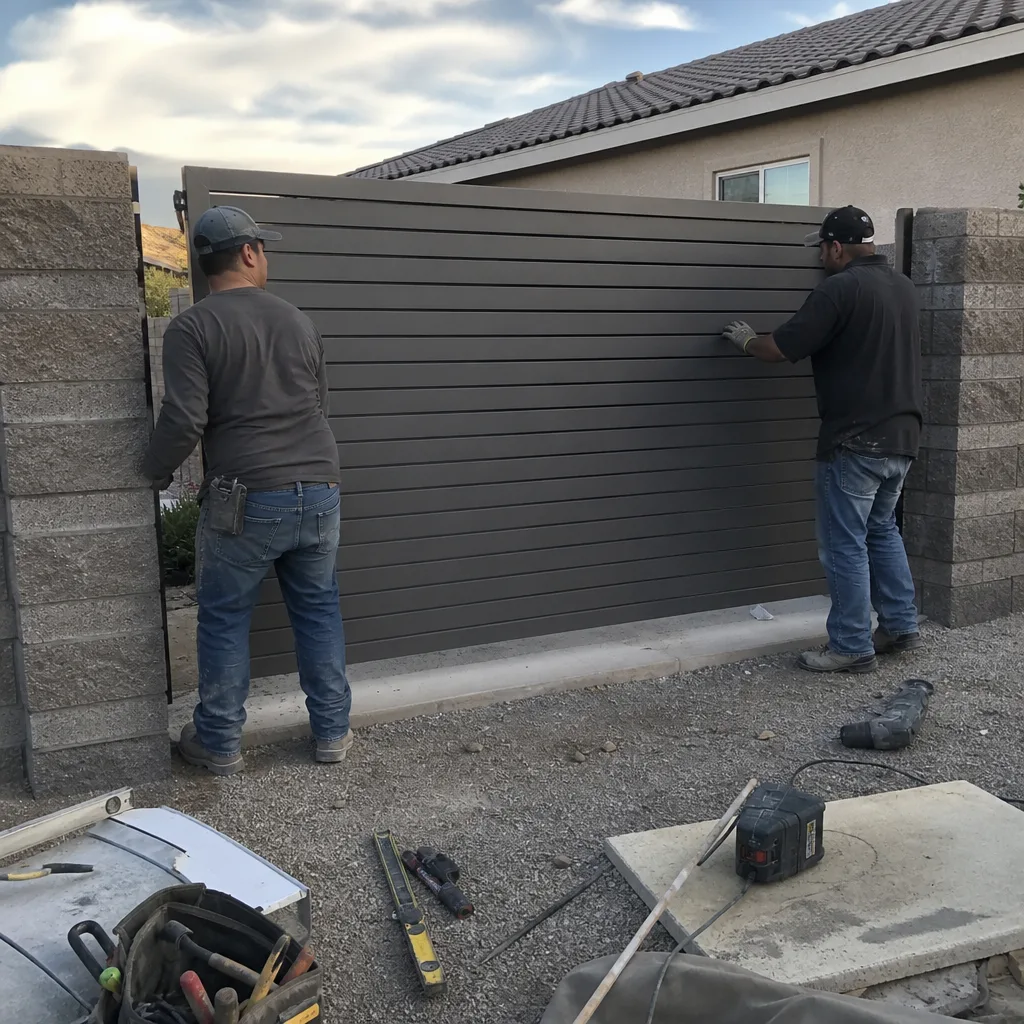
The same gate can call for two completely different approaches depending on whether the work happens in your driveway or in a fabrication shop. The differences are practical, not cosmetic.
- Environment: Field work means wind, dust, temperature swings, and no clean bench. Shop work means controlled conditions and better weld quality on new fabrication.
- Process choice: Field repairs lean on stick and flux-cored for their tolerance of dirty steel and wind. Shop fabrication favors MIG and TIG for cleanliness and appearance.
- Fit-up precision: Shop fabrication allows jigs and precise alignment. Field repair works with what the existing gate gives you, which is why measuring twice and documenting the original geometry matters.
- Coating: A shop can properly prep and powder coat a new section. A field repair gets a touch-up coating that must match and protect the surrounding steel.
In Whitney, the decision often comes down to whether the repair is a hinge weld (field) or a replacement gate leaf (shop). Getting that call right saves money and prevents a field patch that fails because the conditions were wrong for the process used. Vance Gate Repair Whitney documents every field repair with photos of the joint and the coating so the next person has a record.
The Local Parts Supply Problem in Whitney
Whitney isn’t a metro core with a dozen gate-supply houses on the same block. Local inventory is thin, which makes part substitution a real field problem rather than a theoretical one. When the exact hinge or roller isn’t on a shelf nearby, the choices are to order and wait, or to substitute a compatible part that fits the dimensions and load rating.
Substitution is fine when it’s done by specification and risky when it’s done by eyeball. A hinge that’s a quarter inch off in pin diameter will wear the gate leaf and the post plate. A latch that fits the hole but not the throw will bind in a month. The documented approach: measure, match on rating and dimensions, install, then photograph the fit. If you’re waiting on a part, ask what the substitute is rated for before anyone drills. In our experience, the Whitney homeowners who avoid double-paying are the ones who keep the measurement record from the last technician.
A Maintenance Schedule That Fits This Climate
Desert climate doesn’t mean low maintenance. It means a different maintenance rhythm than coastal or temperate regions. This schedule is built for Whitney conditions.
- Every 3 months: Visual check of hinge welds and bottom rail. Look for paint lifting and chalky bloom at the soil line.
- Every 6 months: Lubricate hinges and latch hardware, test the latch alignment, and clear irrigation overspray away from the gate base.
- Annually: Inspect post bases for corrosion, check coating condition on sun-facing surfaces, and photograph any change so you can compare year over year.
- After any irrigation or landscape change: Re-check the gate base. New drip lines near a post speed corrosion.
This is also the routine that catches a failing hinge weld in the cheap window, before it becomes a post-plate repair. If you’d rather have a baseline record, the Vance Gate Repair Whitney home page explains how a documented inspection works.
Common Mistakes to Avoid
- Buying “exterior grade” hardware without checking the coating spec. The label says exterior, but the UV rating is what determines lifespan in Whitney’s sun. Ask for the coating details, not just the grade.
- Welding over rust at the post base. A bead laid over active corrosion fails within a season. The steel has to be cut back to sound metal first.
- Substituting a hinge by eye instead of by measurement. A fraction of an inch in pin diameter wears the gate leaf and post plate, and the damage doesn’t show for months.
- Painting raw steel instead of prepping for powder coat. Cheaper up front, but in Whitney’s UV it chalk and fails in a few years.
- Letting irrigation spray hit the gate base. Alkaline soil plus constant moisture is the corrosion recipe here. Redirect the drip line.
- Mixing weld processes to fit the tool on hand. Using gas-shielded MIG in a windy driveway produces a weak joint. Match the process to the conditions.
- Skipping the documentation. Without a photo record of part numbers and settings, every future repair starts from zero and you pay twice.
See the difference
BeforeAfter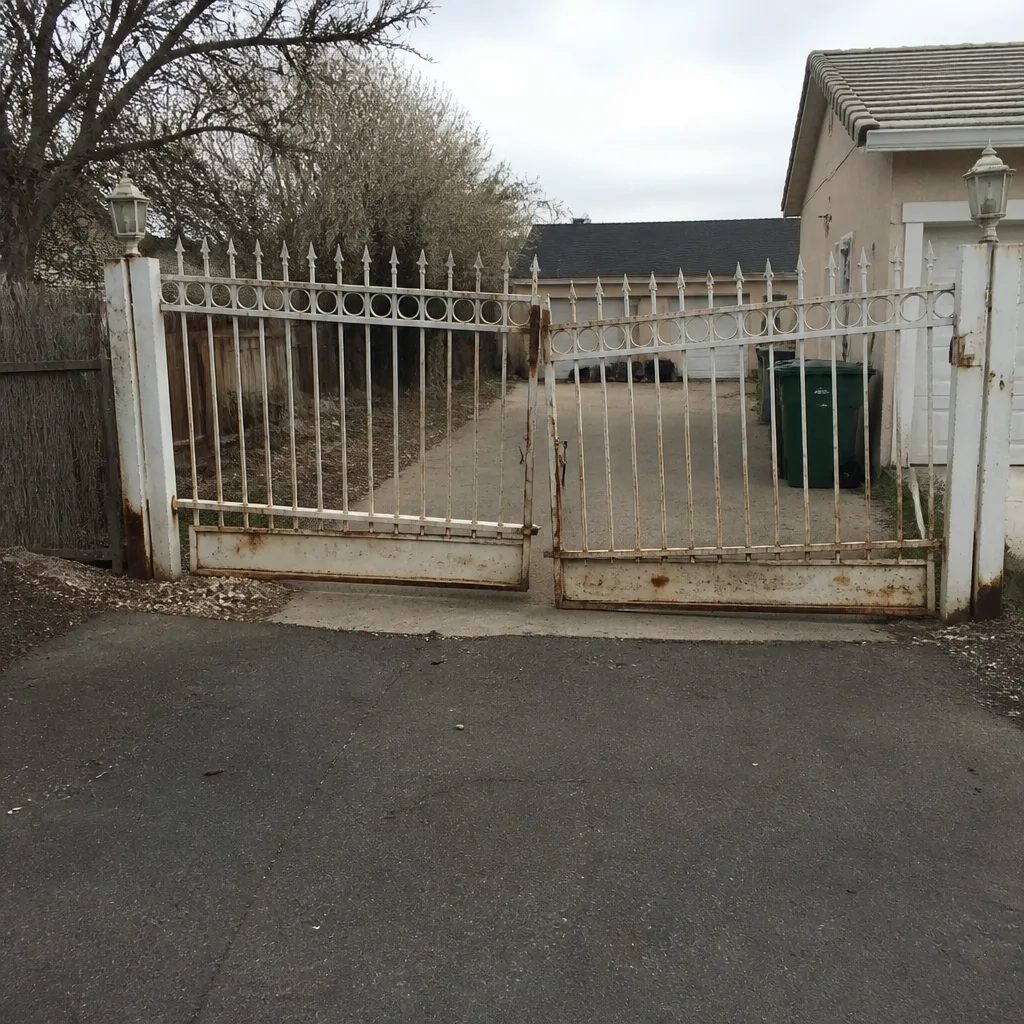 Before
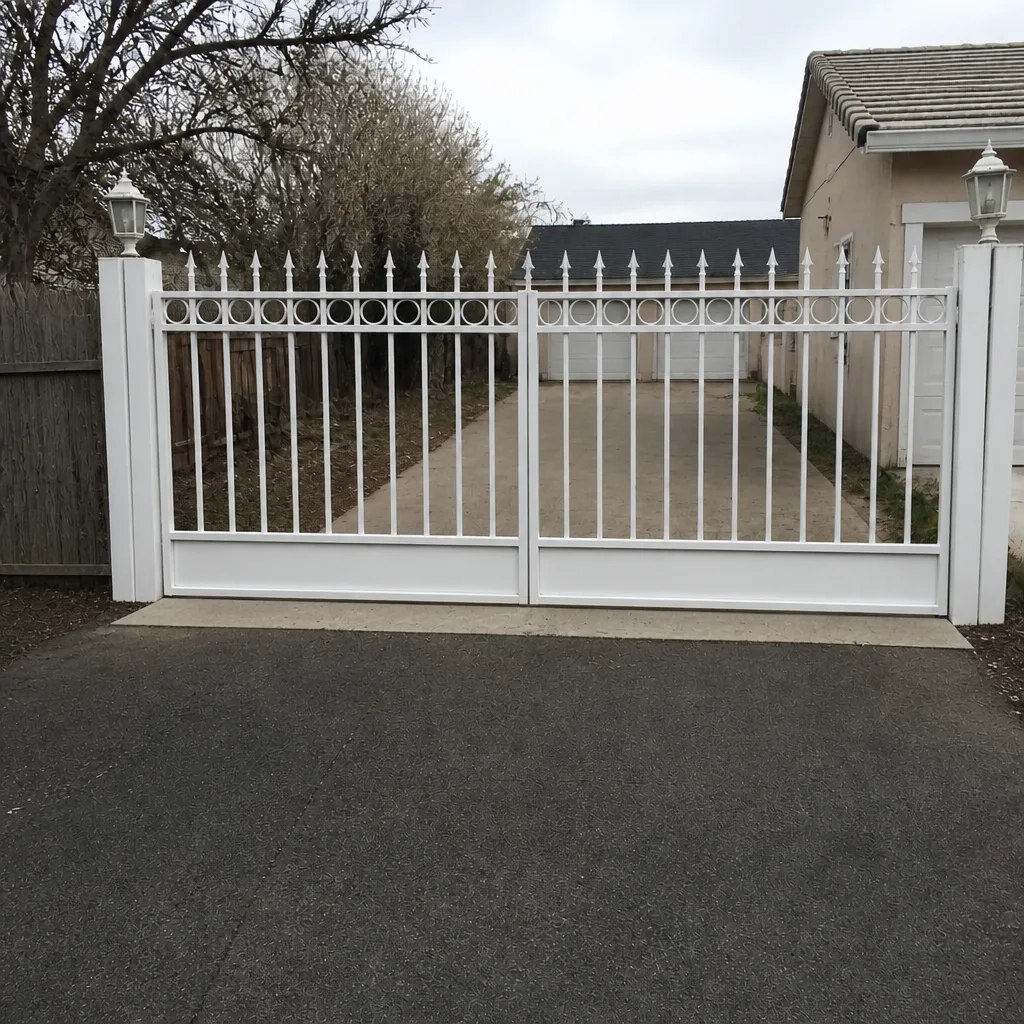 After
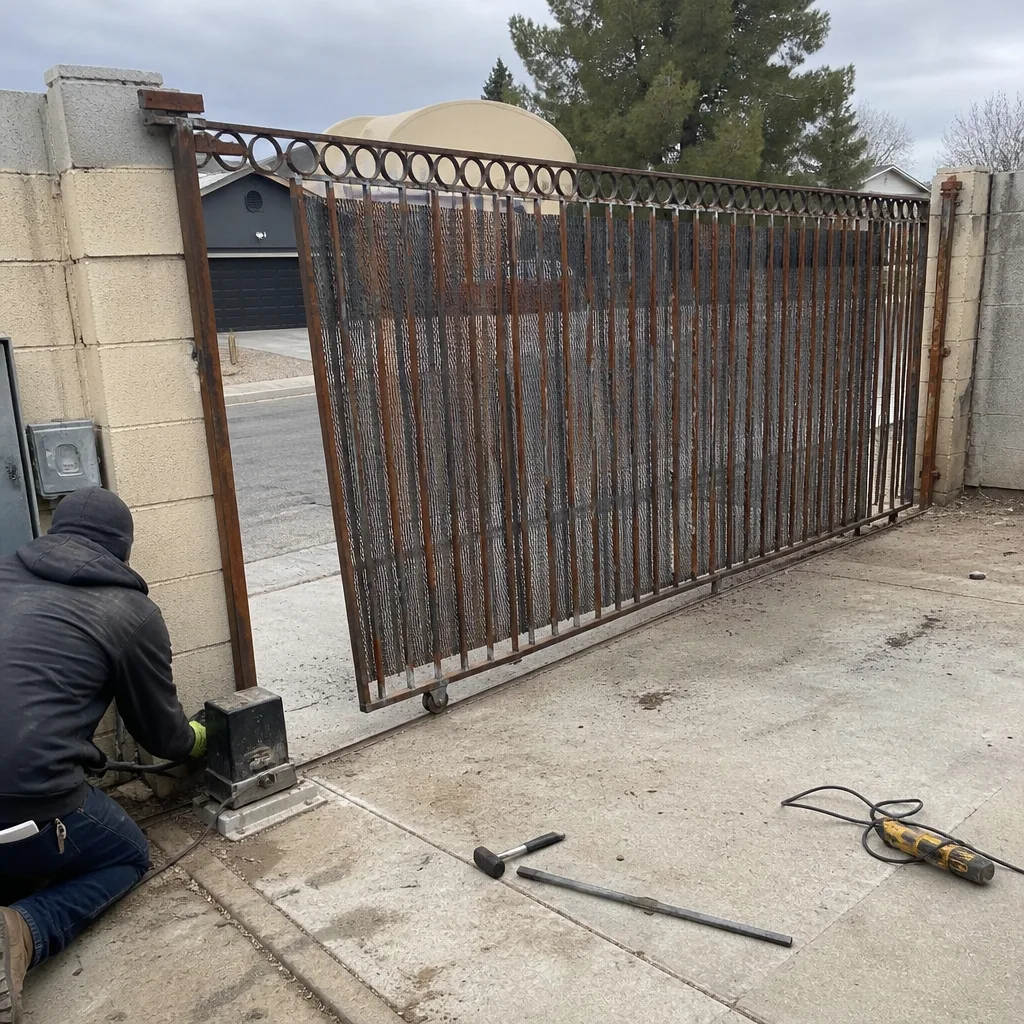 Before
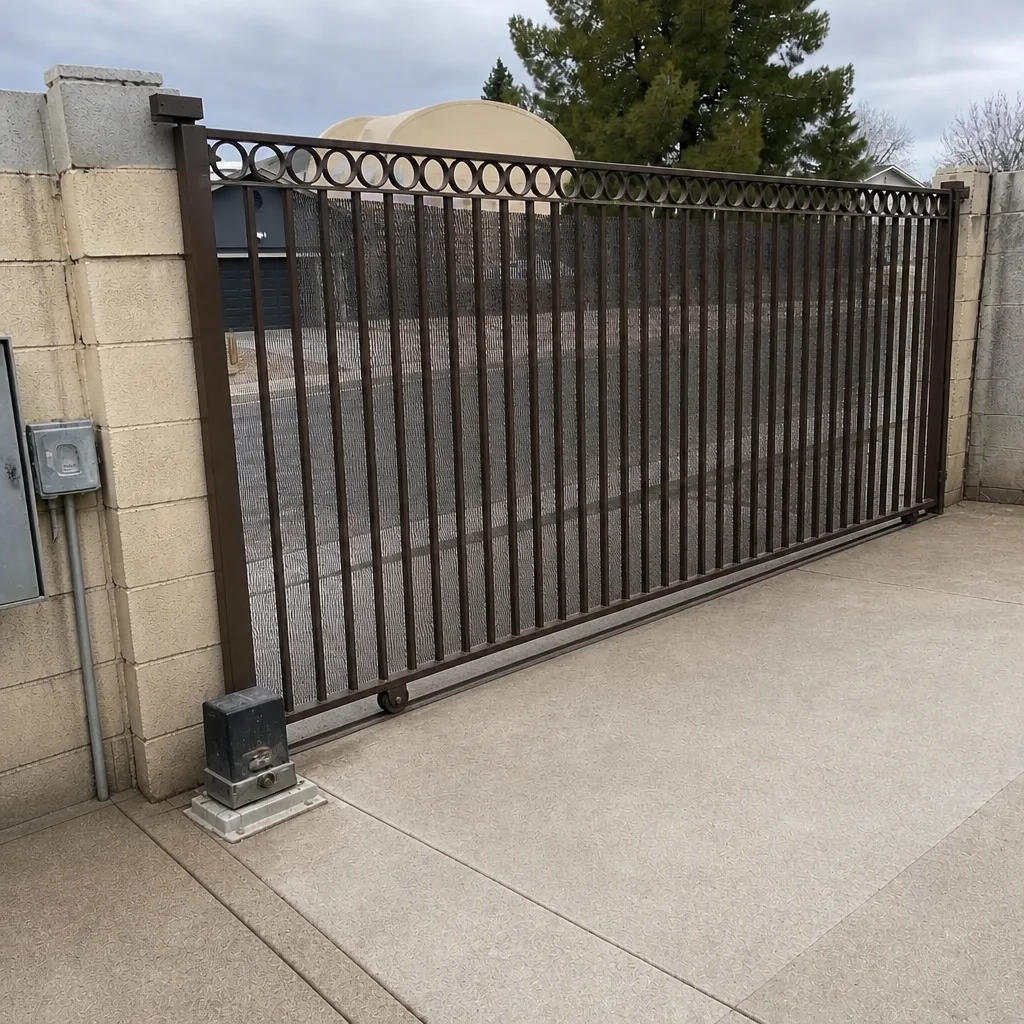 After
When to Call a Professional
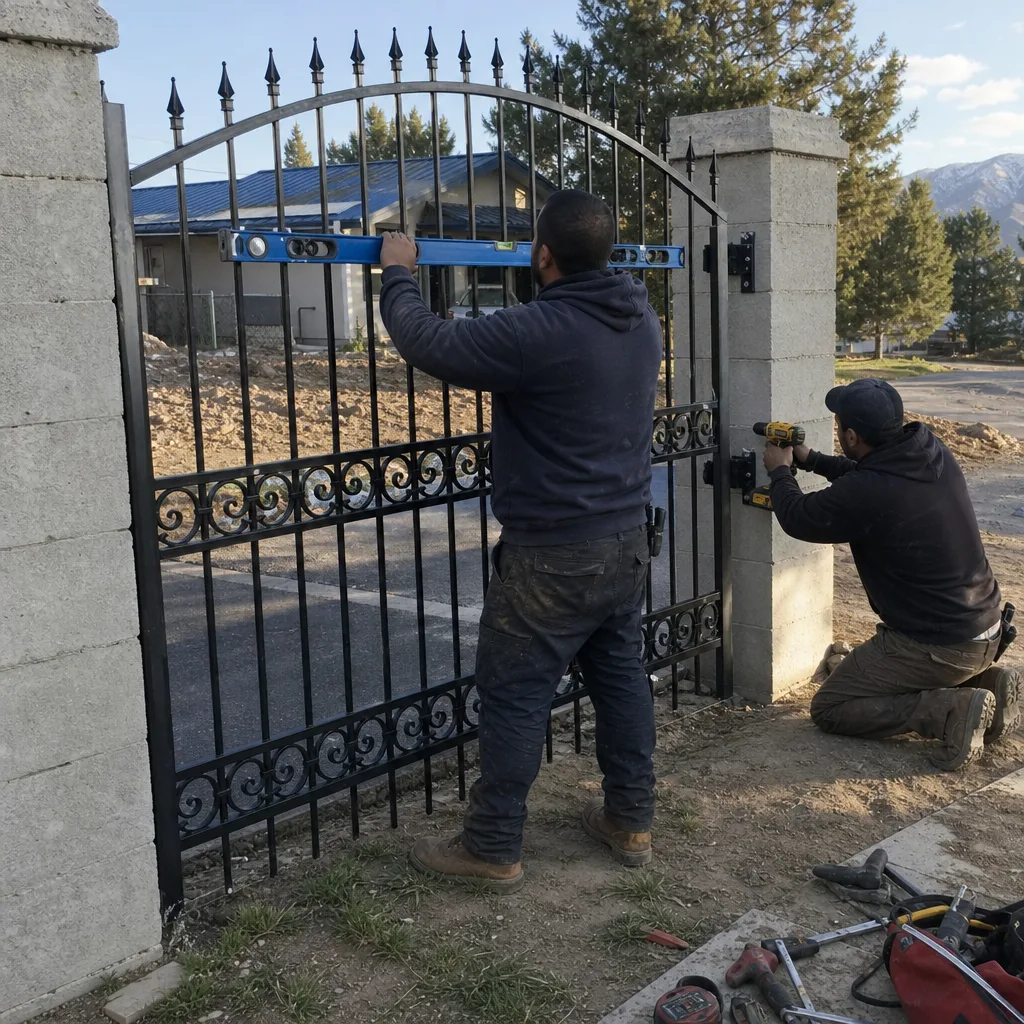
Some gate work is a homeowner’s job and some isn’t. Call a professional when a hinge weld is cracked or a post plate is tearing out, when the gate post is leaning or the section at the soil line has thinned, when you need a field weld on structural steel, or when a part is discontinued and you need a measured cross-reference. Welding structural gate steel and setting hinge geometry are jobs where a bad fix shows up later and costs more to undo. Vance Gate Repair Whitney offers free estimates in Whitney. Call (844) 797-4861 and we’ll give you a written price before any work starts.
Frequently Asked Questions
Most hinge and bottom-rail weld repairs in Whitney fall in the $150 to $450 range, depending on access and whether coating touch-up is included, while post-base repairs that require cutting out corroded steel run higher. The price depends on the section loss and the access, so the exact figure comes from an inspection. Call (844) 797-4861 for a written estimate before any work begins – estimates are free.
Hinge welds fail first on most Whitney driveway gates, followed closely by the bottom rail on gates set near irrigated landscaping. UV exposure breaks down coating on the sun-facing side, and alkaline soil accelerates corrosion at the post base, so those two zones need the closest watch.
Yes. A compatible replacement can be matched by pin diameter, plate hole spacing, throw, and load rating even when the original brand is off the market, which is why measuring and photographing the original hardware matters before removal. Bring the old part or its measurements and any parts supplier can cross-reference it.
Powder coat over properly prepped steel outperforms paint over raw steel by roughly 5 to 8 years of service life in high-UV desert exposure. The difference is in UV resistance and film integrity: powder coat resists chalking and holds color far longer, so you recoat less often.
Stick (SMAW) or flux-cored MIG is usually right for field repairs because it tolerates wind, dirt, and weathered steel. Gas-shielded MIG and TIG belong in shop fabrication where the conditions are clean and controlled.
Yes. Vance Gate Repair Whitney assesses the gate, identifies the weld zone and part, cross-references compatible hardware when the original is discontinued, and photographs the finished joint before leaving. Call (844) 797-4861 for a free estimate and a written price up front.
The Bottom Line
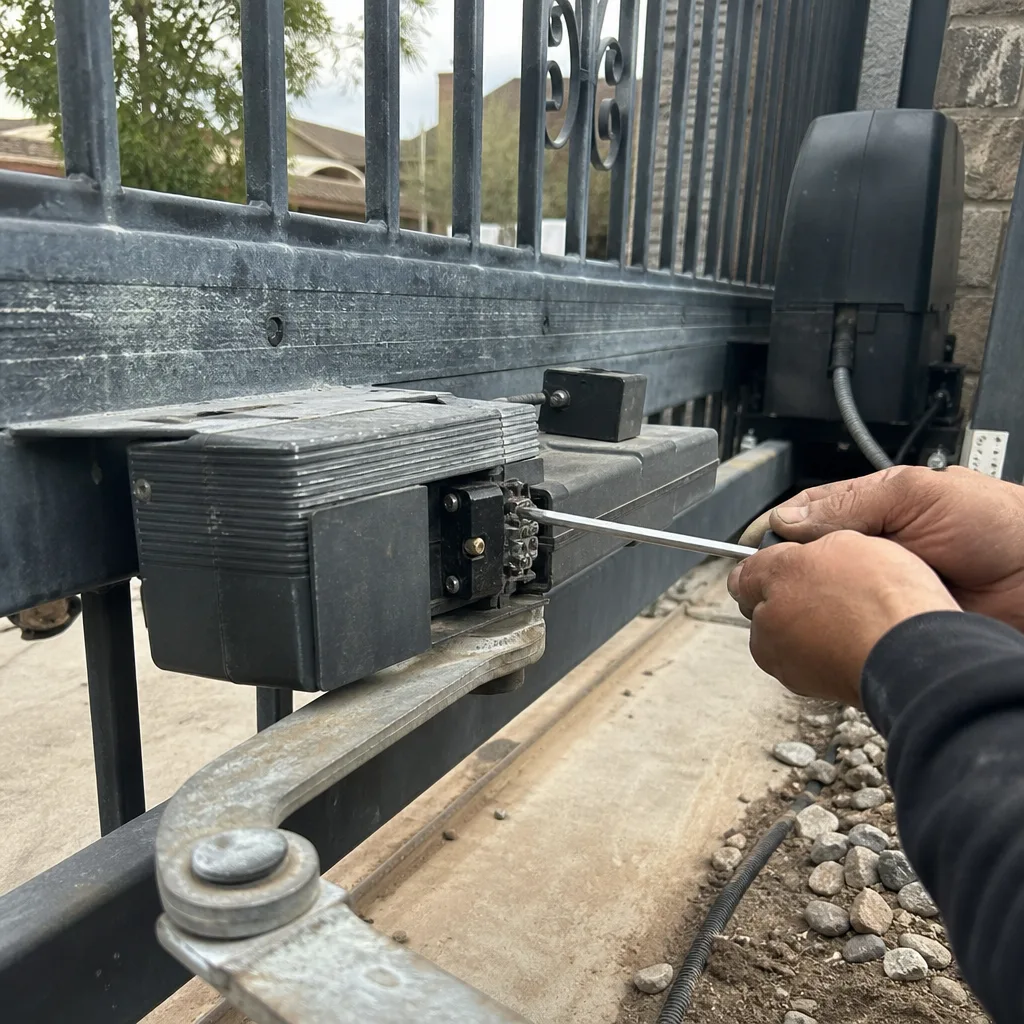
Gate parts in Whitney live or die on three things: UV exposure, alkaline soil at the post base, and the local parts supply that makes substitution a real skill rather than a shortcut. Match the coating to the sun, match the weld process to the field conditions, and measure a replacement part rather than guessing at it. The four-zone map tells you where to look first, and the hinge weld is usually the answer. Get the price in writing before work starts, keep the photo record, and your gate lasts longer between repairs. Written by the team at Vance Gate Repair Whitney.
Written by the team at Vance Gate Repair Whitney.