
Last updated November 18, 2026
 Wrought iron
 Wood & steel frame
 Farm & ranch
 Sliding driveway gates
 LiftMaster operators
Free on-site gate assessment - hinges, posts, and your LiftMaster or Nice gate operator checked before anything is quoted
The assessment is free and the quote is the invoice.
Get your free estimateGate Motor & Opener Maintenance Schedule: What to Do and When
Most gate maintenance guides say “lubricate every six months.” That interval was written for a mild-climate average – in Whitney, the right interval after a dust storm or a hard freeze is now, regardless of the calendar. We’ve seen a BFT sliding-gate operator seize three weeks after the homeowner’s “overdue” service date, and we’ve seen the same model run clean for two years because the owner reset the schedule around actual stress events. This guide lays out a condition-based maintenance schedule built on cycle counts and seasonal triggers, plus a logging habit that predicts failures before any symptom shows up.
Quick Answer
Service your gate motor when an event triggers it, not when the calendar says so. The four triggers that matter most are a dust storm, a freeze, every 1,000 registered cycles, and any manual-release use. At each visit, log motor amp draw, inspect the photo eyes, and verify limit-switch end points.
Styles & brands we work with
- Wrought iron
- Wood & steel frame
- Farm & ranch
- Sliding driveway gates
- LiftMaster operators
Table of Contents
- Why calendar-based schedules fail in Whitney
- The four maintenance triggers that matter
- The lubrication map: what takes grease, what takes oil, what stays dry
- Logging motor amp draw as an early-warning metric
- Annual tasks that require no tools
- What to do after any manual-release use
- The one-page maintenance log template
- Common mistakes to avoid
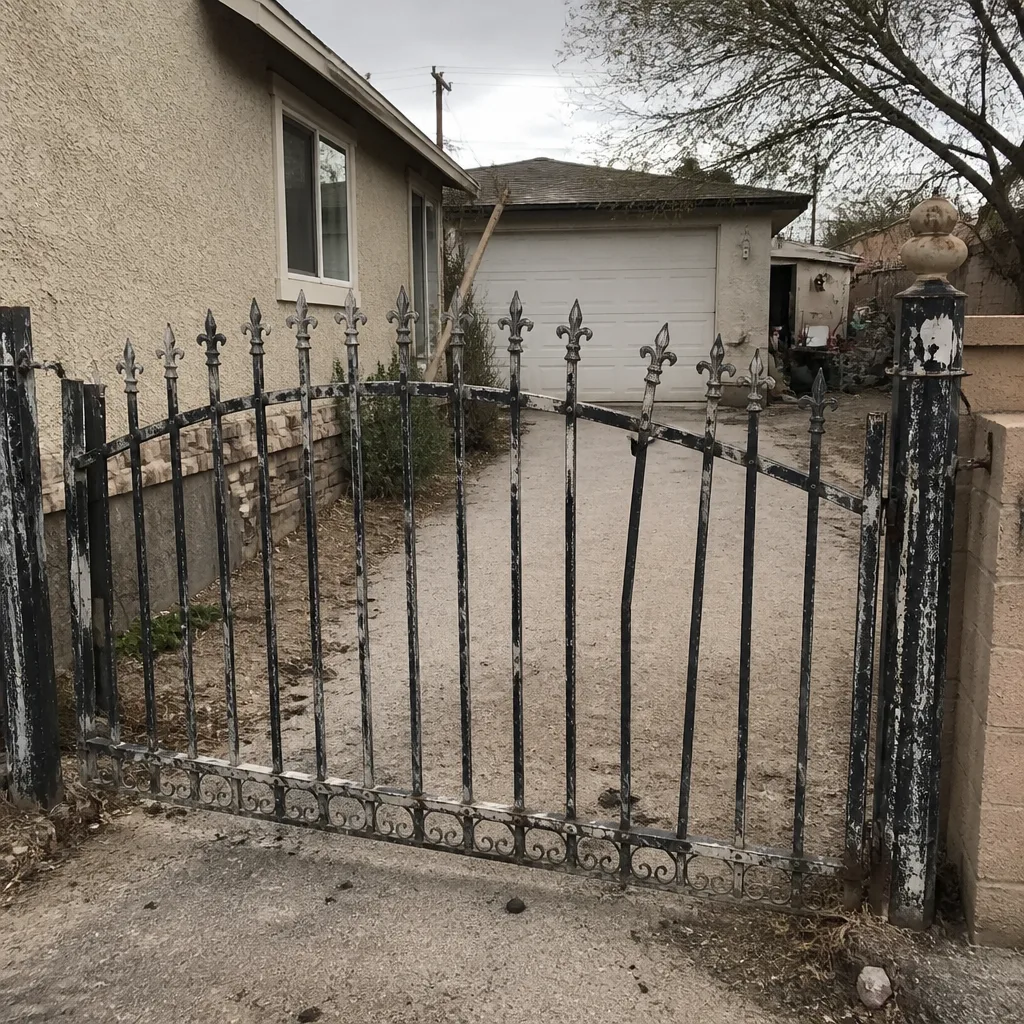 Before
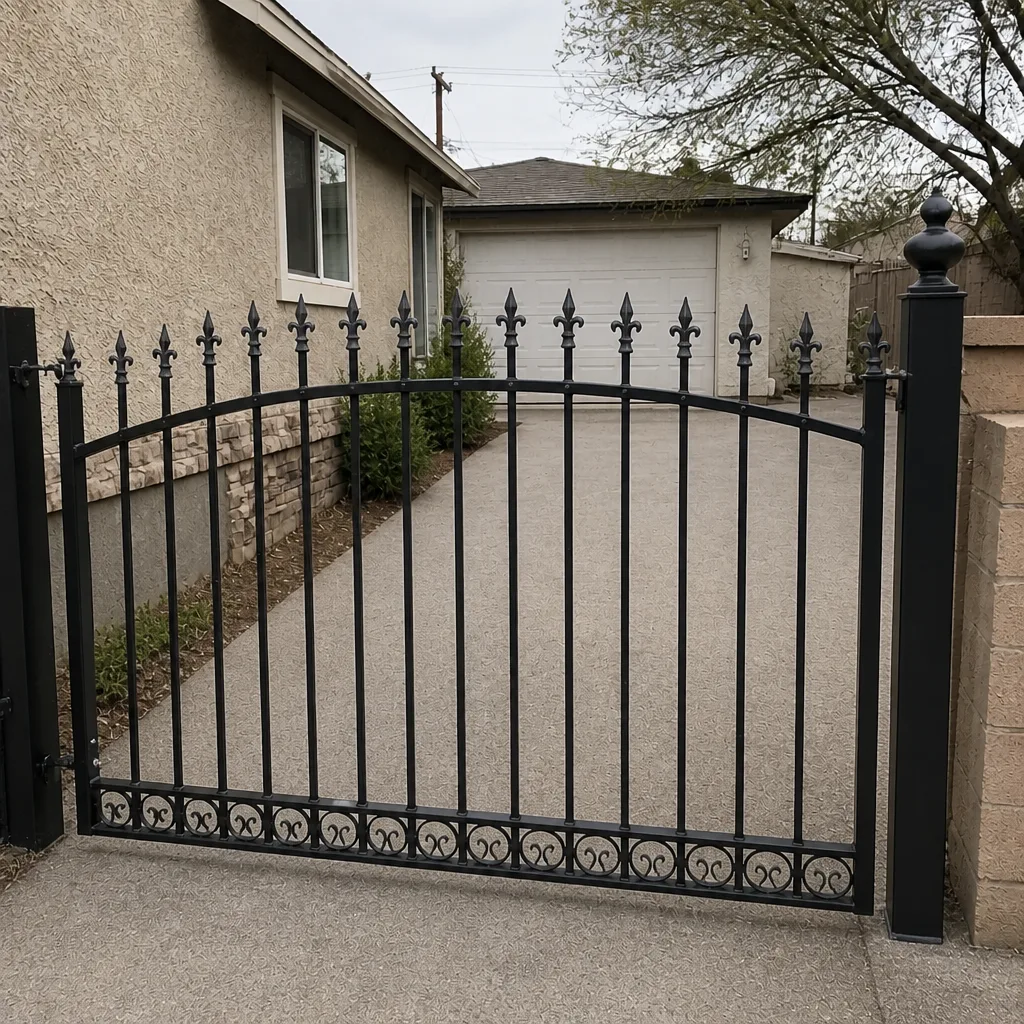 After
Why calendar-based schedules fail in Whitney
A six-month lubrication interval assumes an average climate. Whitney isn’t average. Between spring dust events, summer heat that drives control-board temperatures well past the ambient reading, and winter swings that drop below freezing overnight, gate hardware here sees more stress per year than the interval was designed for. When we open a motor housing in Whitney after a windy stretch, we routinely find fine grit packed into the limit-switch gear and around the arm pivot bushings. That grit turns a clean grease film into an abrasive paste.
Cycle count matters just as much. A homeowner who opens and closes the gate eight times a day puts nearly 3,000 cycles on the operator in a year. A homeowner who does the same twice a day puts on roughly 730. Same neighborhood, same motor, and the calendar schedule gives both the same answer. It shouldn’t.
None of this is an argument for never checking the calendar. It’s an argument for treating the calendar as a floor, not a ceiling. The trigger schedule below sits on top of a yearly baseline service, not instead of one. If you want the underlying motor service done under a written price, our Gate Motor & Opener in Whitney page covers what a full service visit includes.
The four maintenance triggers that matter
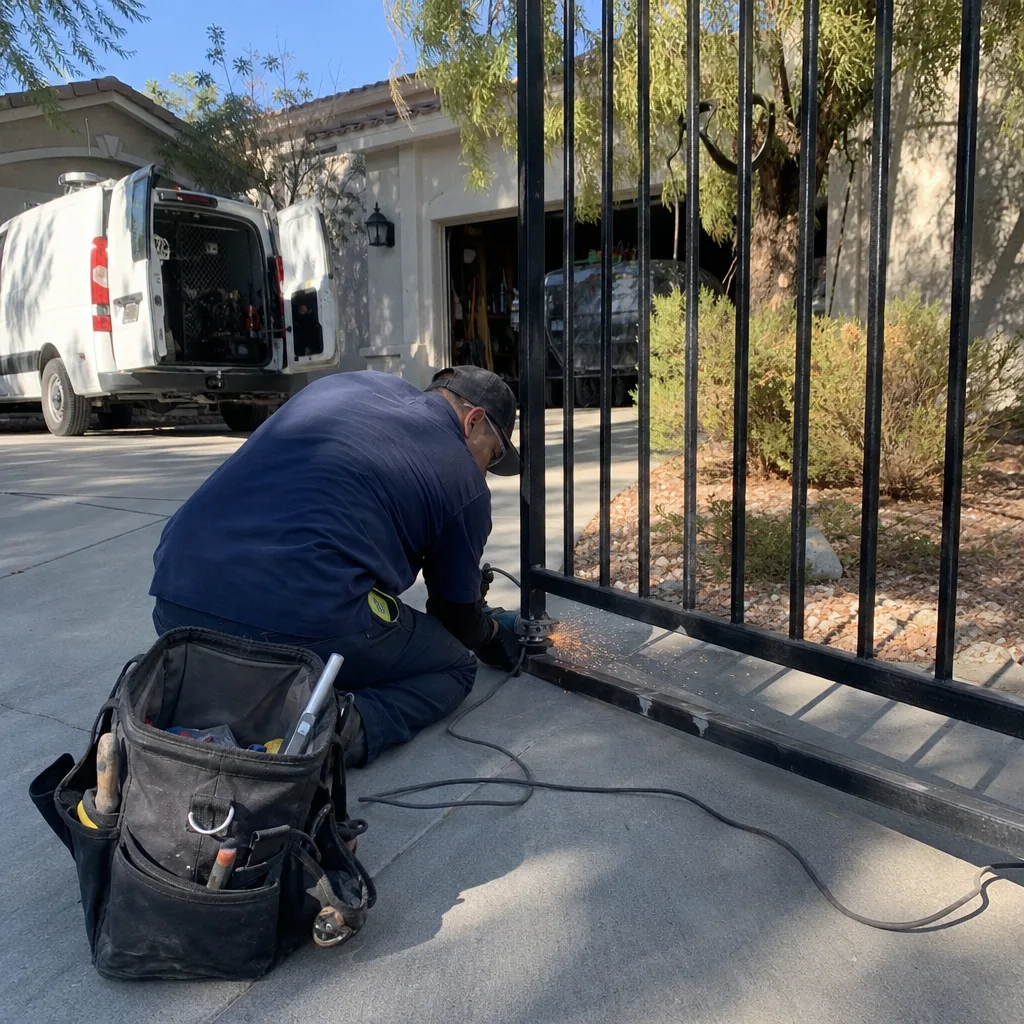
These four events mean it’s time to look at the hardware, full stop. The calendar can wait. The trigger can’t.
- Within a week of a dust storm. Whitney gets these on a predictable enough seasonal rhythm that a homeowner who’s been through a couple of seasons can feel one coming. The morning after, do a basic visual pass: grit in the track on a sliding gate, grit around the hinge bushings on a swing gate, grit near the photo-eye lenses. Grit in the wrong place eats the finish off a steel rack within a season.
- Within a week of a hard freeze. Freezing temperatures stiffen lubricants. If the gate has been struggling through the cold, or if the operator tripped its thermal cutoff during a cold snap, the motor should be checked before the stiffness causes a stall and a burnt winding. Freeze also drives frost heave, which throws a gate out of level and loads the operator unevenly.
- Every 1,000 cycles. Most modern control boards – LiftMaster, FAAC, BFT, Linear, Viking all now build this in – either count cycles outright or reveal them via a diagnostic menu. Check the count at your annual service, add the cycles since the last visit, and when you cross a thousand, do a maintenance pass: lubricate the pivot points, check that the amp draw is stable, verify the limits.
- After any manual-release use. If you pulled the release lever – during a power cut, a jam, anything – the operator has to be re-engaged correctly after the mechanism is back in service. A swing-arm operator that’s re-engaged a couple of teeth off the correct position runs against its own limit switch every time it closes. That will burn the motor out slowly and silently. After any manual release, do a full open-close-open test and listen for strain at the ends of travel.
If you want to know what’s underneath the housing before the next trigger hits, that’s what a service visit is for. No rough estimate, a written price before anyone touches a tool.
The lubrication map: what takes grease, what takes oil, what stays dry
Getting this wrong is the most common maintenance error we correct. A gate lubricated with the wrong product at the wrong point can run worse than one that was never lubricated at all, because the wrong product collects grit and hardens into a loading condition. Here’s the map we use on every service visit.
- Takes grease (a light lithium or equivalent): swing-arm pivot bushings, hinge pins on swing gates, and the operator’s output shaft bearing. Grease is for slow-moving, high-load points. Apply sparingly, then wipe the excess. Excess grease is grit glue.
- Takes oil (a light machine oil, applied with a small oil can): roller chains on sliding-gate operators, rack-and-pinion contact surfaces on a nylon or steel rack, and any pivot that moves through a small arc. Oil penetrates and washes old grit out; grease sits on top and holds it in.
- Stays dry: nylon rack teeth (a dry-film or manufacturer-specified lubricant only – standard grease swells and degrades nylon over time), the photo-eye lenses, the control-board terminals and any exposed terminal block, and the inside of the motor housing. If you find moisture inside the motor housing, that’s a repair, not a maintenance item.
- No lubricant at all on the release mechanism. The manual-release lever should move freely but stay clean. Grease on the release latch is a safety issue, because it collects grit that jams the lever when you need it most.
The nylon-rack point deserves a longer note. A common gate lubricant, applied to a nylon rack because “it looks dry,” will soften the rack teeth under load and cause rapid tooth wear. Once a nylon rack has been softened by grease, replacing the rack is the only correct fix. It’s a cheap repair done early and an expensive one after a stall.
Logging motor amp draw as an early-warning metric
This is the single most useful maintenance habit we can teach a Whitney homeowner, and it’s the one almost no one does. Every operator draws a current in amps as the motor works. That current rises as the mechanical load on the motor rises. A binding hinge, a stiff bushing, a rack with a rough spot, and a failing capacitor all show up as rising amperage before the motor stalls.
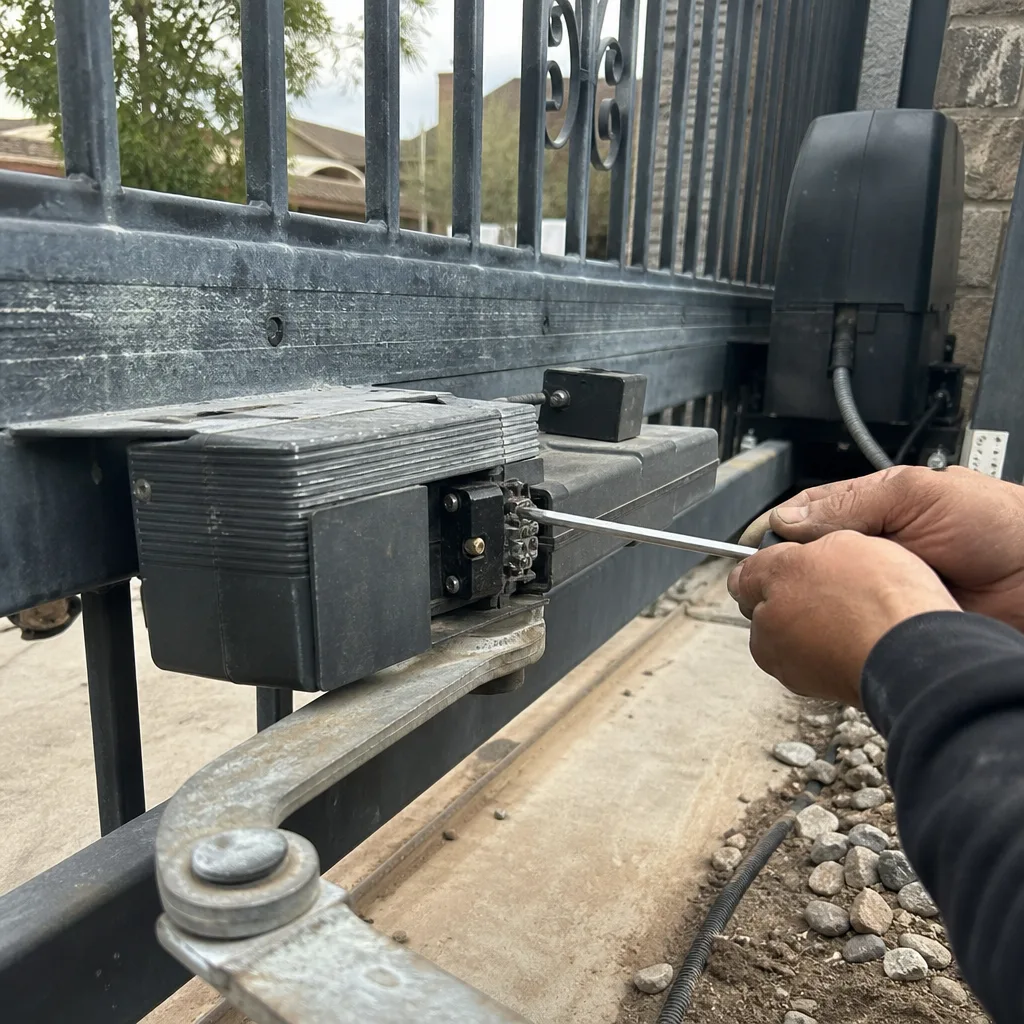
To log amp draw you need a clamp-style ammeter (a small clamp meter that reads current without breaking the wire). Wearing appropriate gloves, open the operator housing with the power isolated, clamp the ammeter around the motor’s supply conductor, and take a reading during a full open cycle and again during a full close cycle. Write both numbers down.
The habit works like this:
- Log the amp reading at every service visit, along with the date, the cycle count, and the ambient temperature.
- Compare this reading to the previous two. A steady eight amps at every visit is a healthy motor.
- If you see a rising trend over three consecutive checks, that’s your early warning. A rising amp draw across three visits means the mechanical load is climbing. Find and fix the mechanical cause before the motor burns out.
We’ve caught binding hinges on a Viking gate that way with a zero-symptom amp trend, at a repair cost of a hinge and a lubrication pass. Left another six months, the same gate would have needed an operator. The exact same fault, two completely different invoices, and the only difference was that someone was logging the amperage.
If electrical work isn’t where you want to be, that’s fine. Part of our service visit is leaving that amp reading in your job record and photographing the setup, so the next person to look at the gate has a baseline. If you’d like that baseline on your current motor, our Gate Repair in Whitney page lays out what a diagnostic visit covers.
Annual tasks that require no tools
These four checks need nothing more than eyes, hands and a flashlight. They take ten minutes and catch problems before they become service calls.
- Photo-eye lens inspection. The photo eyes are the pair of small infrared emitters and receivers on either side of the gate opening. If a spider has laid a web across the lens, or dust has filmed it over, the gate will behave erratically – stuttering, reversing on the open, or refusing to close. Wipe both lenses with a clean cloth. Then do a walk test: walk slowly through the beam while the gate is closing. If the gate does not reverse, the photo eyes are not doing their job. This is a safety issue, and the gate should be taken out of service until it’s resolved.
- Control-board terminal corrosion check. With the power isolated (always isolate before opening anything), look at the terminal block on the control board. Green or white powdery crust on the terminals is corrosion. It’s the single most common intermittent-fault cause on gates in Whitney after a wet season. Do not start poking at it with a screwdriver; if you find corrosion, that’s a repair visit.
- Battery load test. If your operator uses a battery backup, test it annually. Most modern boards will indicate a low battery in their diagnostic menu. A battery that won’t take a load is a battery that will leave you locked out during a power cut.
- Limit-switch end-point verification. Watch the gate travel to full open and full close. On a swing gate, the leaf should stop square to the driveway, not angled in or out. On a sliding gate, the leading edge should stop cleanly against the post without leaning or bouncing. If the gate has crept past its stop over the year – which it does, especially after freeze-thaw cycles – the limits need to be reset. A gate that bumps its stops is loading the operator at the ends of travel, which is where most motor damage happens.
The limit-switch adjustment itself is a service task. Do not attempt it with a screwdriver and a YouTube video; a swing arm or sliding operator that runs its limit switch past the intended stop can crack a hinge bracket or strip its own gearbox. If your gate is hitting its stops, book a service visit.
What to do after any manual-release use
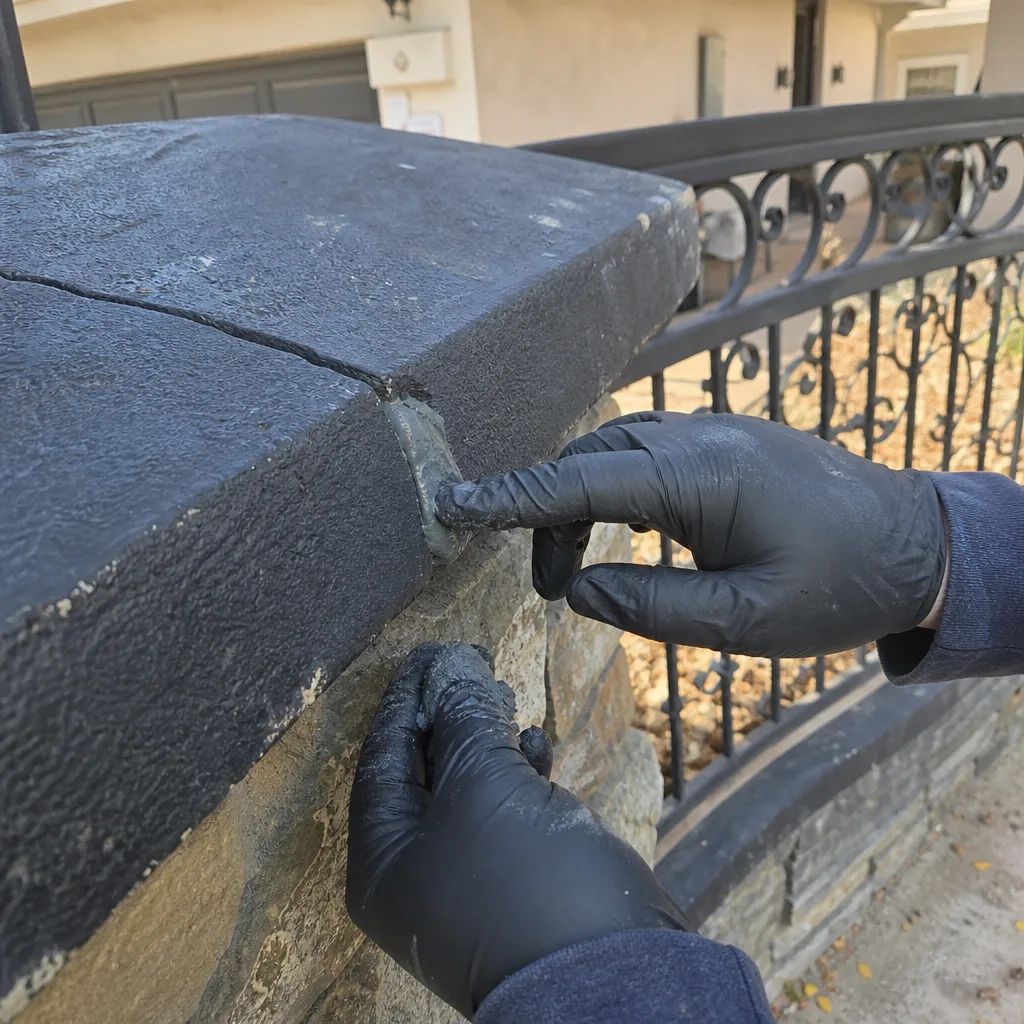
We covered this in the trigger list, but it deserves its own section because it’s the most under-reported maintenance event we see. If you pulled the release lever, that event needs to be logged and the operator re-engaged correctly before the gate goes back into service.
For a swing-arm operator, re-engage the arm to the gate bracket only when the gate is in the closed position and the arm has been moved to its own closed position. For a sliding-gate operator, the manual release disengages the pinion from the rack; re-engagement is a matter of moving the gate to a spot where the pinion drops cleanly into a rack tooth, then confirming the manual release lever is fully returned to its detent. After re-engagement, open and close the gate by hand once through the full travel before you run the motor. If hand travel is rough, stop. Something mechanical has moved and running the motor will make it worse.
After any manual release, watch the motor run the next full cycle and listen. Any new noise – a click, a grind, a bounce at the end of travel – is a signal. Log the date of the manual release in your maintenance log so a future technician knows exactly when the operator was last re-engaged and can check the mechanism against a known reference point.
The one-page maintenance log template
A maintenance log only earns its keep if a future technician can understand the gate’s service history without asking the homeowner a single question. The column list below is what we’d want to see if we were opening your operator for the first time. Print it, tape it inside the operator housing or the property file, and keep it current.
- Date of the visit or the check.
- Trigger – was this a scheduled service, a post-dust-storm check, a post-freeze check, a 1,000-cycle pass, or after a manual-release use?
- Cycle count at the start of the visit (from the board menu).
- Amp draw on an open cycle and on a close cycle.
- Ambient temperature at the time of the measurement (amp draw reads differently on a cold morning than on a hot afternoon).
- Lubricant applied by point (bushing, hinge, chain, rack) – and the specific product used.
- Photo-eye walk-test result.
- Limit-switch end-point position – measured or photographed, not “checked.”
- Parts installed, with the part number.
- Manual release used since last visit? Yes / no, with the date.
- Photo record reference number – the batch identifier for the photo log left on the visit.
Six months from now, that log tells a technician what the gate was doing, how it was set, and what was installed, all before anyone picks up a tool. That’s what makes a maintenance schedule work. It’s also why we treat the log as part of the job, not an extra – a written record every visit, photographed, so the gate’s service history never gets lost. If you’re wondering what it costs to have the gate brought fully up to this standard of record, the Gate Motor & Opener in Whitney page covers what we do and how the pricing works.
Common Mistakes to Avoid
- Greasing a nylon rack. Standard grease softens nylon teeth and turns a $60 rack into an operator repair. Use the dry-film lubricant the manufacturer specifies, nothing else.
- Testing the photo eyes with a finger. A finger is not an obstacle a photo eye sees reliably. Use a proper obstruction test – a foot, a piece of cardboard, or the walk-through test – and confirm the gate reverses.
- Ignoring a slow gate. A gate that’s started creeping is a gate whose amp draw has risen. That’s the early warning. Log it and find out why before the motor fails.
- Adjusting limit switches by feel. The limit switches are set at a specific position. A guess adds a few degrees to the end of travel every cycle, and the motor pays for it. Measure, photograph, verify.
- Dusting a gate with a hose after a dust storm. Water plus grit near the control housing is a corrosion promoter. Dry-brush or blow out the grit, then check the housing for water intrusion separately.
- Trusting a verbal service record. “It was serviced a while back” is not a service history. A maintenance log with dates, amennal readings and part numbers is the one piece of paperwork that prevents the next problem being paid for twice.
- Skipping the log after a manual release. A release that isn’t recorded is a release no future technician knows about, and the mechanism gets checked against an assumed-correct state that may not be true.
See the difference
BeforeAfter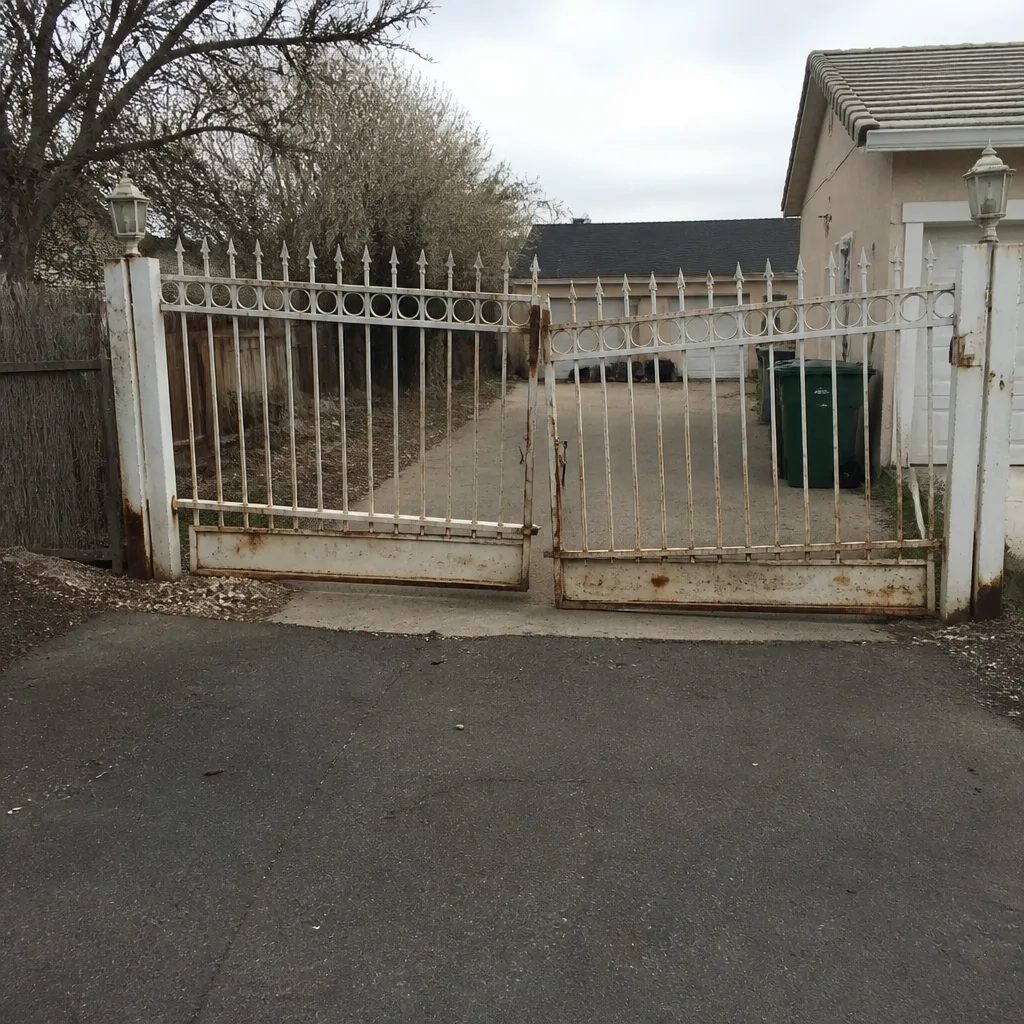 Before
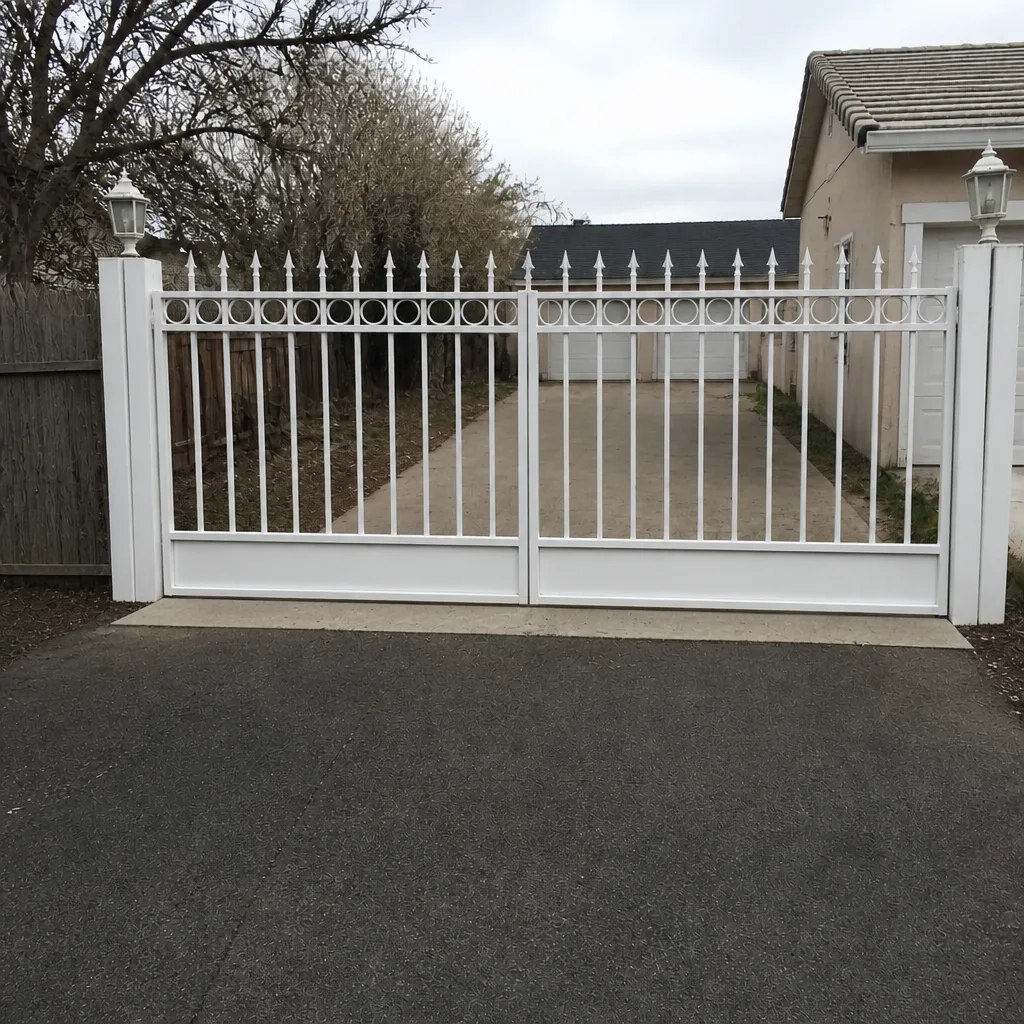 After
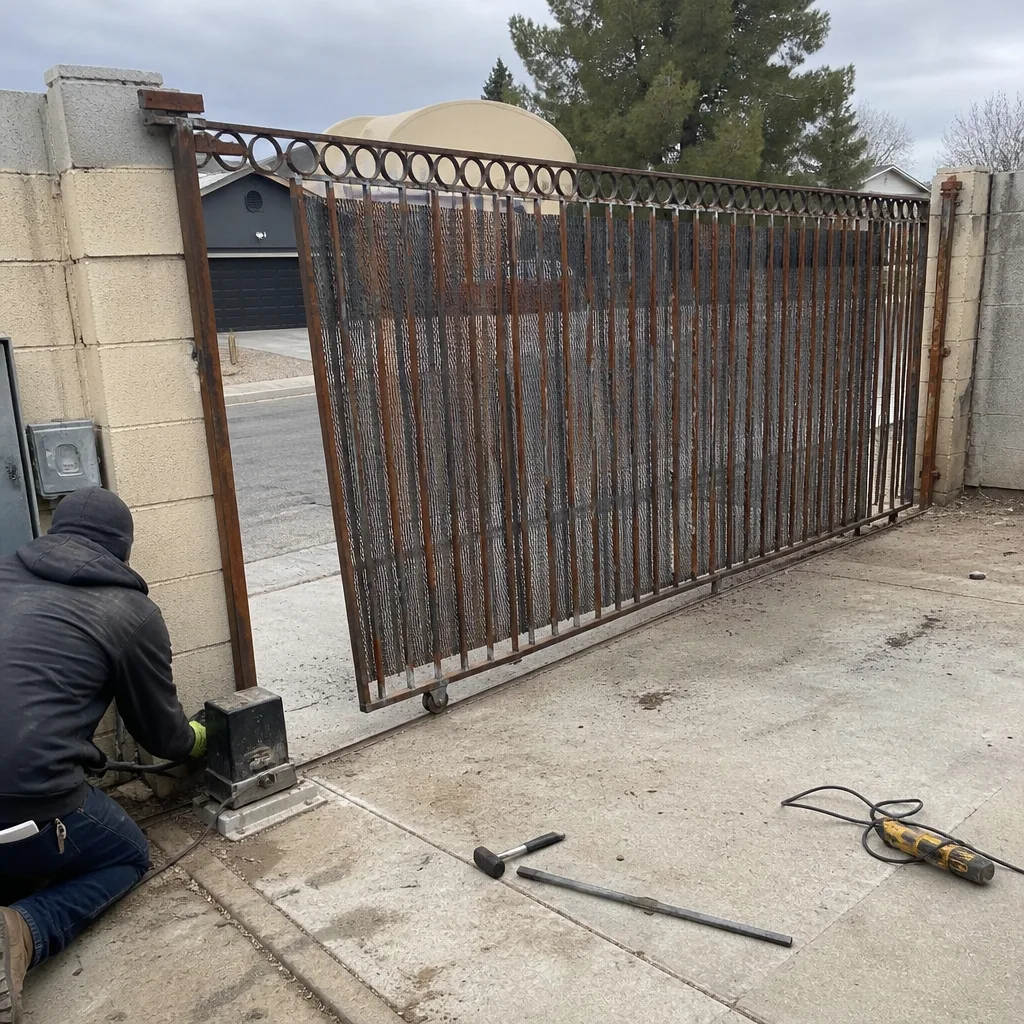 Before
 After
When to Call a Professional
Call a professional for any of the following: a gate that reverses on its own, a motor that stalls or trips its thermal cutoff during normal use, a photo eye that fails the walk-through test, corrosion on the control board, a gate that bumps its stops, a failing battery backup, or a rising amp trend you can’t trace. Any manual-release re-engagement where the gate runs rough by hand is a stop-and-call. And anything involving the 120-volt supply to the operator is a job for a licensed electrician, full stop. Vance Gate Repair Whitney offers free estimates in Whitney – call (844) 797-4861. We’ll bring the ammeter, do the walk test, and hand you a written price before any work begins.
Frequently Asked Questions
Every 1,000 registered cycles, plus a check after any dust storm, hard freeze, or manual-release use. That works out to roughly annually for a daily-use residential gate in Whitney, and more often for a gate on a busy driveway.
We dispatch a technician for gate repair calls, and a live person answers the phone around the clock. If you’re calling because the gate has stopped or a photo eye failed, call (844) 797-4861 and we’ll get you scheduled.
Grease goes on slow-moving, high-load points like hinge pins and pivot bushings. Oil goes on chains, racks, and small-arc pivots. Nylon racks get a dry-film lubricant and nothing else. Getting this wrong wears parts faster than the interval between services.
It’s the current the motor pulls during a cycle, read with a clamp meter. As the mechanical load on the motor rises, the amp draw rises with it. A rising trend across three visits tells you a mechanical problem is developing, well before the gate stops moving.
We service nine major gate-automation brands, including FAAC, BFT, Linear and Viking. We don’t steer you toward a replacement when repair is the right call.
A full visit includes the electrical and mechanical checks, a lubrication pass on the correct points, the limit-switch end-point verification, the photo-eye walk test, an amp-draw reading, and a photo record of what we found and adjusted. The price is written and agreed before any work starts, so there’s no invoice surprise at the end. If you have a written estimate from another company, we’ll review it and give you a free second opinion on it, paperwork and all.
The Bottom Line
Calendar-based maintenance was designed for a milder climate than Whitney offers. Build your schedule around the events that actually stress the hardware: dust storms, freezes, every 1,000 cycles, and every manual release. Lubricate by the map, not by habit. Log your motor amp draw at every service and watch for the three-visit trend that predicts failure. Do the four tool-free checks every year, and keep a maintenance log that a future technician can read without asking you a single question. Do that, and most of the gate repairs we see in Whitney never happen. When one does, call (844) 797-4861 and we’ll hand you a written price before anyone picks up a tool. If you’re planning for a new gate or operator, our Gate Installation in Whitney page covers what a proper install looks like – and if you’re just starting out with us, the Vance Gate Repair Whitney home page has the full picture.
Written by the team at Vance Gate Repair Whitney.