
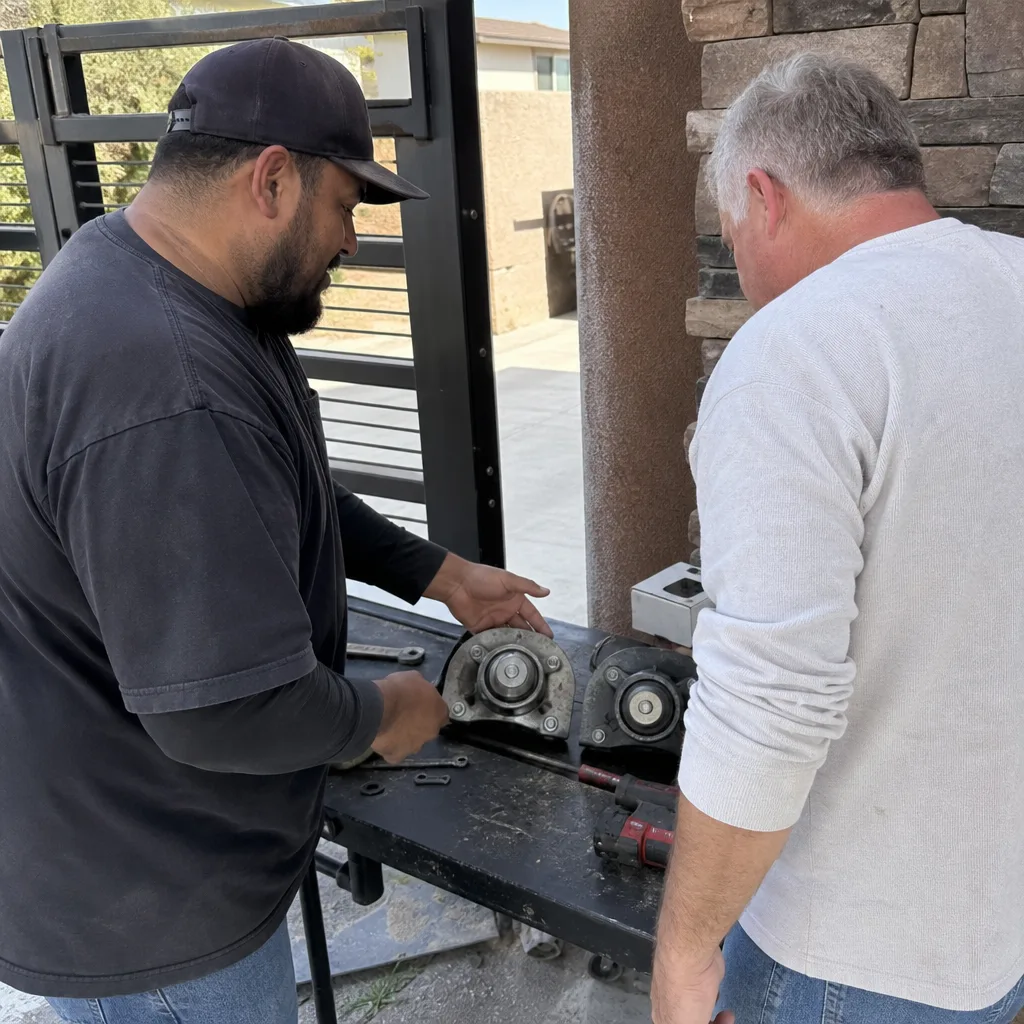
Last updated November 18, 2026
 Wrought iron
 Wood & steel frame
 Farm & ranch
 Sliding driveway gates
 LiftMaster operators
Free on-site gate assessment - hinges, posts, and your LiftMaster or Nice gate operator checked before anything is quoted
The assessment is free and the quote is the invoice.
Get your free estimateGate Repair Maintenance Schedule: What to Do and When
The grease spec printed in your gate operator manual was written for a national average climate. Whitney is not the national average. Here in the high desert, gates bake under intense UV for most of the year, swing through 40-degree day-to-night temperature swings, and breathe in fine airborne dust every time the wind picks up. A maintenance calendar copied from a coastal or temperate-climate guide will have you greasing parts that don’t need it and ignoring the ones that are already drying out. This guide lays out a month-by-month schedule built around what actually wears gates out in Whitney, the lubricants that survive here, and the three measurements worth logging at every service interval.
Quick Answer
In Whitney, a residential driveway gate needs lubrication and a visual inspection monthly, a full hardware and safety-device check every three months, and an annual service that includes motor amp-draw readings, limit-switch adjustment, and hinge and weld inspection by a licensed technician. The high-desert climate accelerates UV degradation, dust intrusion, and lubricant evaporation, so the interior Nevada schedule runs roughly twice as often as generic national recommendations.
Styles & brands we work with
- Wrought iron
- Wood & steel frame
- Farm & ranch
- Sliding driveway gates
- LiftMaster operators
Table of Contents
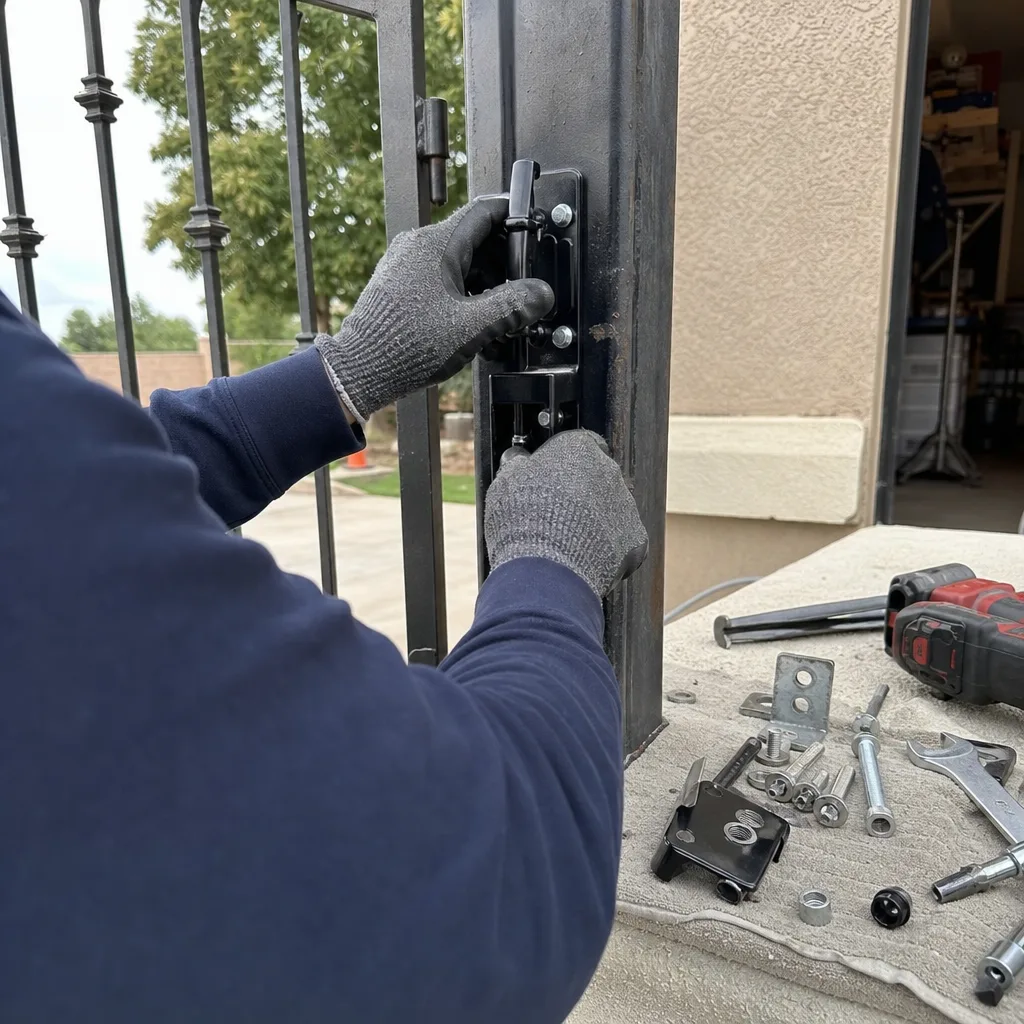
- The Whitney Month-by-Month Maintenance Calendar
- Which Lubricants Survive Nevada Heat and UV
- The Three Measurements to Log at Every Service
- Building a One-Page Gate Service Log
- What Homeowners Can Do vs. What Needs a Technician
- Photo-Eyes, Safety Edges, and Why They Fail in Whitney
- Motor and Automation-Specific Tasks
- Preparing Your Gate for Winter and Monsoon Season
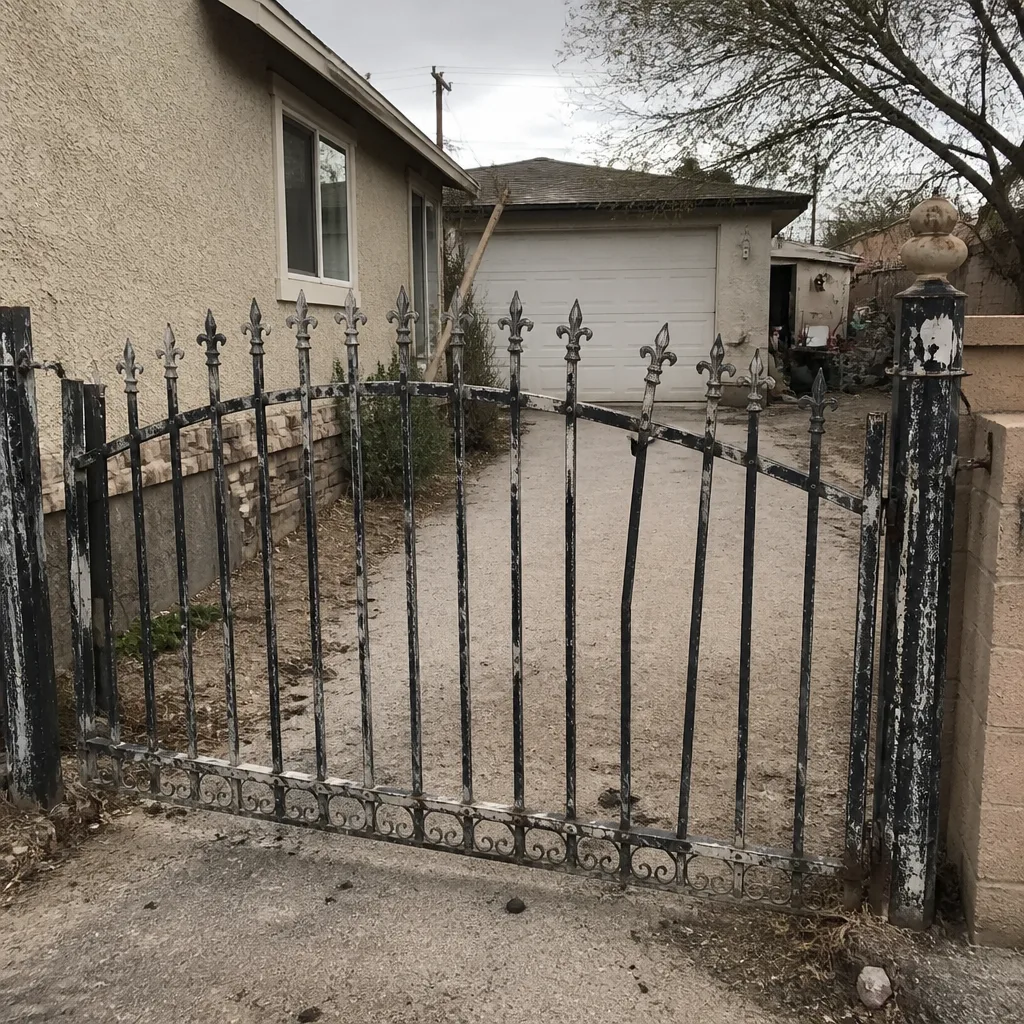 Before
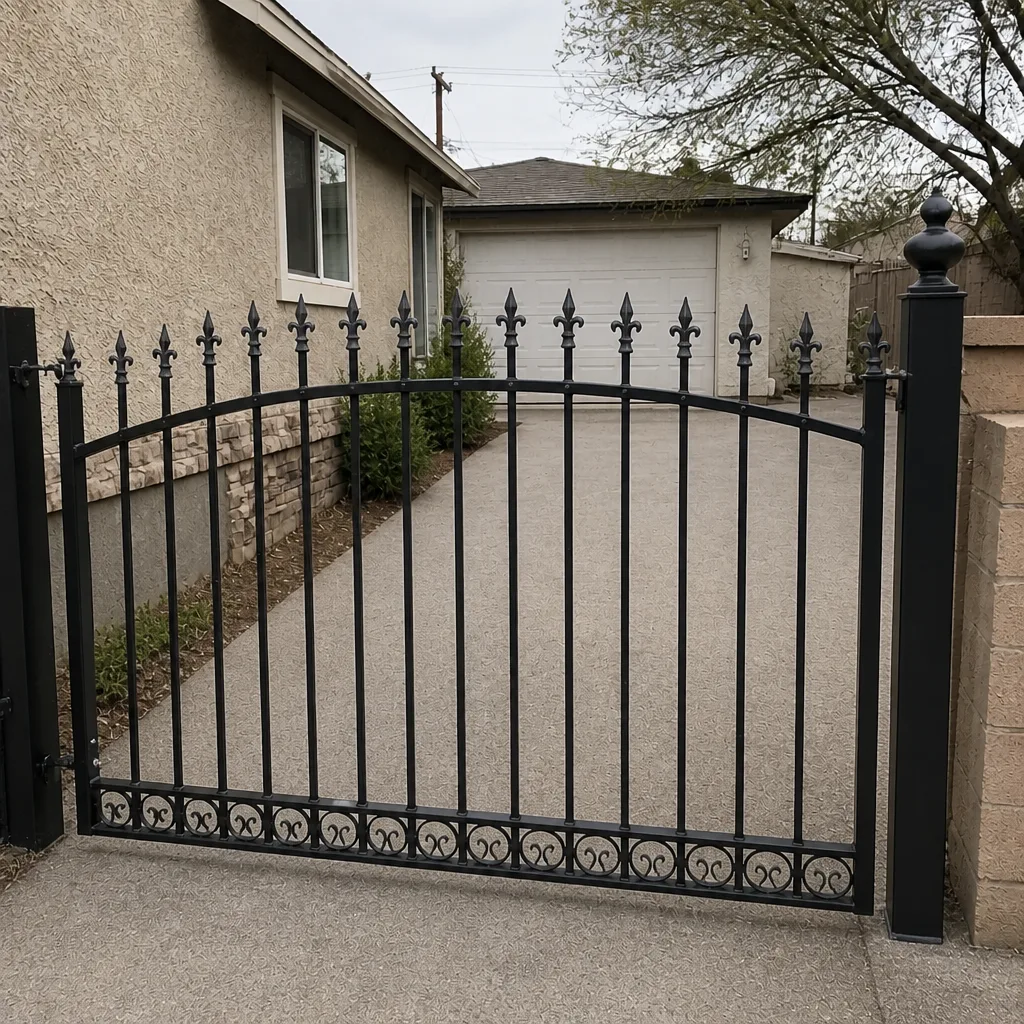 After
The Whitney Month-by-Month Maintenance Calendar
Generic gate maintenance advice tells you to “service annually.” That’s fine in a mild climate. In Whitney, an annual service on a gate motor is like changing your car’s oil once a year regardless of mileage – technically something, but not enough. The calendar below reflects the actual seasonal stressors here: spring winds that drive dust into every moving joint, summer heat that degrades grease and stresses control boards, and winter nights that drop cold enough to shrink and stiffen metal components.
January through March: Post-winter inspection. Check for frost cracking on welds, lubricate all hinges and the operator arm, test the photo-eye alignment after any ground shift from winter moisture, and clear dust and debris from the control-box vents. March winds in Whitney start pushing grit into the tracks and rollers, so a pre-wind-season cleaning of the gate’s travel path saves wear later.
April through June: The heavy-dust window. Clean and re-lubricate the operator arm and all pivot points roughly every four weeks. Inspect the photo-eye lenses (they cloud faster in dust) and check the safety-edge reversing sensitivity. Test the battery backup if your operator has one – heat is the number-one killer of sealed lead-acid batteries in gate openers.
July through September: Peak heat. UV exposure is at its worst, so check for sun-cracking on rubber weather seals, plastic covers, and any nylon or Delrin bushings. Watch for the operator’s control board overheating – if the gate slows or stutters on hot afternoons and runs fine at night, that’s a heat symptom, not a mechanical one. Lubricate more often but with less product; thin coats evaporate less unevenly.
October through December: Pre-winter prep. Full hardware tightness check (bolts loosen with thermal cycling), hinge wear inspection, a fresh coat of lubricant on everything that moves, and a functional test of every safety device before the cold sets in. This is the ideal window for the annual technician service.
If your gate has been neglected for a year or more, start with a gate repair in Whitney evaluation before layering maintenance on top of a worn system.
Which Lubricants Survive Nevada Heat and UV
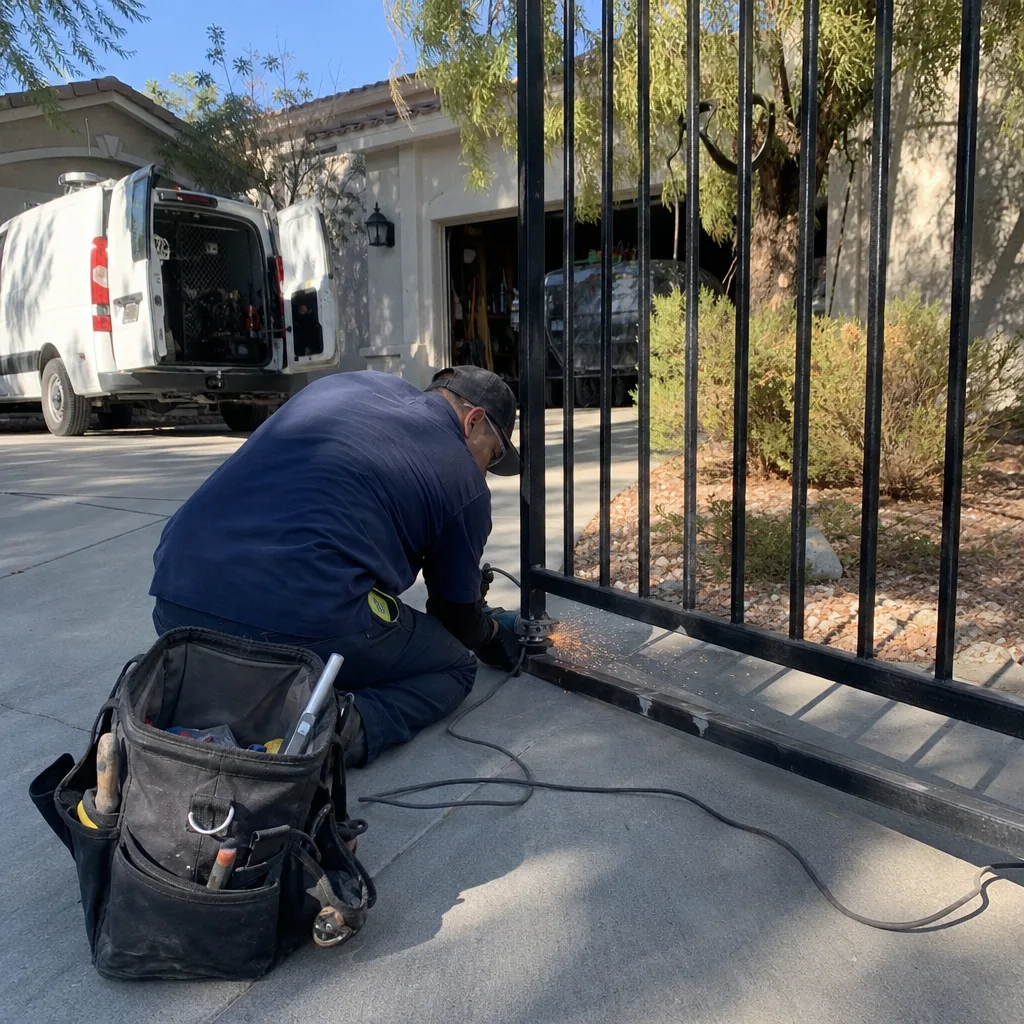
Here’s a detail most maintenance guides skip: the wrong grease is worse than no grease in Whitney. A light general-purpose oil that works fine in humid climates evaporates within 30 to 60 days here under direct sun, leaving behind a tacky film that captures airborne desert dust and turns into an abrasive paste. That paste grinds away at hinges and rollers faster than dry metal would.
What survives the high desert:
- Lithium-complex or synthetic PTFE grease on hinge pins, pivot points, and the operator arm. These hold up to heat past 300°F and resist water washout without becoming a dust magnet.
- Dry-film PTFE or molybdenum-disulfide spray on sliding tracks, roller chains, and any exposed linkage. It goes on wet, sets dry, and doesn’t collect grit the way wet grease does.
- Dielectric grease inside control-box connectors and on battery terminals. This is critical in Whitney because dust works its way into every connection point and accelerates corrosion.
What to avoid: WD-40 as a primary lubricant (it’s a solvent, not a long-term lubricant, and it evaporates fast in heat), generic white lithium in an aerosol can that foams and dries chalky, and silicone spray on high-load surfaces like gate hinges where it simply doesn’t have the film strength.
A simple rule: if you apply a lubricant in July and it’s gone or gummy by September, it isn’t right for Whitney. Test on one hinge first, note the date, and check it in 60 days.
The Three Measurements to Log at Every Service
This is where a real maintenance program separates from “grease it and hope.” Three numbers, logged every service interval, let you spot a failing component from trend data before it stops the gate entirely. No guessing, no waiting for something to break.
- Travel time. Time how long it takes the gate to go from fully closed to fully open, in seconds. Write it down. If that number creeps up by 15% or more over several months, the motor is working harder than it should – worn hinges, a failing operator arm, or a control board losing its charge. A gate that used to open in 14 seconds and now takes 17 is telling you something.
- Motor amp draw. This is the current the motor pulls during a cycle, measured with a clamp meter at the operator. Healthy readings stay flat. Rising amp draw means increased mechanical resistance – the single best early indicator of a hinge or roller that needs attention. This one measurement justifies the annual technician visit on its own.
- Limit-switch gap. The limit switch tells the operator when to stop. Measure the physical gap at the switch and the degree of travel overshoot. Even a 10-12 degree drift past the set point stresses the gate and the motor every cycle. Log the number so the next adjustment is precise instead of approximate.
Our technicians log all three numbers and photograph the readings on every visit – not because they’re required to, but because the next service should start from data, not a guess. That’s the same wiring-diagram discipline Adrian Vance brought over from commercial access-control work in 2014.
Building a One-Page Gate Service Log
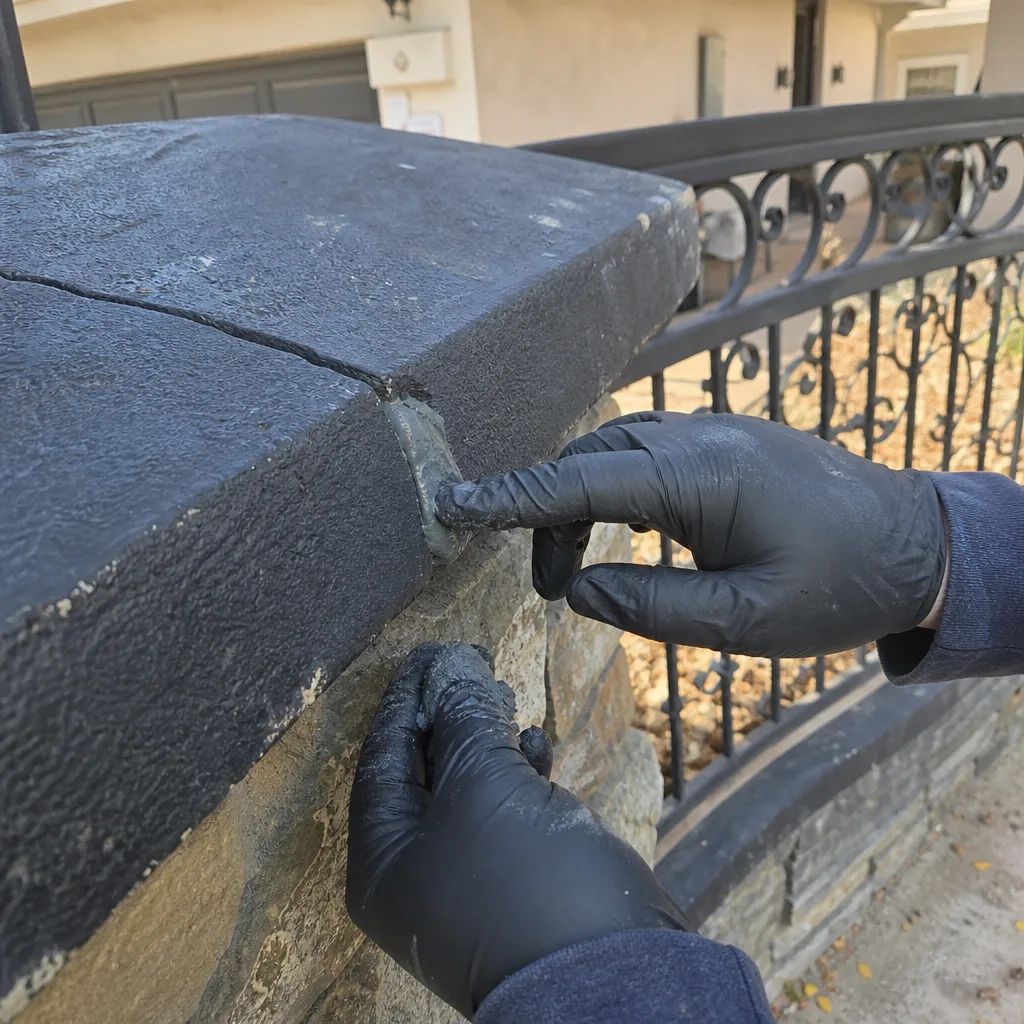
The goal of a service log is simple: any future technician should be able to read it in under two minutes and know exactly what’s been done, what’s failed before, and what to watch. Here’s how to build one that works.
Keep it to a single page – a clipboard page, a printed template, or a shared note on your phone. At the top, list: gate type (swing or slide), operator brand and model (LiftMaster, DoorKing, Ghost Controls, Elite, and others all have their own quirks), install date, and voltage. Below that, create four columns: Date, Task performed, Measurement readings, Photo reference.
Every entry should answer three questions: what was found, what was set or adjusted, and what part number was installed if anything was replaced. Write it the way a technician talks – “photo-eye misaligned 2 inches, realigned and photographed” is a real log entry, “adjusted sensor” is not useful. If a measurement was taken, write the number, not “checked.”
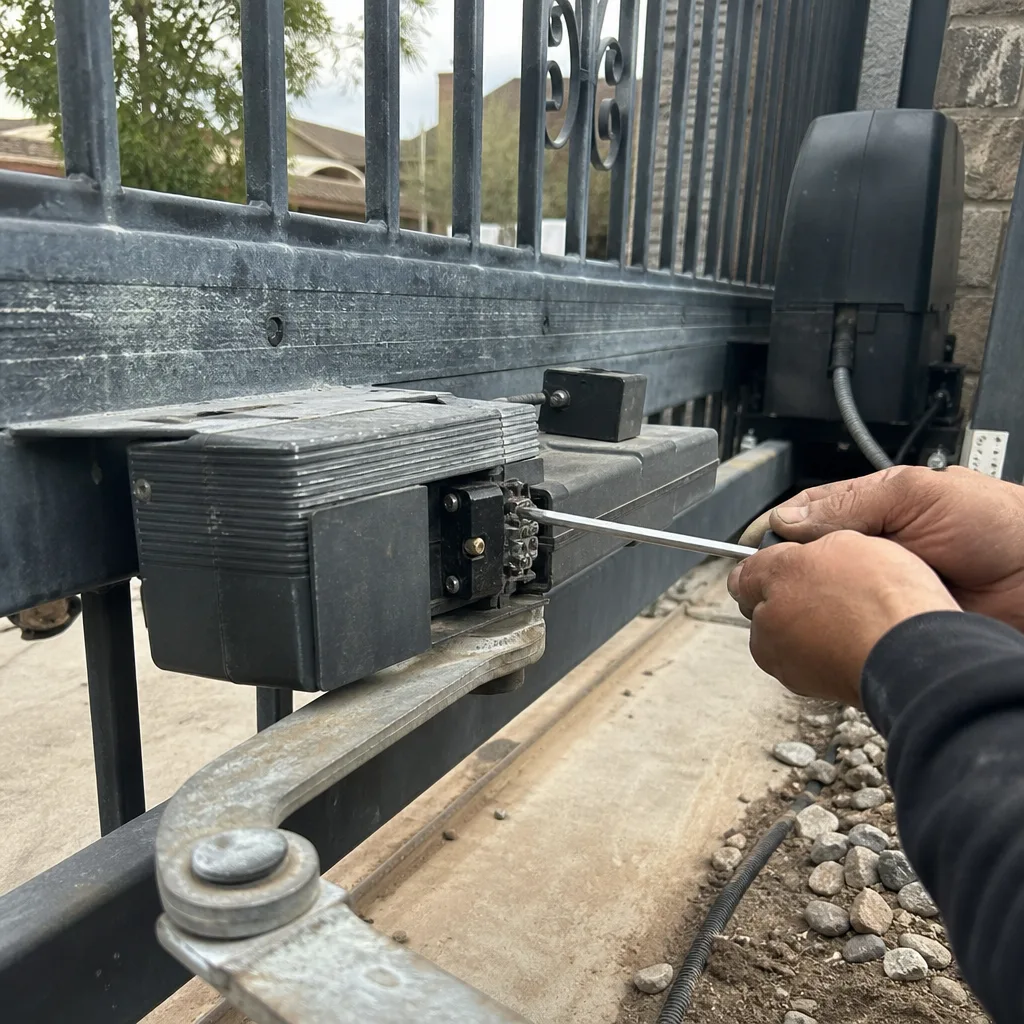
Photograph everything that matters: the limit-switch position after an adjustment, the wiring inside the control box, the hinge wear, the battery date stamp. Some operators – Ghost Controls and Viking among them – have control boards with enough connectors that a before-photo saves a lot of guesswork on the next visit.
Why bother? Because the most expensive gate repair is the one you pay for twice. If a technician replaces a control board and there’s no record of the part number or the amp-draw readings that preceded the failure, the next tech starts from zero and you may pay to rediscover the same problem. Under the Haven Standard, every visit includes a photographed record on every job – the homeowner keeps a copy and we keep one in the job file. A good service log is the homeowner’s half of that record.
What Homeowners Can Do vs. What Needs a Technician
Most gate maintenance is safe for a careful homeowner. Some of it absolutely is not. Here’s the line.
Homeowner-safe monthly tasks:
- Visually inspect hinges, rollers, and weld points for cracking or rust.
- Clear dust, leaves, and debris from the gate’s travel path.
- Clean photo-eye lenses with a soft cloth (only if you can reach them safely and the gate is powered off).
- Apply dry-film lubricant to tracks and chains in thin coats.
- Test that the reversing safety feature works – place a small object in the path and confirm the gate reverses.
- Check that manual release works and the key operates smoothly.
- Record travel time with a stopwatch, and log it.
Licensed-technician-only tasks:
- Anything involving the control board, wiring, or 120V/240V power connections.
- Motor amp-draw measurement and limit-switch adjustment.
- Spring and counterbalance work on any gate that uses them – these components are under extreme tension and can cause serious injury if handled without the right tools and training.
- Welding repairs, hinge replacement, and structural post work.
- Battery backup replacement on operators where the battery is buried inside the housing.
- Any adjustment to the safety edges or force settings that govern how hard the gate pushes before reversing.
If you’re not sure whether a task is safe, it probably isn’t. Electrical panels, gas lines, and stored mechanical energy are all places where a mistake has real consequences – call a professional rather than risk it.
Photo-Eyes, Safety Edges, and Why They Fail in Whitney
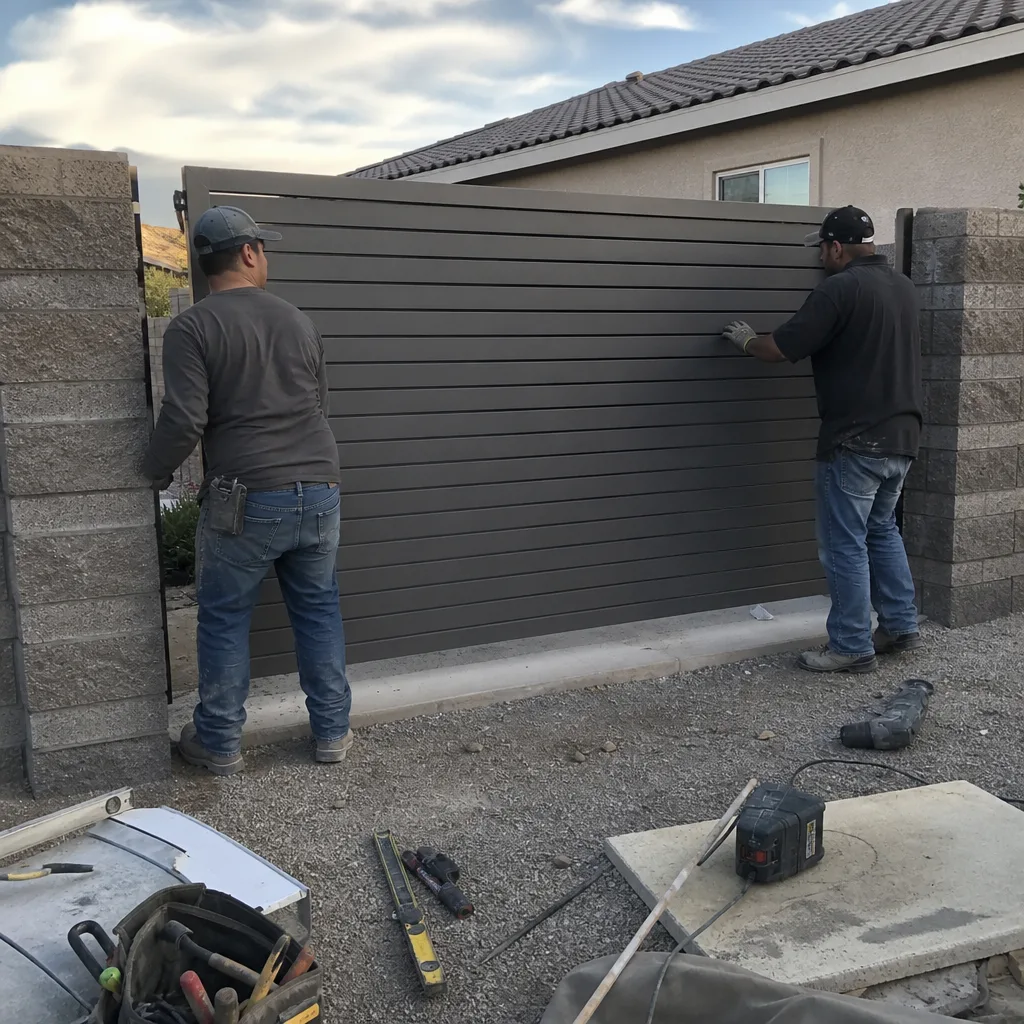
Safety devices are the parts most likely to fail silently in Whitney, because they fail in exactly the way the climate attacks them. A photo-eye – the infrared beam that stops or reverses the gate if something crosses the path – relies on a clean lens and a stable mounting bracket. Dust clouds the lens faster here than in most places. Ground shifts from the dry-to-wet cycles warps the bracket alignment. Thermal expansion changes the angle by a degree or two between morning and afternoon. Any of those moves the beam off-target and the gate stops responding to it, often without any warning.
Safety edges – the rubber strips along the gate’s closing edge – crack from UV exposure and stiffen in cold. A stiff edge can fail to register a light impact, which is precisely when you need it to.
Test both every month. For photo-eyes, break the beam with your hand while the gate is moving and confirm it reverses. For safety edges, press the edge while the gate is closing and confirm it reverses and doesn’t continue. If either fails, don’t operate the gate until it’s fixed – a gate that ignores its safety devices is a hazard to anyone on the property. We’ve found this to be one of the most common findings on first visits to Whitney gates that have never had a documented service record.
Because the wiring and force-settings programming on these devices varies widely between brands – FAAC, Elite, DoorKing, and others all program force limits differently – setting safety devices correctly is a job for a technician who works with that specific motor. Our team services nine major automation brands and works with whatever is already on your property rather than pushing a replacement.
Motor and Automation-Specific Tasks
The gate hardware is half the story. The operator – the motor and control system – is the other half, and it needs its own schedule. For a broader overview of operator service, see our gate motor & opener in Whitney page.
Monthly: listen for changes in the motor’s sound. A healthy operator runs smooth and even. Grinding, knocking, or a labored start are early signs of mechanical resistance or a failing component. Clear any debris that has collected around the operator housing, especially in spring when Whitney’s wind deposits grit into every available crevice.
Quarterly: inspect the control-box interior for dust buildup. In the high desert, dust finds its way into enclosures that aren’t sealed well, and it can bridge electrical contacts. Check the backup battery date; sealed lead-acid batteries in gate operators typically need replacing every two to three years here because summer heat degrades them faster than in cooler climates.
Annually: the full technician service. Amp-draw readings, limit-switch timing, force-limit calibration, hinge and weld inspection, and a complete photo documentation of what was found, what was adjusted, and any parts installed by their part number. This is the visit that catches everything the monthly checks can’t. If your operator is nearing the end of its useful life, gate installation in Whitney covers what a modern replacement looks like – but repair is always the first conversation.
Preparing Your Gate for Winter and Monsoon Season
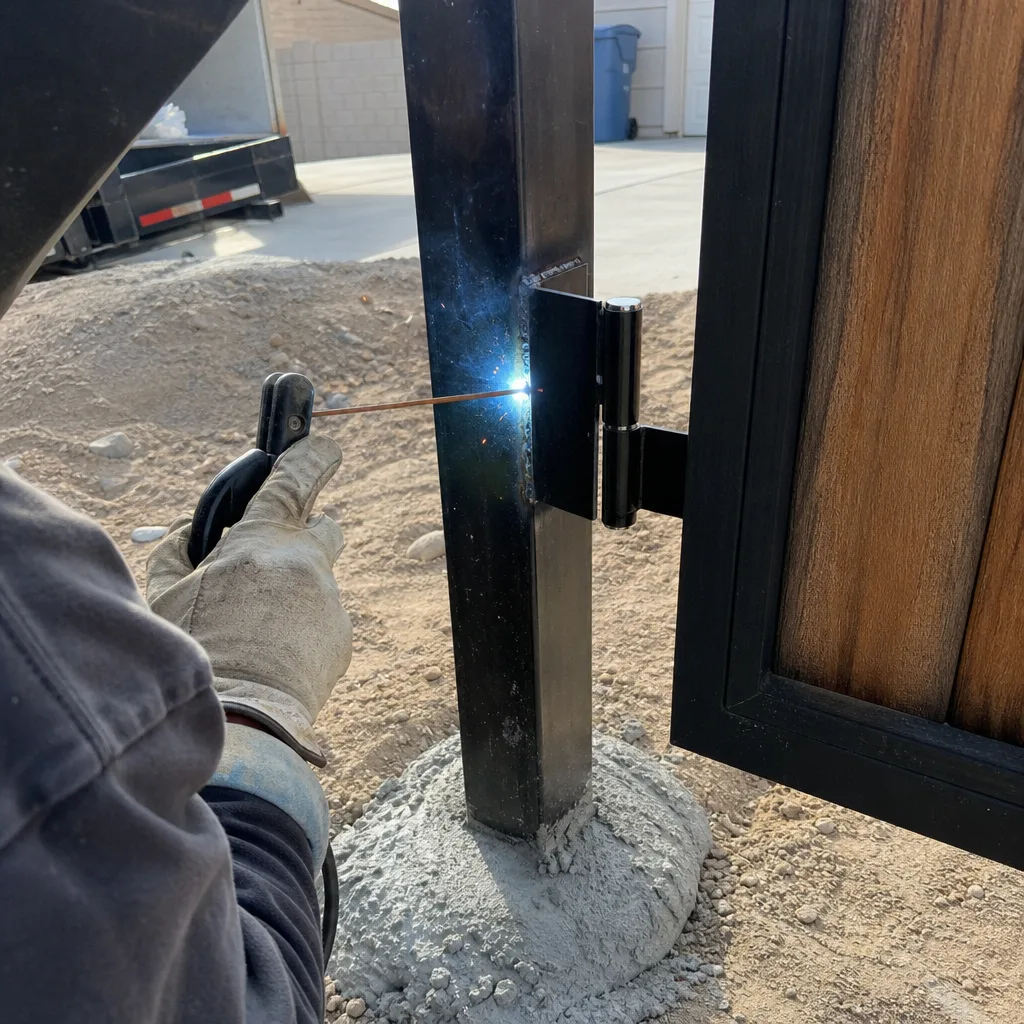
Whitney doesn’t get many freezing days, but the ones it does get do damage. A gate that ran perfectly in October can bind in January because metal components shrink in the cold, lubricant thickens, and any moisture that got into a joint expands when it freezes. Add monsoon-season debris – sand, gravel, and sediment that wash across the driveway – and the gate’s travel path becomes a trap for a slide gate’s rollers.
Before the cold arrives, tighten every accessible bolt (thermal cycling loosens them), apply fresh lubricant to all moving parts, and test manual release so you’re not stuck if the power goes out. Clear the travel path completely and check that the gate’s drainage channels aren’t blocked. If your gate uses a slide mechanism, the track needs to be clear of grit down to the base; run a stiff brush along it and follow with dry-film lubricant.
One seasonal warning worth stating plainly: gate operators collect energy and push with enough force to injure. If anything in your winter prep involves the control board, the springs, or the electrical connections, stop and call someone trained to work on it. A couple of hundred dollars in preventive service is much cheaper than an emergency repair in a cold snap.
Common Mistakes to Avoid
- Using a coastal-climate grease spec. National-average lubricants evaporate and attract grit within 60 days here. Test your grease against Whitney’s summer before committing.
- Over-greasing to compensate. More product doesn’t mean more protection – excess grease captures dust and turns your hinges into sandpaper. Thin, appropriate coats win.
- Skipping measurements because “it’s working.” A gate that operates today can be 20% harder to move than it was three months ago. Amp draw and travel time are how you catch that before failure.
- Testing photo-eyes only once a year. Dust and thermal shift take them out of alignment in weeks here. Monthly testing is not excessive.
- Letting an untrained helper adjust safety limits. Force settings and reversing thresholds are matters of life safety. Reprogamming them wrong can defeat the protection entirely.
- Not keeping records. Without a log, every technician re-diagnoses the same problem and you can end up paying twice for the same fix.
- Ignoring UV degradation on plastic and rubber parts. Weather seals, photo-eye lenses, and bushings crack faster in Whitney. Catch them at the first sign of surface crazing.
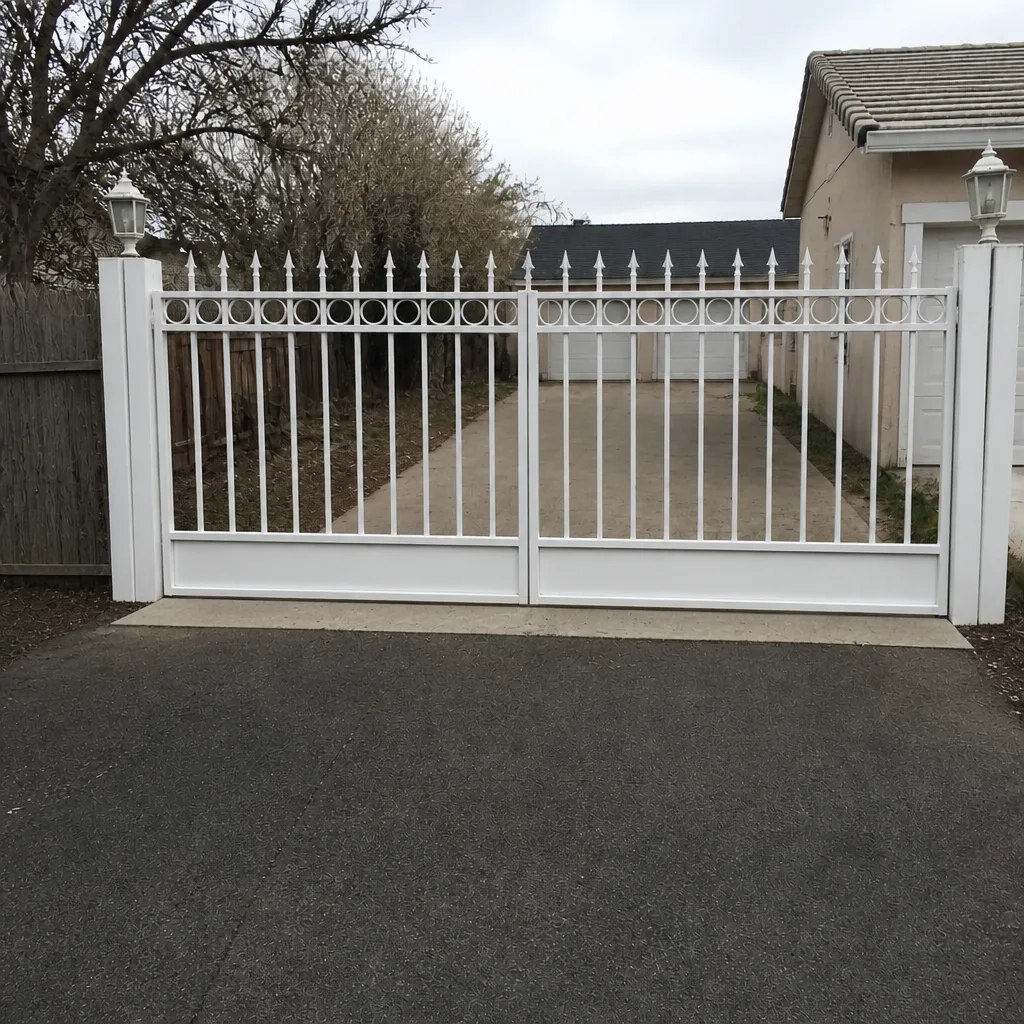
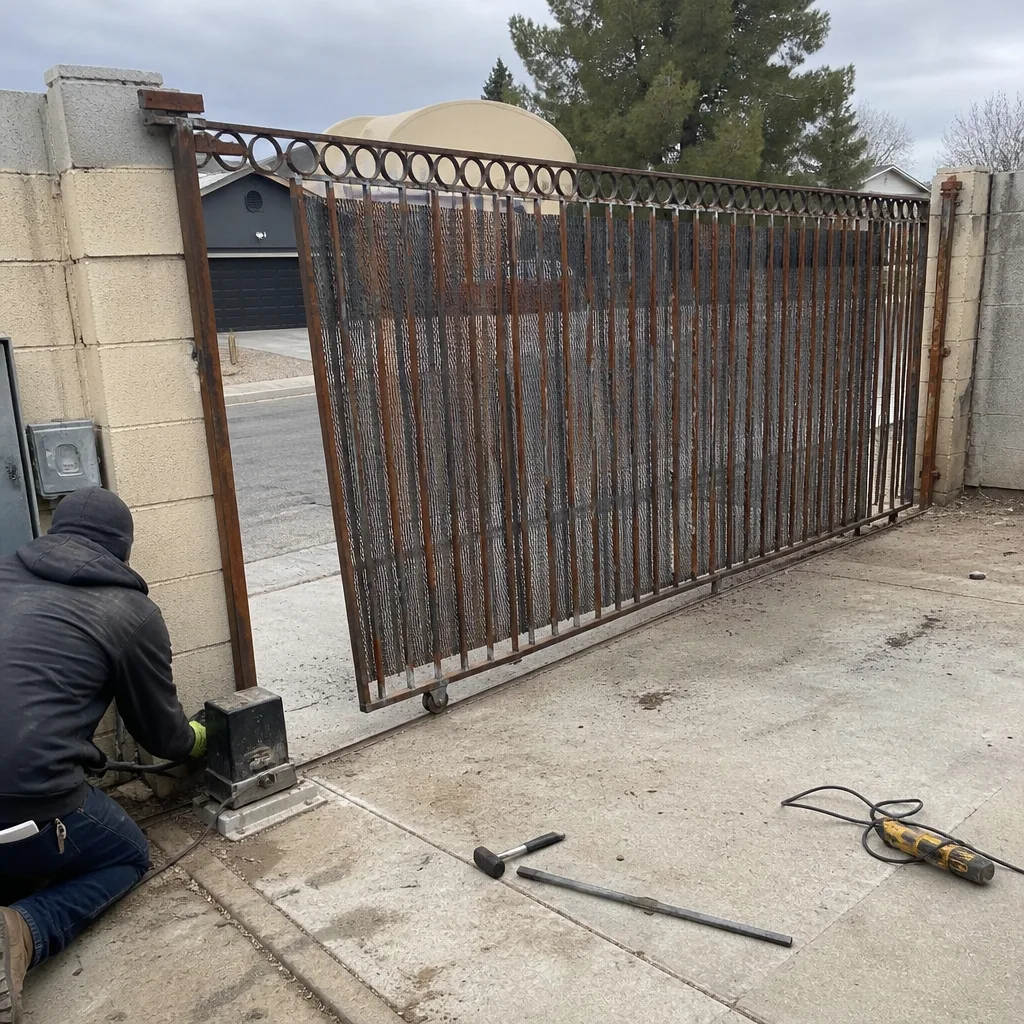
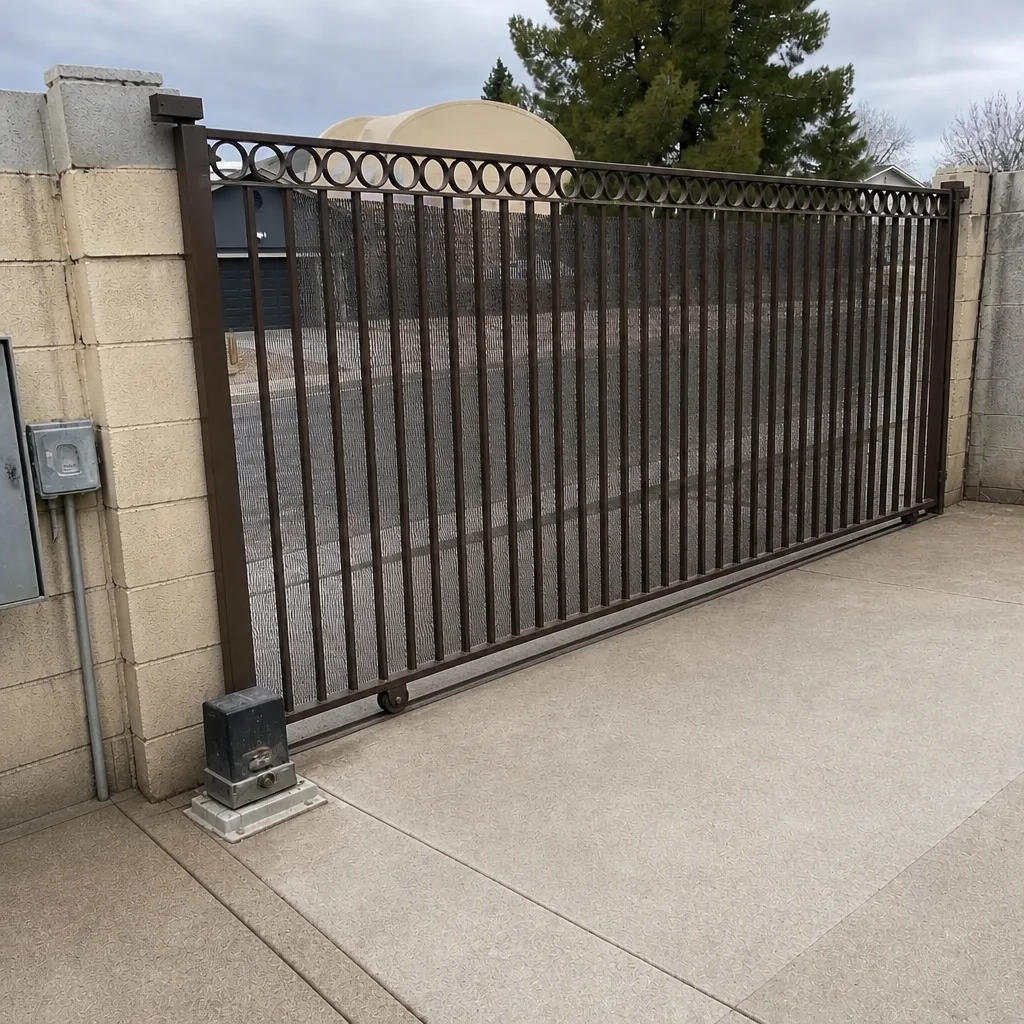
See the difference
BeforeAfter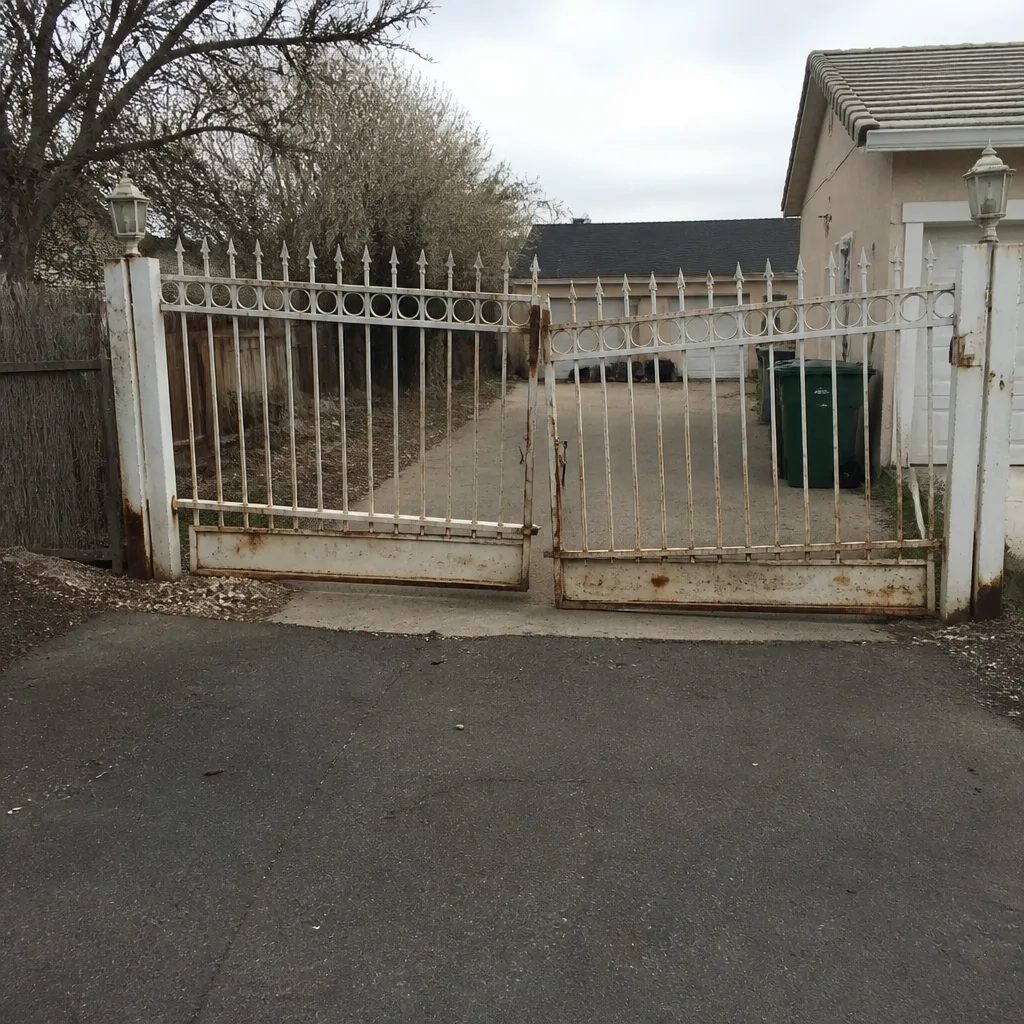 Before
 After
 Before
 After
When to Call a Professional
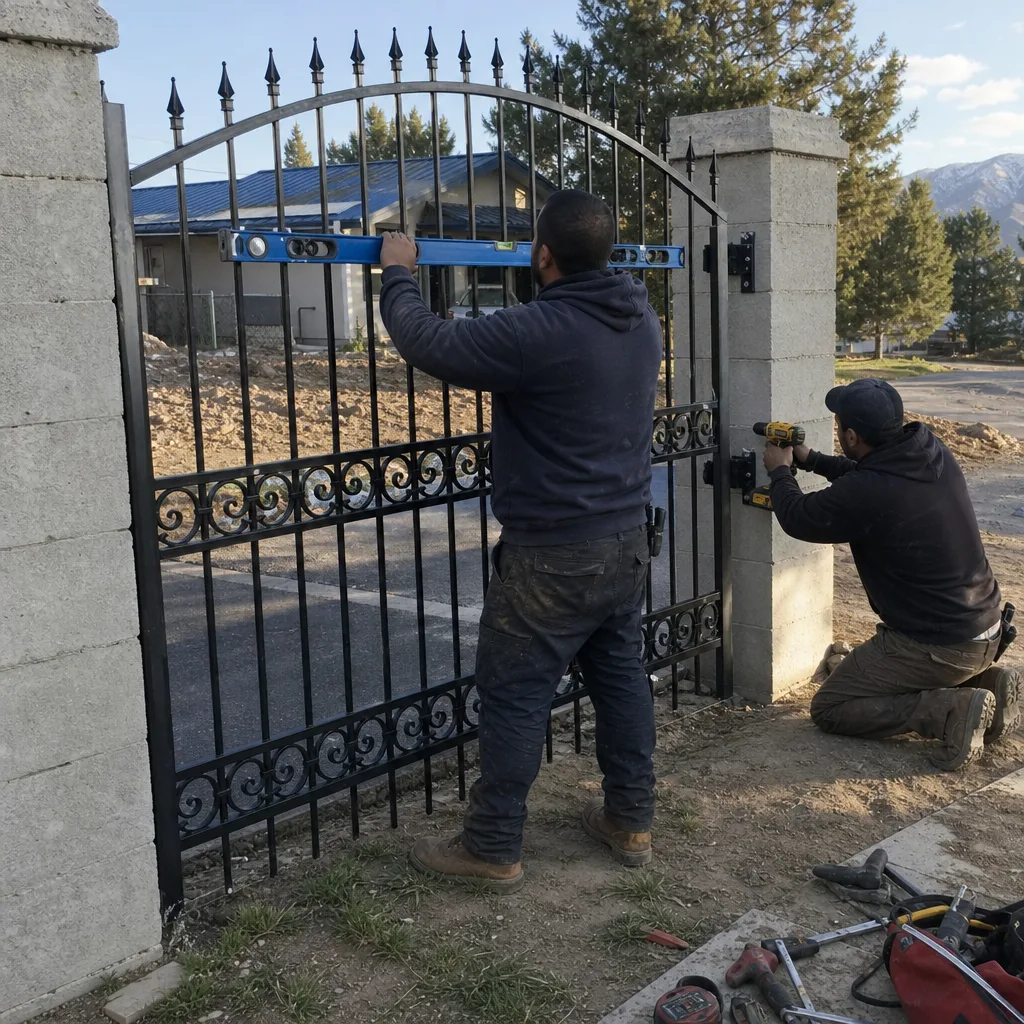
Call a professional immediately if the gate moves on its own, ignores its safety devices, makes grinding or knocking sounds, or fails to reverse when something is in its path. Also call if you see cracking at a weld, a sagging gate post, or a hinge pulling away from the frame – those are structural, and the gate can fall. Anything involving the control board, electrical wiring, springs, or force settings should always be a technician’s job, because the risk is injury, not inconvenience. Our team handles all of these as standard service calls, and because a live person answers the phone 24 hours a day, you can reach someone the moment you notice a problem. Vance Gate Repair Whitney offers free estimates in Whitney – call (844) 797-4861.
Frequently Asked Questions
Every four to six weeks during the dusty spring and early summer months, and every six to eight weeks the rest of the year. Whitney’s low humidity causes lubricant to evaporate faster than in humid climates, and wind-borne dust captures any residue that remains. Use a synthetic PTFE or lithium-complex grease on high-load points and a dry-film spray on tracks and chains. Call (844) 797-4861 for an exact quote on a full service – estimates are free.
You can safely clean debris, apply lubricant, test the safety features, and log travel time. A technician should measure amp draw, adjust limit switches, work on springs, touch the control board or wiring, and repair welds or structural posts. The dividing line is stored energy and live electricity – call a professional rather than risk injury. A free estimate is available at (844) 797-4861.
Yes. Every service visit includes a documented photo record of what was found, what was adjusted, and any part installed, and the homeowner receives a copy. We photograph amp-draw readings, limit-switch settings, and hardware condition so the next service starts from data rather than guesswork. Call (844) 797-4861 to schedule – estimates are free and pricing is written before work starts.
Dust clouds the lenses, thermal expansion shifts the mounting brackets a degree or two between morning and afternoon, and ground movement from dry-to-wet cycles warps the alignment. Any of those takes the beam off-target, often without warning. Test the beam monthly and have a technician realign it at the annual service. Call (844) 797-4861 if your photo-eyes aren’t responding.
A full service includes amp-draw measurement, limit-switch adjustment, force-limit calibration, hinge and weld inspection, lubrication of all moving parts, safety-device testing, and a photo documentation record. If a part needs replacing, the written price for that part is agreed before any work begins. Call (844) 797-4861 for a free estimate on the service and a written quote.
In Whitney’s summer heat, sealed lead-acid batteries typically last two to three years. If the gate fails to open during a brief power interruption, or the operator displays a low-battery fault, the battery needs replacing. Check the date stamp on the battery and replace it before it fails rather than waiting for a power outage to reveal the problem. Call (844) 797-4861 for a battery replacement.
The Bottom Line
A maintenance schedule that works in Whitney is built around what the high desert actually does to gates: it accelerates UV wear, drives dust into every joint, evaporates the wrong lubricants, and cycles metal through constant thermal stress. The recurring core of a good program is monthly lubrication and safety checks, quarterly control-box and battery inspection, and an annual technician service with three measurements logged every time. Keep a one-page log that any technician can read in two minutes, and let the data tell you when a component is failing before it fails. For gate repair in Whitney, from a maintenance plan to an emergency fix, the place to start is our Vance Gate Repair Whitney home, where every visit gets a written price before work starts and a photo record when it’s done. Call (844) 797-4861 for a free estimate today.
Written by the team at Vance Gate Repair Whitney.