
Last updated November 18, 2026
 Wrought iron
 Wood & steel frame
 Farm & ranch
 Sliding driveway gates
 LiftMaster operators
Free on-site gate assessment - hinges, posts, and your LiftMaster or Nice gate operator checked before anything is quoted
The assessment is free and the quote is the invoice.
Get your free estimateGate Repair Maintenance Checklist for Whitney Homeowners
If your maintenance checklist doesn’t include a single measurement, it’s not a checklist – it’s a reminder to call someone. “Lubricate moving parts” and “check the gate” tell you nothing about whether the work actually happened or whether your gate is drifting out of spec. In our experience across thousands of service calls, the difference between a gate that lasts 15 years and one that fails in five is whether anyone wrote down the numbers. This guide gives Whitney homeowners the actual readings – hinge gaps in millimeters, limit-switch positions, float voltages – so you can verify the work and build a record that protects you.
Quick Answer
A proper gate maintenance checklist uses measurable checkpoints, not vague tasks: hinge gaps between 3-6mm, limit-switch travel set to the manufacturer’s degree spec, photo-eye alignment within 2mm, and battery float voltage around 13.2-13.8V for a 12V system. Log these readings at every visit and compare them over time – drift is the early warning sign of failure. In Whitney’s desert temperature swings, these measurements matter more than in milder climates.
Styles & brands we work with
- Wrought iron
- Wood & steel frame
- Farm & ranch
- Sliding driveway gates
- LiftMaster operators
Table of Contents
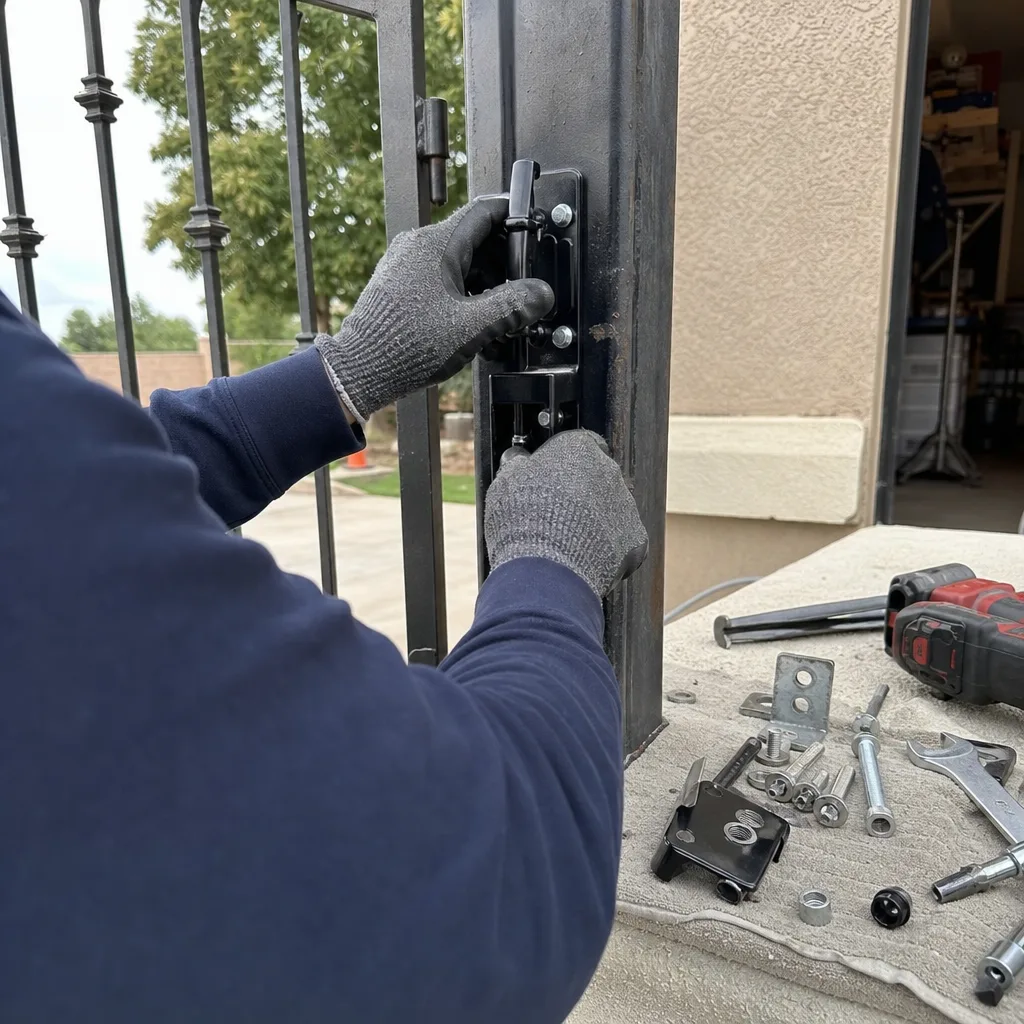
- Why Measurements Beat Descriptions
- The Measurable Checkpoints That Actually Matter
- Warranty-Safe Maintenance: What You Must Document
- How to Log Each Inspection Visit
- The Two Invisible Tasks Everyone Skips
- The Printable Sign-Off Sheet Format
- Common Mistakes to Avoid
- When to Call a Professional
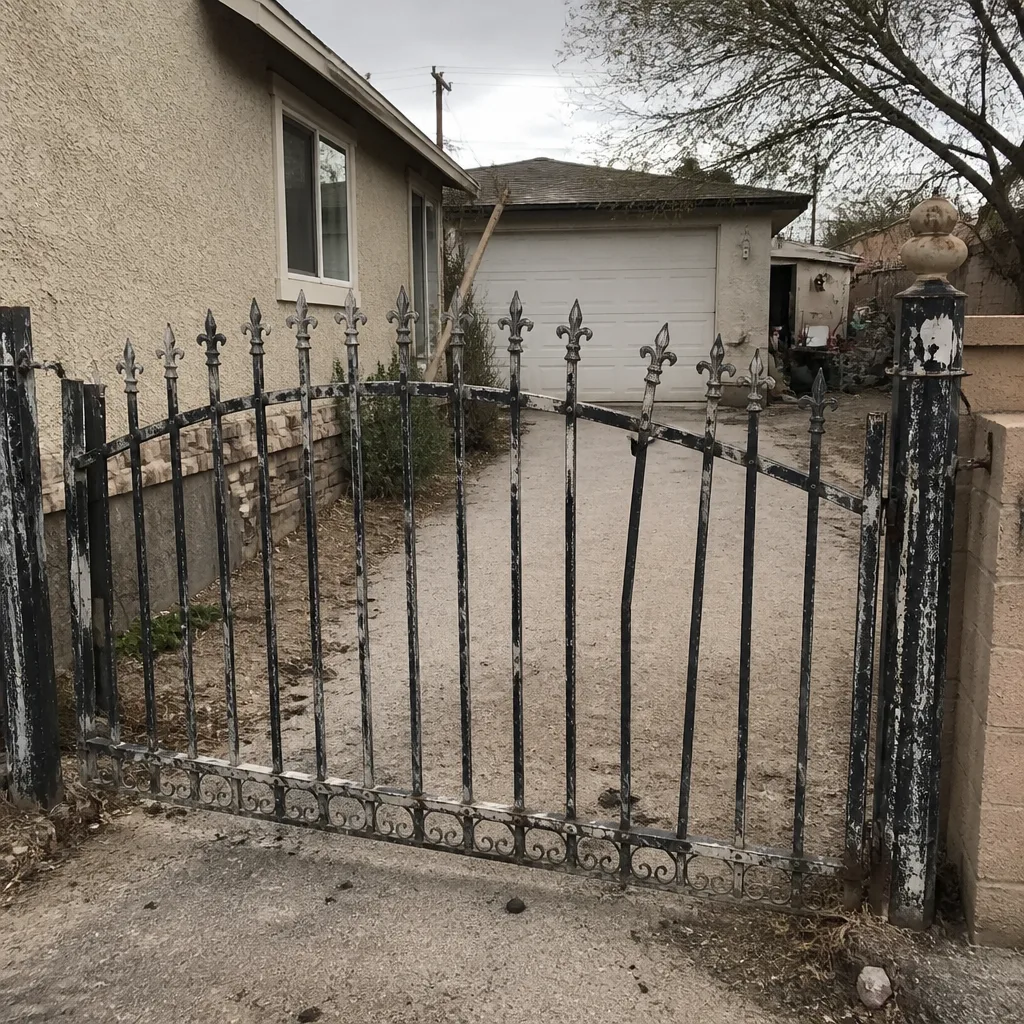 Before
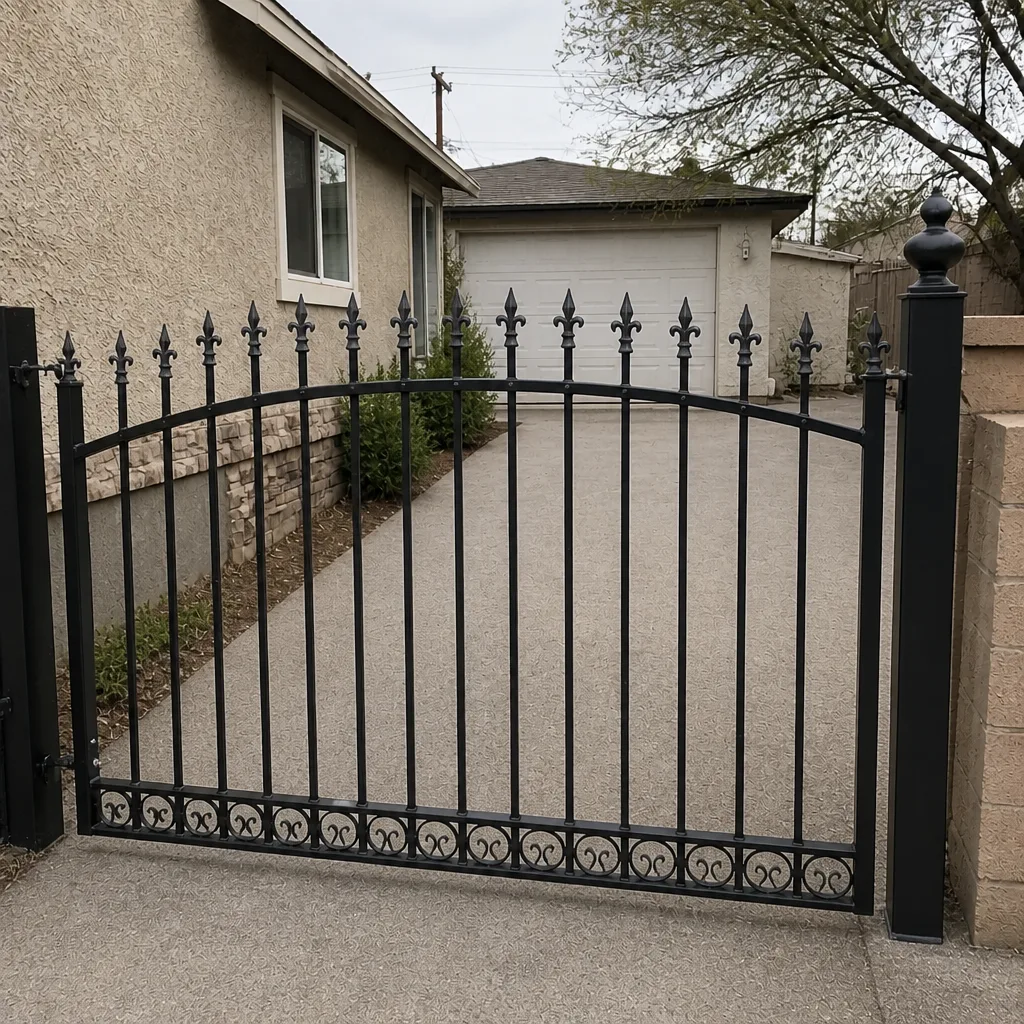 After
Why Measurements Beat Descriptions
The problem with most checklists is that they describe actions instead of recording results. “Grease the hinges” tells you a tube was opened. It doesn’t tell you whether the hinge pin had worn 1.5mm into the barrel or whether the gate had started to sag on one hinge. When a technician writes down “left hinge gap: 8mm at the top, 4mm at the bottom,” that single number tells the next person whether an adjustment was due, whether it was done, and whether the gate is drifting the same direction season after season.
Whitney’s climate makes drift measurable. Summer afternoons here regularly push past 105°F, and winter nights dip well below freezing. Steel gate frames expand and contract across that range, hardware loosens under the cycling, and wood gates swell when the monsoonal humidity arrives in July and August. A gate that measures perfectly in April can be out of tolerance by September. Without numbers on a page, you never see it coming; you just notice one morning that the gate is dragging.
The measurement habit comes from commercial access-control work, where every adjustment is recorded because the next technician inherits the site. A residential gate deserves the same discipline. Under Clause 4 of what we call the Haven Standard – Evidence on every job – our technicians add photographic evidence to go along with the readings. But you can build the habit yourself with nothing more than a tape measure, a torque wrench, and a notebook.
The Measurable Checkpoints That Actually Matter
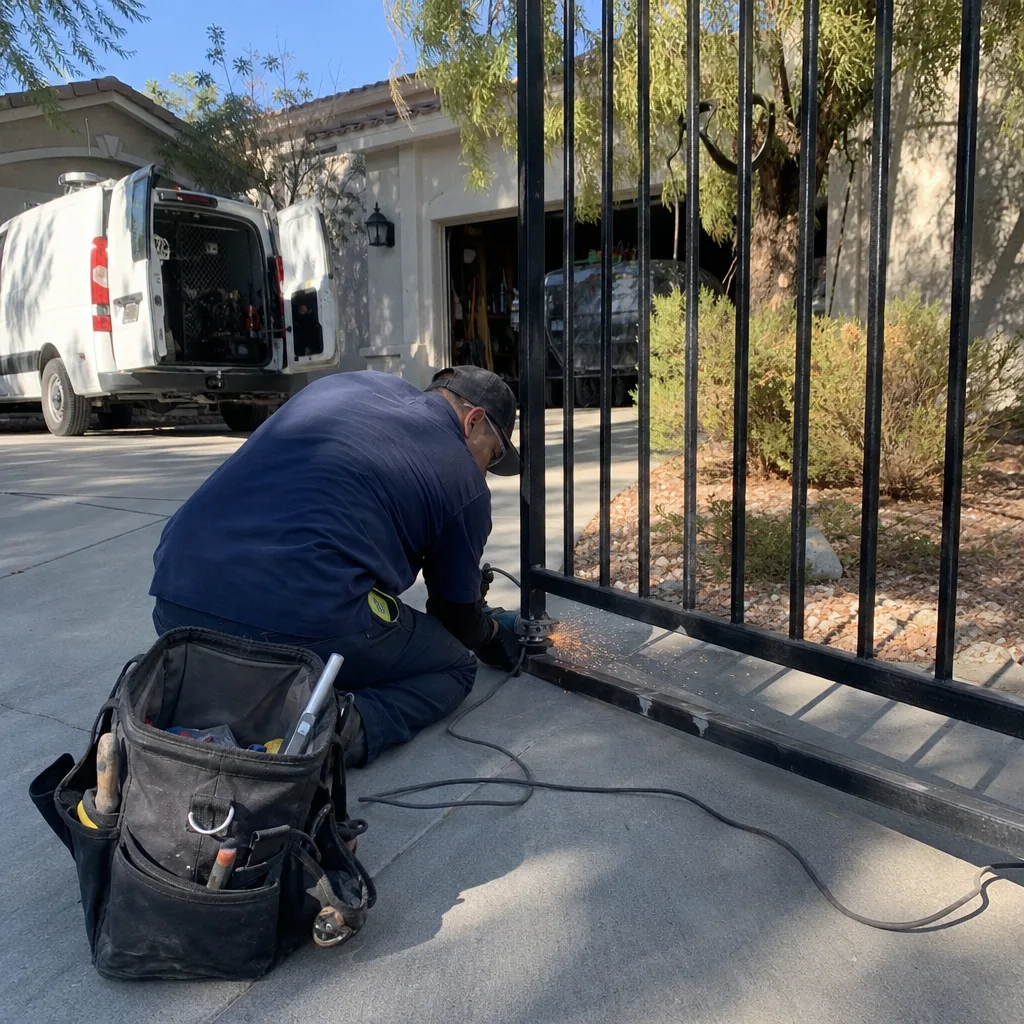
These are the specific readings that determine whether a gate is healthy. Get a baseline reading on a calm day with the gate at rest, then repeat them at every inspection. The tolerance ranges below reflect what works on typical residential swing and slide gates we service in Whitney.
Hinge Gap Tolerance
Measure the gap between the gate frame and the hinge plate – top and bottom of each hinge – with a feeler gauge or calipers. A healthy gap is 3-6mm. Anything above 8mm means the hinge is worn or the hardware has loosened, and the gate is sagging. On a swing gate, upper hinge wear shows up as the latch-side corner dropping; measure the gap every six months.
Limit-Switch Travel Reading
On an automated gate, the limit switch controls where the gate stops. Read the motor’s programmed travel value (some brands display this on the control board; others require a depth gauge on the limit nut). Note the reading in degrees or counts, whichever the motor reports. If the reading has drifted more than 5 degrees from the original setup, the switch needs adjusting. A gate that over-travels will slam and damage the frame; one that under-travels leaves a gap a car can squeeze through.
Photo-Eye Alignment Distance
The photo-eye is the infrared beam that stops the gate if something crosses its path. Measure the vertical and horizontal offset between the emitter and receiver lenses. They should be aligned within 2mm. Anything more means one lens has sagged or been knocked out of position, and the gate can fail to reverse on obstruction – a serious safety problem.
Battery Float Voltage
If your gate runs on battery backup or a solar-charged 12V system, check float voltage under charge: 13.2-13.8V for a 12V battery at 75-80°F. Whitney’s temperature swings matter here. A reading below 12.6V at rest means the battery is on its way out, and cold nights accelerate the drop. Log the voltage every six months; a steady downward trend means replace before it strands you.
- Hinge gap: 3-6mm tolerance, measure top and bottom of each hinge
- Limit-switch travel: within 5 degrees of factory setting
- Photo-eye alignment: within 2mm vertical and horizontal
- Battery float voltage: 13.2-13.8V under charge; 12.6V minimum at rest
- Chain or belt tension: 12-15mm deflection at the midpoint
Warranty-Safe Maintenance: What You Must Document
Manufacturer warranties on gate operators – including LiftMaster and DoorKing – are conditional. Skip specific maintenance tasks and a warranty claim for a motor failure can be denied, even if the failure was unrelated. The tasks that most commonly trigger warranty denial are: lubrication of the operator’s drive mechanism, inspection of the safety devices, and battery replacement beyond the rated service life. If those three aren’t documented, the manufacturer has grounds to say the equipment wasn’t maintained per spec.
The good news is that documentation is simple. Every maintenance visit should produce:
- The measured readings from the checkpoints above, with the date and technician name
- Photos of the safety devices (photo-eye lenses, edge sensors, reversing mechanism) in their current position
- The part numbers of any lubricant or battery used, with the brand and quantity
- A written record of what was adjusted and the before/after reading
Keep these in a folder with your original purchase receipt and operator manual. If a warranty dispute ever arises, you’ll have a paper trail proving the gate was maintained according to the manufacturer’s schedule – which is usually every six months for residential gates and more frequent for high-cycle commercial gates. Our technicians leave a photo record on every visit for exactly this reason, under Clause 4 of the Haven Standard, so the homeowner never has to argue from memory later.
When you’re reviewing a technician’s maintenance work in Whitney, ask directly: “Where are the readings and where are the photos?” A legitimate operator will hand them over without hesitation.
How to Log Each Inspection Visit
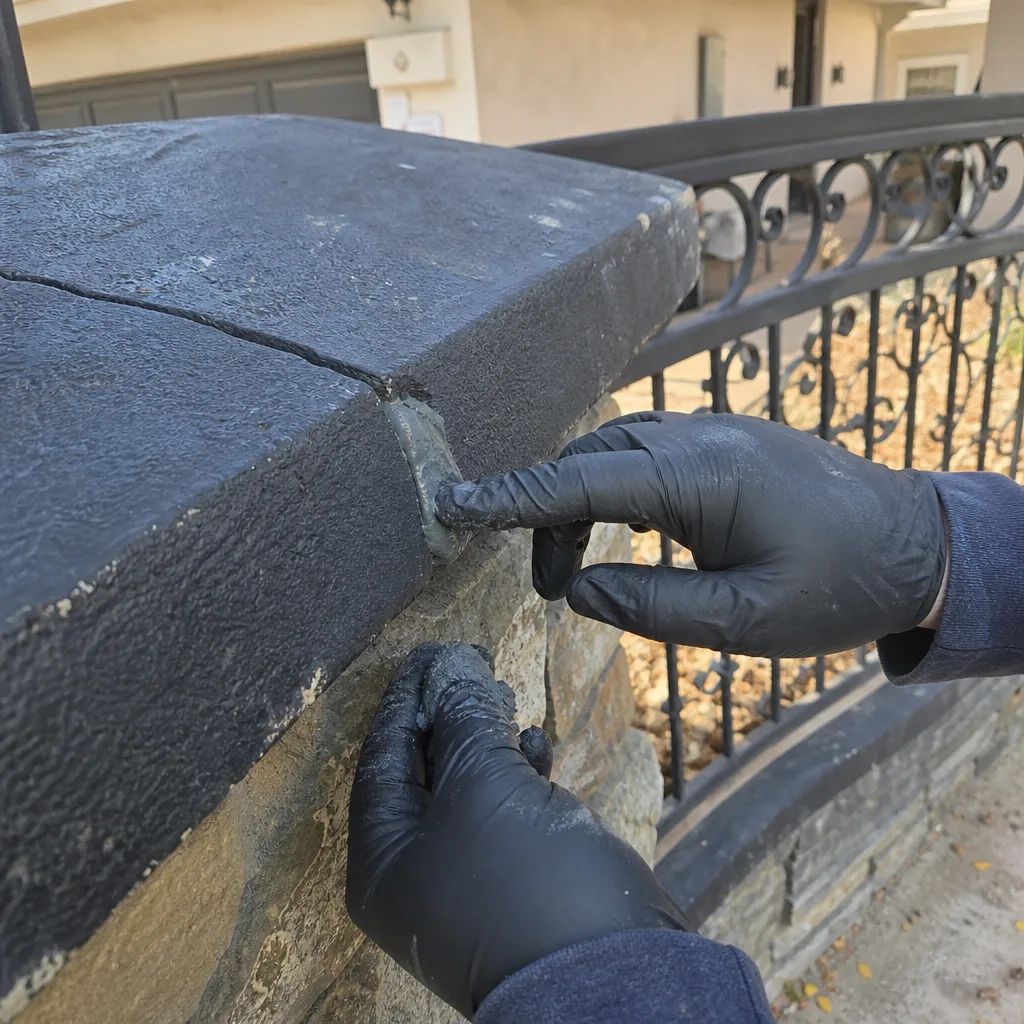
A snapshot is worthless. A log is everything. The point of logging readings is to detect drift – the slow change that precedes every gate failure. A hinge gap at 4mm is fine. A hinge gap that was 4mm two years ago, 5mm last year, and 7mm today is a hinge that needs replacing. Without the history, each visit looks fine in isolation. With the history, the trend jumps off the page.
Use a simple log format with one row per visit and one column per checkpoint. Here’s the structure:
- Date and technician – who was on site and when
- Odometer reading – the gate’s cycle count if the operator reports one (LiftMaster and Elite both do)
- Each checkpoint reading – hinge gap, limit switch, photo-eye offset, battery voltage, chain deflection
- What was adjusted – a written note of each change and the new reading
- Parts replaced – part number, quantity, brand
- Photos – the file name or reference so future technicians can pull the image
The cycle count is the most underused number in residential gate maintenance. It tells you exactly how much work the gate has done since the last service, not just how many months have passed. A gate that runs 40 cycles a day accumulates more wear in one month than a gate that runs five times a week in a year. When you review your log in Whitney, the cycle count and the measured readings together give you a complete picture of wear.
Keep the log somewhere you’ll actually find it – a folder in the garage, a digital document you can share with whoever services the gate next. A gate installation in Whitney should always come with a fresh logbook, but if yours is already in place, the log will outlast the operator and the technician.
The Two Invisible Tasks Everyone Skips
Two maintenance items never make it onto a homeowner’s checklist because they don’t involve anything visible moving. Both matter for safety, and both will fail silently if skipped.
Ground Wire Integrity
The operator’s ground wire runs from the equipment to earth, and it’s what protects the gate from electrical faults and lightning surges. In Whitney, with summer storms and dry soil, ground rods corrode faster than in wet climates. Test the ground connection with a multimeter: resistance from the operator chassis to earth should be under 25 ohms. If you can’t measure it, ask your technician to include a ground test on every visit. A failed ground is invisible until the day it matters.
Conduit Seal Inspection
The conduit that carries power and low-voltage wires to the gate should have sealed ends. In Whitney, dust and debris will fill any gap, and moisture from occasional rain will follow. A conduit that’s been open to the elements can corrode the conductors inside and, in a worst case, cause a short if an animal enters the run. Inspect the conduit ends and check for a tight seal at every maintenance visit. This is a 30-second visual task that prevents a $400 wire-run repair.
Neither of these tasks is glamorous. Both are the difference between a gate that works for 12 years and one that has a mysterious failure nobody can diagnose. When you’re reviewing whether a maintenance visit was thorough, ask about both by name – a technician who knows the job will know what you’re asking.
The Printable Sign-Off Sheet Format
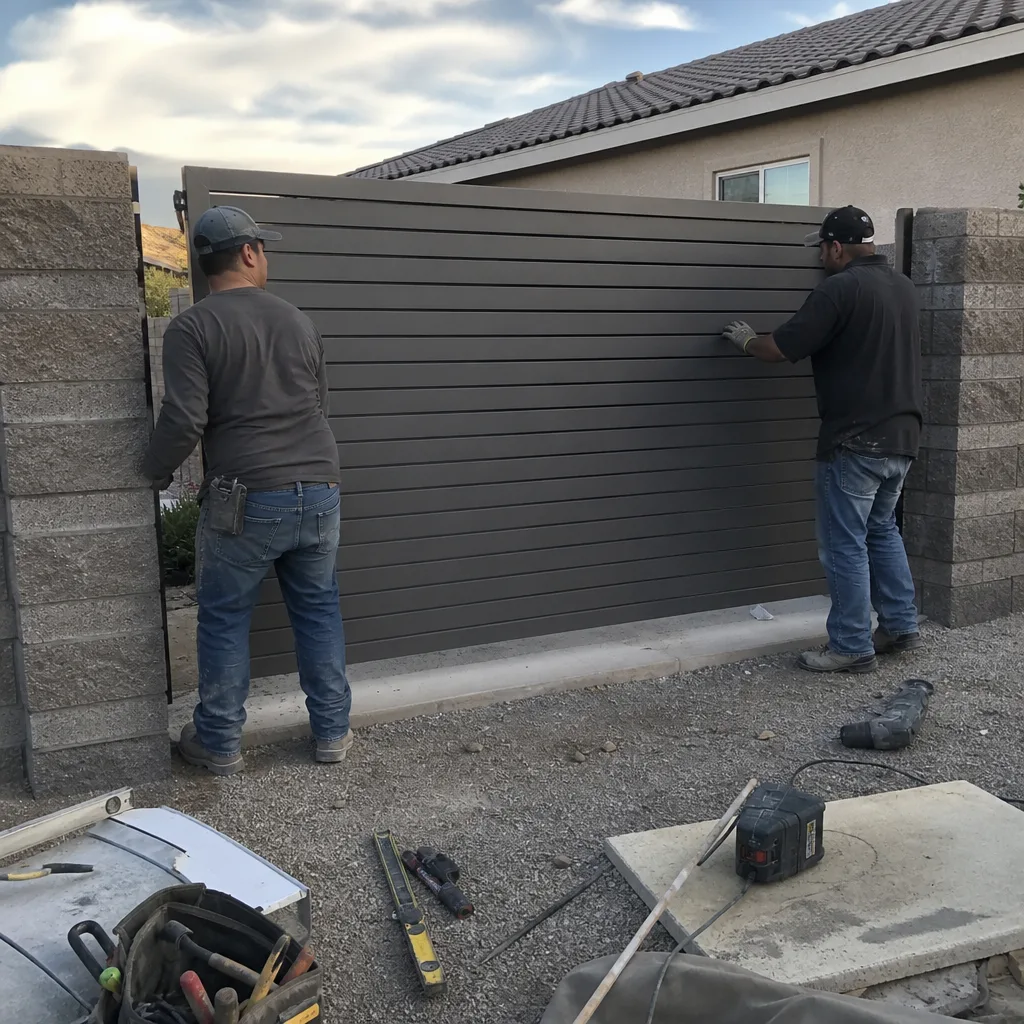
The final piece is a sign-off sheet that documents the visit in a form you can hand to a warranty department, an insurer, or the next technician. It should fit on a single page and cover the measurements, the adjustments, and the evidence. Here’s a format that works:
- Header: Date, address, gate model, operator brand, technician name
- Arrival readings: a row for each checkpoint with the measured value
- Adjustments made: checkbox and note for each item touched, with the new reading
- Parts replaced: part number, brand, quantity
- Photos attached: count and reference
- Signature line: technician signature and homeowner acknowledgement
That page is your evidence. If a limit switch fails nine months after a maintenance visit and the manufacturer questions whether maintenance was done, you have a signed, dated record with the readings. If a hinge wears out and the vendor disputes the wear history, you have the log showing the gap measurements over time. Under the Haven Standard, our technicians fill in this sheet and leave a copy with you on every visit; there’s no extra charge for the documentation because it’s part of the job.
Print a few blank copies and keep them with your gate’s manual. Even if you never hire a technician, the sheet gives you a discipline for your own inspections. Gate motor and opener work on a Whitney property should always be traceable – and with the sheet in place, it always is.
Common Mistakes to Avoid
- Recording symptoms instead of readings. “Gate is loud” tells you nothing in six months; “chain deflection measured 8mm at midpoint, spec 12-15mm” tells you exactly what changed. Always convert the observation into a number.
- Skipping the ground test because it “looks fine.” A ground wire in Whitney can corrode for years without any visible sign. Test it with a meter at every visit or have your technician test it.
- Not noting the operating temperature. A battery voltage reading is only meaningful if you know the temperature at the time. Whitney’s summer and winter readings on the same battery can differ by two volts, and logging the temperature prevents false alarms.
- Throwing away the operator manual. The manufacturer’s maintenance schedule – what must be checked and when – is in that manual, and it’s what a warranty claim will be judged against. Keep it with your log and photos.
- Letting the log live only in the technician’s system. Ask for your copy in writing. If you change providers or sell the home, the log should travel with the property, not stay on someone else’s server.
- Ignoring the cycle count. Months since last service don’t tell you how much work the gate has done. A Whitney gate on a busy driveway can double the wear of one opened twice a day.
- Adjusting the limit switch without recording the change. Any limit-switch adjustment should have a before and after reading. Skipping the record means the next technician starts from scratch and you may pay twice to rediscover the same setting.
When to Call a Professional
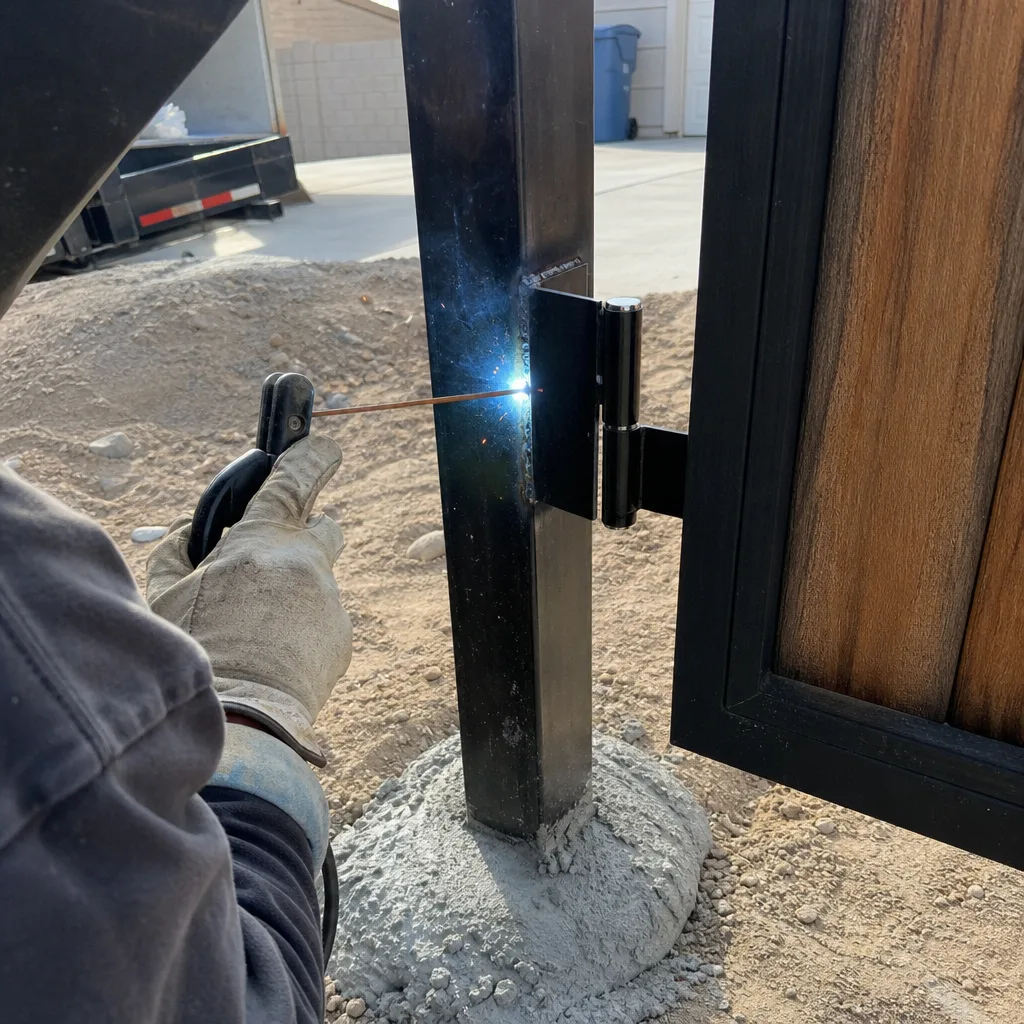
Some of this checklist is homeowner work – the visual inspections, the log, the photo of the photo-eye alignment. But several items should be handled by a trained technician, not because they’re hard but because the consequences of getting them wrong are serious. Anything involving the motor’s internal adjustments, the electrical supply, the ground connection, or the safety devices needs a professional. So does anything where a measurement is out of tolerance and requires disassembly: a hinge gap above 8mm usually means replacing the hinge, not tightening it; a limit switch that keeps drifting means a worn switch that needs to be replaced. High-tension and electrical components on a gate are not DIY territory.
Vance Gate Repair Whitney offers free estimates in Whitney – call (844) 797-4861. We’ll bring the meters, take the readings, and leave you a written record of everything we found and set.
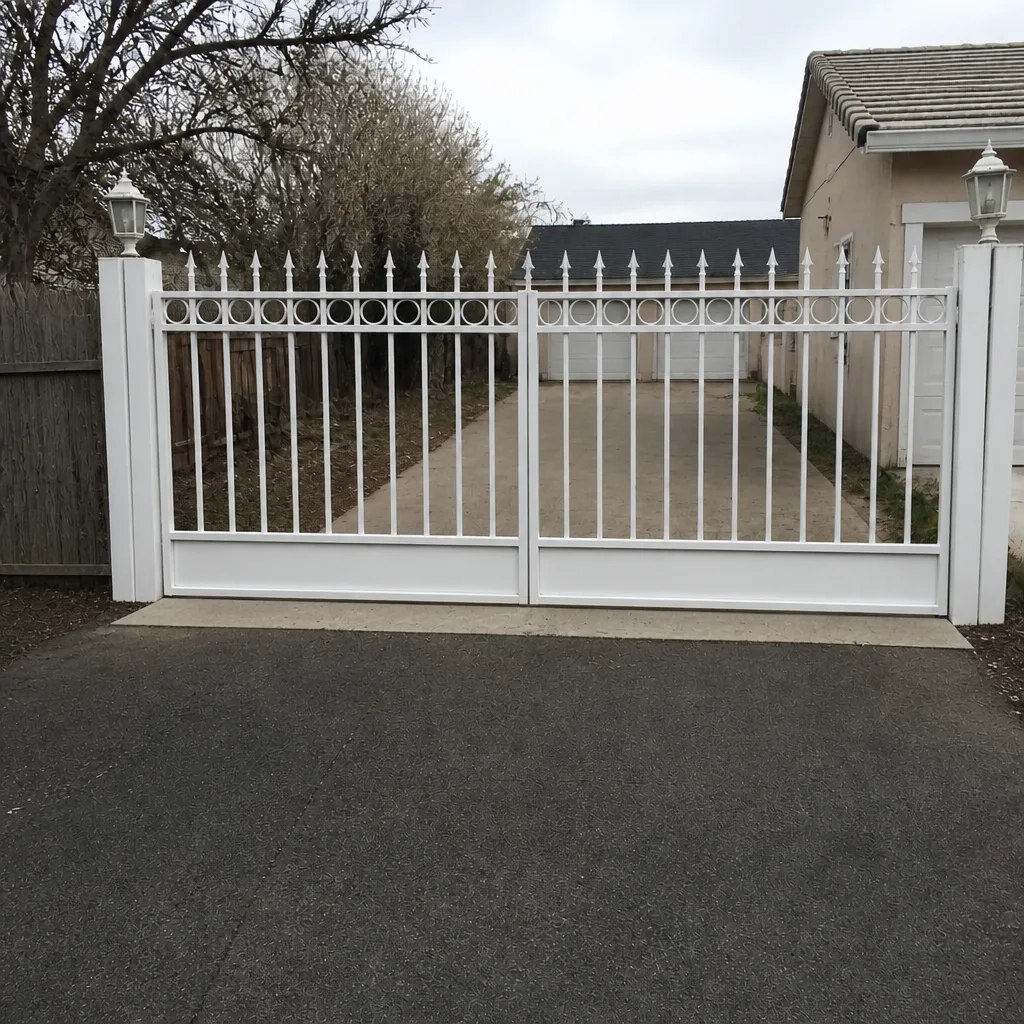
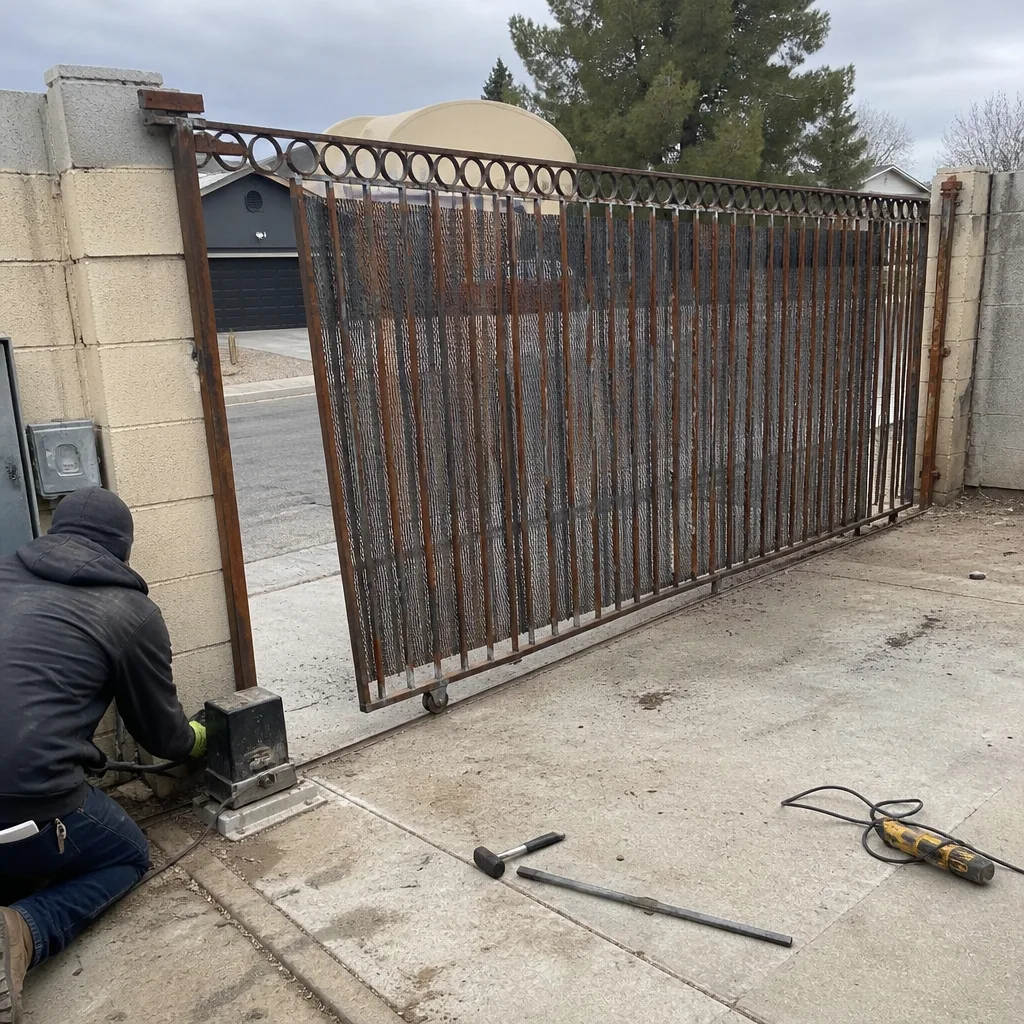
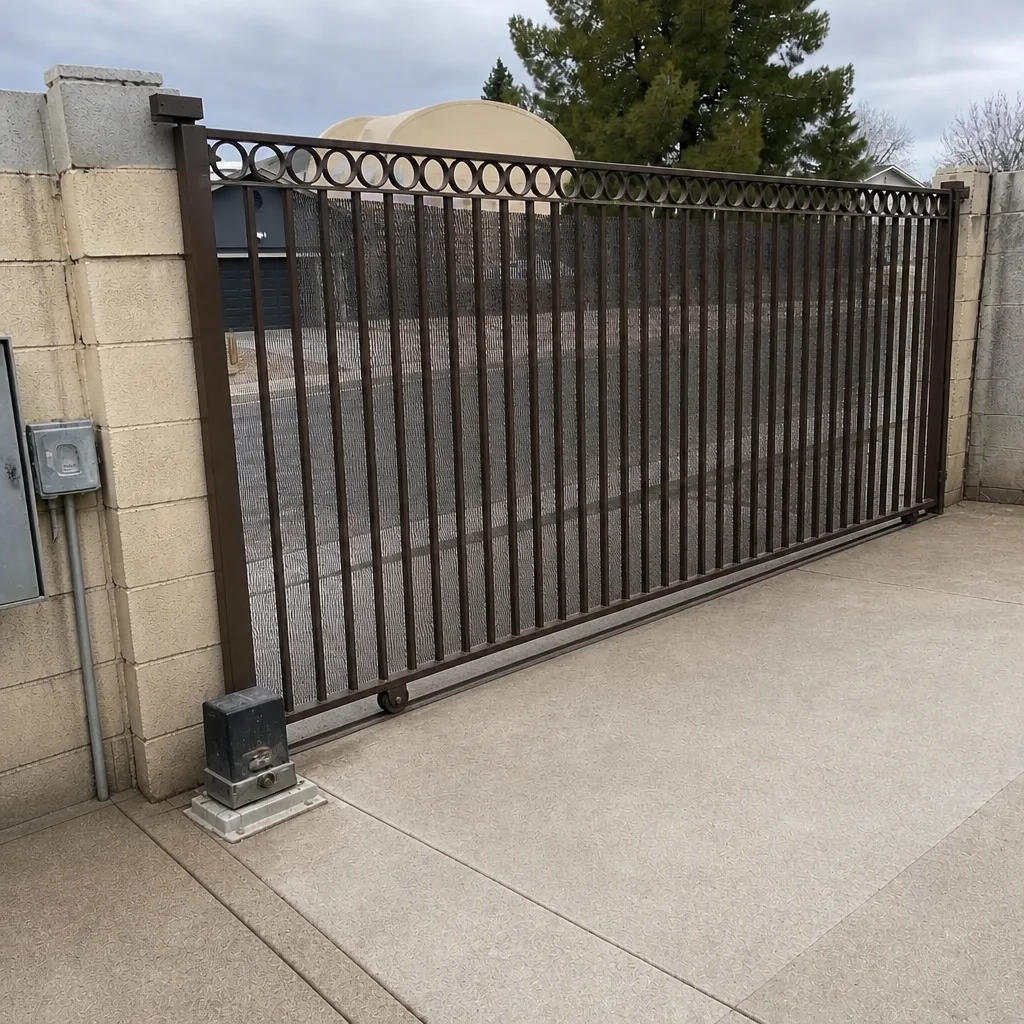
See the difference
BeforeAfter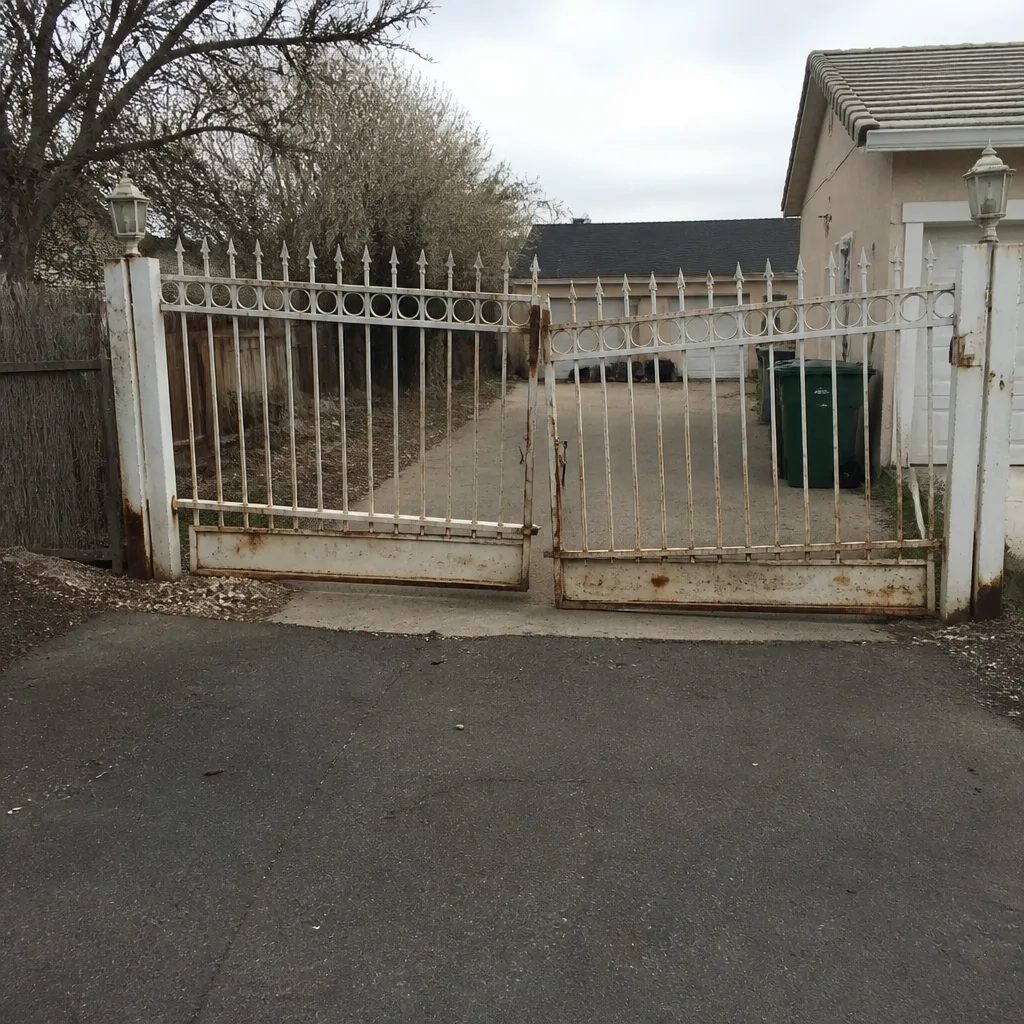 Before
 After
 Before
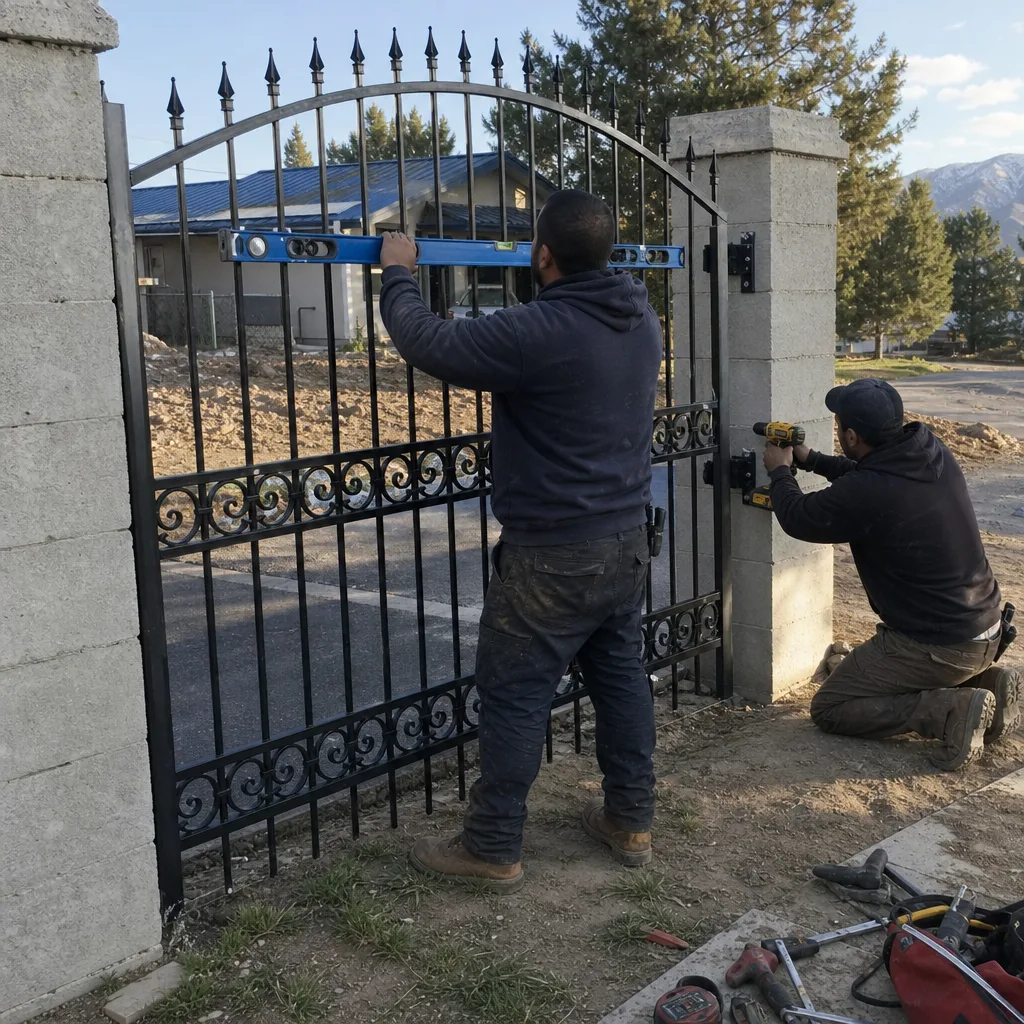
 After
Frequently Asked Questions
A real gate maintenance checklist records measurable readings: hinge gap (3-6mm), limit-switch travel (within 5 degrees of the original setting), photo-eye alignment (within 2mm), battery float voltage (13.2-13.8V for a 12V system), and chain or belt deflection (12-15mm at midpoint). It should also include the ground wire test and conduit seal inspection. Vague items like “lubricate moving parts” don’t count. Call (844) 797-4861 if you want a checklist you can compare against your technician’s report.
Every six months for a typical Whitney residential gate, and more often if the gate cycles dozens of times a day. The desert temperature swings and summer monsoon humidity both accelerate wear on hinges, batteries, and electrical connections. Scheduling maintenance before summer (April) and after monsoon season (October) catches problems before they become failures. Call (844) 797-4861 to schedule an inspection.
Yes. LiftMaster, DoorKing, and other major manufacturers require documented maintenance for warranty coverage on operator failures. If a motor fails and you can’t show a maintenance record that includes lubrication, safety-device inspection, and battery replacement per schedule, the claim can be denied. The fix is simple: keep a log with dates, readings, parts used, and photos. We leave that record on every visit. Call (844) 797-4861 for a free review of your existing documentation.
The photo-eye is the infrared beam that tells the operator to stop or reverse if something crosses the gate’s path. If the emitter and receiver are misaligned by more than 2mm, the gate can fail to reverse on obstruction, which is a serious safety problem. Measure the offset between the lenses every six months. If they aren’t aligned, don’t adjust them yourself – call (844) 797-4861 and we’ll realign and test the whole safety circuit.
Battery voltage is temperature-sensitive. A 12V battery reads higher in warm weather and lower in cold weather by as much as two volts. Whitney’s summer highs above 105°F and winter nights below freezing create a wide swing on the same battery. Always log the reading alongside the temperature so you can tell a real decline from normal seasonal variation. If the resting voltage drops below 12.6V at 75°F, replace the battery. Call (844) 797-4861 if you’re unsure.
Maintenance means measuring, adjusting, lubricating, and documenting the gate while it’s working – the goal is preventing a failure. Repair means fixing something that’s already broken: a motor that won’t start, a gate that’s dragging, a hinge that’s failed. Maintenance catches the drift before it becomes a repair. If you’re at the repair stage, gate repair in Whitney covers what we do and what it costs, and you can call (844) 797-4861 for a written estimate before any work starts.
The Bottom Line
A maintenance checklist that isn’t built on measurements is just a reminder to hire someone. The real checklist gives you numbers – hinge gap, limit-switch travel, photo-eye offset, battery voltage, chain deflection – and a log that shows how those numbers change over time. Add the two invisible items (ground wire integrity and conduit seal inspection), document each visit on a single-page sign-off sheet, and you have a record that doubles as warranty evidence. In Whitney’s climate, drift is inevitable; the only question is whether you see it before it becomes a repair. Make the measurements, keep the log, and call (844) 797-4861 when any reading goes out of tolerance.
If you’re also weighing whether your gate’s hardware is due for replacement rather than another adjustment, our guide to gate installation in Whitney lays out what a new gate involves. If you want to understand the operator itself, gate motor and opener service in Whitney covers brands, service intervals, and what we check on every visit. And if you’re starting fresh with a gate company, Vance Gate Repair Whitney home explains how we work. For a free written estimate and a documented visit, call (844) 797-4861.
Written by the team at Vance Gate Repair Whitney.