
Last updated November 18, 2026
 Wrought iron
 Wood & steel frame
 Farm & ranch
 Sliding driveway gates
 LiftMaster operators
Free on-site gate assessment - hinges, posts, and your LiftMaster or Nice gate operator checked before anything is quoted
The assessment is free and the quote is the invoice.
Get your free estimateGate Access Control Maintenance Schedule: What to Do and When
Most access-control failures aren’t sudden. They’re the fourth time the same limit switch drifted out of range and nobody wrote it down the first three times. A gate that “just stopped working” usually gave three or four quiet warnings over months – a slightly short swing, a beam that tripped on a windy afternoon, a battery that ran the motor a half-second slow. The schedule below is built around one idea: maintenance worth doing is maintenance you can prove you did. We’ll show you which checks belong to you and which belong to a technician, what a real log entry looks like, and why a Whitney gate with a written record behaves differently than one without.
Quick Answer
A working gate access-control schedule has two layers: an owner-level visual check every 30 days (no tools, ten minutes) and a technician-level inspection every six months that records limit-switch position, battery voltage, photo-eye alignment, and motor draw. The single most important habit is writing down what you found each time, because drift is only visible against a baseline. In Whitney, where the desert swings from summer highs in the triple digits to winter nights near freezing, the six-month cadence matters even more – a summer-only schedule misses the battery draw-down that shows up in January.
Styles & brands we work with
- Wrought iron
- Wood & steel frame
- Farm & ranch
- Sliding driveway gates
- LiftMaster operators
Table of Contents
- The Two Layers of Gate Maintenance: You vs. the Technician
- What a Limit-Switch Baseline Reading Is and Why It Matters
- The 30-Day Owner Check: Ten Minutes, No Tools
- The 6-Month Technician Check: Readings, Adjustments, Photos
- How Whitney’s Temperature Swings Affect Your Battery Backup
- What a Real Maintenance Log Entry Contains
- Maintenance Tasks That Void Manufacturer Warranties
- Common Mistakes to Avoid
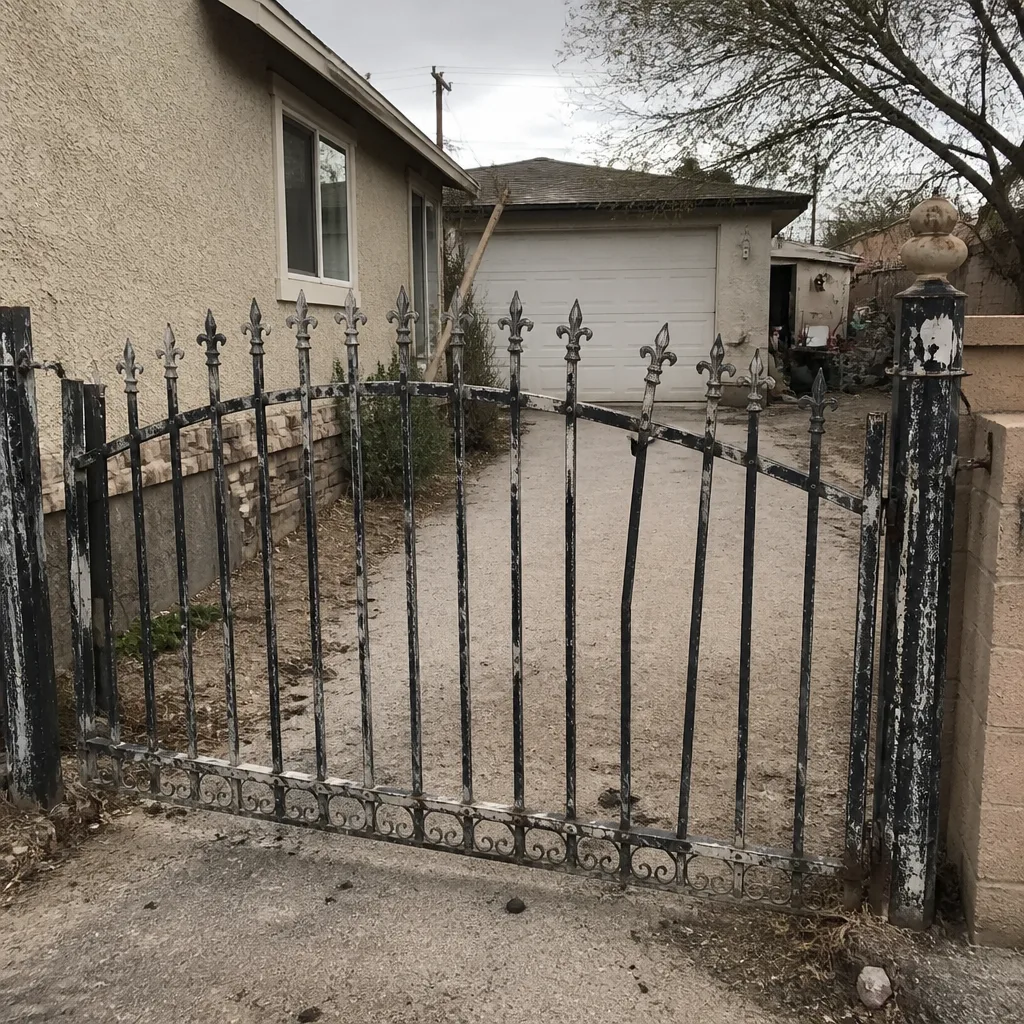 Before
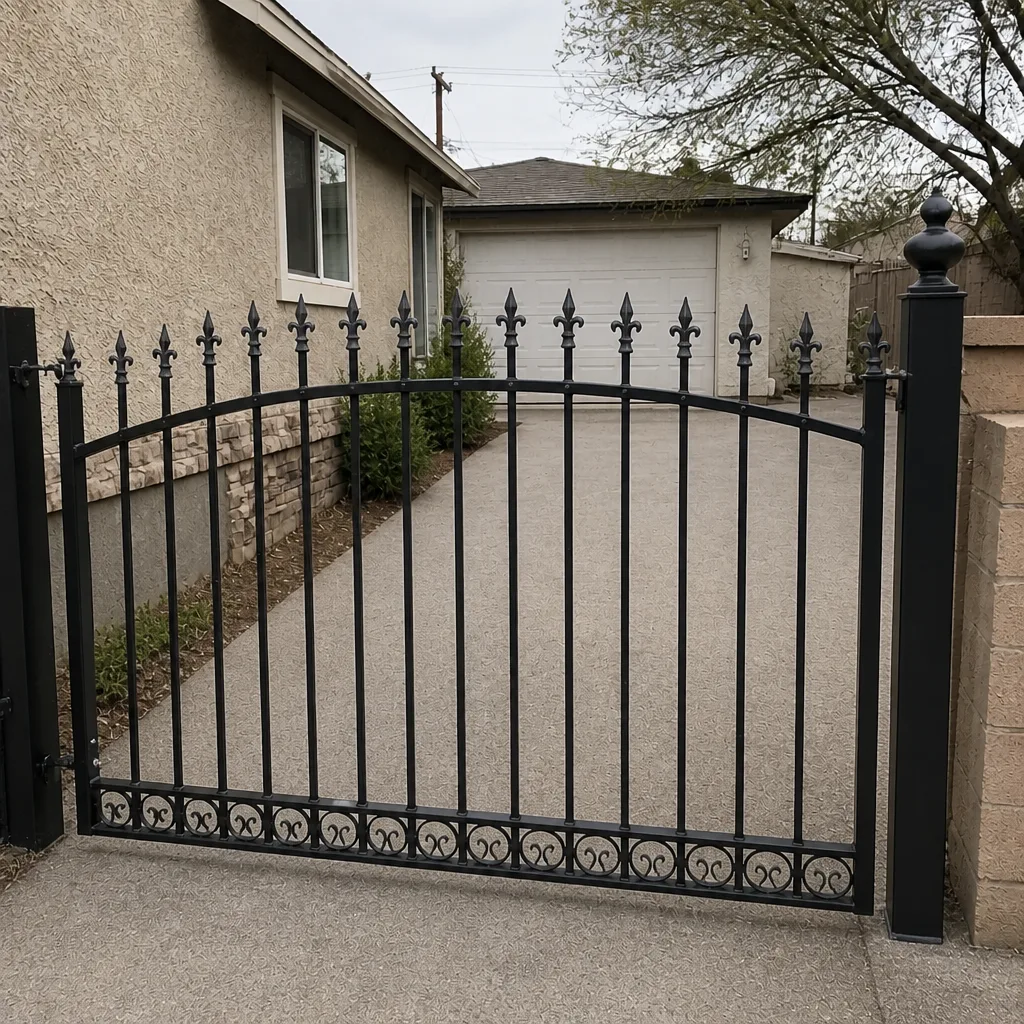 After
The Two Layers of Gate Maintenance: You vs. the Technician
The single biggest confusion in gate access control is where your responsibility ends and a technician’s begins. Most homeowners either do too little (they assume the gate is someone else’s problem until it fails) or too much (they start adjusting things that need a meter and a written spec). Here’s the clean split, and it’s the same split we use on every job we document.
Your layer – the 30-day visual check. No tools, no adjustments, ten minutes. You’re looking and listening, not fixing. If something looks wrong, you write it down and call.
The technician layer – the 6-month service visit. Out comes the multimeter, the limit-switch gauge, and the camera. This is where readings get recorded and adjustments get made against a known baseline. This is the layer that prevents failures rather than reacting to them.
Here’s why the split matters in practice. On a recent gate repair in Whitney call, the homeowner had been tightening a sagging hinge bolt every few weeks for months. The gate kept sagging because the real problem was a post that had shifted in the heat – which a technician would have caught at the six-month mark with a plumb check. Owner effort isn’t wasted, but it needs to stay in its lane: observe and report, don’t adjust.
When you stay in your lane and a technician stays in theirs, you get a gate that reaches the end of its service life instead of the end of its patience four years early.
What a Limit-Switch Baseline Reading Is and Why It Matters
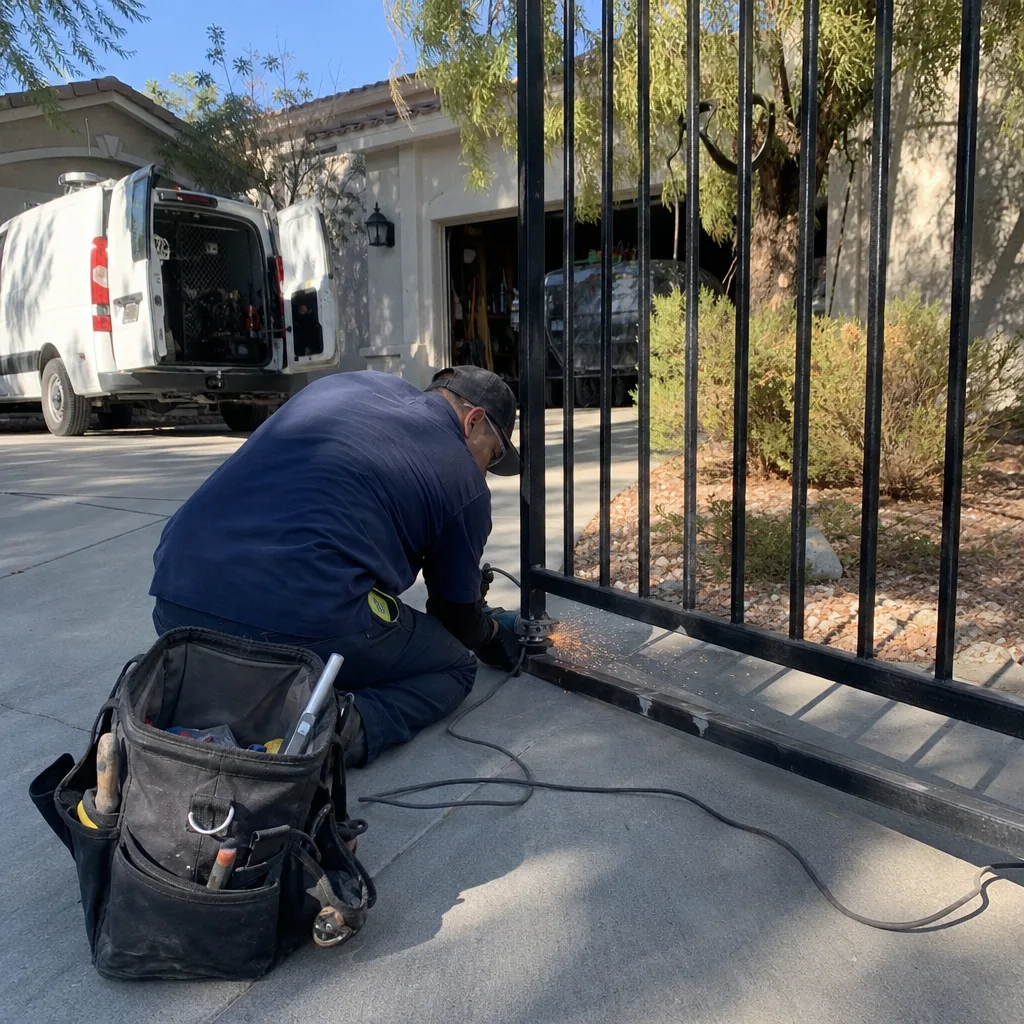
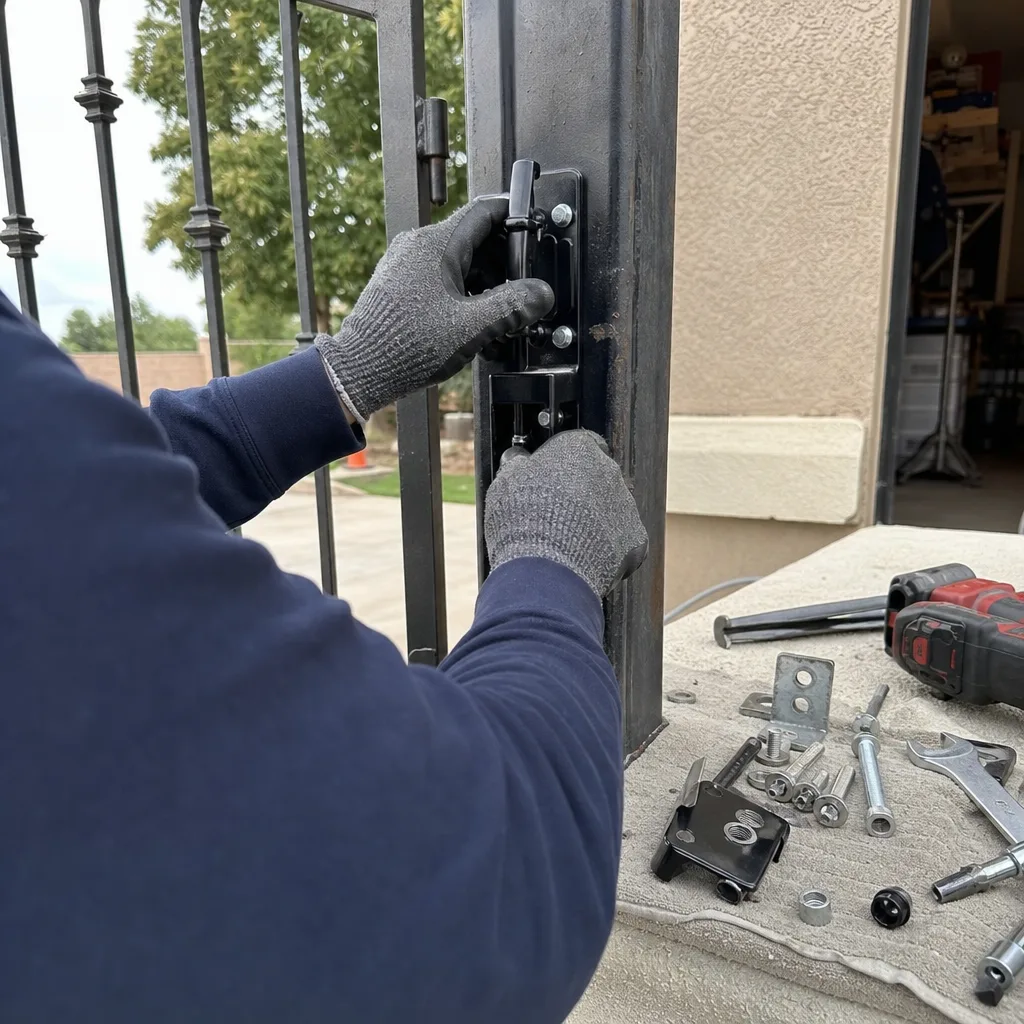
A limit switch is the small sensor inside your gate operator that tells the motor when to stop. It doesn’t just turn the gate off – it defines exactly where “fully open” and “fully closed” are. If that position drifts, the gate starts stopping a little short, or slamming into the stop with more force than it should.
Here’s the part almost nobody does: recording the limit-switch position at install, and again at every service visit, so you can measure drift in degrees over time. Without a baseline reading, a technician can only tell you the gate is misadjusted right now. With a baseline, they can tell you it drifted 12 degrees over eight months – which points at a cause. Thermal expansion of the gate frame. A slipping arm bracket. A worn gear in the operator. Each has a different fix, and the baseline is what tells them apart.
This is why we photograph the limit-switch position and write the reading into the job record every single visit. In our experience, a gate that’s been recording baselines for two years is a gate where we can predict the next failure instead of just showing up for it.
In practical terms, the baseline gives you three things competitors skip:
- A drift trend. 2 degrees a year is normal wear. 12 degrees in six months means something is moving under load.
- A brand-specific reference. A LiftMaster swing operator and a FAAC 400 set their limits differently, and the baseline needs to match the brand on your property, not a generic spec.
- A paper trail. If a repair under warranty is ever questioned, the readings are the evidence.
If your installer never left you a limit-switch reading, that’s the first thing to ask for at the next service visit. It’s the difference between maintenance and guesswork.
The 30-Day Owner Check: Ten Minutes, No Tools
This is the check you own. Do it on the first weekend of every month, before the gate becomes a problem. It’s a walk-around, not a repair session – if you find something, you note it and stop.
- Walk the full travel path. Open and close the gate once, slowly, and watch the entire swing. Look for the gate dragging on the ground, a track that’s lifted, or a wheel that’s worn flat.
- Listen to the motor. A healthy operator runs at a steady hum. Grinding, clicking, or a slow startup means the motor is working harder than it should.
- Check the photo-eyes. That’s the infrared beam that stops the gate if something crosses the path (the safety beam). Walk through the path and confirm the gate reverses. If it doesn’t, that’s a safety failure, not a minor issue – stop using the gate and call.
- Look at the hinges and post. Any visible rust, a gate sagging at the far corner, or a post with a crack at the base is a technician issue.
- Listen for the warning beeper. Most operators beep before moving. If the beeper is silent or intermittent, note it.
- Glance at the control box. Look for any status light that’s red or flashing that wasn’t before. Don’t open the box – just note the color.
Ten minutes. The value isn’t in what you fix; it’s in what you catch early enough that a technician visit stays a maintenance call instead of a repair. A gate that’s caught in month one is a cheap fix. A gate that’s caught in month nine is often a motor.
The 6-Month Technician Check: Readings, Adjustments, Photos
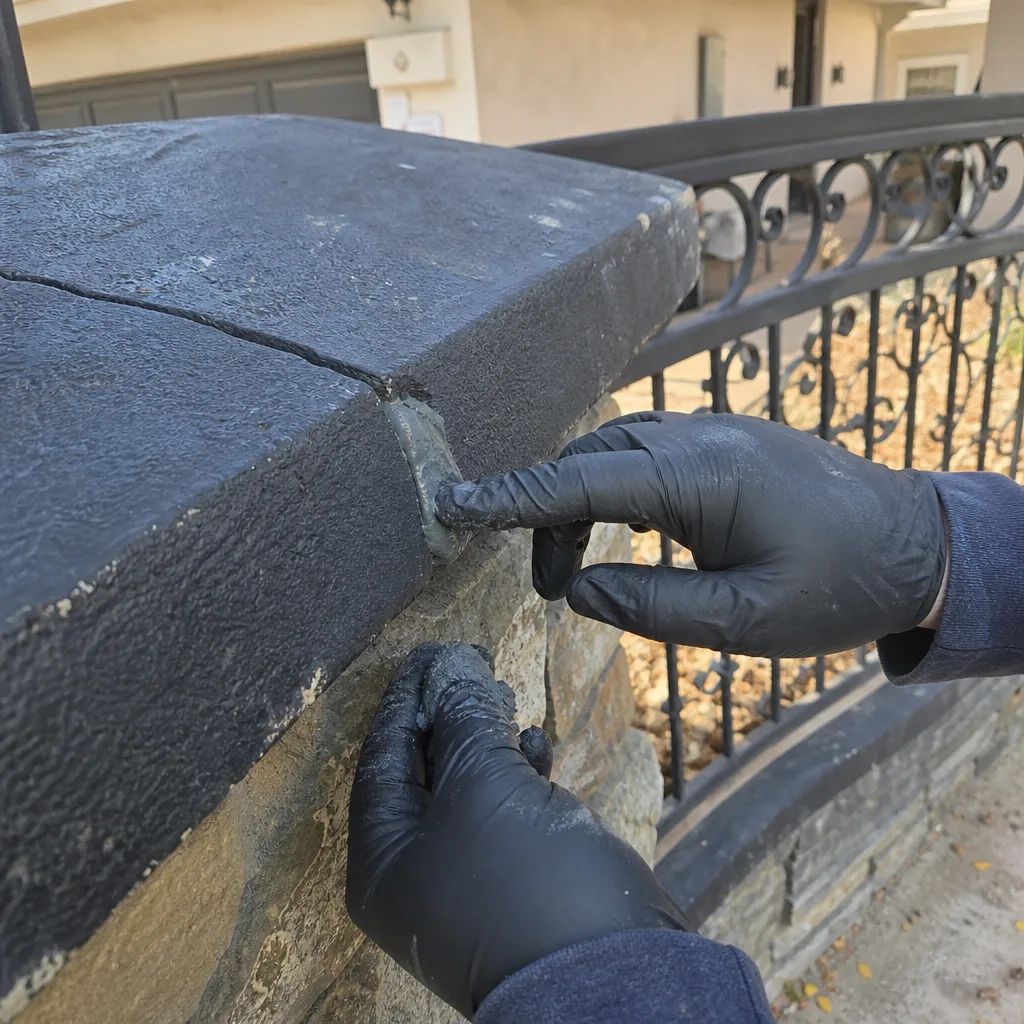
The six-month service visit is where a gate goes from “still working” to “measurably healthy.” Every item on this list produces a reading that goes into the log. A visit without readings is a visit worth questioning.
What a proper 6-month technician checklist includes:
- Limit-switch position reading compared against the previous visit’s baseline (see above).
- Battery backup voltage test – critical in Whitney, and we’ll come back to why.
- Photo-eye alignment and beam strength – a beam that’s 2 inches out of alignment works fine in daylight and fails in low sun.
- Motor current draw measured at full travel, to spot a motor working harder than spec.
- Hinge, roller, and track inspection with a plumb check on the post.
- Control box and wiring inspection – a photograph of the wiring diagram as found, so the next technician doesn’t have to reverse-engineer it.
- Safety reverse test with the current ASTM force setting confirmed.
- Photo record of every adjustment and every part number installed.
On a LiftMaster or Elite operator, the motor current draw number is the read that catches a failing gearbox months before the homeowner hears it. On a Mighty Mule or Ghost Controls solar setup, the battery voltage trend is the read that tells you whether the panel is actually keeping up. In our experience, the brand on your property is less important than the record – nine major brands come through our work, and the schedule is the same for each.
If you’re not sure when your last 6-month visit happened, that’s a sign. Call and get the baseline established. Gate motor and opener service in Whitney is where the readings actually happen.
How Whitney’s Temperature Swings Affect Your Battery Backup
Battery backup is the most under-scheduled part of gate access control, and Whitney’s climate makes it worse than almost anywhere. Whitney sits in a desert basin where summer afternoon highs climb into the triple digits and winter nights drop toward freezing. A lead-acid or sealed AGM gate battery that lives in that swing degrades faster than one in a mild year-round climate.
Here’s the specific problem a summer-only schedule misses. In summer, the gate motor runs heavier (heat increases resistance), but the battery stays warm and reads full voltage at rest. The homeowner assumes the backup is fine because the test shows green. Then winter arrives, the battery’s capacity has already dropped from heat damage, and the first cold snap pulls the resting voltage below the operator’s threshold. The gate works all summer, then fails on the first cold morning – which sounds like a sudden failure but is a nine-month-old problem the schedule never measured.
What we record on every Whitney service visit:
- Battery resting voltage before the test, not just after – the before number is the honest one.
- Loaded voltage during a full open cycle under backup power.
- Battery age and part number, written into the log.
- A trend line from the previous visit, so a sag from 12.8 to 12.4 to 12.1 shows up as a pattern, not a surprise.
If your battery is more than three years old in Whitney, ask for the trend reading rather than a simple “battery good.” A summer-only check tells you the battery is warm. A properly documented winter check tells you whether it’ll actually carry the gate.
What a Real Maintenance Log Entry Contains
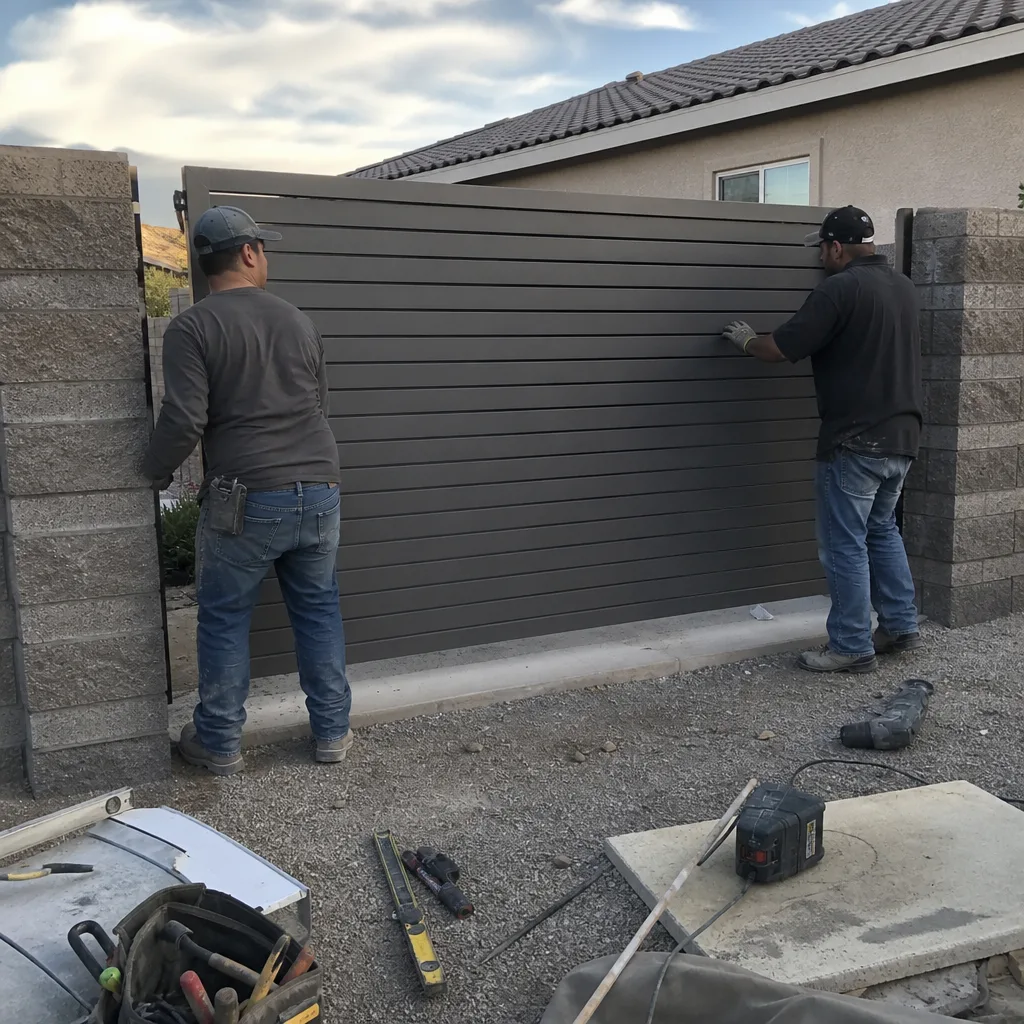
“Checked gate” is the most useless line in a maintenance log. It tells the next technician nothing, tells you nothing, and defeats the entire point of a schedule. A real entry is a document you could hand to a stranger and they could repeat the visit exactly.
Here’s the standard we hold every entry to – the four things every log line must contain:
- Date and technician. Not just a name – the person who did the work, with their license number on the record.
- Readings, in numbers. Limit-switch position, battery voltage (resting and loaded), motor current draw, photo-eye beam strength. Every reading that the visit produced.
- Parts touched and parts installed. The part number, the brand, and whether it was adjusted, cleaned, or replaced. “Adjusted limit switch position 3 degrees clockwise” beats “adjusted limits.”
- Photos. Before and after of every adjustment. The wiring diagram as found. The limit-switch position. The photo-eye alignment. A photo record on every visit isn’t optional – it’s the whole habit.
When we finish a visit, the homeowner gets a photo log of every adjustment and a written record of the part numbers installed. That record stays with the property. It’s why a second technician walking onto your gate can see what the first one found – instead of relearning the same gate and charging you for the rediscovery. Under Clause 4 of our own standard, the photo record is on every job at no extra charge. That’s not a sales line; it’s the reason the schedule works at all.
Maintenance Tasks That Void Manufacturer Warranties
This is the section most homeowners discover too late. Several tasks on a gate operator are warranty-critical, meaning if a non-authorized person performs them, the manufacturer can decline a claim later. On the brands we work with daily, the borderline items are:
- Opening the operator housing on a sealed or weather-rated unit. Many manufacturers require this to be done by an authorized technician to preserve the weather seal and warranty.
- Adjusting or replacing the limit switch by hand. Improper adjustment can damage the operator’s internal gearbox, which is not a cheap part.
- Replacing the control board or any component inside the control box. Miswiring here can burn the board and does damage beyond warranty repair.
- Changing safety reverse force settings. The ASTM force setting is a safety-critical spec. Adjusting it to “make the gate work” is a warranty and safety issue.
- Replacing the battery backup on operators that require factory-matched units. Some brands lock in specific battery types.
If you own a LiftMaster, FAAC, Elite, or similar operator and someone other than an authorized technician has opened the housing to “fix” the limit switch, the manufacturer may decline a future claim. The right move is to leave those adjustments alone, document the issue on your 30-day check, and let a technician with the correct tools and readings perform the fix. Cheap adjustment now can mean no warranty coverage later – and the operator housing is not a “just try it” zone for a homeowner.
Common Mistakes to Avoid
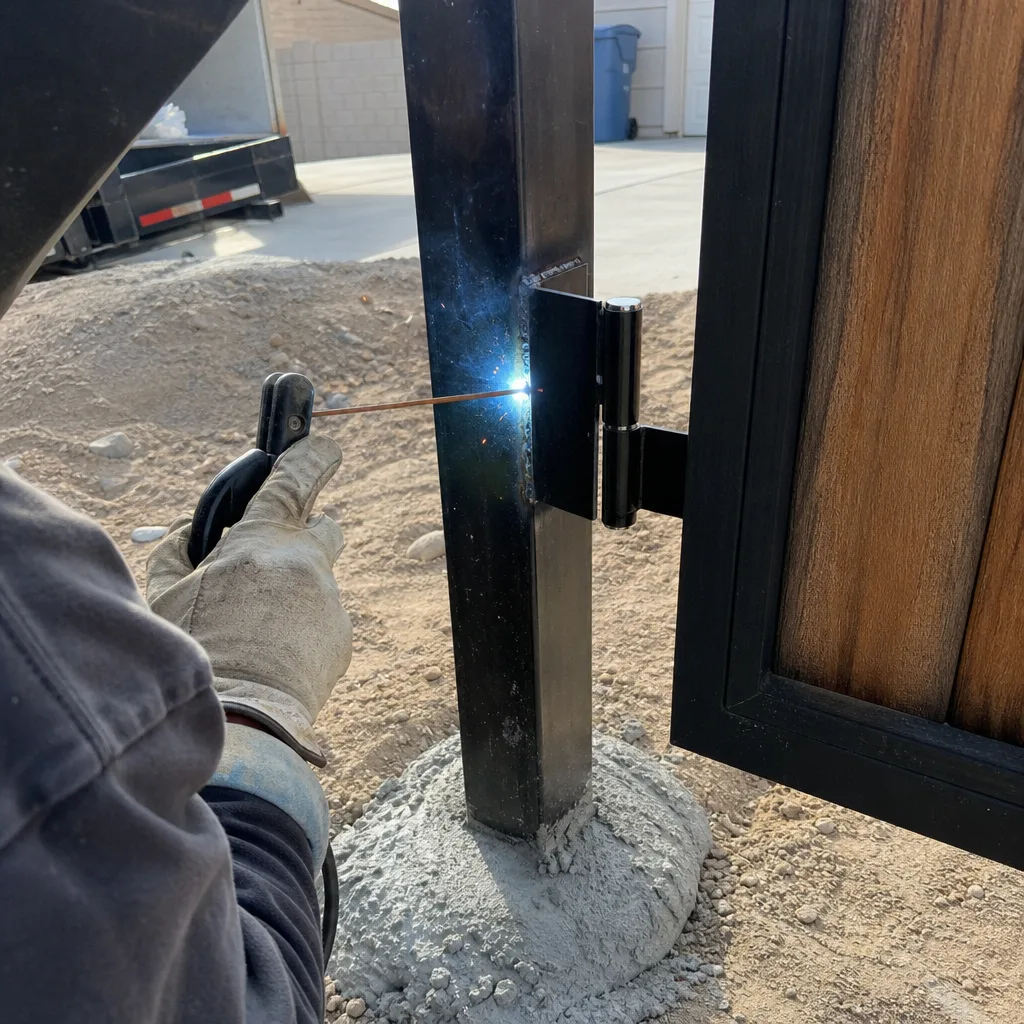
- Resetting the limit switch without a baseline. If you adjust the limit switch and don’t write down the new reading, the next technician has no idea where the gate started and can’t measure drift. You’ve just reset the clock, not fixed the cause.
- Skipping the winter battery check. Whitney’s summer-only schedule assumes the battery is fine because it read green in July. The draw-down shows up in January, when it’s already a failure. Check the battery at least twice a year.
- Adjusting the photo-eye to “stop the tripping.” A beam that trips on a windy afternoon is misaligned or weak, not too sensitive. A homeowner adjustment typically moves the beam further out of alignment and creates a safety-failure risk.
- Using WD-40 on the operator track. It attracts dust, and in a desert climate it turns into a paste. Use the manufacturer’s specified dry lubricant, on the manufacturer’s schedule.
- Reading “battery good” as a full check. A resting voltage check without a loaded test tells you half the story. Ask for the loaded reading, not the resting one.
- Ignoring a beeping or silent beeper. The warning beeper is a safety feature tied to the operator, and a silent beeper is a code or motor issue in the making.
- Trusting a verbal “checked gate” log. If the record doesn’t have readings, photos, and part numbers, you don’t have a maintenance record – you have a signature. Ask for the paper.
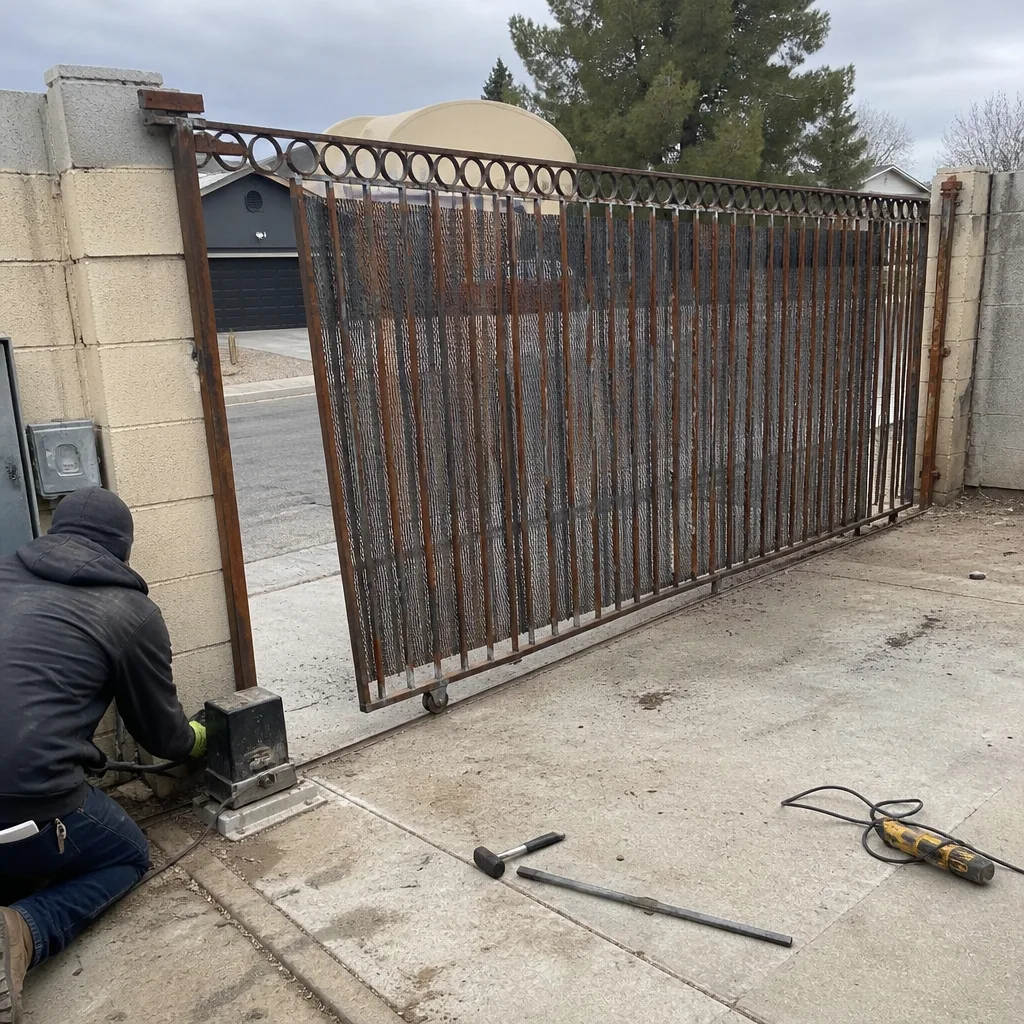
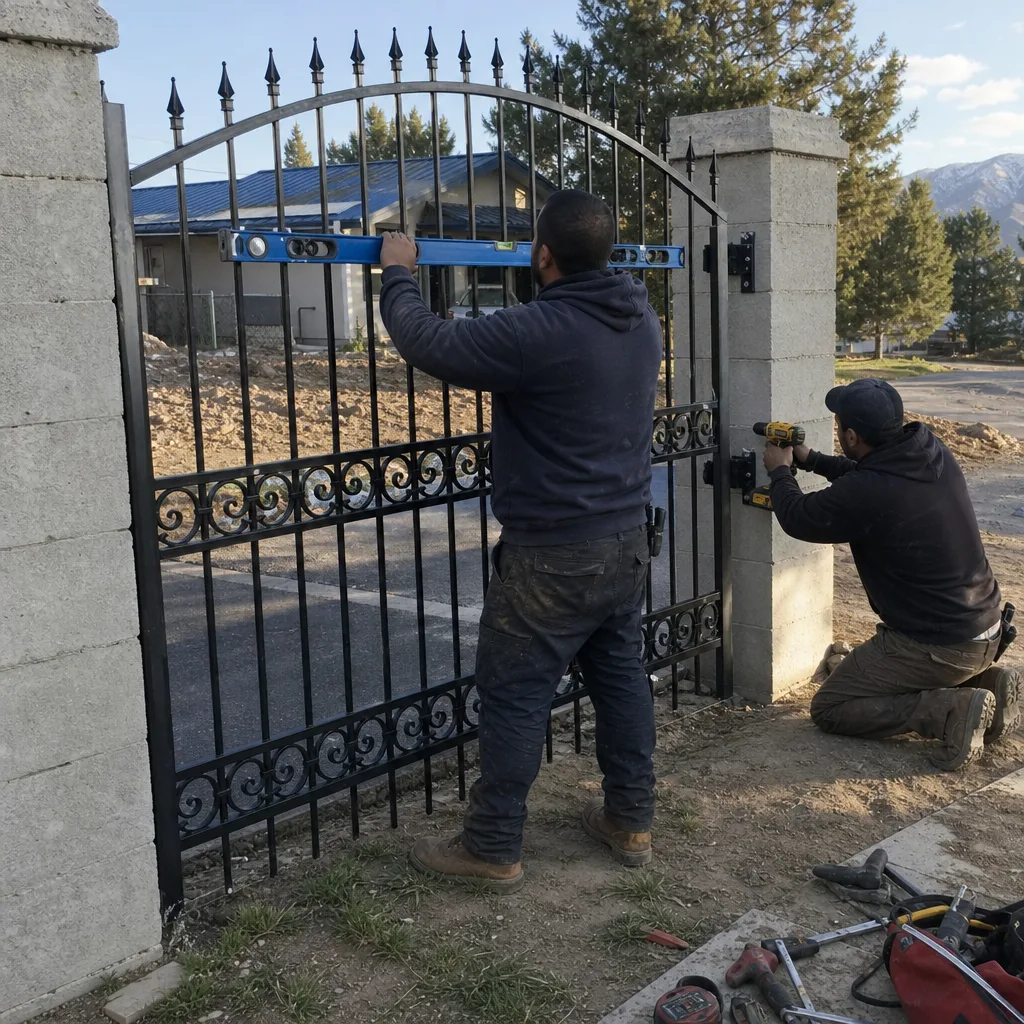
See the difference
BeforeAfter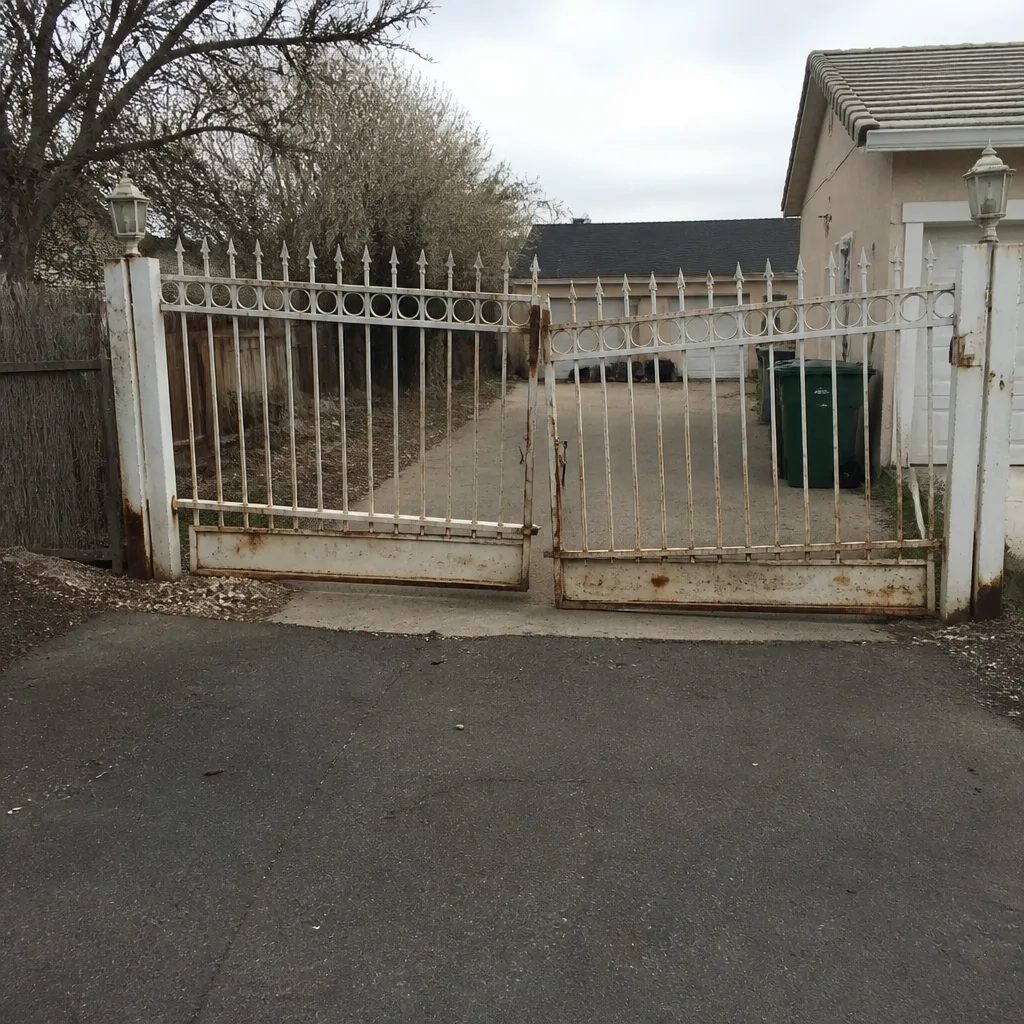 Before
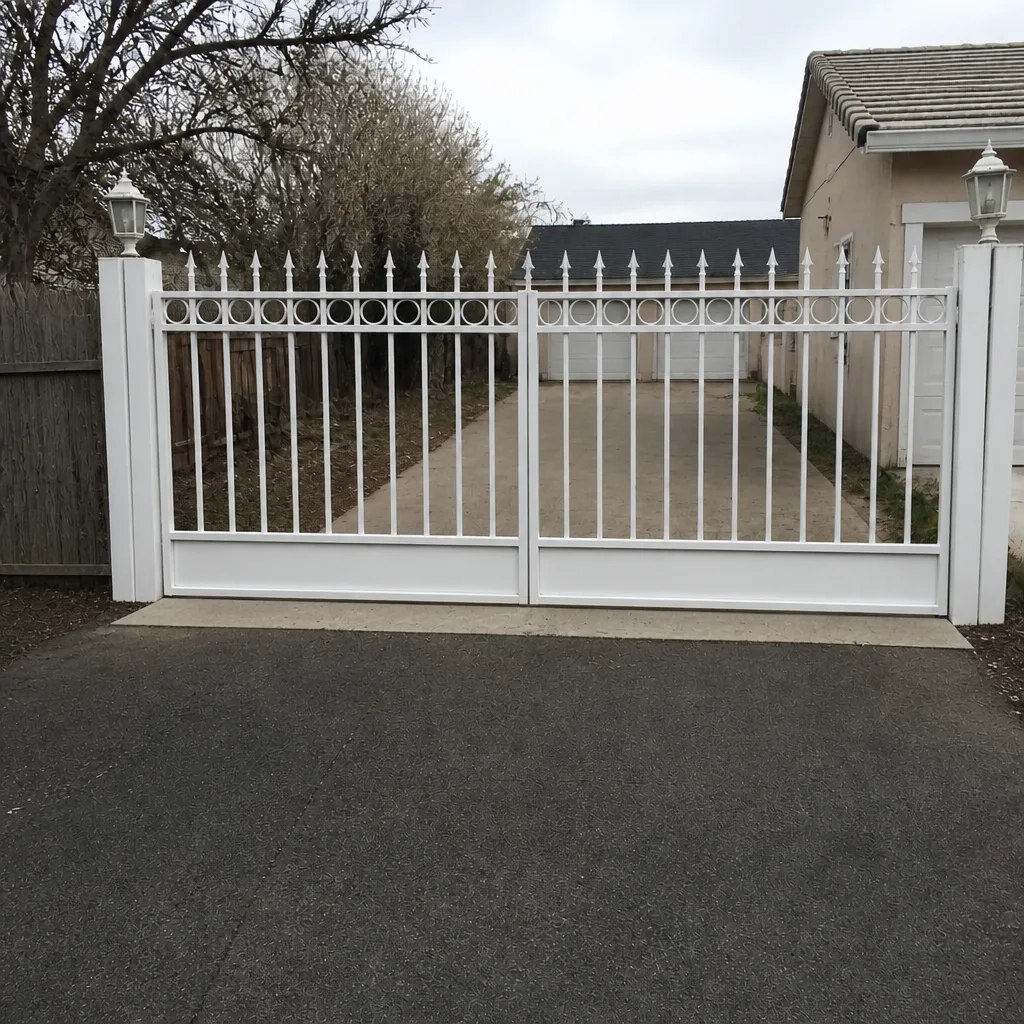 After
 Before
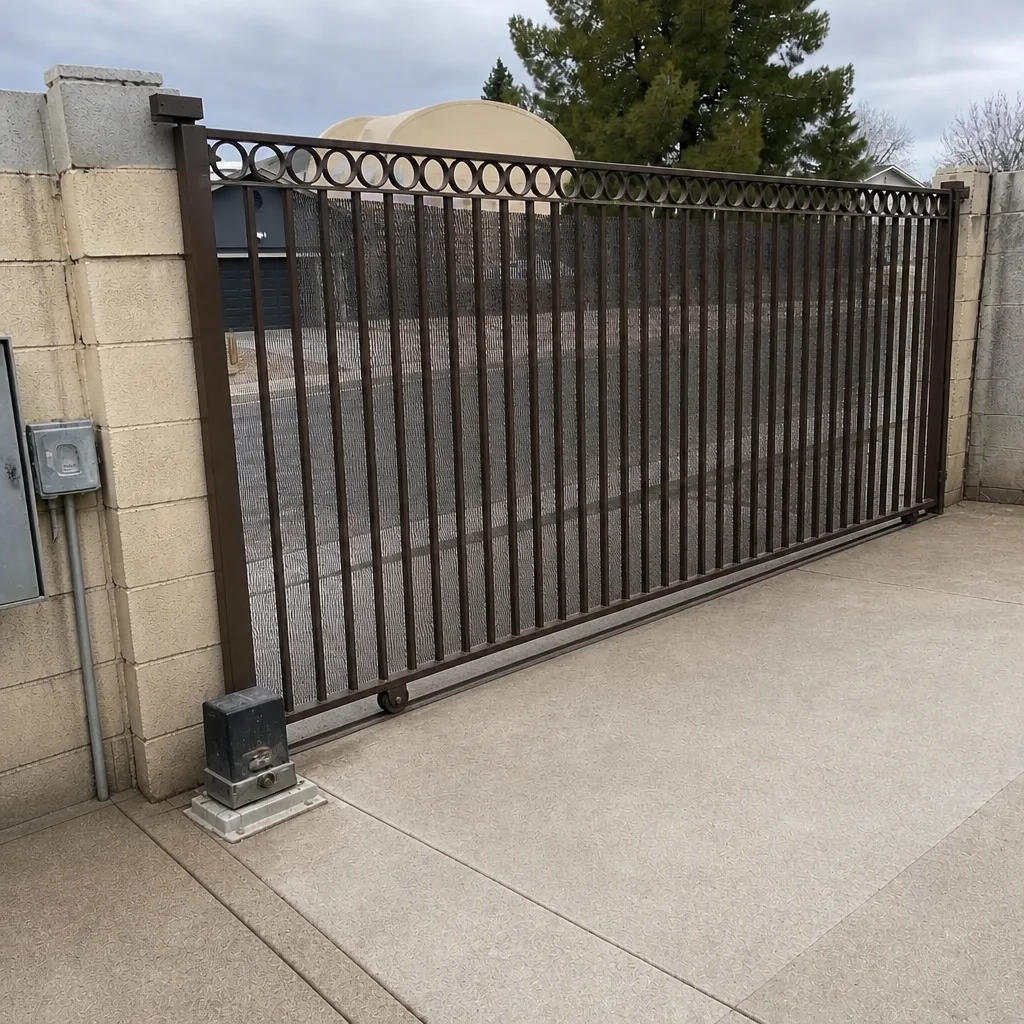 After
When to Call a Professional
Most of this schedule belongs to you, but some findings are an immediate stop-use and call. Anything that fails the safety reverse test, a photo-eye that doesn’t trip the gate, a gate that drags or stops short of its limit, and any visible crack at the post base are all stop-use issues. We’ve also seen homeowners try to fix a limit-switch drift themselves and end up replacing the operator’s gearbox. None of those adjustments are safe to attempt without the tools and the readings, and the operator’s force settings are governed by code for a reason.
If your gate falls into any of those scenarios, or if you simply don’t have a written record from your last service, call us. Vance Gate Repair Whitney offers free second opinions on any written estimate from another company – bring the paperwork and we’ll review it at no cost. Free estimates in Whitney, with a written price before any work starts: call (844) 797-4861.
Frequently Asked Questions
Every six months by a technician, with a 30-day visual check by the owner in between. In Whitney, the six-month cadence matters specifically because of the temperature swing – a summer-only check misses the winter battery draw-down, and a winter-only check misses the heat damage that already happened. If you’re in a heavier-use household or a gate that runs more than 20 cycles a day, we recommend quarterly technician visits.
It’s a written position value recorded at install and at every service visit – for example, “limit switch position 3 set to 47 degrees from closed, photographed.” Without that starting number, a technician can only say the gate is misadjusted now; with it, they can measure how far it drifted and identify the cause. Ask any technician to record the reading, not just check the gate.
Because summer heat degrades a battery’s capacity while leaving its resting voltage looking healthy. The gate works all summer, the capacity is quietly gone, and the first cold night pulls the voltage below the operator’s threshold. A proper 6-month check records the resting and loaded voltage and tracks the trend so the winter failure gets caught in October, not January.
We don’t recommend it. The limit switch on most operators is inside the housing and its adjustment interacts with the motor’s internal gearbox – a wrong adjustment can damage the gearbox, which is not a cheap part. On a LiftMaster, FAAC, Elite, or any brand you own, the safer move is to note the problem on your 30-day check and let a technician with the baseline reading fix it. On most gates, the fix is a five-minute adjustment once the technician is there.
You need the written log, with readings, photos, and part numbers. A verbal “checked gate” is not a record – it can’t tell the next technician what the last one found, and it can’t show drift over time. The written record is what turns a maintenance schedule into something worth paying for.
Opening the sealed operator housing, adjusting or replacing the limit switch by hand, replacing the control board, changing the safety reverse force setting, and replacing the battery backup on operators with factory-matched units. Each of those is normally a warranty-critical task that the manufacturer expects an authorized technician to perform. If you’re unsure, ask before you touch it – the housing is not a homeowner DIY zone.
The Bottom Line
A maintenance schedule is only as good as the record it produces. The 30-day owner check catches the obvious, the 6-month technician check catches the measured, and the written log – with readings, photos, and part numbers – is what turns the whole thing into an early-warning system instead of a calendar reminder. For Whitney, that means a winter battery check, a limit-switch baseline, and a record you can hand to the next technician. If you want the schedule running properly on your gate, with a written price before any work and a documented photo record on every visit, start with a gate installation in Whitney consult or a service call. Call (844) 797-4861 for a free estimate in Whitney.
Ready to put a documented maintenance record on your gate? Reach us any hour at (844) 797-4861 – a live person answers, day or night. We’ll send a written price before any work begins and leave you with the photo log. Start from our Vance Gate Repair Whitney home page, or go straight to scheduling.
Written by the team at Vance Gate Repair Whitney.