
Last updated November 18, 2026
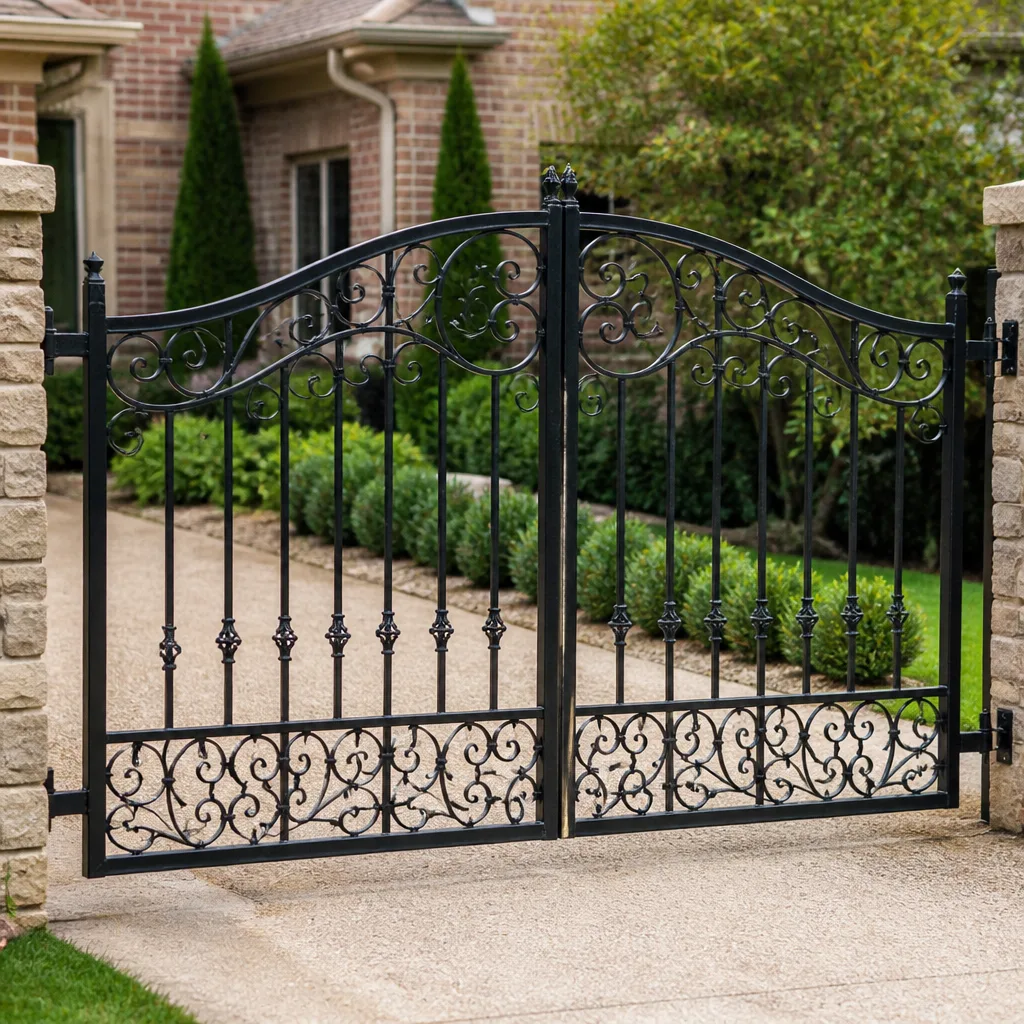 Wrought iron
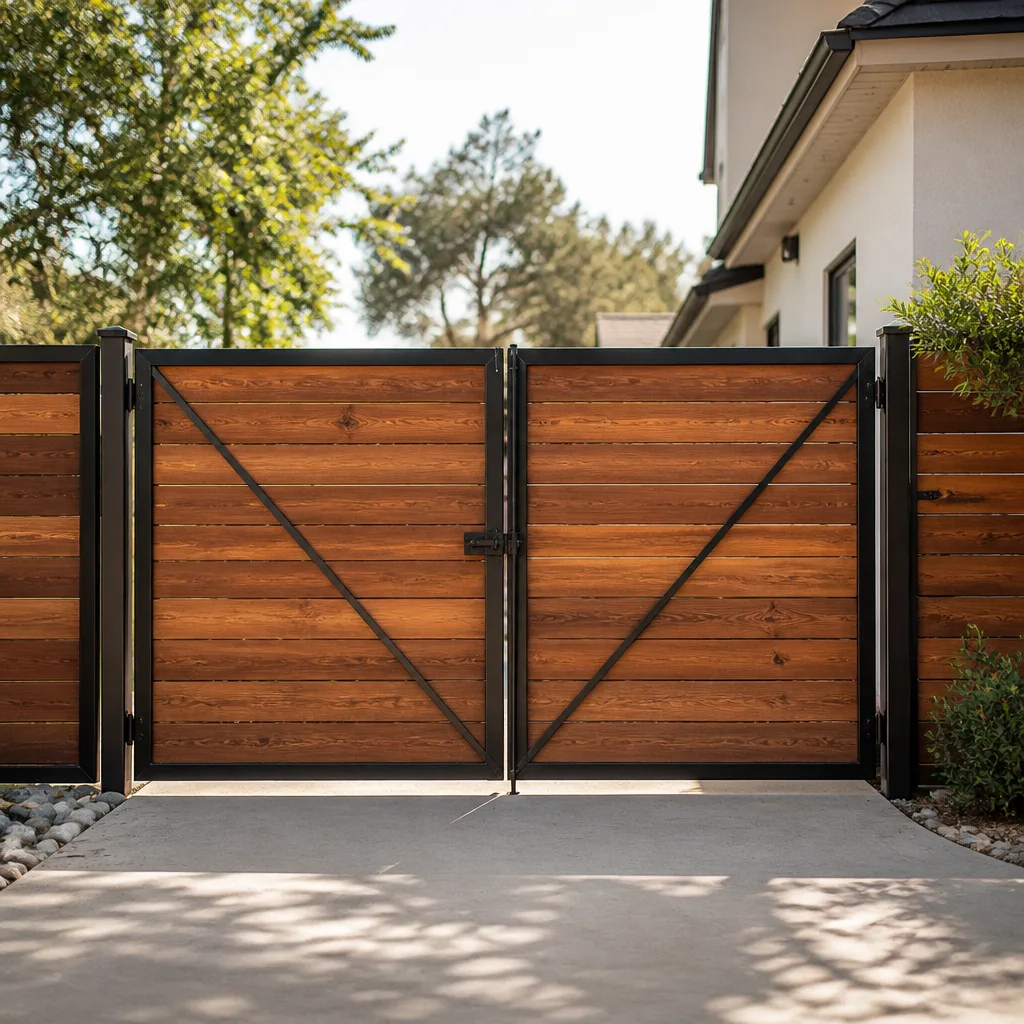 Wood & steel frame
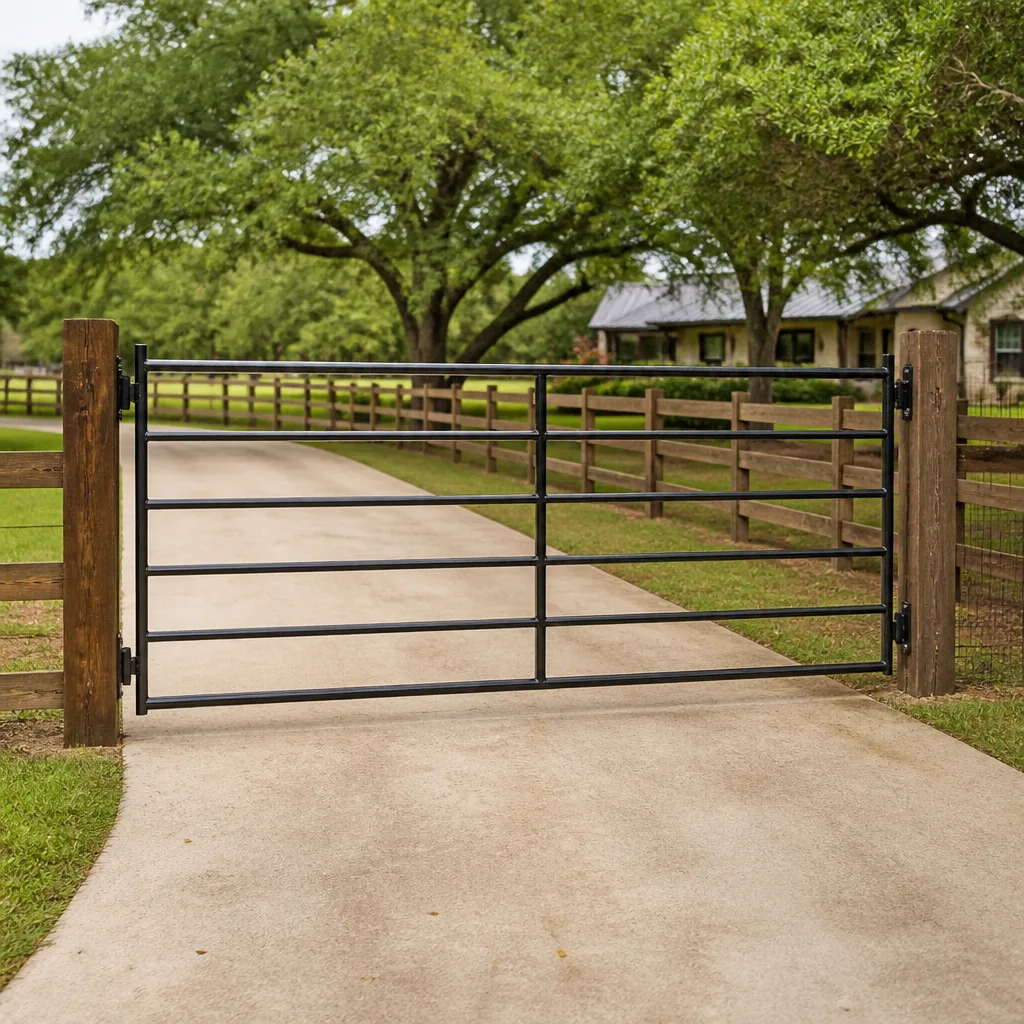 Farm & ranch
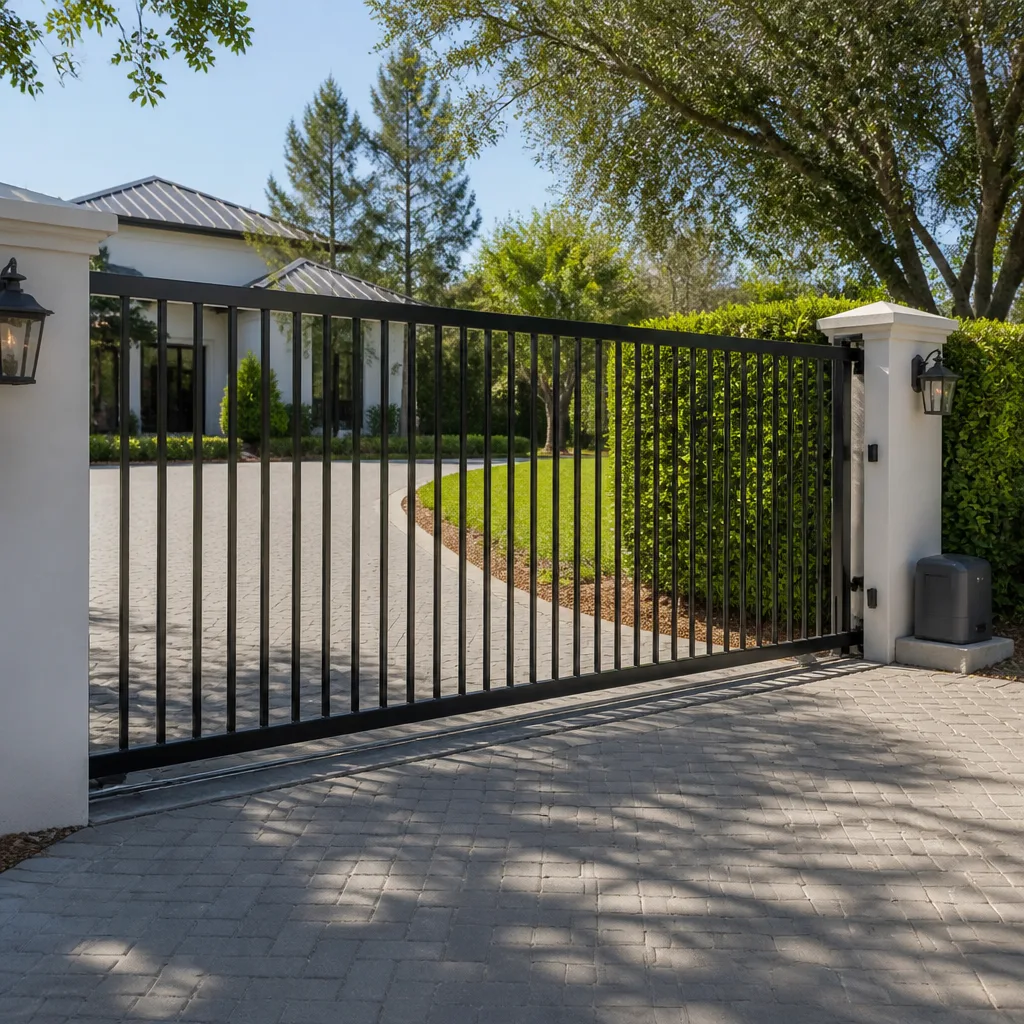 Sliding driveway gates
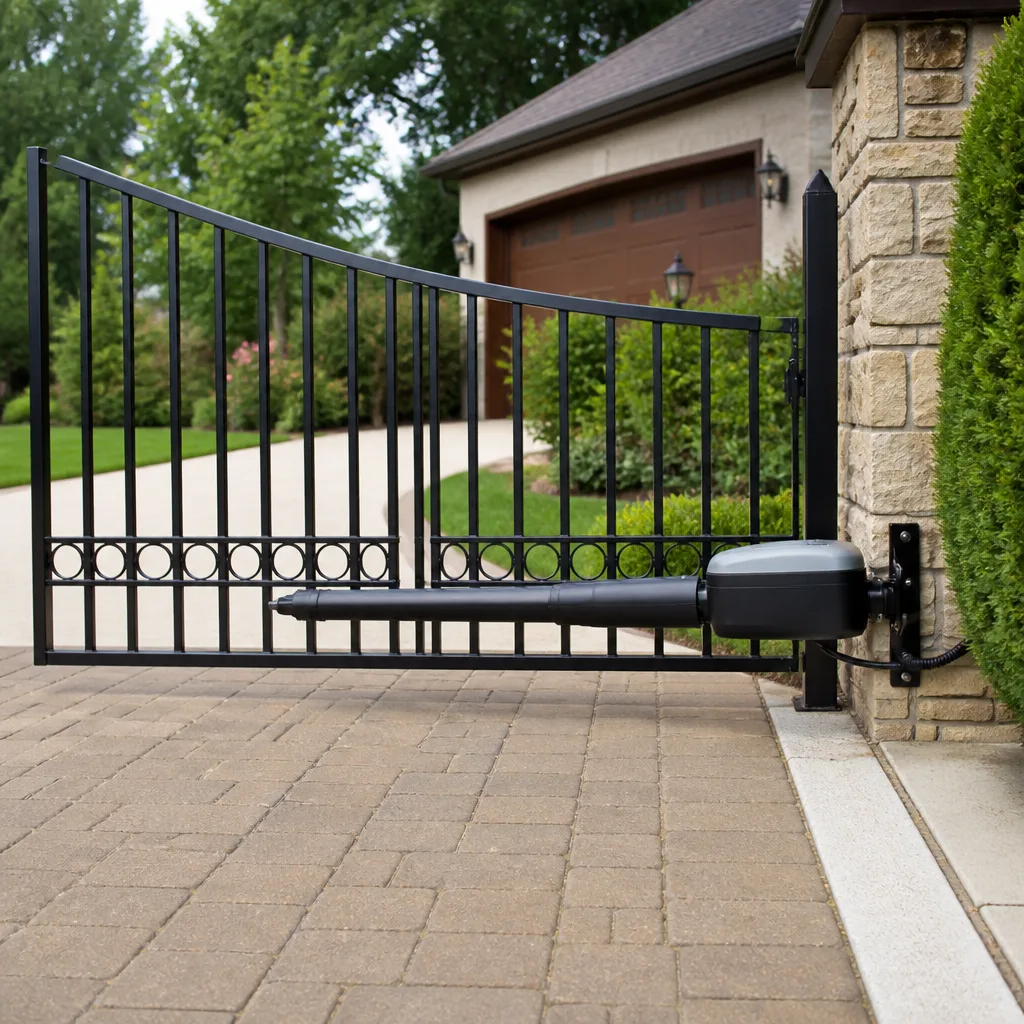 LiftMaster operators
Free on-site gate assessment - hinges, posts, and your LiftMaster or Nice gate operator checked before anything is quoted
The assessment is free and the quote is the invoice.
Get your free estimateHow Long Does Gate Repair Take? Timelines and What to Expect
Most gate repairs are finished in under two hours of actual work. The part that stretches a repair across days is almost never the labor. It’s the control board that has to ship from a distributor in California, the motor arm that isn’t on any shelf in Whitney, or the hinge bracket that turns out to be a discontinued size. A gate that’s been down for four days usually represents a twenty-minute fix waiting on a delivery truck. This guide breaks down realistic timelines by repair type, tells you which parts are stocked locally and which ones always require an order, and shows you the exact questions that get you an honest estimate instead of an optimistic one.
Quick Answer
Gate repair typically takes 1 to 3 hours for sensor, hinge, and adjustment work, and 3 to 5 days for anything requiring a special-order part like a control board or operator motor. If the part is in stock, most repairs are completed on the first visit. If it isn’t, the timeline is set by shipping, not by the repair itself.
Styles & brands we work with
- Wrought iron
- Wood & steel frame
- Farm & ranch
- Sliding driveway gates
- LiftMaster operators
Table of Contents
- Repair Timelines by Type
- What’s Stocked Locally vs. Special-Order
- Temporary Fixes: When They Make Sense
- Questions to Ask on Day One
- Documentation You Should Receive at Completion
- What Makes Whitney Gate Repairs Different
- Common Mistakes to Avoid
- When to Call a Professional
 Before
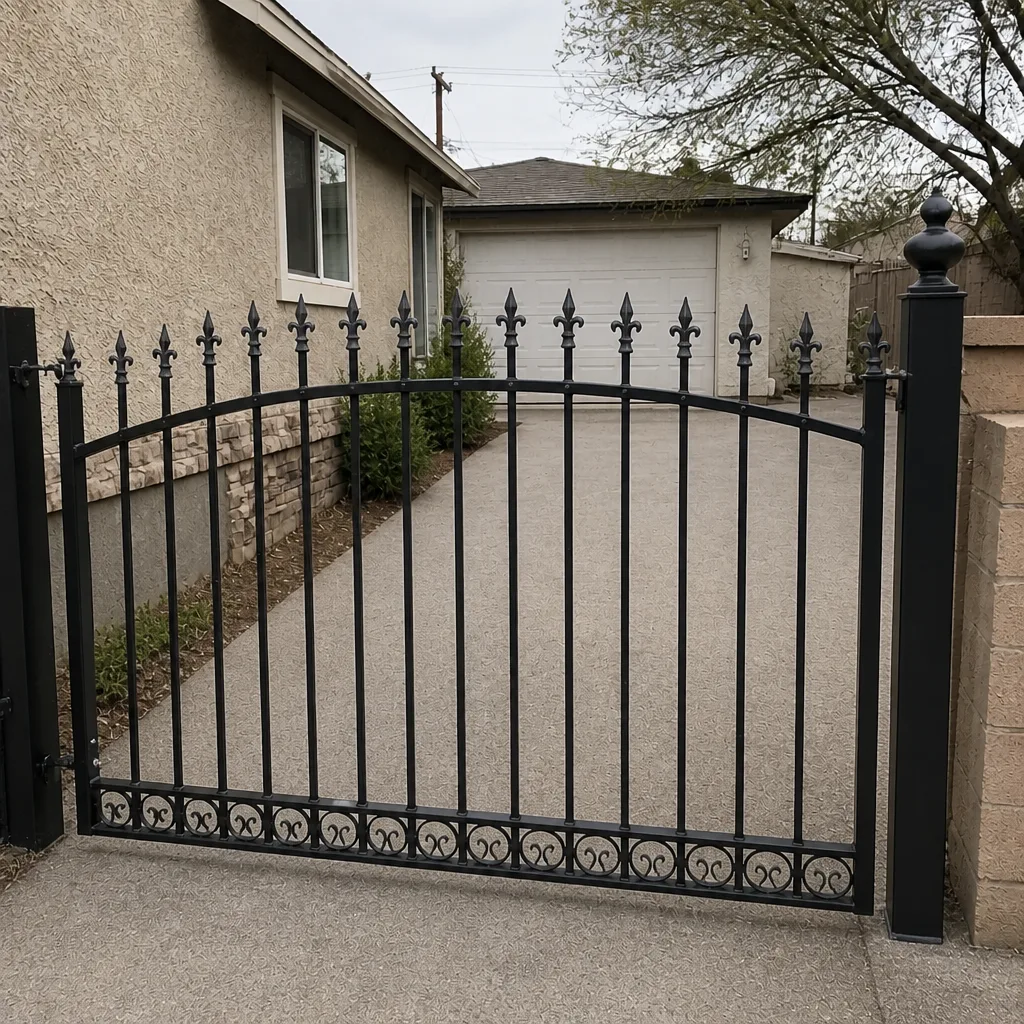 After
Repair Timelines by Type
Every repair falls into one of five rough categories, and each has its own timeline rhythm. Here’s what we see across Whitney and the surrounding neighborhoods, broken down from fastest to slowest.
Sensor alignment: 20 to 45 minutes. A photo-eye (the infrared beam that stops the gate if something crosses the path) knocked out of alignment by a bumped bracket or a settling post is a quick reset. We realign it, test the beam across the full path, and photograph the corrected position. Done in under an hour on the first visit.
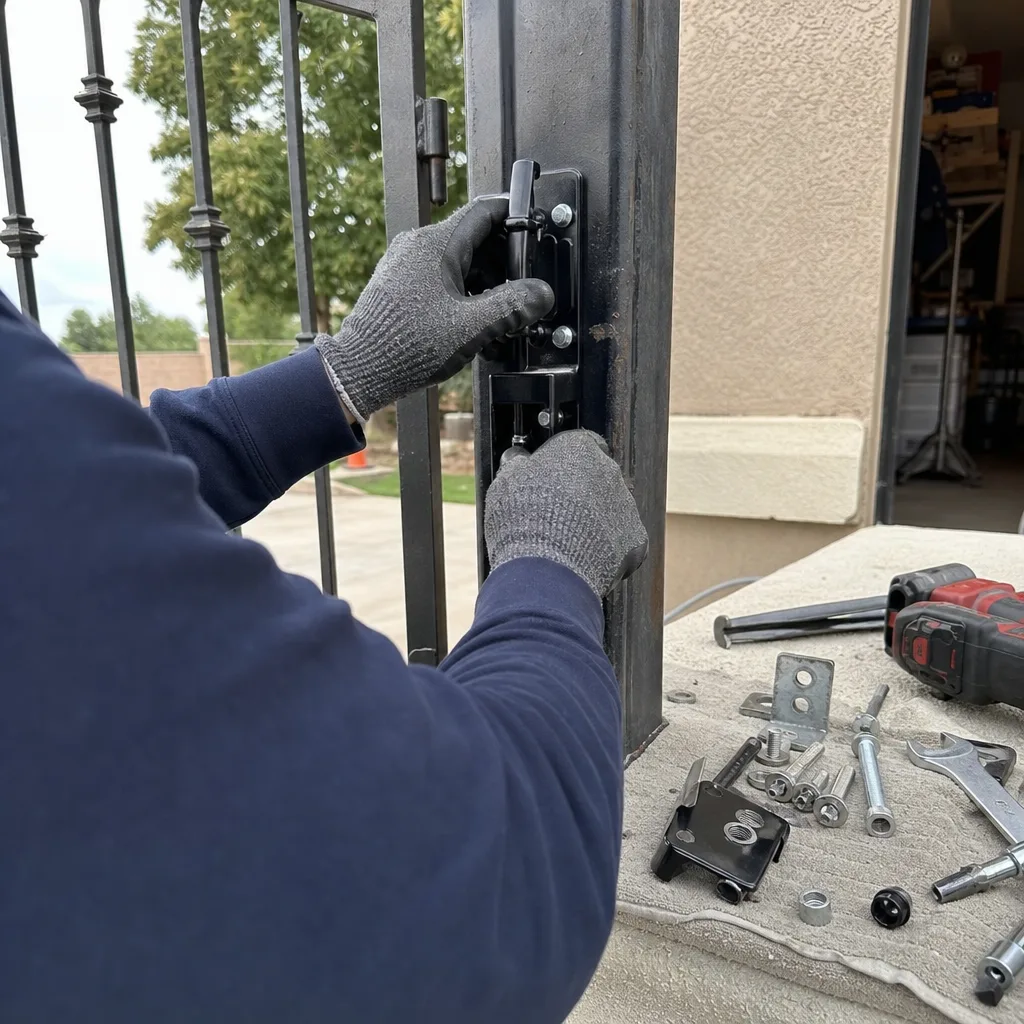
Hinge replacement: 45 minutes to 2 hours. Swing gate hinges wear faster than most homeowners expect because of the weight load. If the replacement hinge is a common size and the gate post is sound, this is a same-visit repair. If the hinge is welded rather than bolted, add grinding and re-welding time.
Control board swap: 3 to 5 days (mostly waiting on shipping). The swap itself takes 30 to 60 minutes. But control boards are model-specific, and no local company keeps a shelf full of every board from every brand. When a LiftMaster or Elite board fails, we order the exact replacement and schedule the swap the moment it lands.
Motor replacement: 2 to 5 days. A swing-gate motor arm is a bigger part with fewer sizes in common circulation. Most replacements require an order, and the install itself runs 2 to 3 hours.
Full operator replacement: 5 to 10 days. This is the largest category because it combines a special-order unit with 4 to 6 hours of install, plus re-tuning the limits and safety edges. A full operator swap on a wide Whitney drive is typically a two-visit job.
What’s Stocked Locally vs. Special-Order
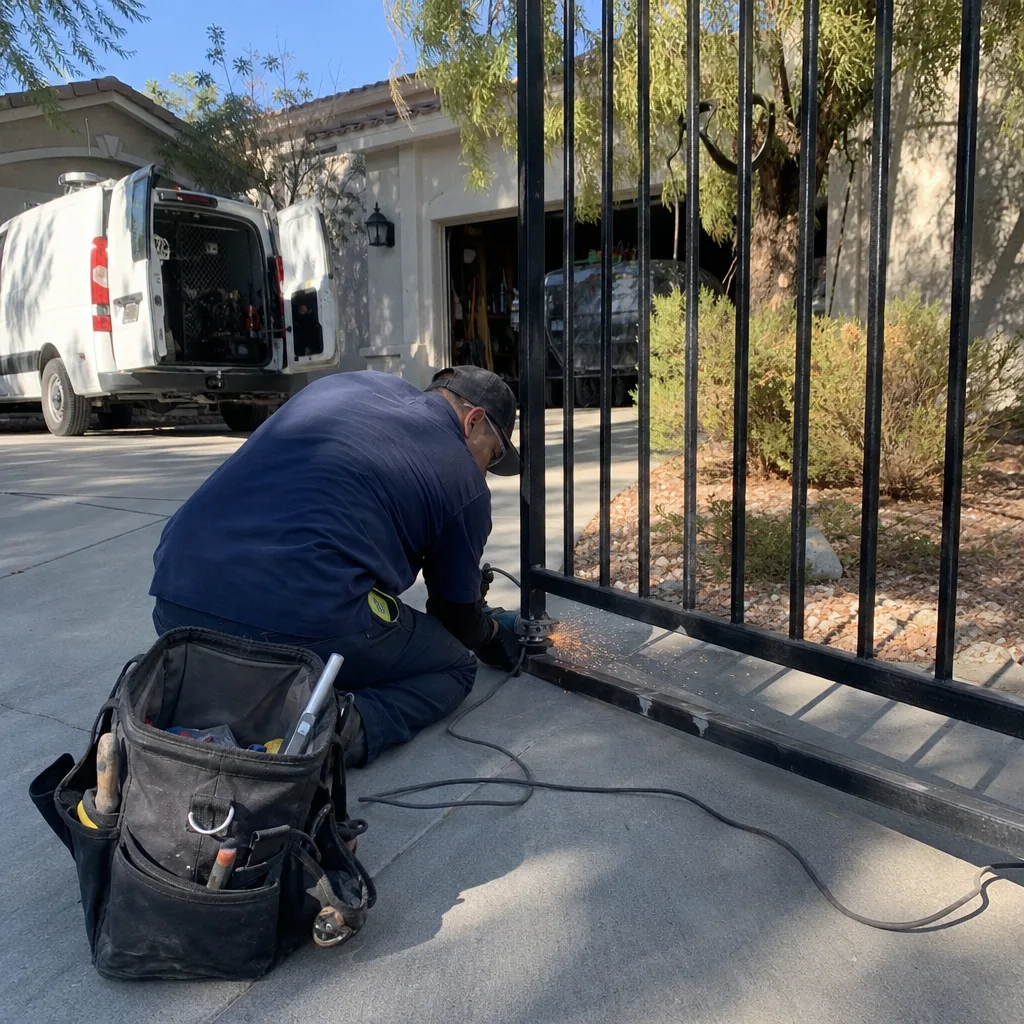
This is the single biggest variable in any timeline, and almost nobody asks about it before the technician shows up. Here’s how parts inventory shakes out in the Whitney area.
Usually stocked by local companies:
- Common swing-gate hinge sizes
- Photo-eye sensors and brackets
- Standard limit switches
- Safety-edge rubber (the pressure strip along the gate’s closing edge)
- Fasteners, brackets, and mounting hardware
Almost always special-order:
- Control boards (model-specific, discontinued frequently)
- Motor arms for specific automation brands
- Full operator units
- Battery backup modules
- Proprietary brand-specific remote receivers
Vance Gate Repair services nine major brands – LiftMaster, FAAC, BFT, Linear, Viking, Ghost Controls, DoorKing, Elite, and Mighty Mule – which means we’re not going to steer you toward a full replacement just because your existing motor isn’t the brand we stock the most of. If your Mighty Mule arm can be repaired, we repair it. If it needs a FAAC equivalent, we’ll quote both paths in writing so you can compare.
The takeaway: ask directly whether the replacement part is on a shelf locally or coming from a distributor. That answer alone tells you whether your gate is down for a day or a week.
Temporary Fixes: When They Make Sense
A gate that’s stuck open is a real security problem for most Whitney homeowners, but it’s easy to overpay for a temporary fix because the urgency is real and the alternatives feel thin. Here’s where the line sits.
A temporary fix is appropriate when:
- The gate is a safety hazard (opens uncontrolled, or fails to stop at the limit)
- The part is already on order and the gate will be down for days
- You need the gate operational for a specific event or day
It is not appropriate when:
- It masks a wiring or motor fault that will fail again within the week
- It bypasses a safety edge or reversing sensor that protects a child or pet
- It leaves the gate partially automated and dangerous to operate
A reasonable temporary fix – propping the gate in a safe position, manually disengaging the operator, or capping a failed safety sensor so the gate is locked rather than swinging – should cost very little, often under $100, and should always come with a written note about the pending permanent repair. If a company quotes you an emergency rate to leave your gate propped open, that’s not a repair. That’s a placeholder on your dime.
For more on how we approach these interim jobs, see our Gate Repair in Whitney page.
Questions to Ask on Day One
An honest timeline is a written timeline. Here’s the sequence to run through with any technician, before you agree to work.
- “Is the part you’re replacing in stock locally or special-order?” This is the single most useful question and almost nobody asks it.
- “What’s the written timeline from diagnosis to completion?” A good answer names a date. A bad answer says “we should be able to get to it.”
- “If the part doesn’t fit, what happens to the price?” Under our Haven Standard Clause 1, the price is written before work starts, and it doesn’t change without a new written quote.
- “Will you photograph what you find and what you adjust?” Every visit from Vance includes a documented photo record (Haven Standard Clause 4). Ask any company you call if they do the same.
- “If this same problem comes back in 6 months, what’s covered?” Good answers mention a warranty window with named terms.
- “What’s the brand on my motor?” If the technician can’t identify it before opening the case, that’s a warning sign.
Asking those six questions gets you an honest timeline. Skipping them gets you the optimistic version.
Documentation You Should Receive at Completion
This is the part that determines how long the next repair takes. A documented repair isn’t just good record-keeping – it’s what turns a diagnosis that takes 45 minutes into a diagnosis that takes 5.
At completion of any Vance Gate Repair job, you should receive:
- A written scope and price (delivered before work started, not after)
- A photo log of what was found, what was adjusted, and what was replaced
- The exact part number of anything installed, plus the brand and model of the operator
- Limit-switch readings (the actual degrees or positions the gate was tuned to)
- A wiring diagram if any control or access wiring was touched
- The 365-Day Done Right Promise in writing, covering the completed repair
Why this matters in practice: when a gate fails again two years later, the technician who walks up to it should already know the brand, the model, the last limit-switch settings, and the last part installed. Without that record, the next visit starts from zero. With it, the technician starts five minutes in. That documentation habit is what we brought from commercial access-control work into residential gate service, and it’s the reason future technicians don’t have to rediscover the same problem twice.
For a look at how motor and operator repairs specifically get documented, see Gate Motor & Opener in Whitney.
What Makes Whitney Gate Repairs Different
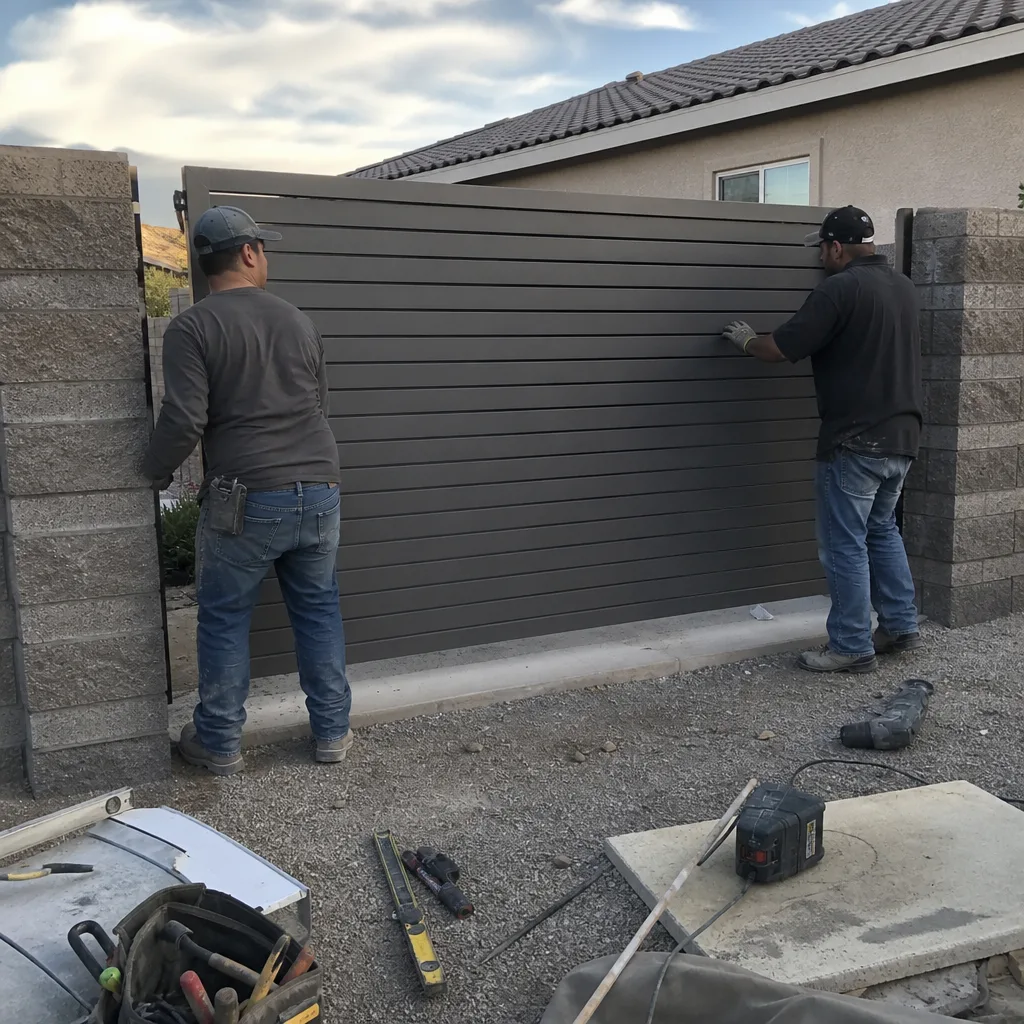
A few realities of Whitney and the surrounding east valley shape the timelines more than homeowners realize.
Summer heat is hard on motors and batteries. Gate operators sit in direct sun for most of the year, and the internal batteries and control boards carry a shorter effective life in Whitney than in a cooler climate. We see far more mid-July control board failures than anywhere else in the seasonal cycle because the enclosure heat builds to levels the boards weren’t designed to tolerate indefinitely.
Wind and dust wear on hinges and photo-eyes. The east valley gets big dust events through spring, and the grit works into hinges faster than most homeowners expect. Photo-eye alignment fails more in Whitney than in sheltered neighborhoods because the mounting brackets take the brunt of the wind load on any gate that catches it.
New-build gates with first-generation failures. Whitney has a lot of newer homes where the original builder-installed operator is now on its first replacement cycle. Those jobs are predictable – we know which brands fail first and which parts we’re going to need – so the timeline is usually clean if you call before the motor stops.
Older property lines with mixed gate types. Not every Whitney driveway gate is a modern swing operator. Some properties still have manual slide gates or civil-era swing setups where the automation was retrofitted. Those take longer to diagnose because the installation history isn’t always obvious from the outside.
For property-specific installation timelines, see our Gate Installation in Whitney guide – installation is measured, ordered, and scheduled, not dispatched same-day.
Common Mistakes to Avoid
- Paying emergency rates for a temporary fix. A propped-open gate should cost very little. If the number is high, the job isn’t a temporary fix – it’s a placeholder with a markup.
- Not asking whether the part is stocked locally. The single question that turns a vague timeline into a real one. Ask it on day one.
- Accepting a verbal timeline. If it isn’t written, it isn’t a timeline – it’s a guess. Whitney gate repairs should always come with a written date and a written price before work begins.
- Letting a technician bypass a safety edge. Never worth it. A gate that swings without a working safety edge is a hazard to children, pets, and vehicles, and no repair timeline justifies bypassing one.
- Choosing a company by brand badge alone. A shop that only stocks one brand will push a replacement toward that brand. A shop that services many brands can repair what you already have.
- Discarding the documentation from a prior repair. The photo log, part number, and limit-switch readings from last time are why the next visit takes 20 minutes instead of 90. Keep them.
- Skipping the diagnosis visit to save time. Shortcutting the diagnostic visit almost always adds days, because the technician guesses wrong on the part and the gate sits open waiting on a second order.
When to Call a Professional
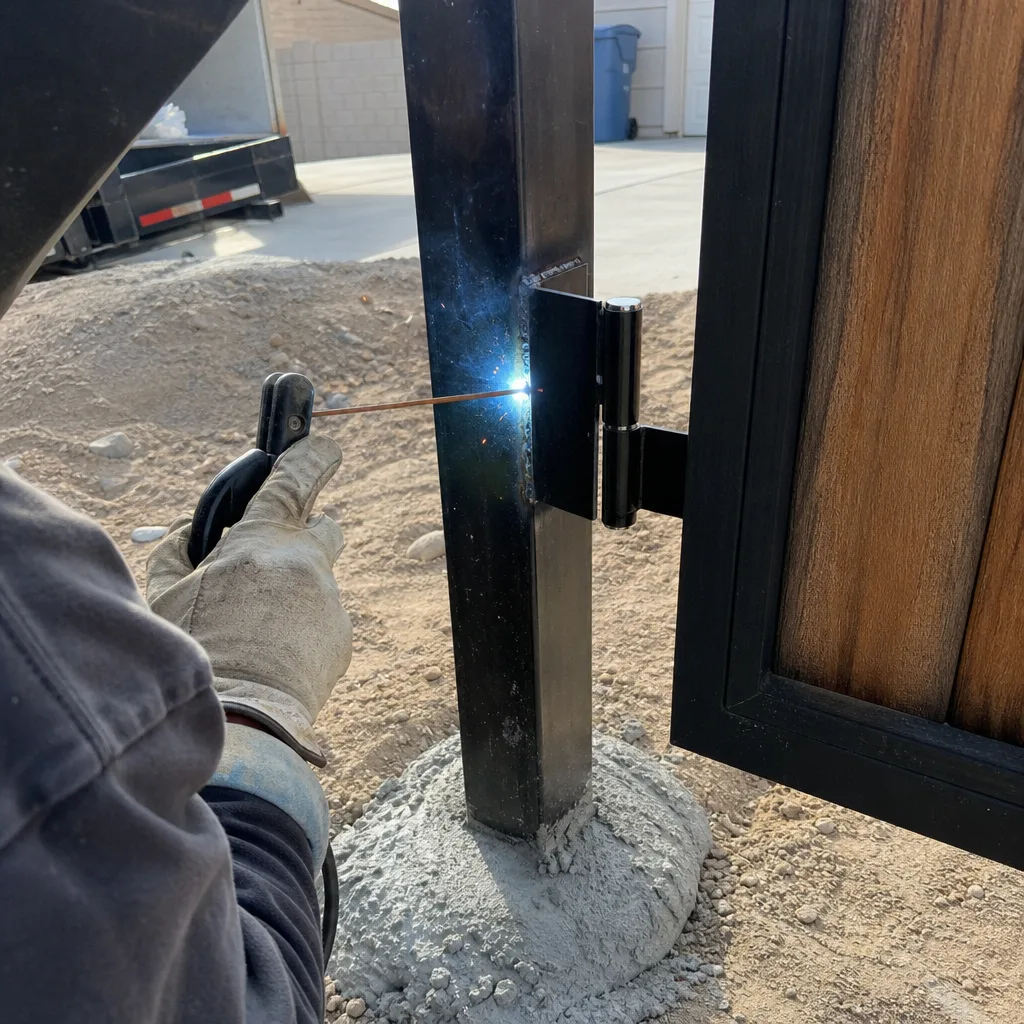
Call a gate repair professional when the gate fails to reverse on contact, when the operator makes grinding or popping sounds, when the gate drifts past its limit, when a hinge is loose or a post has shifted, or when the operator won’t engage at all. Any symptom that touches the reversing safety system is not a DIY item – gate operators carry real crushing force at the hinge, and the safety edges and photo-eyes that stop them need to be tested with proper equipment, not judged by eye. If a gate is propped open and a temporary fix seems tempting, call before you improvise; what looks like a small bypass can disable the entire safety path. Vance Gate Repair Whitney offers free estimates in Whitney and gives you the written price before work starts. Call (844) 797-4861 – a live person answers around the clock.
See the difference
BeforeAfter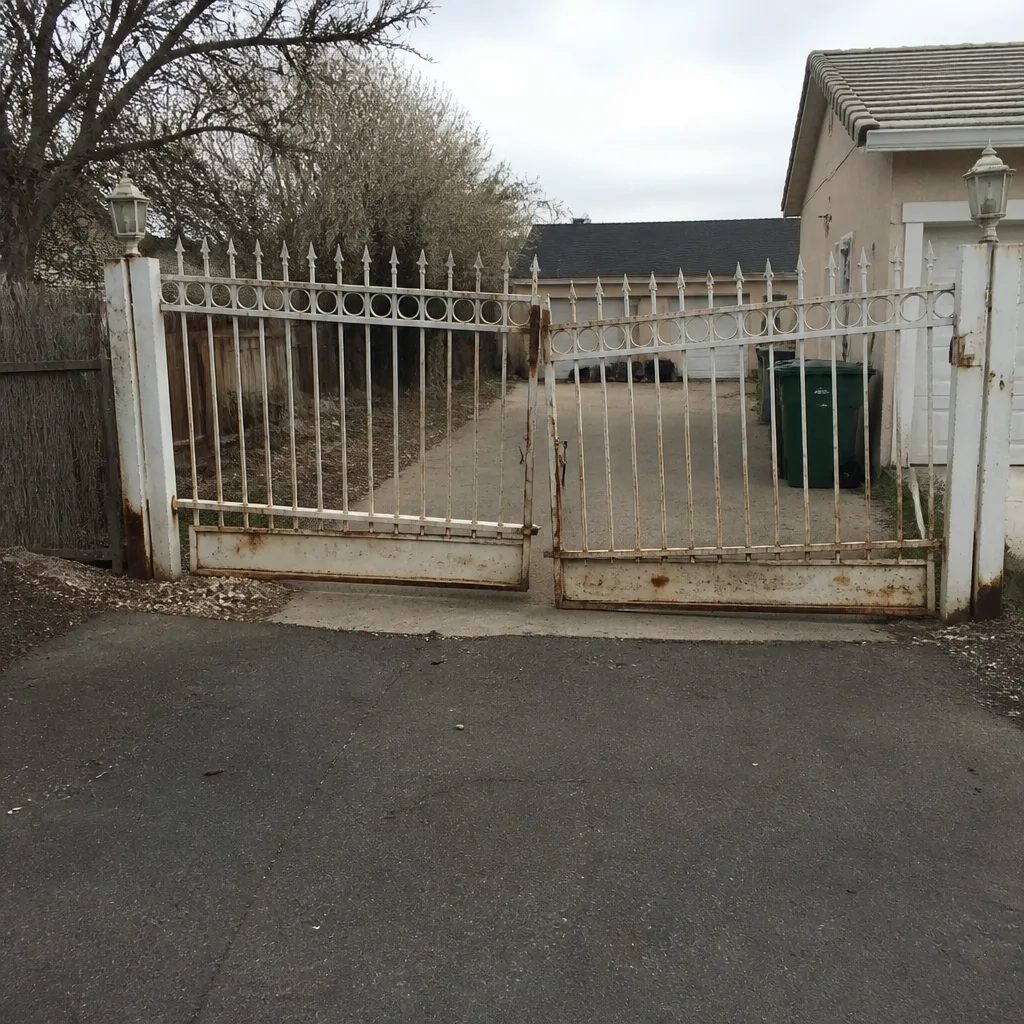 Before
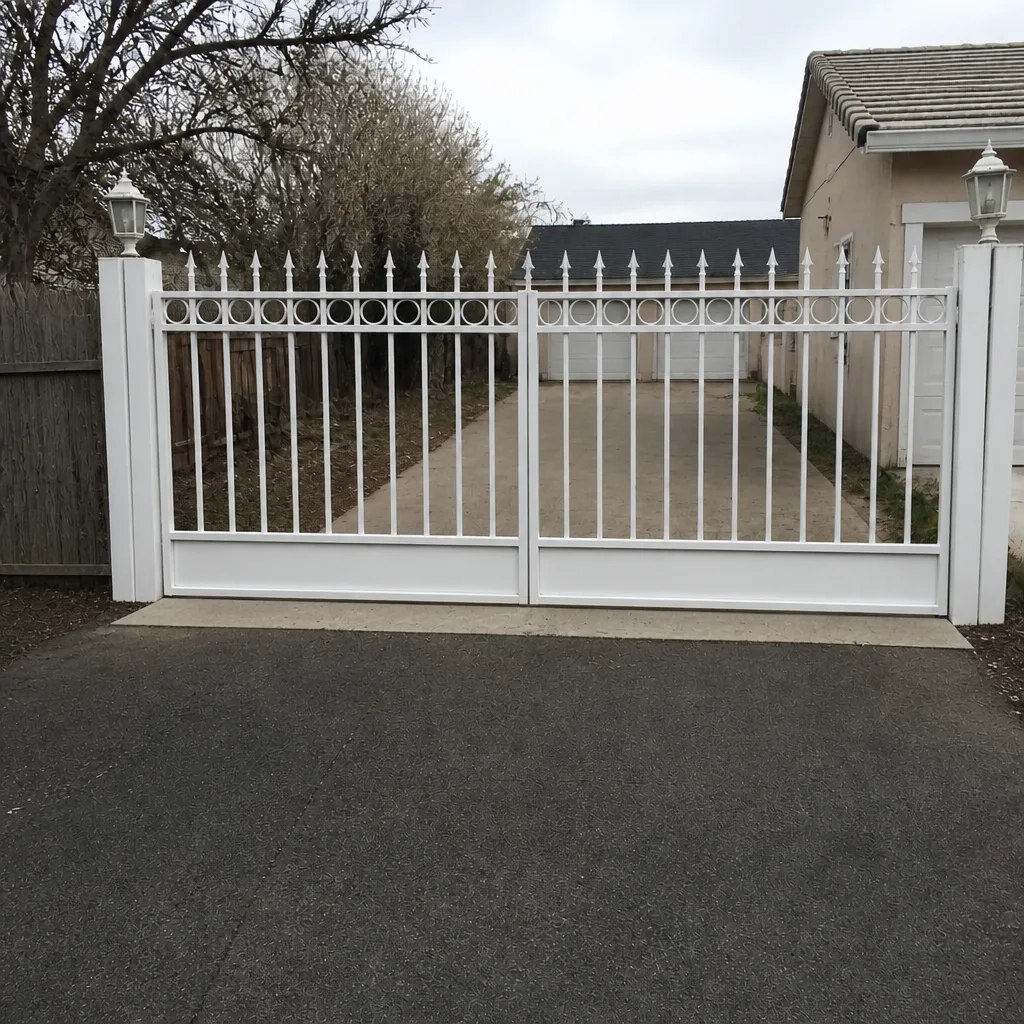 After
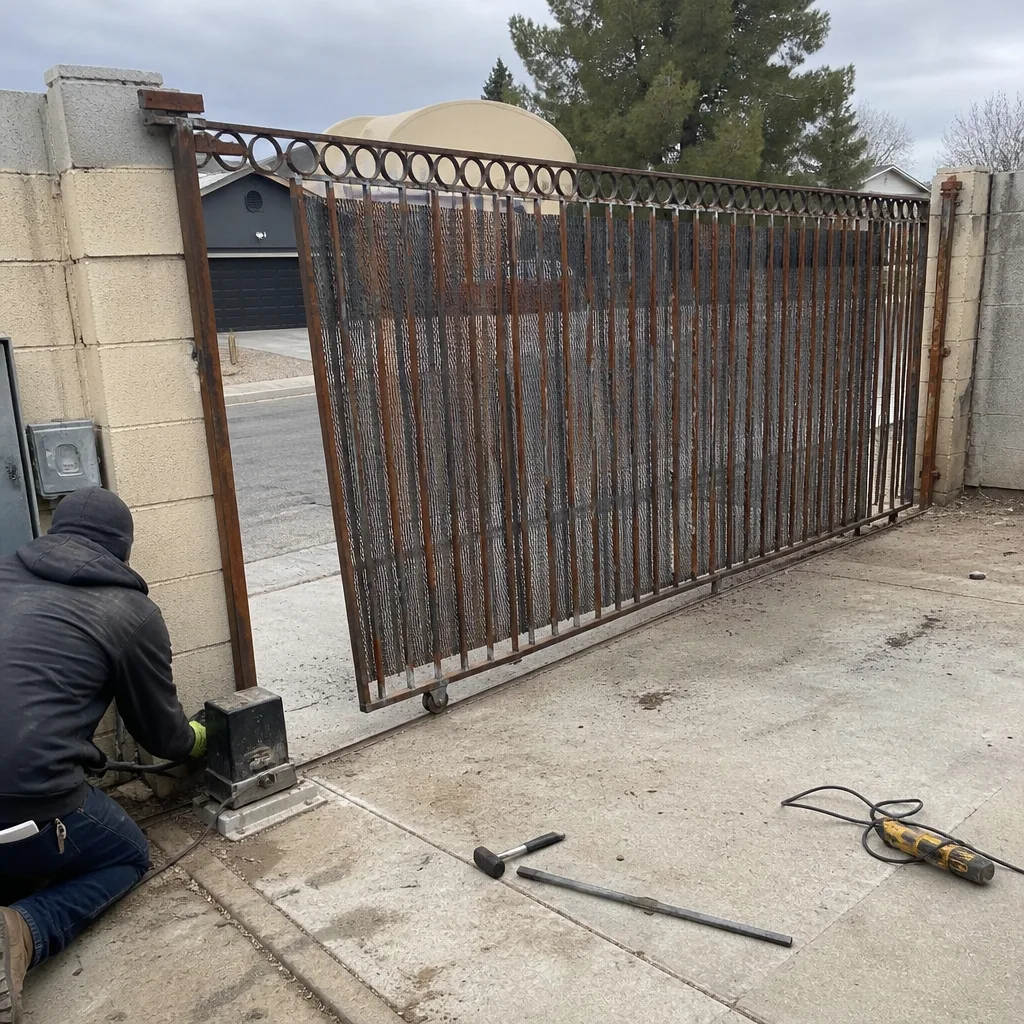 Before
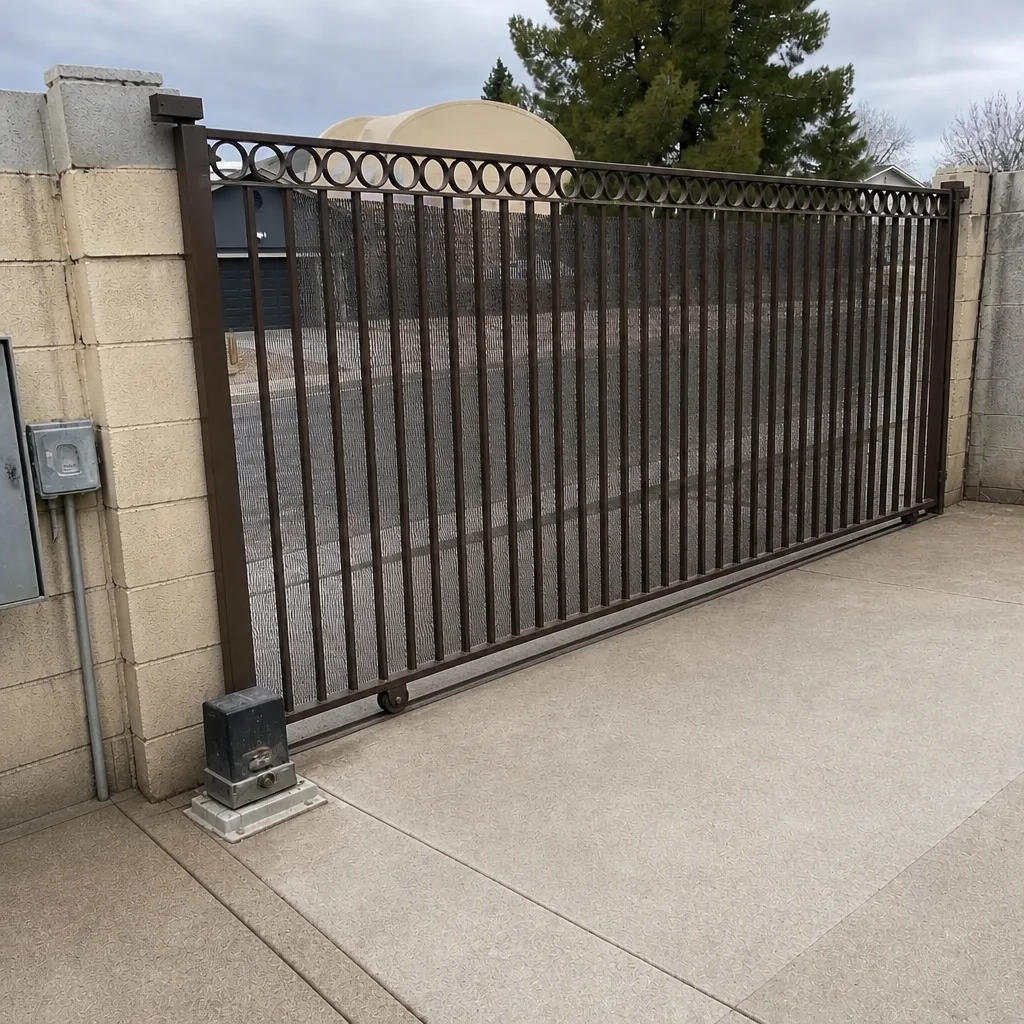 After
Frequently Asked Questions
Most gate repairs in Whitney take 1 to 3 hours of on-site work for adjustments, sensor alignment, and hinge work, and 3 to 5 days total for anything requiring a special-order part. The labor is fast – the wait is almost always shipping. Call (844) 797-4861 for an exact quote on your gate – estimates are free.
Because the control board, motor arm, or operator unit has to ship from a distributor. The 20-minute swap is the only part of the job we can’t compress. If the part is in stock, we do it the same visit. If it isn’t, we give you a written date for the return visit and a photo of the failed part so you know exactly what we found. Call (844) 797-4861 and we’ll tell you upfront whether your part is stocked or on order.
For sensor, hinge, adjustment, and manual-release work, yes – we run same-day and 24-hour emergency availability for repairs, and our phone line is answered by a live person at any hour. For anything that requires a special-order part, we’ll do the diagnosis today and schedule the completed repair around the part’s arrival. Call (844) 797-4861 for an exact quote – estimates are free.
Typical Whitney gate repair line items run about $85 to $150 for sensor alignment, $150 to $350 for hinge replacement, $350 to $650 for a control board swap, $600 to $1,200 for a motor replacement, and $1,500 to $3,500 for a full operator replacement – the ranges widen with brand and whether the mounting is intact. Every price is written and agreed before work starts. Call (844) 797-4861 for an exact quote – estimates are free.
Sometimes, and it depends on what’s failing. A locked or manually disengaged gate is a safe temporary state for a swing operator waiting on a control board. Bypassing a safety edge or photo-eye is never a safe temporary fix, and we won’t do it – the reverse force on a gate operator is a serious injury risk. We’ll tell you in writing whether an interim fix is appropriate for your specific gate. Call (844) 797-4861 for an exact quote – estimates are free.
Yes, on every install and every operator repair, the power run and safety edges (the pressure strips and photo-eyes that stop the gate) are part of the scope, not an add-on. They’re tested and photographed at completion. Installation and full operator jobs are measured, ordered, and scheduled – they aren’t dispatched same-day, and the timelines above account for that. Call (844) 797-4861 for an exact quote – estimates are free.
The Bottom Line
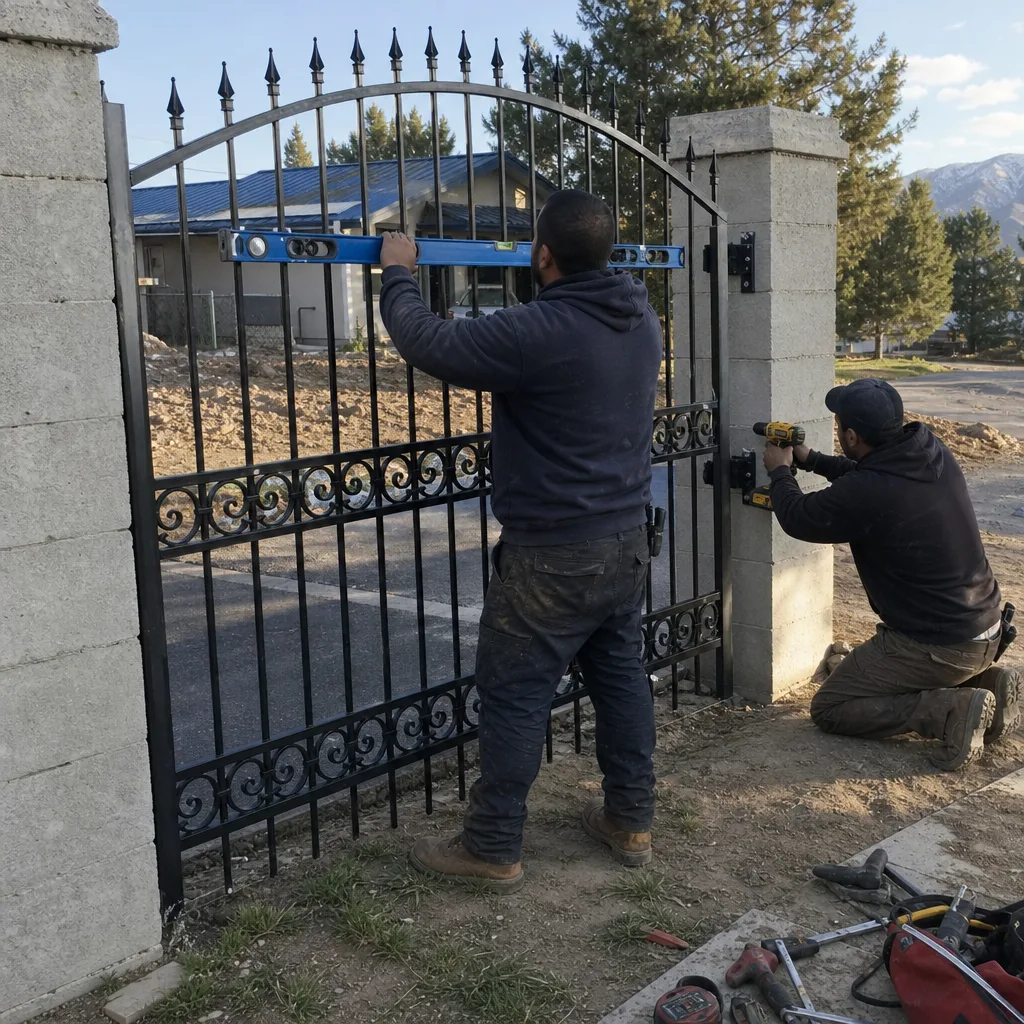
Gate repair timelines come down to one variable most homeowners never ask about: whether the part is on a shelf or on a truck. Adjustment and sensor work finishes the same visit. Hinge work usually does too. Control boards, motor arms, and full operators add 3 to 10 days to the calendar, and almost all of that gap is shipping. Ask the parts question first. Ask for the timeline in writing. Ask what documentation you’ll get at completion – because the record from this repair is what makes the next one fast. And if you want all three on the same job, that’s what Vance Gate Repair Whitney delivers. For a full view of our services across the valley, see the Vance Gate Repair Whitney home page.
Contact
A gate that’s stuck, noisy, or swinging when it shouldn’t is worth one call. Vance Gate Repair Whitney gives you a written price before any work starts, a documented photo record on every visit, and the 365-Day Done Right Promise covering the repair for a full year. Our technicians have up to 12 years of experience across nine major automation brands, and a live person answers the phone at any hour. Call (844) 797-4861 for a free estimate – we’ll tell you exactly what we found, exactly what it costs, and exactly when it’s going to be fixed.
Written by the team at Vance Gate Repair Whitney.