
Last updated November 18, 2026
 Wrought iron
 Wood & steel frame
 Farm & ranch
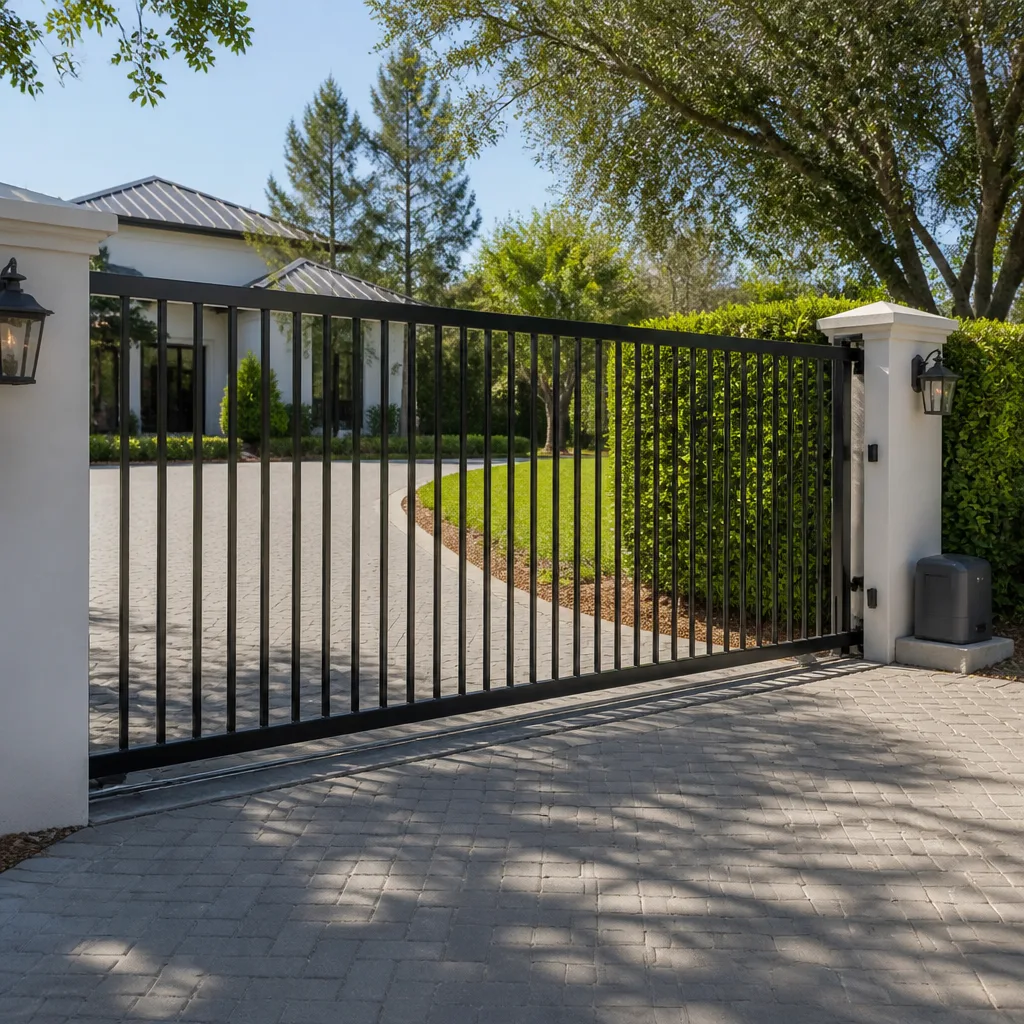 Sliding driveway gates
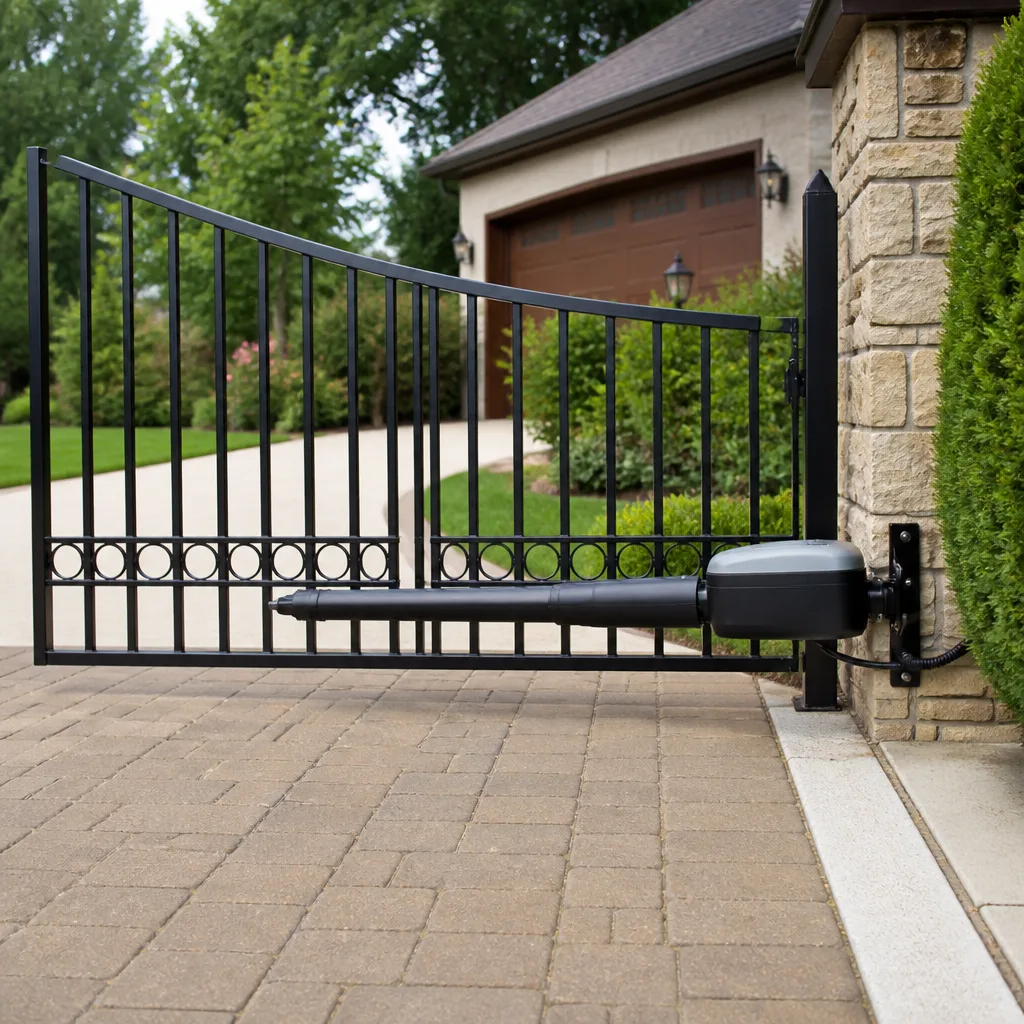 LiftMaster operators
Free on-site gate assessment - hinges, posts, and your LiftMaster or Nice gate operator checked before anything is quoted
The assessment is free and the quote is the invoice.
Get your free estimateSeasonal Gate Repair Care for Whitney: Year-Round Homeowner’s Guide
The gate that fails in January in Whitney usually broke in August. The heat did the damage quietly: steel framing expanded a few millimeters past its designed clearance, a wiring jacket baked under ultraviolet light for 90 straight days, and a motor housing pulled in fine alkali dust that sat against the control board until the first hard freeze turned it into a corrosion problem. Homeowners call that a winter breakdown. It isn’t. Whitney doesn’t run on four equal seasons. It runs on two damaging ones and two short transition windows when preventive work costs a fraction of emergency repair. This guide lays out what to check and when, scheduled to the Mojave climate rather than a generic maintenance calendar.
Quick Answer
Seasonal gate maintenance in Whitney means front-loading preventive work into two narrow transition windows: late spring, before sustained 100°F days set in, and fall, before the first freeze locks post movement in place. Summer and winter are damage-control months, not repair months. Gates serviced in the right windows see fewer motor failures, fewer sagging hinges, and cheaper repairs overall than gates maintained on a generic calendar.
Styles & brands we work with
- Wrought iron
- Wood & steel frame
- Farm & ranch
- Sliding driveway gates
- LiftMaster operators
Table of Contents
- Why Whitney’s Climate Breaks Gates Differently
- Summer: Thermal Expansion, UV, and Operator Ventilation
- Fall: The Cheapest Window for Hinge Wear and Post Movement
- Winter: Hydraulic vs. Electromechanical Operators in a Hard Freeze
- Spring: Alkali Dust in Motor Housings and What Corrosion Looks Like First
- Building a Dated Maintenance Log That Compounds Year Over Year
- Common Mistakes to Avoid
- When to Call a Professional
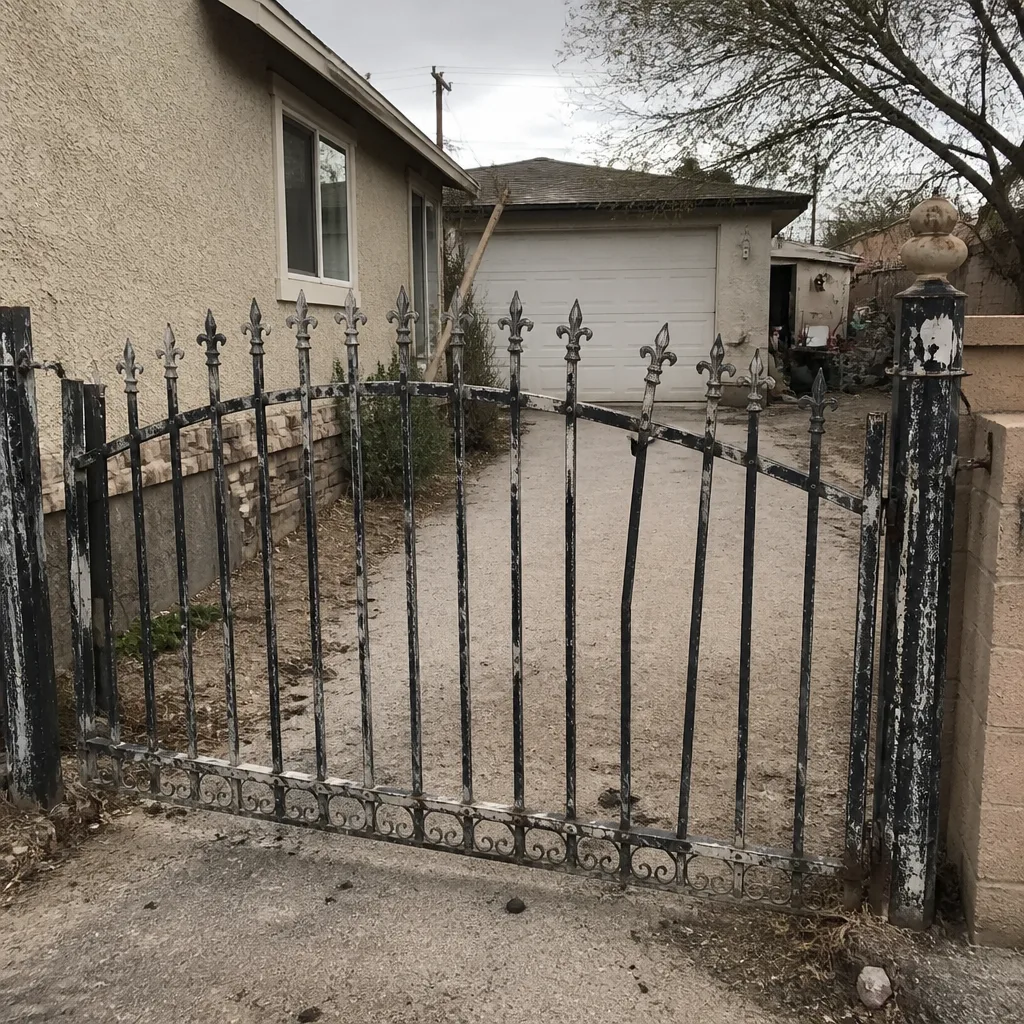 Before
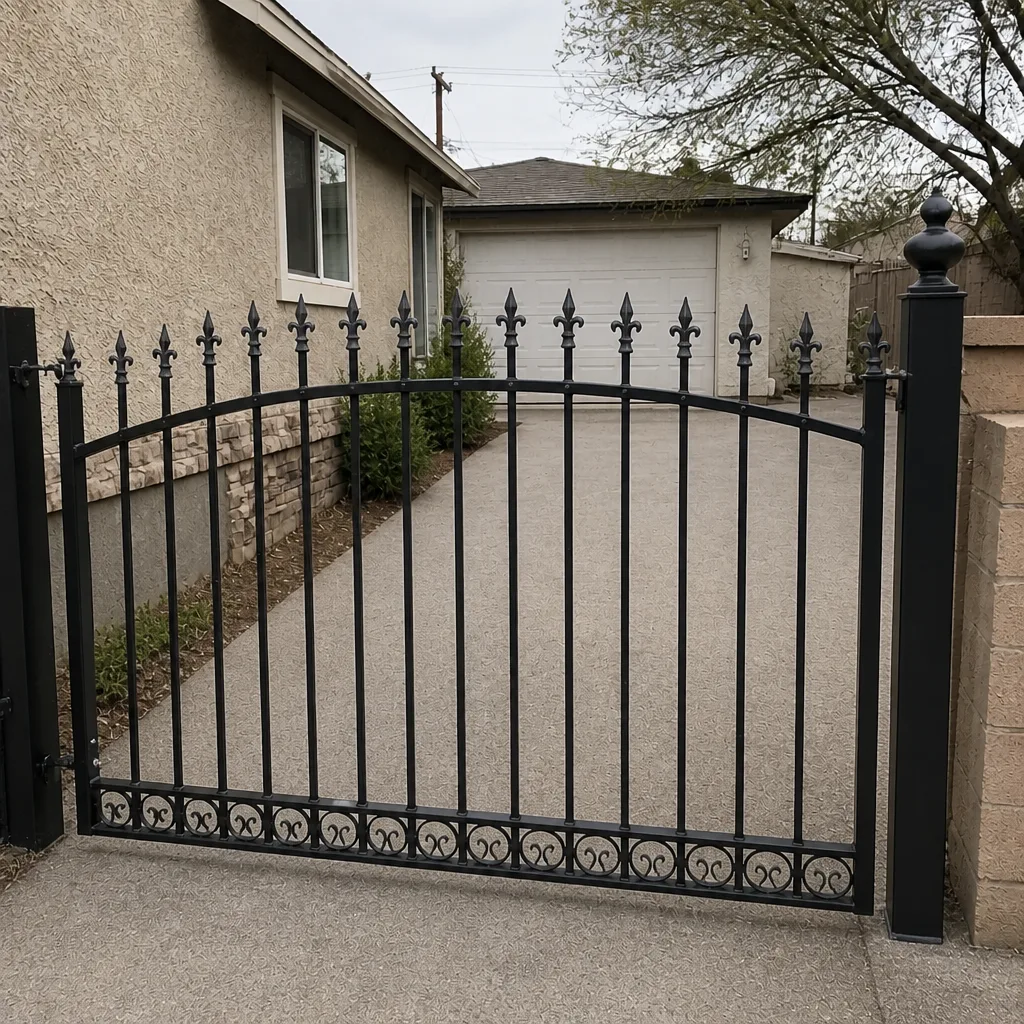 After
Why Whitney’s Climate Breaks Gates Differently
Whitney sits in the Mojave fringe east of the Las Vegas Valley, which means the gate on your property lives through a very different pressure cycle than one installed in a coastal climate. Summer afternoons regularly push past 100°F. Winter overnight lows can drop below freezing for a handful of nights each season. What sits between those extremes is wind. That combination matters because gate hardware doesn’t fail from one big event. It fails from repeated small expansions and contractions, and Whitney delivers more of those per year than most of the country.
Steel swing frames are the clearest example. A steel gate installed to a quarter-inch clearance at 70°F can expand past three-quarters of an inch when the frame surface hits 150°F in direct July sun. If the gate is latched or auto-closing against a post that isn’t moving at the same rate, the frame binds, the motor’s current spikes, and the operator either trips its overload protection or quietly grinds a gear set for weeks before the homeowner notices.
Concrete post footings are the second part of the story. Whitney’s soil is calcareous, alkaline, and often shallow to caliche, which drains poorly and shifts seasonally. A post that moves two degrees through the year is not necessarily failing, but it will slowly push hinge pivots off alignment. By the time a gate visibly sags, the wear has usually been accumulating for a full year.
If you’ve read our Vance Gate Repair Whitney home page, you’ve seen the documentation standard we work to. This guide follows the same principle: record what you find, compare it to last season, and fix issues while they’re still small.
Summer: Thermal Expansion, UV, and Operator Ventilation
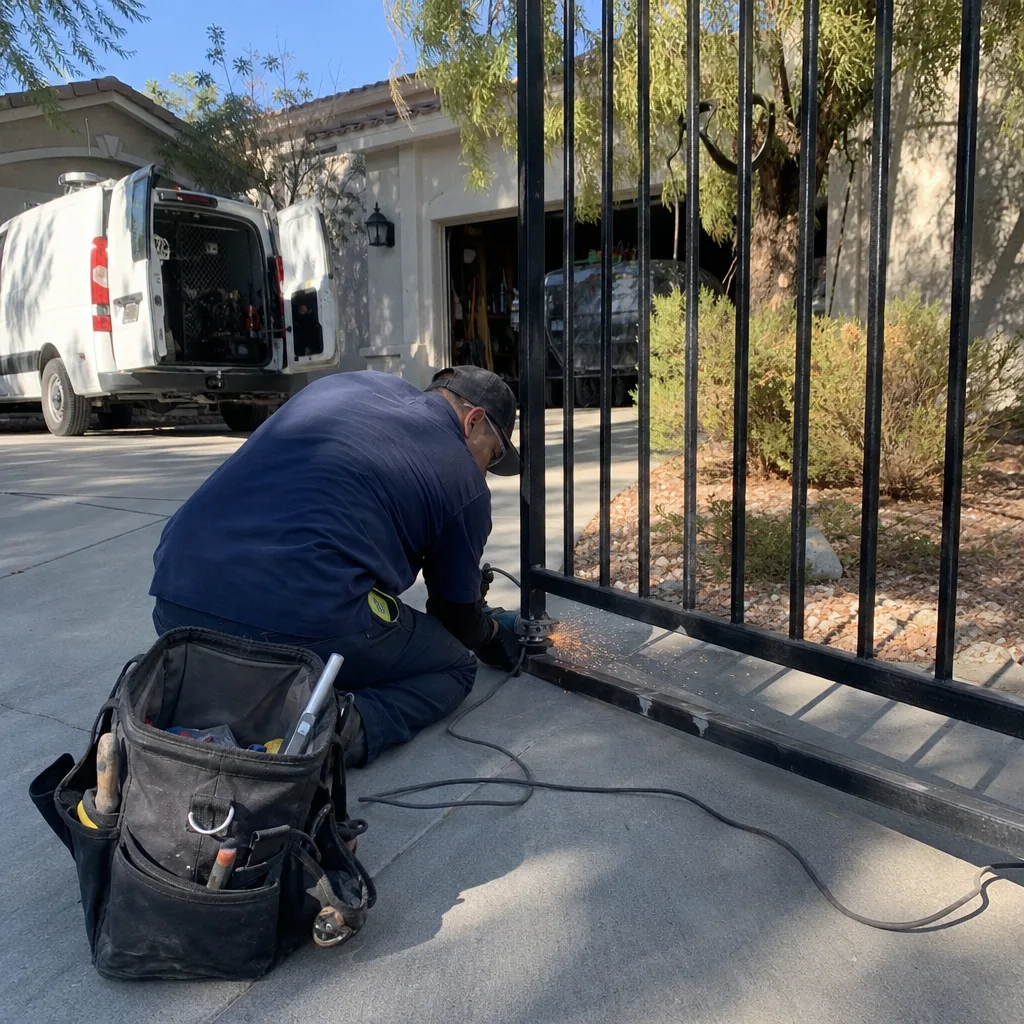
The single most useful summer task in Whitney is done before sustained 100°F days, not during them. Aim for late May or early June, once the daily highs start creeping past 95°F but before the gate is running eight to ten cycles a day in triple-digit heat.
What to check before the heat locks in
- Thermal expansion gaps on steel frames. Measure the clearance between the gate frame and the strike post at mid-morning, not midday. If you’re seeing less than half an inch across a steel swing gate, it will bind by July. Note the number and the temperature at the time of reading.
- UV-protected wiring runs. Any exposed wire between the operator and the control box should be inside UV-rated conduit. Standard gray conduit will chalk and crack after a few Mojave summers. Look for fading or surface grazing on the outer jacket.
- Operator ventilation. Motor housings on LiftMaster and Ghost Controls units need clear airflow. Nests, dust buildup, and stacked storage against the operator are the three most common causes of a summer thermal shutdown we see in Whitney.
- Battery backup health. Test the battery by cutting AC power for 15 seconds and confirming the gate completes a full cycle. Summer heat kills lead-acid batteries faster than cold does, and a dead backup battery means your gate is stuck open during the next grid event.
The other summer issue is the one nobody sees coming: dust ingress into the control box. Whitney gets regular wind events that push alkali-rich soil into every gap. Inside a sealed box, that dust mixes with humidity and turns mildly caustic. If the control board has a visible white or off-white deposit on the terminals, that’s not normal aging – it’s the early stage of a corrosion problem you’ll want addressed before fall.
Fall: The Cheapest Window for Hinge Wear and Post Movement
Fall is the single most cost-effective repair window in Whitney, and most homeowners miss it. The reason is ground temperature. Post footings that move during the freeze-thaw cycle do so because the surrounding soil is still dynamic. Once the first hard freeze of the season pins the soil in place, a hinge adjustment you could have made in October becomes a post-set job in January.
In our experience across Whitney, hinge wear is the most underreported gate problem in the area. Here’s what to look at:
- Hinge play. With the gate in the open position, grab the free edge and try to rock it up and down by hand. Anything past a quarter-inch of movement at the outside edge is a worn hinge pin or bushing.
- Post plumb. A four-foot spirit level against the inside face of the post tells you if the post has drifted. A degree or two out of plumb is common after a full summer. Anything past two degrees adds load to the operator on every cycle.
- Strike alignment. The latch should engage without the gate flexing. If the operator is pushing the gate the last half inch to close, the strike is off and the motor is doing structural work it wasn’t designed for.
- Concrete at the post base. Hairline cracks radiating from the footing are normal. A gap wider than a credit card suggests the post is moving underneath.
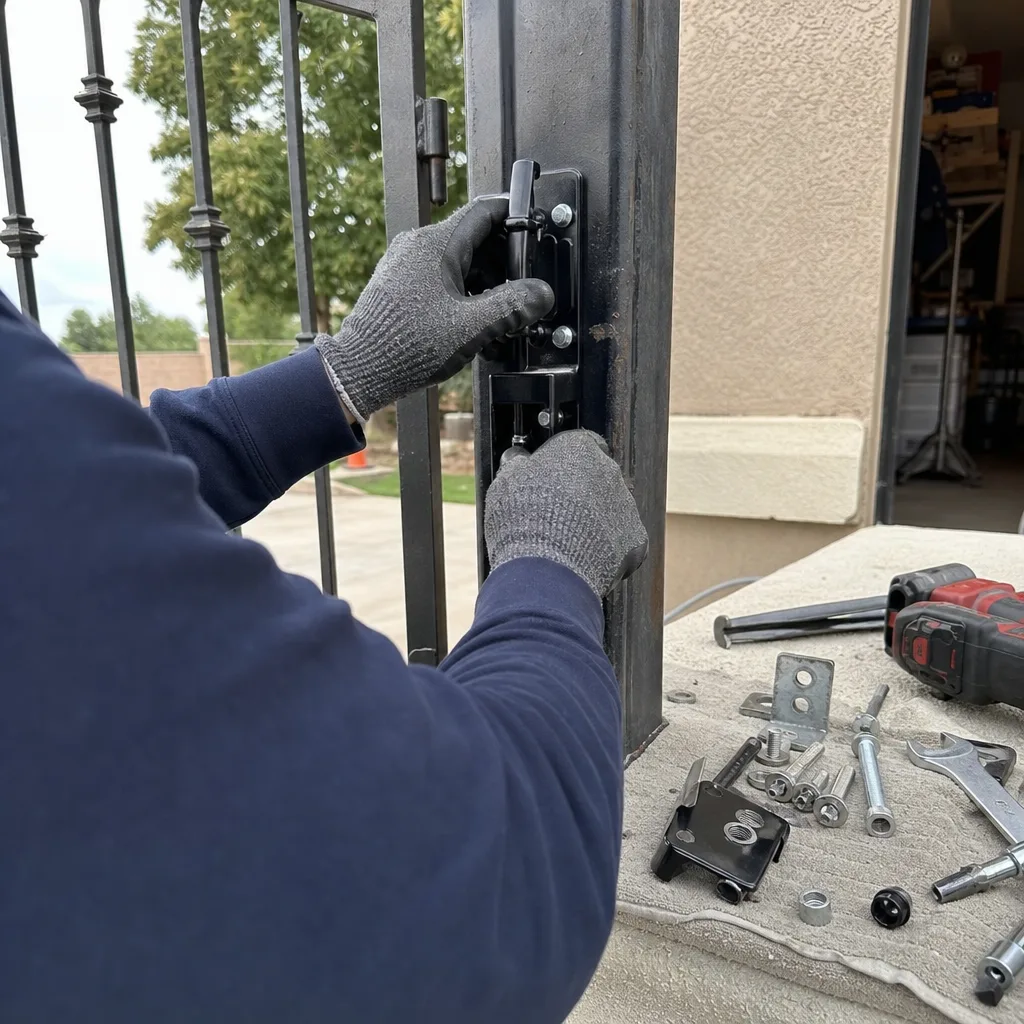
Addressing hinge and strike alignment in October typically costs a fraction of what the same repair costs in February, because a technician can adjust the hardware in place rather than resetting a footing in cold, set-up ground. That’s the timing principle behind our Gate Repair in Whitney guide, applied to the calendar.
Winter: Hydraulic vs. Electromechanical Operators in a Hard Freeze
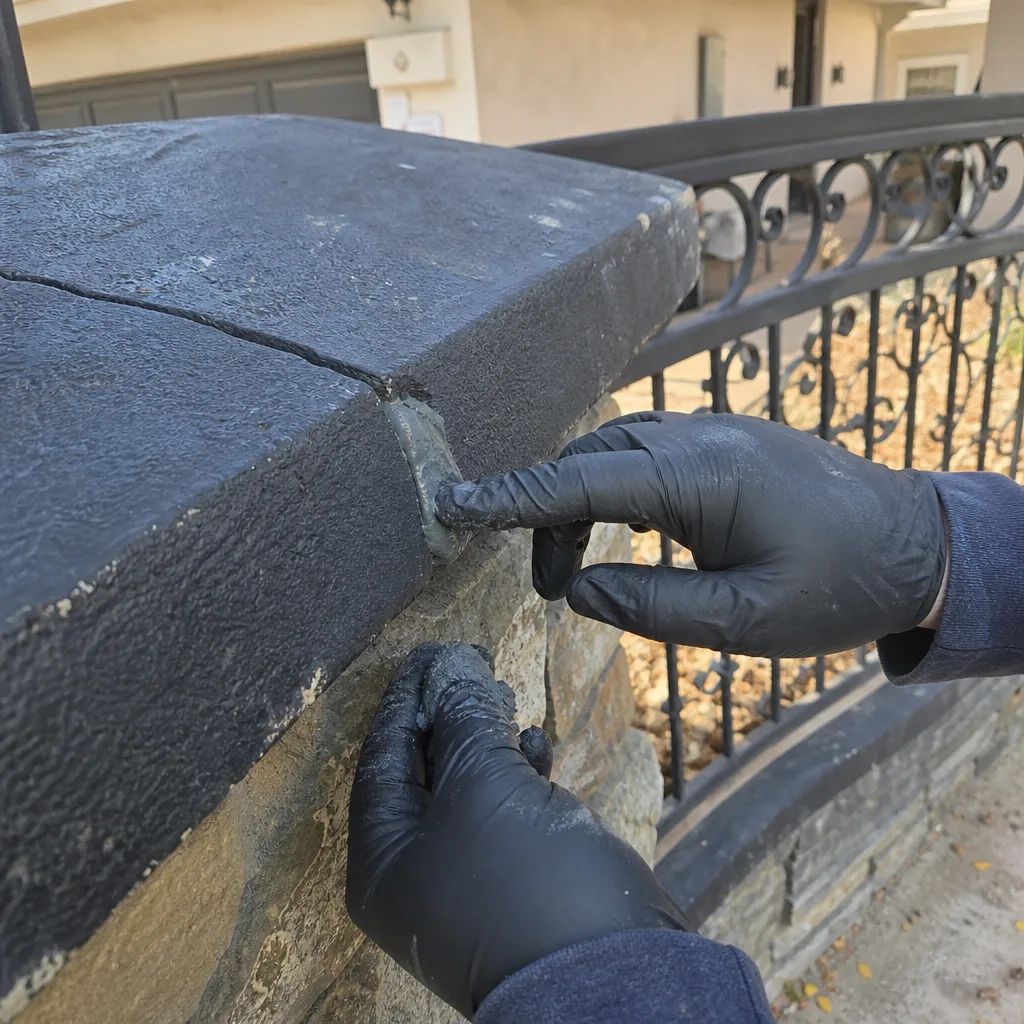
Whitney rarely gets a hard freeze. That’s exactly why they cause so much damage when they happen. Hydraulic operators have a specific vulnerability: the hydraulic oil thickens in cold, and the operator’s motor draws significantly more current to push the gate through its first cycles of the morning. FAAC and BFT hydraulic arms are built for this, but the seals were never designed for a Whitney gate that saw 110°F for three months in the same year.
Electromechanical operators – the more common type on residential gates, including most LiftMaster, Elite, and Viking units – respond differently. They don’t have oil to thicken, but they do have grease in the gearbox that firms up, and they have control boards that are sensitive to voltage sag. A cold morning combined with the gate’s first cycle of the day is a common recipe for a limit-switch misread, which shows up as a gate that stops halfway open or reverses on its own.
Winter checks worth doing
- Run one full open-close cycle by hand (with the operator disengaged) at the start of the season to confirm the gate swings freely. Bind in the gate itself is a cold-weather risk multiplier.
- On hydraulic operators, listen for any hesitation or “groan” on the first cycle. That’s a sign the oil is straining.
- Confirm the photo-eye (the infrared beam across the gate opening) still triggers. Cold can misalign mounts by a fraction, and the safety reverse feature is non-negotiable.
- Test the manual release key. If you lose power to the operator in a freeze, you need to be able to release the gate by hand.
For a deeper walkthrough of operator troubleshooting, our Gate Motor & Opener in Whitney page covers the common failure modes brand by brand.
Spring: Alkali Dust in Motor Housings and What Corrosion Looks Like First
Spring in Whitney means wind, and wind means dust. The alkaline soil that gives the Mojave its chalky color is also mildly caustic when it settles on metal. Spring is the season when that dust has had a full season to settle into a motor housing, and it’s the season when the early signs show up.
What corrosion looks like before failure, in roughly the order it appears:
- White or grey film on the control board terminals and any exposed copper inside the operator housing.
- Discolored grease around the motor shaft, usually with a faint gritty texture if you sample it.
- Sticking limit switches that cause the gate to drift a few degrees past its usual open or closed position.
- Erratic photo-eye behavior in the afternoon heat, which often traces back to a dust-sheened lens rather than a bad sensor.
- Motor current spikes on the ammeter, visible only with diagnostic tools but the earliest reliable signal.
If you’re seeing steps one and two, you caught it in time. Steps four and five mean you’re weeks from a failure. Spring is also the season to blow down and wipe the operator housing, inspect the conduit penetrations (where dust often gets in), and confirm the whole system is clean before the summer heat cycle starts again.
Spring is also the season for larger projects, and if a gate is on its last functional legs, our Gate Installation in Whitney page explains how that decision works. It’s never the first answer, but it’s worth knowing when it is.
Building a Dated Maintenance Log That Compounds Year Over Year
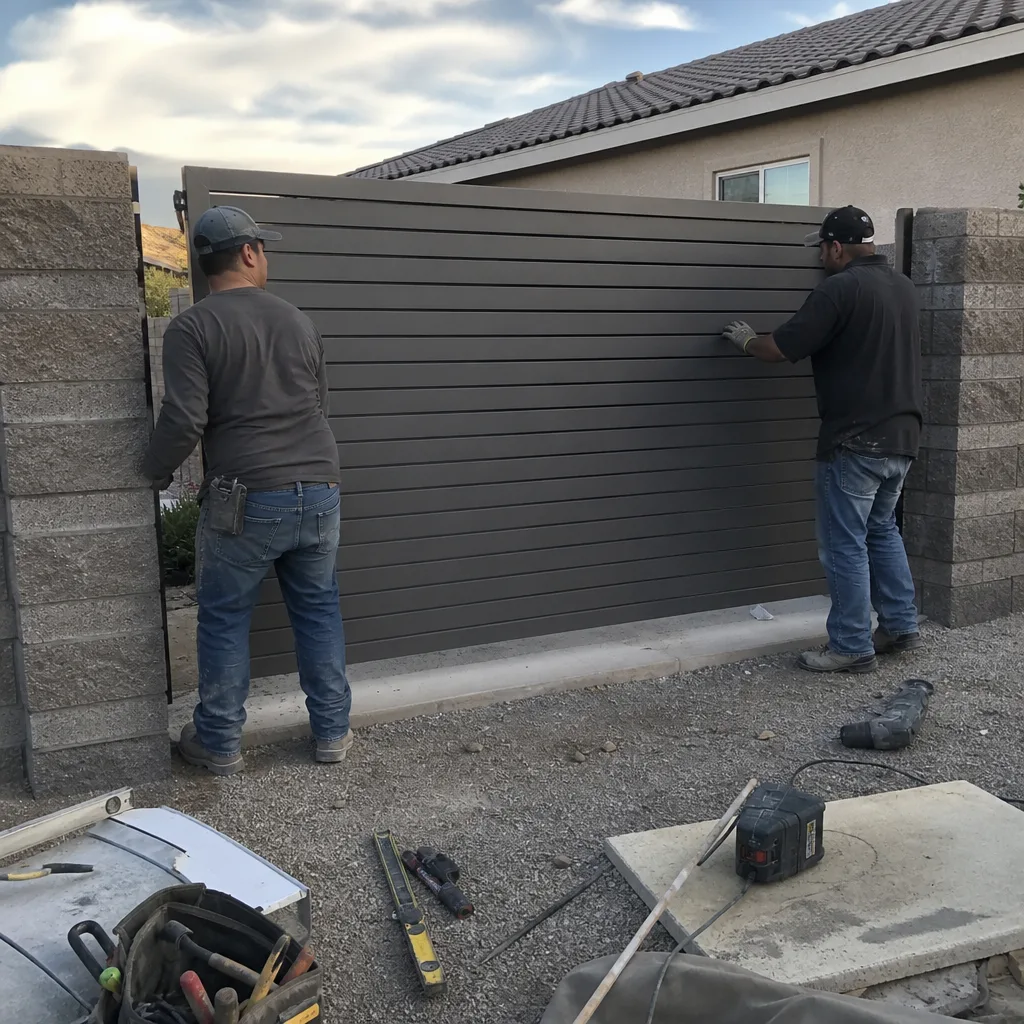
Most homeowners who do seasonal checks do them as isolated events. The homeowners who spend the least on gate repair do them as a series, and the difference is a log. Not a fancy app. A dated record on paper or in a notes file, updated on every inspection, is the difference between “the gate feels a little harder to open” and “the gate is 22 degrees harder to open than it was in October.”
Here’s the template we hand to Whitney homeowners at the end of a service visit. Fill in the blanks each season and keep the prior entries visible. It takes about ten minutes to complete.
- Date and time of check. Include the ambient temperature – summer readings are only meaningful if you record the heat.
- Gate cycle count if your operator tracks it. Most modern LiftMaster and Ghost Controls units do.
- Manual swing force reading. A $30 trigger pull gauge tells you what your hand can’t.
- Photo of each hinge, the strike, the post base, and the operator housing. Photograph from the same angle each time so side-by-side comparison is possible.
- Post plumb reading using a smartphone level app. Note the degrees.
- Observations and repairs made. A one-line note is enough. “Reset west limit switch, photographed new position” is a perfect entry.
- Next inspection date. Being explicit about when the next one is due is the single most reliable way to actually do it.
If you’ve ever had a second company troubleshoot a gate and felt like they were starting from zero, a personal log is the answer. So is a professional one – under our Haven Standard, every visit leaves a photographed record of what was found, set, and installed, filed with the job and left with you.
Common Mistakes to Avoid
- Treating summer as a repair month. Booking non-urgent gate work in July in Whitney means the technician is fighting 115°F on metal that can’t be touched without gloves for most of the day, and the working window shrinks fast. Schedule front-loaded work in May.
- Skipping the fall hinge check because the gate “still works.” Hinge wear shows up in January, not October. It comes from a whole summer of heat cycles and usually gets misread as a winter failure.
- Running a DIY lube-and-tighten campaign without a log. Greasing hinges without recording which grease or how much means the next person (or the next you) can’t tell if the problem is worsening or stable.
- Ignoring the photo-eye alignment because the gate “seems fine.” Photo-eye misalignment on a Whitney gate often shows up only in afternoon heat when the housing expands by a fraction. This is a safety reverse feature – it’s not optional.
- Assuming a hydraulic operator will be fine because it survived last winter. Every freeze cycle stresses the seals harder than the last, and a Whitney hydraulic system that saw four prior winters is at a much higher failure risk in the fifth than the second.
- Not testing manual release in summer. The key that works fine in 70°F can seize in a three-month-open position after a hot, dusty season. Test it in June and again in October.
- Calling for emergency repair instead of a scheduled inspection. The Whitney homeowners who spend the least on gate repair are the ones who schedule the inspection. Emergency calls cost more because the work is unscheduled, always.
See the difference
BeforeAfter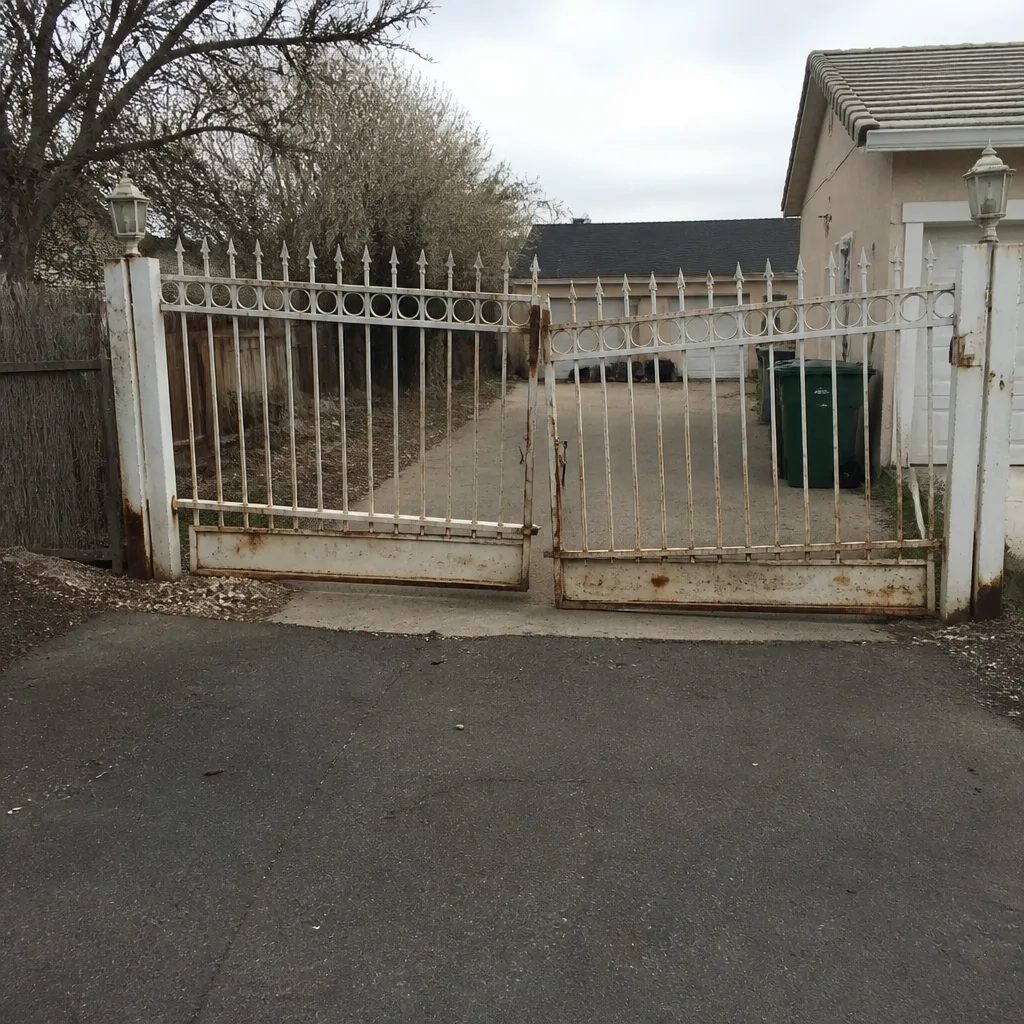 Before
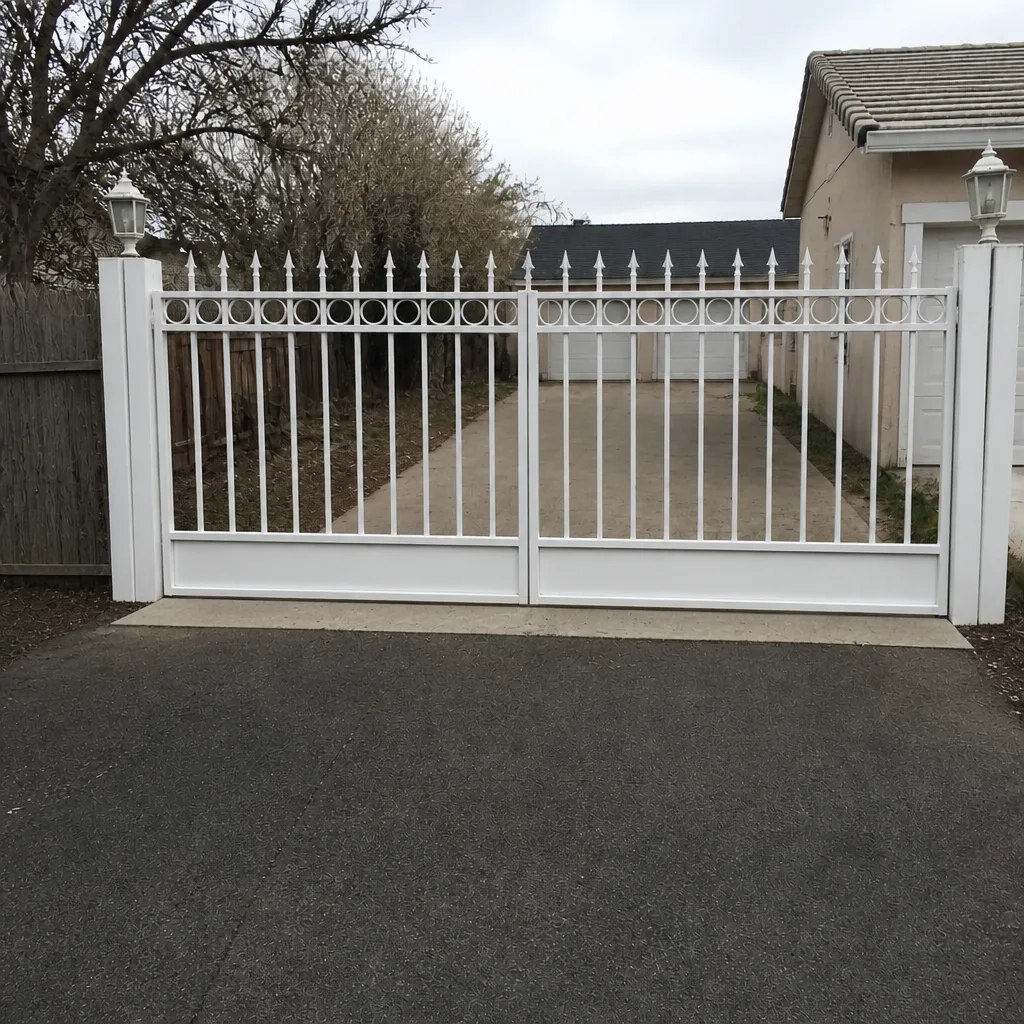 After
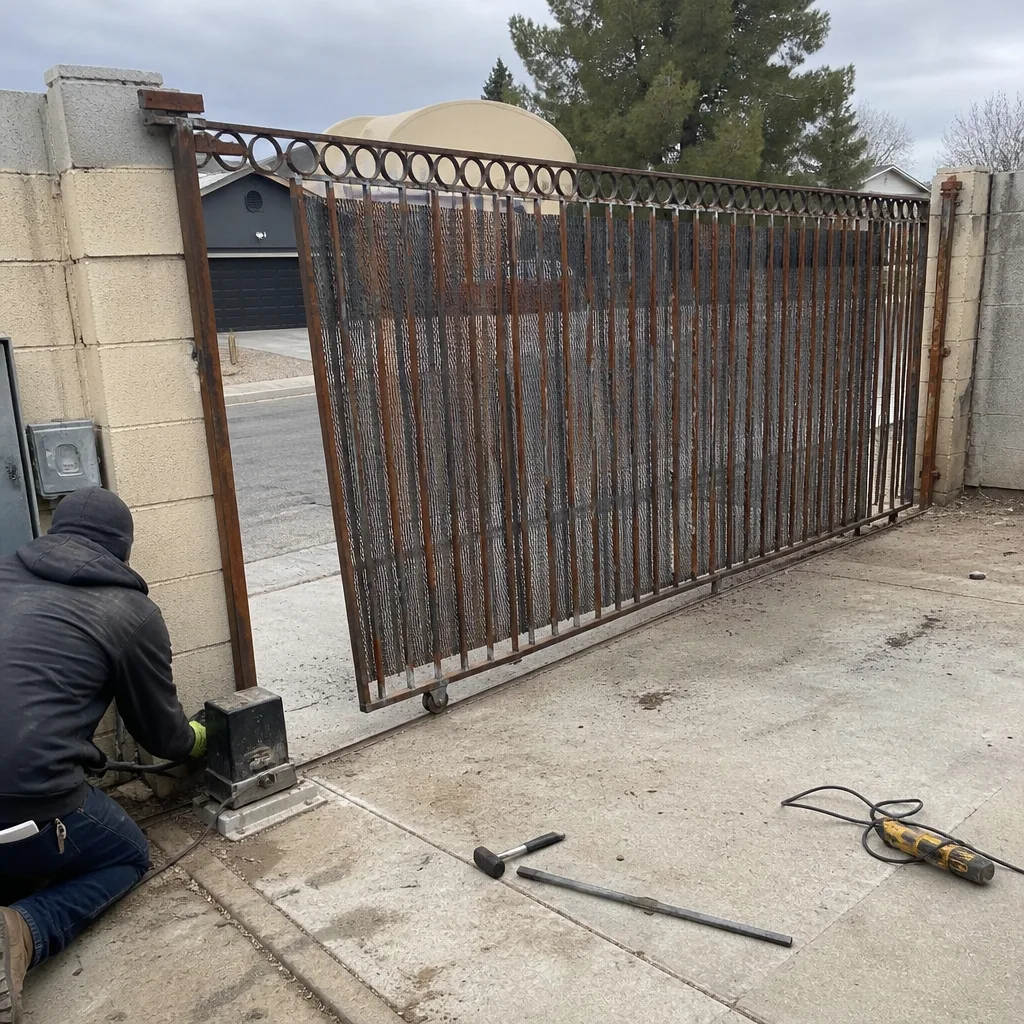 Before
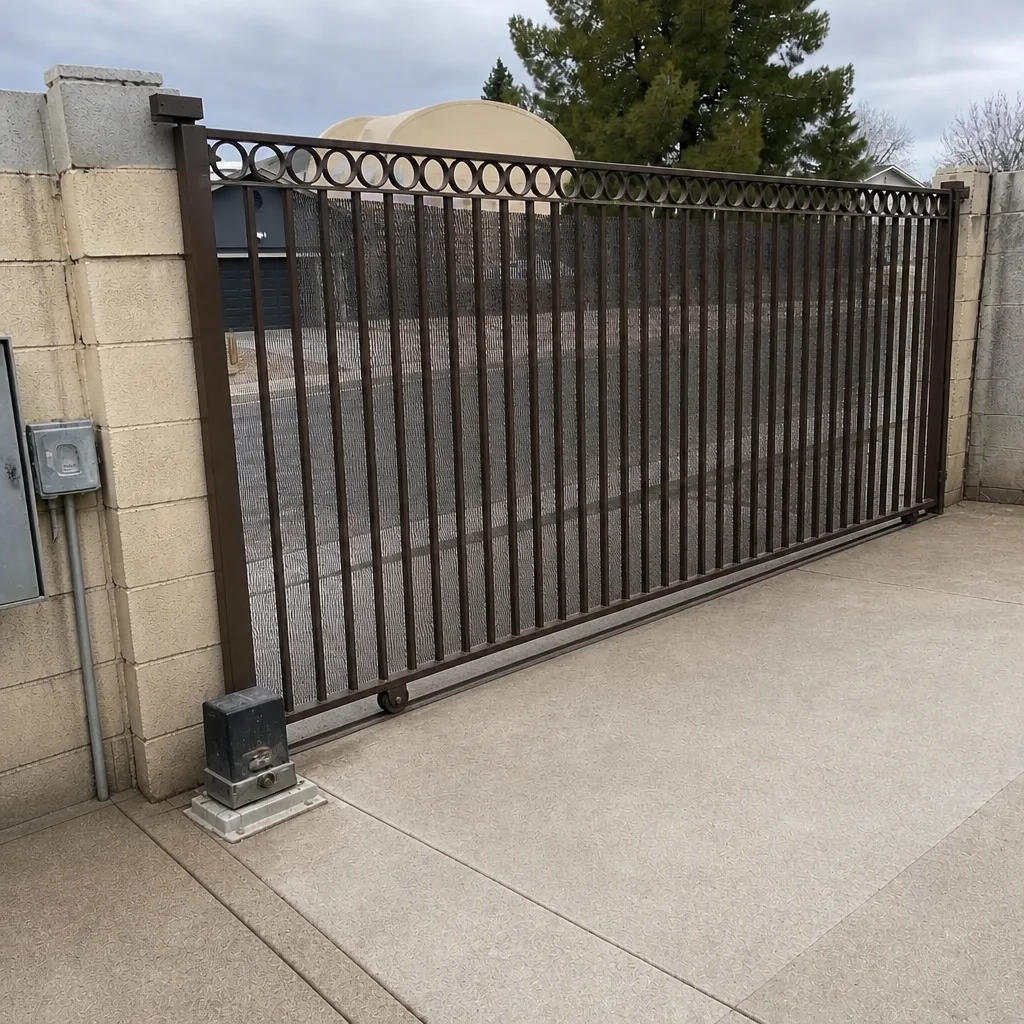 After
When to Call a Professional
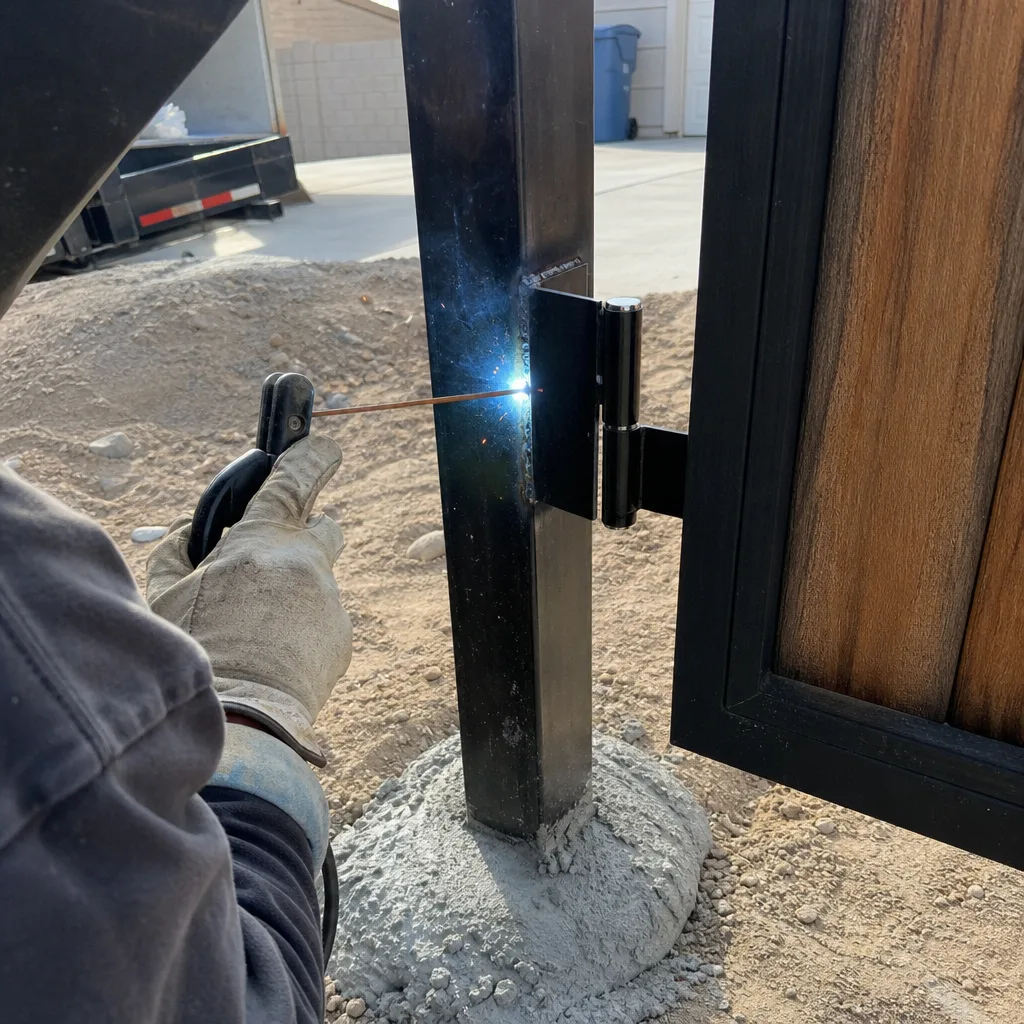
Some seasonal work is safe and reasonable to do yourself: wiping the operator housing, photographing hinges, taking a plumb reading, recording cycle counts. The moment the work touches the operator’s internal wiring, the safety photo-eye circuit, high-tension gate hardware, or a footing that appears to be moving, it’s a different category. Gate springs and arms store energy – a sudden release under hundreds of pounds of load is a genuine hazard, and we’ve seen injuries from a “quick fix” that turned into an uncontrolled swing. Gas struts on some gates are similar. Trained technicians carry the right tools and know what to inspect before they touch it.
For a Whitney gate that’s due for a full seasonal inspection, or one that’s showing early corrosion signs on the control board, a free estimate is the right next step. Vance Gate Repair Whitney offers free estimates in Whitney – call (844) 797-4861. A live person answers, day or night, and you’ll have a written price before any work starts.
Frequently Asked Questions
Late May and October are the two best windows. Late May gets you ahead of the sustained heat that drives thermal expansion, UV damage, and operator overheating, and October catches hinge wear before the first freeze pins post movement in place. Both windows are typically cheaper for repair work than a summer emergency call or a mid-winter fix.
The earliest sign is a white or grey film on the control board terminals and a slightly gritty texture in the grease around the motor shaft. If the gate is drifting past its usual open or closed position by a few degrees, the limit switches are affected. In our experience, a Whitney gate showing these signs is weeks, not months, from a motor failure, and a professional inspection typically costs less than a replacement control board.
They handle cold differently, not necessarily better. Hydraulic operators thicken their oil in freezing temperatures, which strains seals and increases current draw during the first cycles of the morning. Electromechanical operators have gearbox grease that firms up and control boards that are sensitive to voltage sag. Both types perform well in a Whitney winter that stays above freezing, and both benefit from a pre-winter inspection that confirms the manual release works and the gate swings freely by hand.
Yes. Gate springs and hydraulic arms store significant energy, and a sudden release under load can cause serious injury. This is not a component to adjust as part of a seasonal maintenance routine. Call (844) 797-4861 and a trained technician will inspect it – a written price is quoted and agreed before any work starts, so you know exactly what you’re approving.
Clean the lens first with a dry microfiber cloth, since dust sheen is the most common cause. If it continues tripping in the afternoon heat specifically, the alignment has drifted and needs a proper reset with a diagnostic tool. The photo-eye is a required safety feature and shouldn’t be bypassed. Call (844) 797-4861 to schedule an inspection – estimates are free and a technician can usually pinpoint the issue in a single visit.
We service all nine major gate-automation brands, including LiftMaster, FAAC, BFT, Linear, Viking, Ghost Controls, DoorKing, Elite, and Mighty Mule. That’s the practical reason a Whitney homeowner calls us for a motor that’s already on the gate rather than a plumber-style referral – we work on whatever operator is installed. Call (844) 797-4861 to talk through what’s on your gate right now.
The Bottom Line
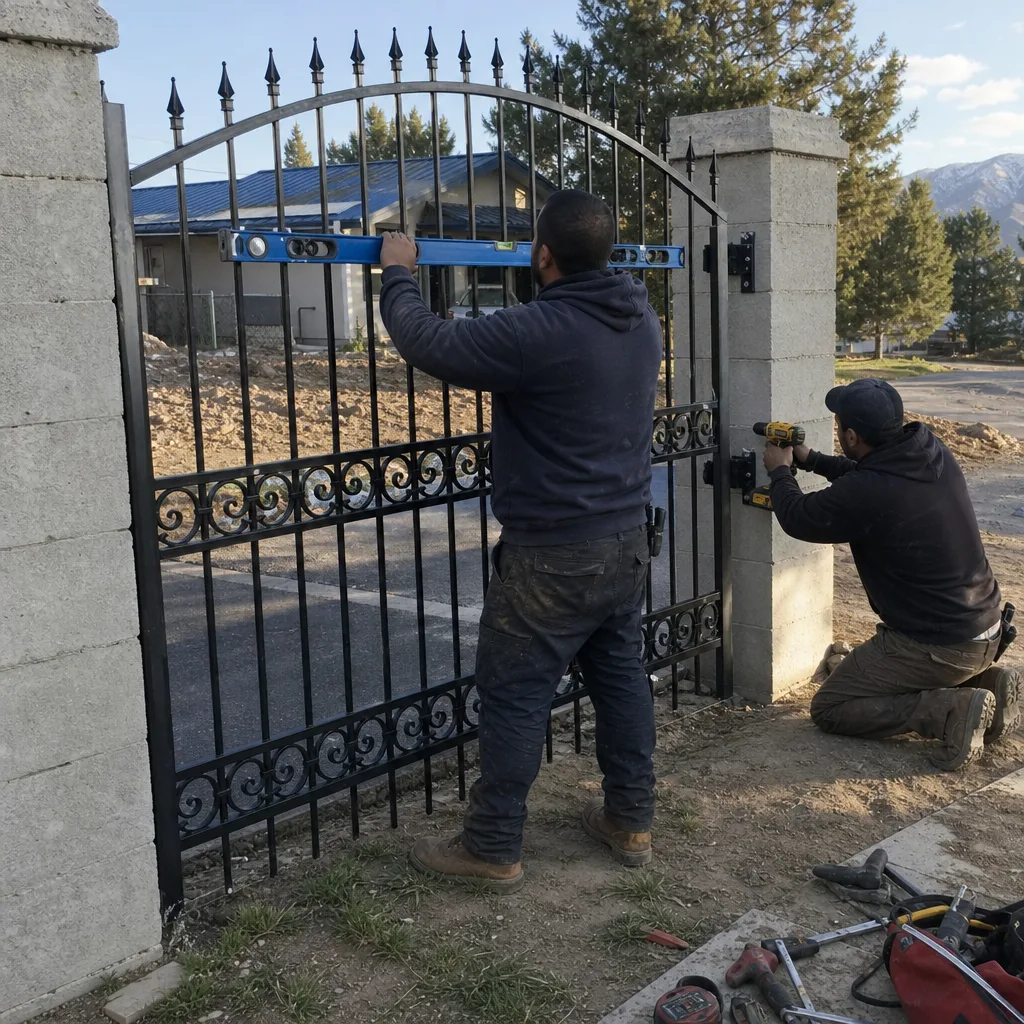
The best gate maintenance schedule in Whitney isn’t a generic spring-and-fall calendar. It’s front-loaded into two specific windows: late May, before the heat locks in, and October, before the ground does. The work in those windows is cheap. Everything that happens between them is expensive, because it’s reactive. Record what you find. Photograph it. Keep the log. The gate on your property is a moving mechanical system that has to survive 110°F summers and the occasional 25°F night – the more it’s serviced in the transition windows, the longer it stays out of the emergency-call column.
Get a Free Seasonal Inspection in Whitney
If your gate hasn’t had a seasonal inspection since last year, the right move is a scheduled one, not an emergency one. Call Vance Gate Repair Whitney at (844) 797-4861 for a free estimate. A live person answers day or night, the price is quoted and agreed in writing before any work starts, and every visit leaves you with a photo record of what was found, what was adjusted, and what was replaced.
Written by the team at Vance Gate Repair Whitney.