
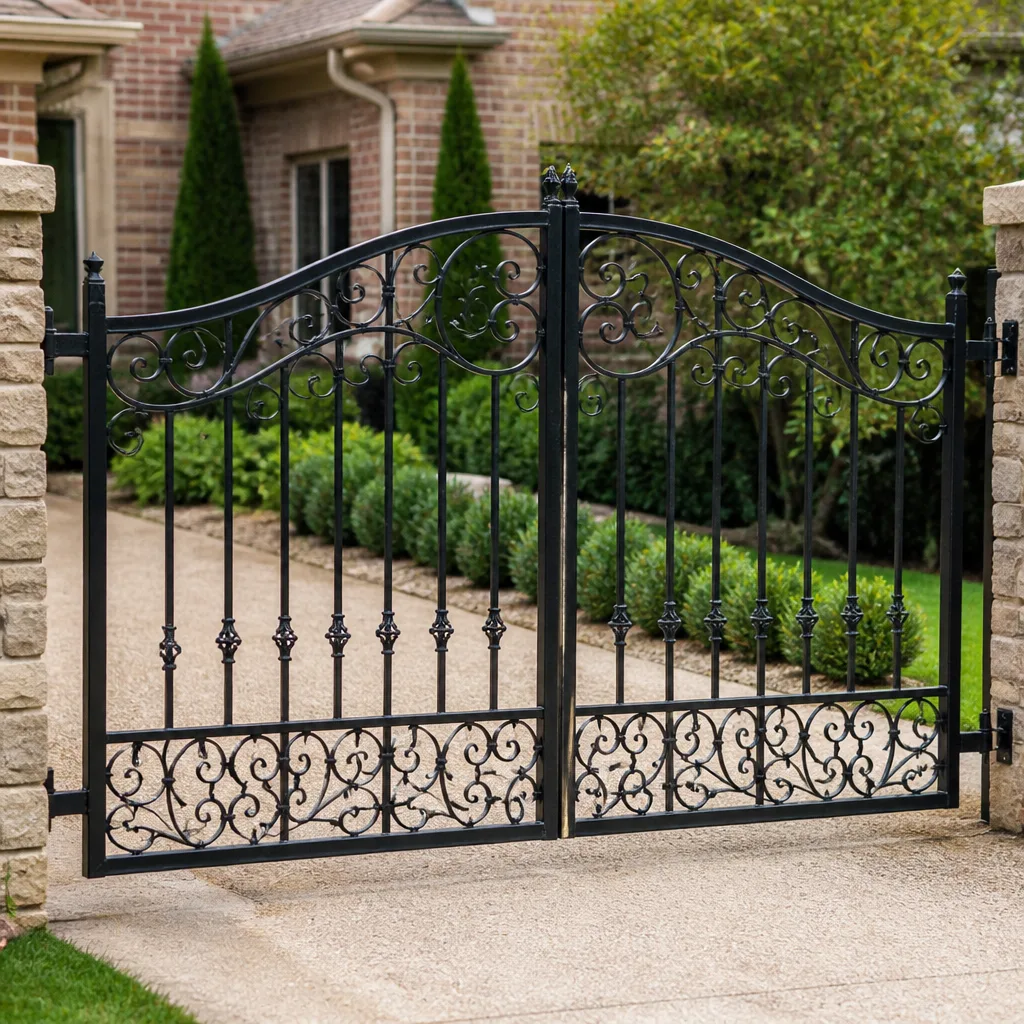
 Wrought iron
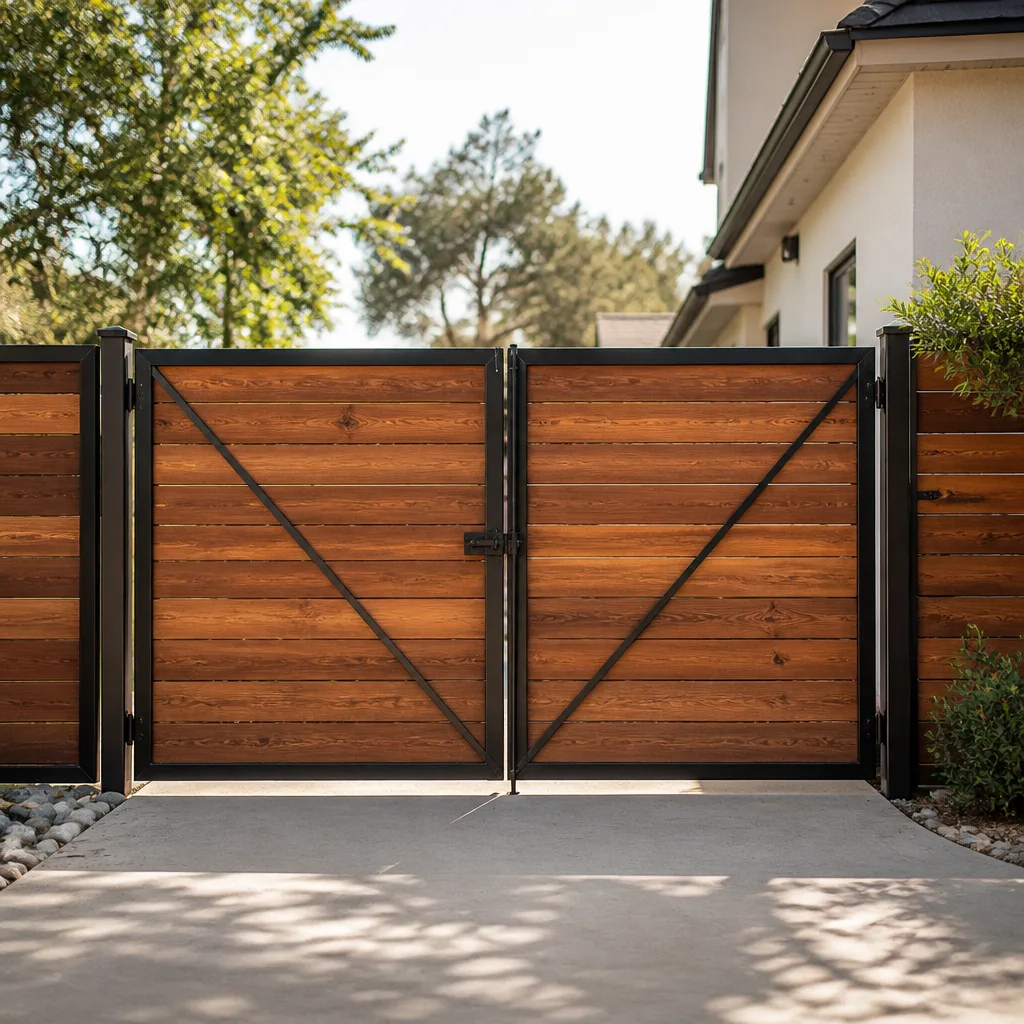 Wood & steel frame
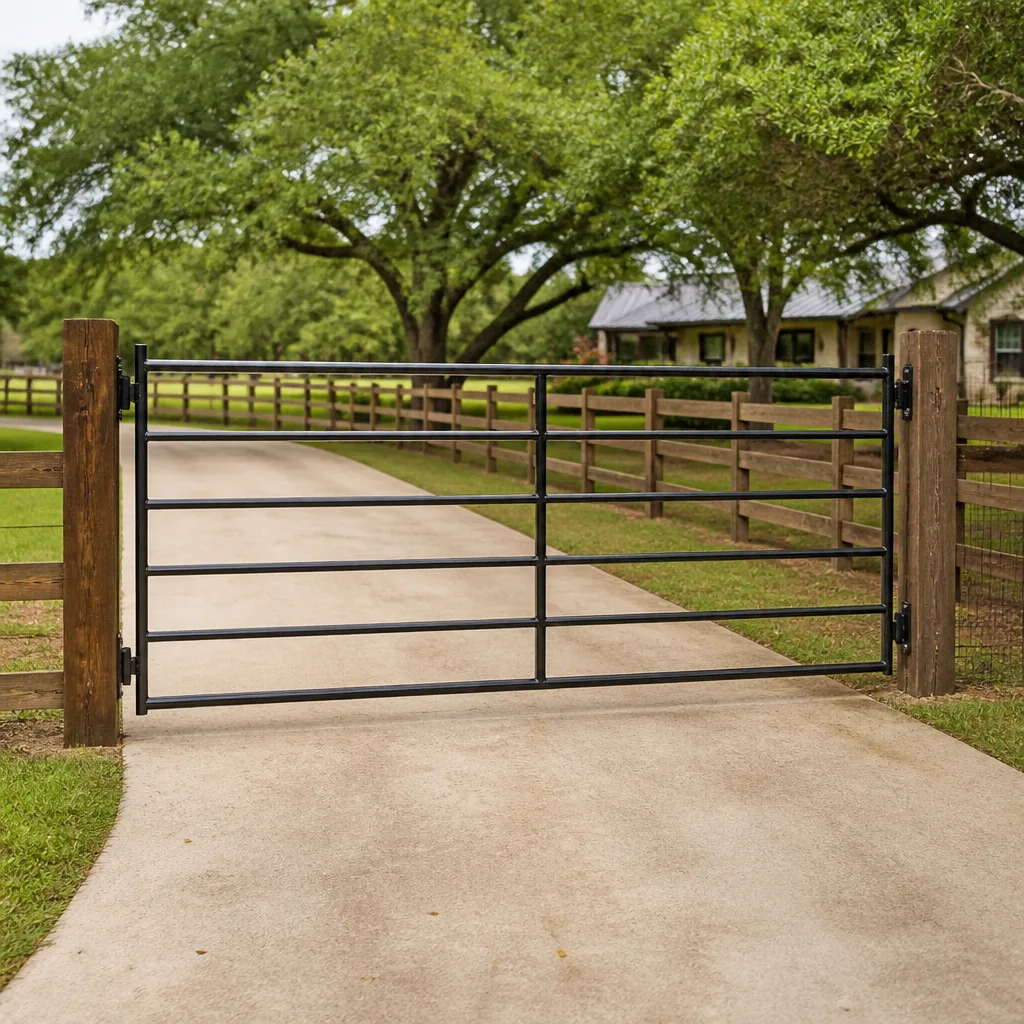 Farm & ranch
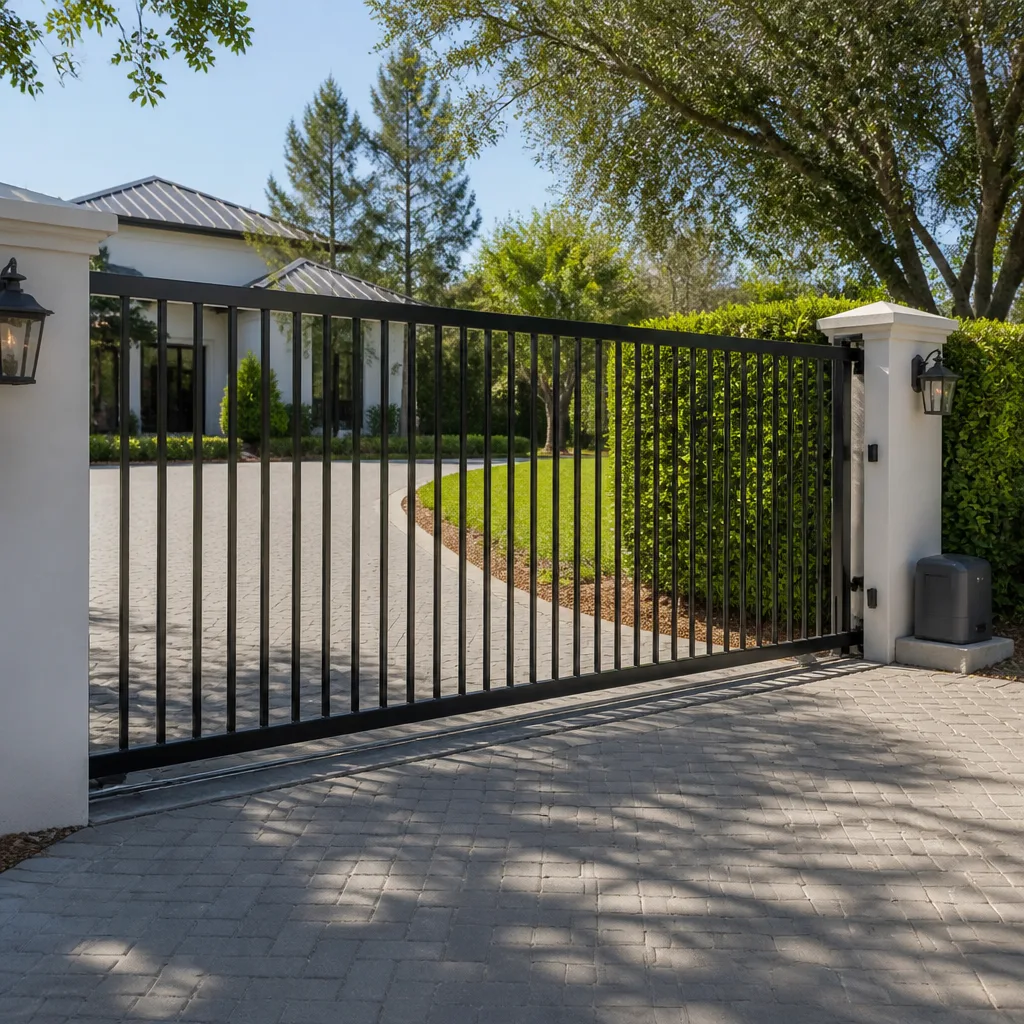 Sliding driveway gates
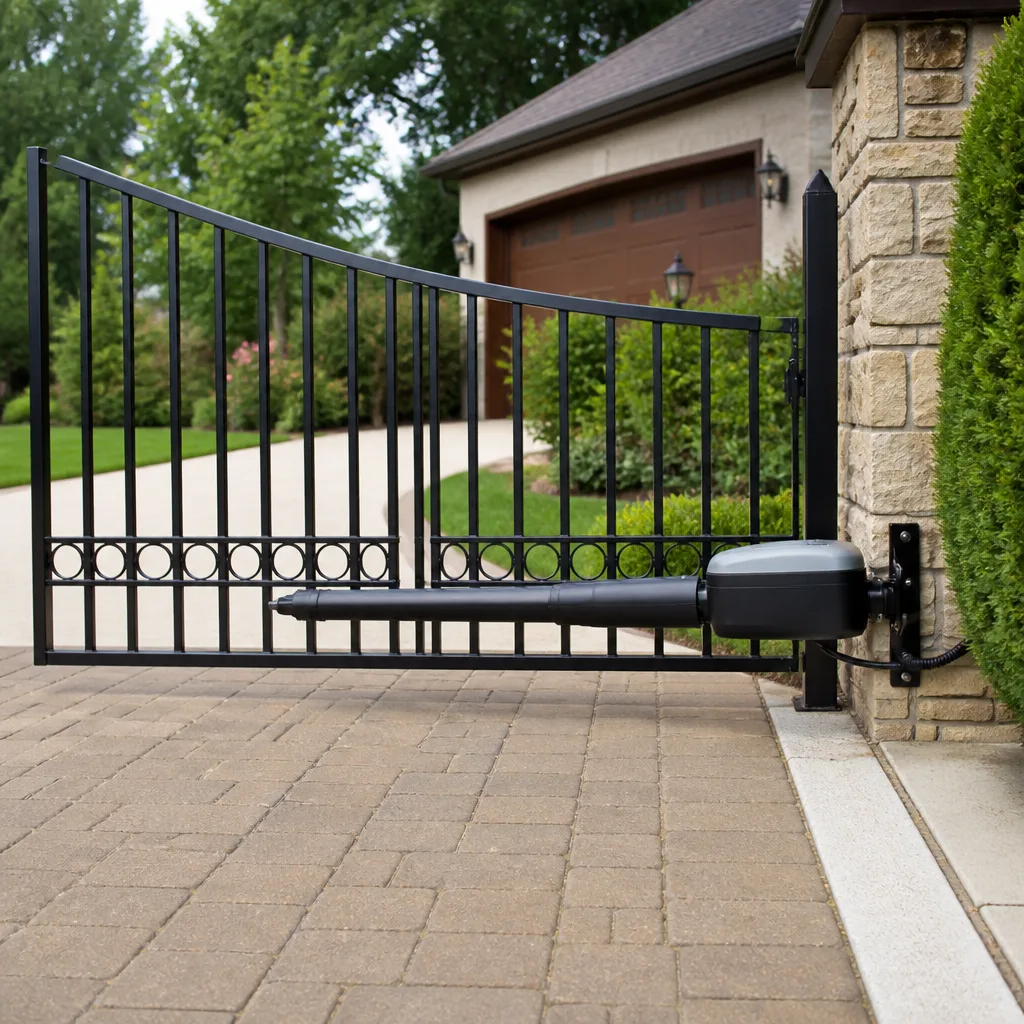 LiftMaster operators
Free on-site gate assessment - hinges, posts, and your LiftMaster or Nice gate operator checked before anything is quoted
The assessment is free and the quote is the invoice.
Get your free estimateStyles & brands we work with
- Wrought iron
- Wood & steel frame
- Farm & ranch
- Sliding driveway gates
- LiftMaster operators
See the difference
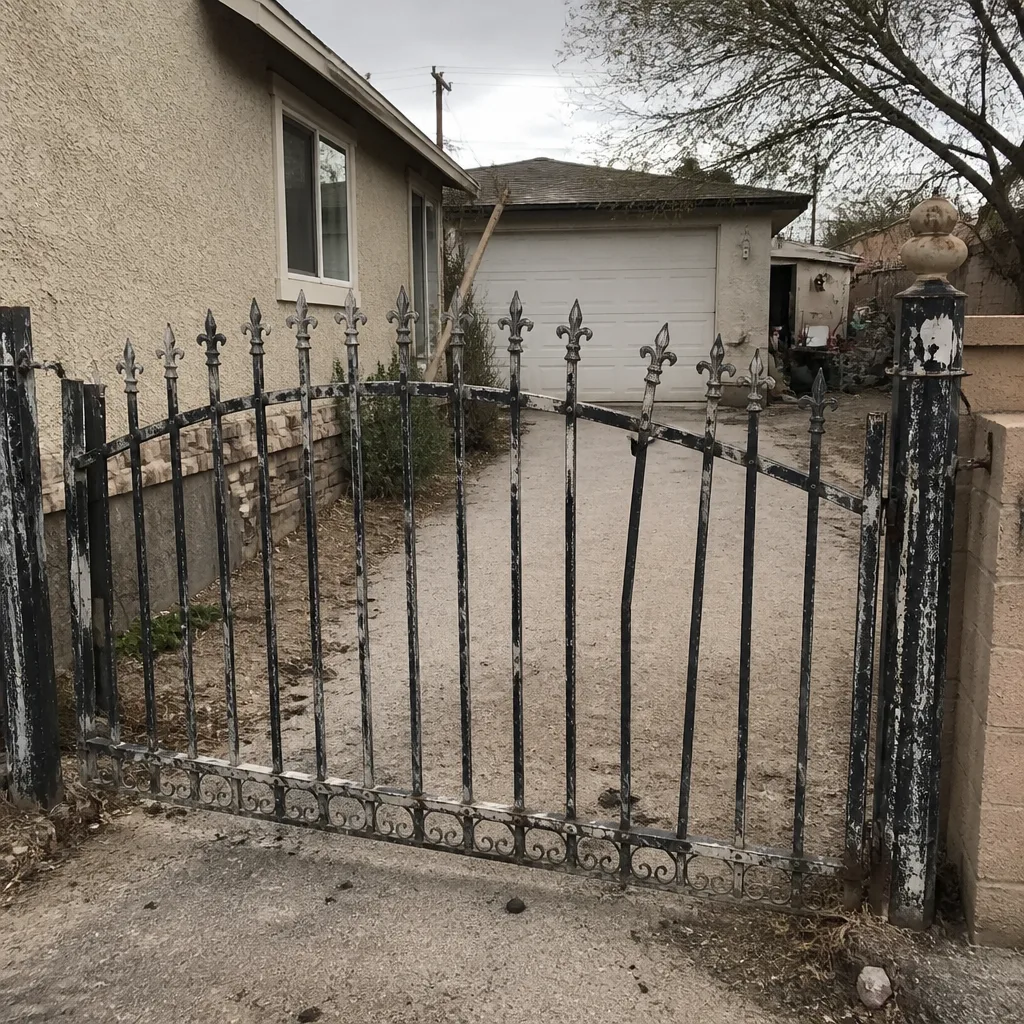 Before
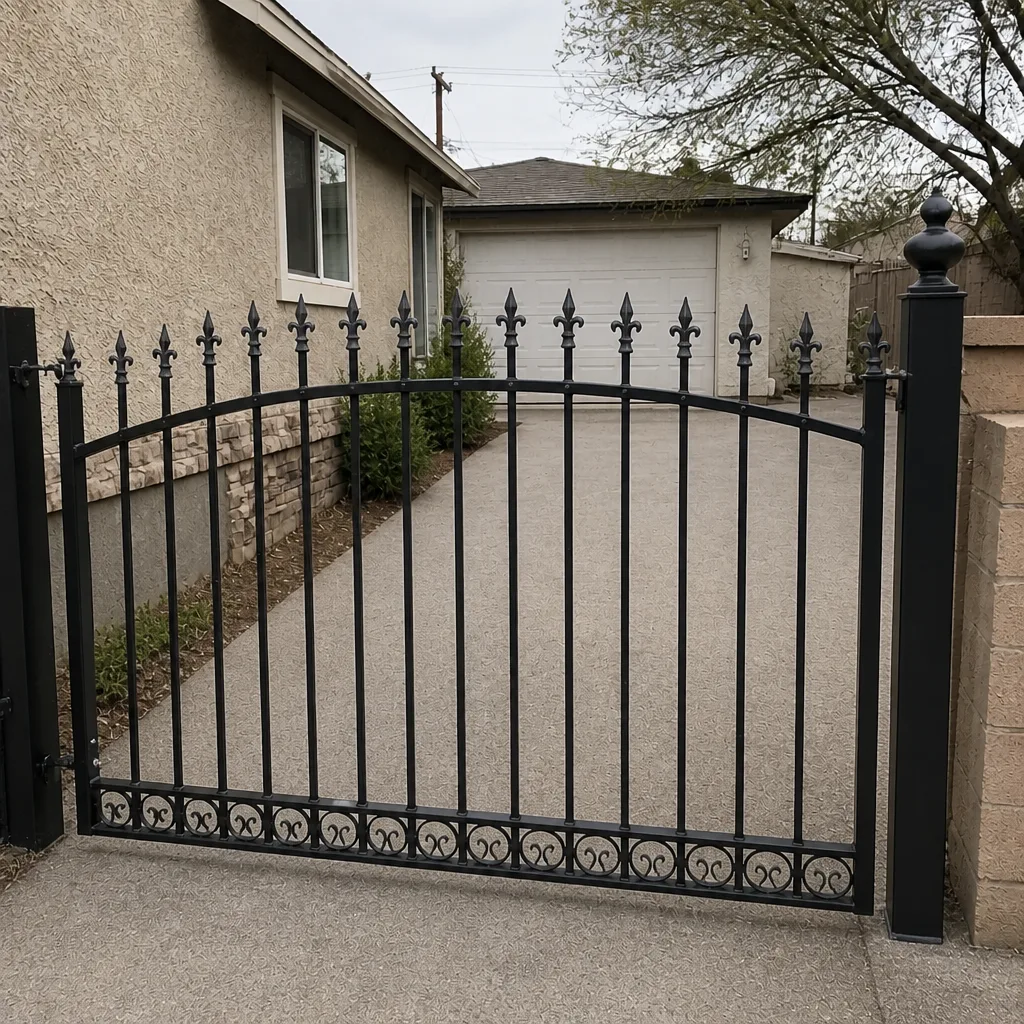 After
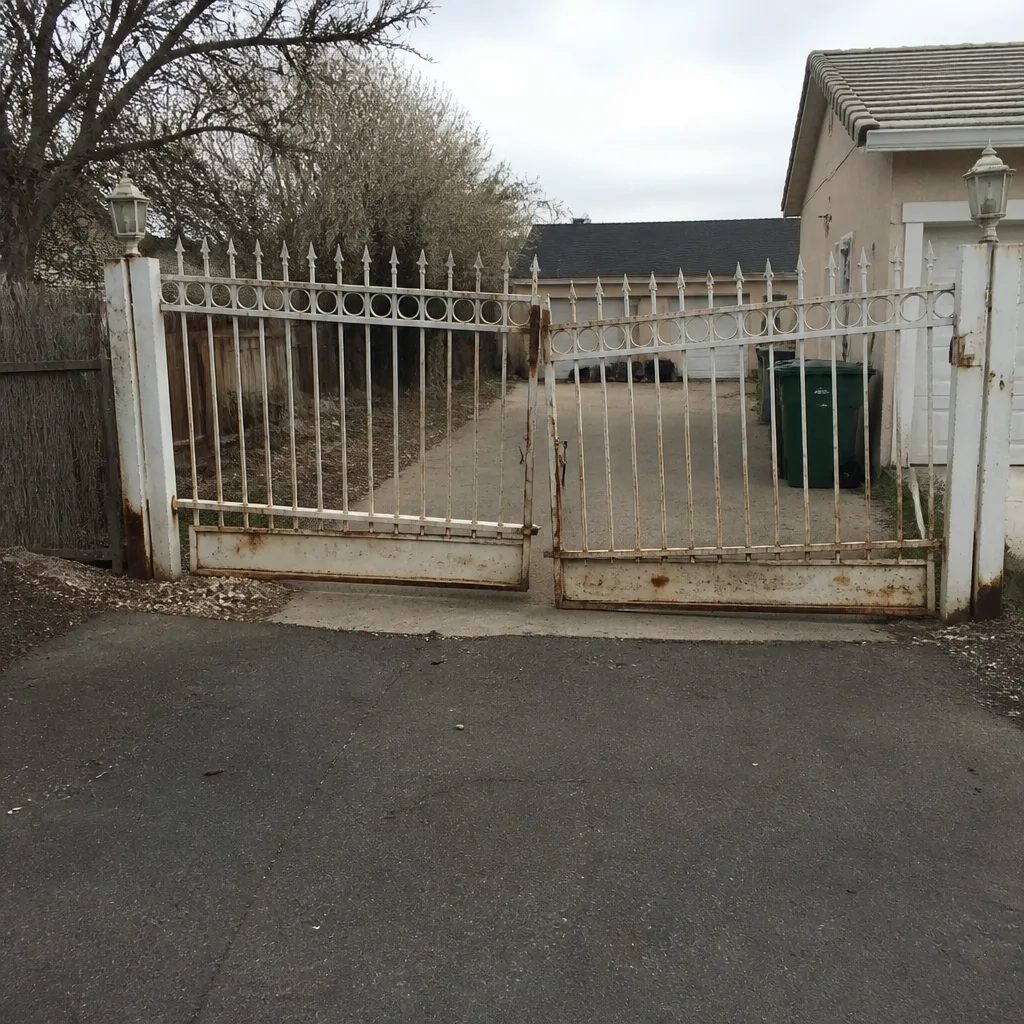 Before
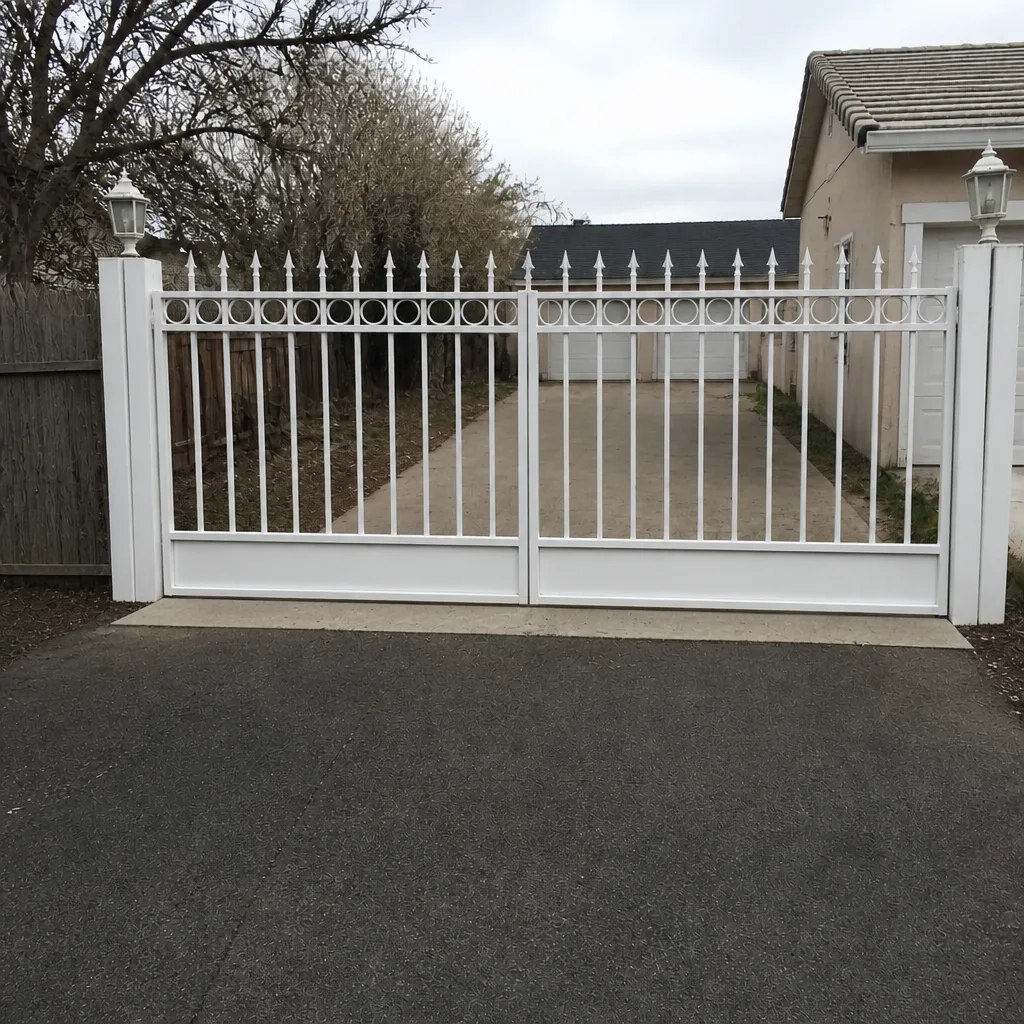 After
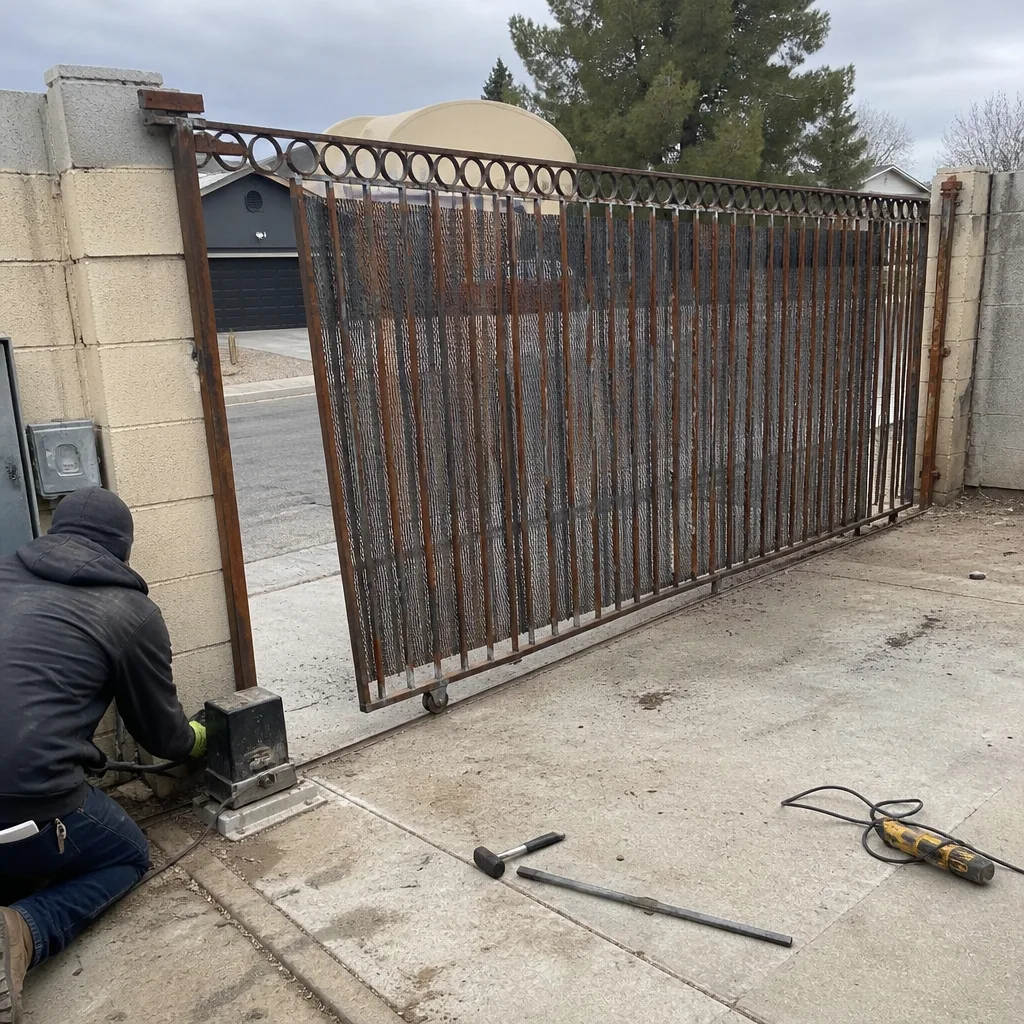 Before
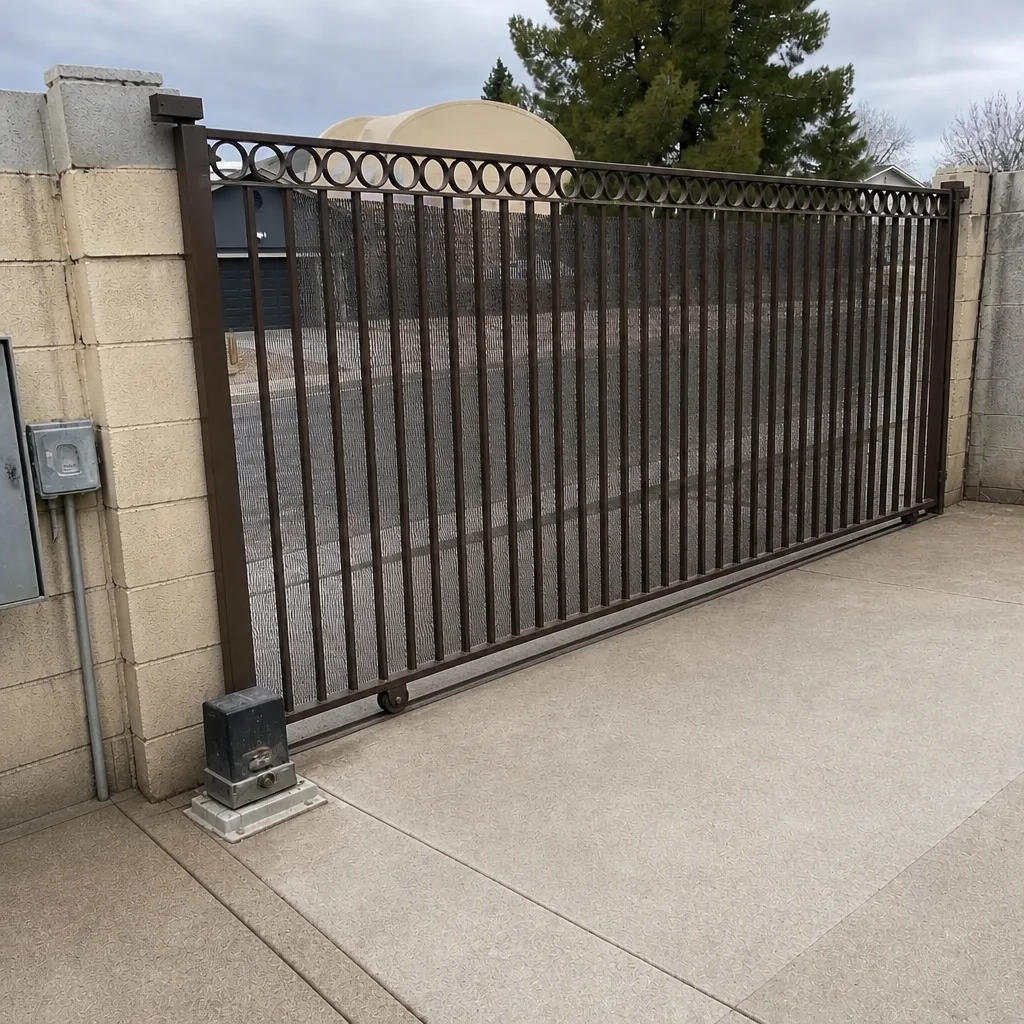 After
How an Automatic Gate Opener Works in Whitney, NV
An automatic gate opener works on a four-part cycle: a command signal arrives from a remote, keypad, intercom, or loop detector; the control board reads that signal and checks its safety inputs; the motor and drive mechanism move the gate; and limit switches tell the board when the gate has reached the end of its travel. In Whitney, that third step fails first, because the limit switch is a small mechanical sensor that slowly drifts out of position as a gate post settles in caliche-heavy desert soil. If your gate stops short, reverses without warning, or needs a nudge to close all the way, the motor is usually not the culprit. Call (844) 797-4861 and we will tell you what we find.
The Four Parts, Explained Without the Jargon
Most homeowners only think about a gate opener when it stops working, so the parts blur together. Here is the actual chain of events, in the order it happens.
- Command input. The remote in your car, the keypad on the column, the intercom at the pedestrian gate, or the loop detector buried under the driveway all do the same job: send a “go” signal to the board. In Whitney, this is where UV and dust do their quiet damage. Remote cases bake and crack. Keypads in HOA subdivisions fill with fine grit that keeps the buttons from registering.
- Control board. The board interprets the command, checks the safety inputs, and fires the motor. It also manages the soft-start and soft-stop so the gate does not slam. Desert heat is unkind to boards: an attic-mounted or poorly shaded box that hits 140°F in July will eventually fail on a component rather than a motor.
- Motor and drive mechanism. The motor turns, and the drive turns that rotation into gate motion. A swing arm pushes the gate leaf. An underground linear actuator pushes from below the ground line. A rack-and-pinion slide operator pulls a rolling gate along a track. If the gate binds, the drive and motor work harder and run hotter, which shortens their life.
- Limit switches. These small switches tell the board “full open” and “full closed.” They are set at installation and re-set whenever the gate’s travel changes. In Whitney’s caliche soils, posts settle and shift, which changes travel and throws the limits out of position. That is why a gate that ran perfectly for three years suddenly stops halfway.
We work on all nine major automation brands: LiftMaster, FAAC, BFT, Linear, Viking, Ghost Controls, DoorKing, Elite, and Mighty Mule. The mechanism matters because it dictates what maintenance looks like. LiftMaster and Viking swing and slide operators are above ground and easier to inspect and adjust. FAAC and BFT underground actuators, common on higher-end Whitney HOA entries, hide the moving parts but require opening the housing to see the mechanisms. Ghost Controls and Mighty Mule lighter-duty swing arms are common on aluminum pedestrian gates. When you book a repair, our technician arrives with the right parts and approach for whichever motor is already on your property. We do not steer you toward a replacement when a repair will do, which is the whole idea behind our gate repair philosophy.
How Safety Loops and Photo-Eyes Fit In
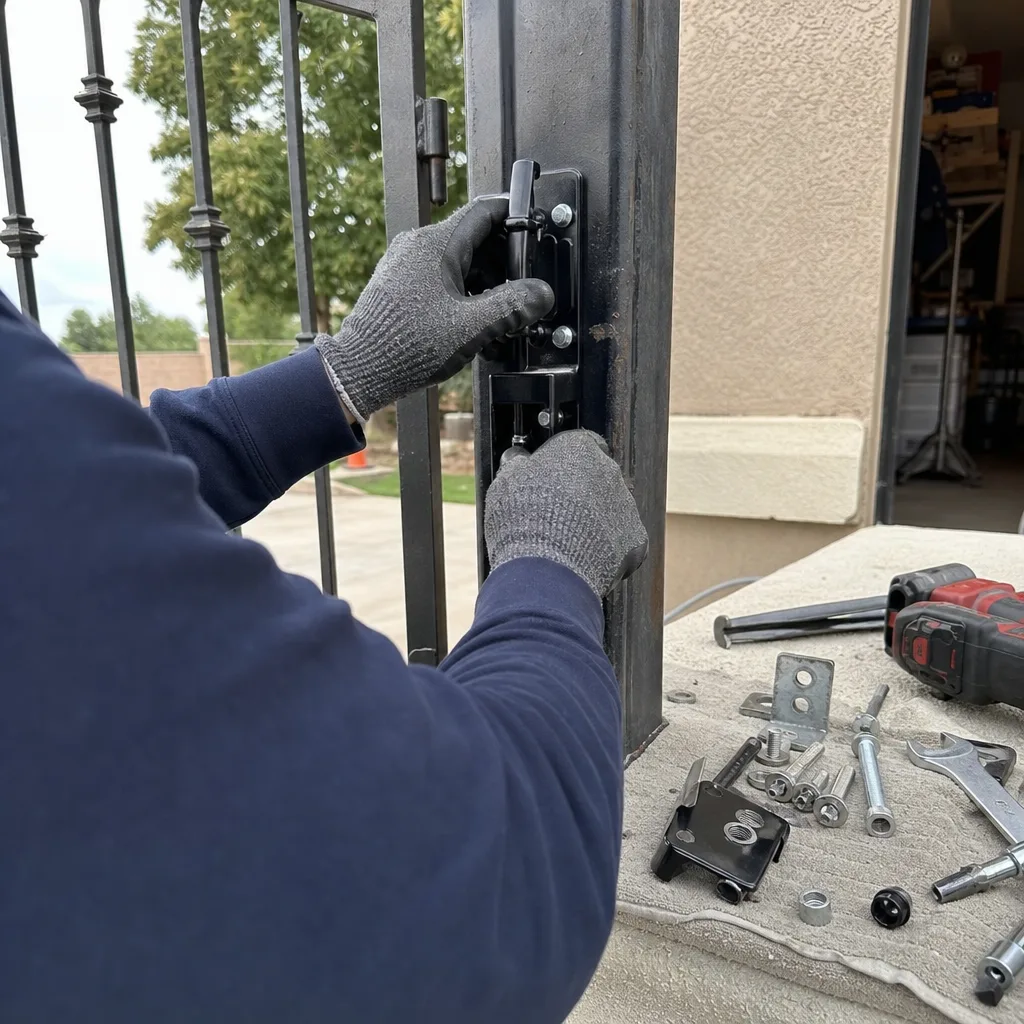
The safety devices are the part most often blamed for a motor problem. A photo-eye is the infrared beam across the gate path; when something crosses it, the board reverses the gate. A safety loop is a wire coil in the driveway that detects a vehicle above it. In Whitney driveways, heat shimmer across asphalt, blowing Mojave dust, and spider webs across the beam all trigger false reversals. A homeowner sees the gate close and immediately reopen and assumes the motor has failed. More often, a photo-eye is misaligned by a couple of inches, or the lens is coated. That is why our first step on any “gate reverses on its own” call is to check the safety devices before we touch the motor.
BeforeAfterWhitney’s Housing Stock, and Why It Matters Here
Whitney is mostly post-1990s tract development and HOA-governed subdivisions, which means most gate work sits inside CC&Rs. The gates are usually wrought-iron or steel driveway gates, aluminum pedestrian gates, and block-wall-adjacent fence gates rather than older wood or historic ironwork. The concrete-block-and-stucco perimeter walls and shared parcel lines that define Whitney’s subdivisions make post settling, gate alignment, and HOA-approved visual matching the core of the job. When you replace a finish or a piece of hardware, the association may require it to match the rest of the perimeter wall exactly. A technician can fix the swing perfectly and still leave the homeowner facing an HOA compliance notice. We keep that in view when we document what we install.
What It Costs, and What We Leave Behind
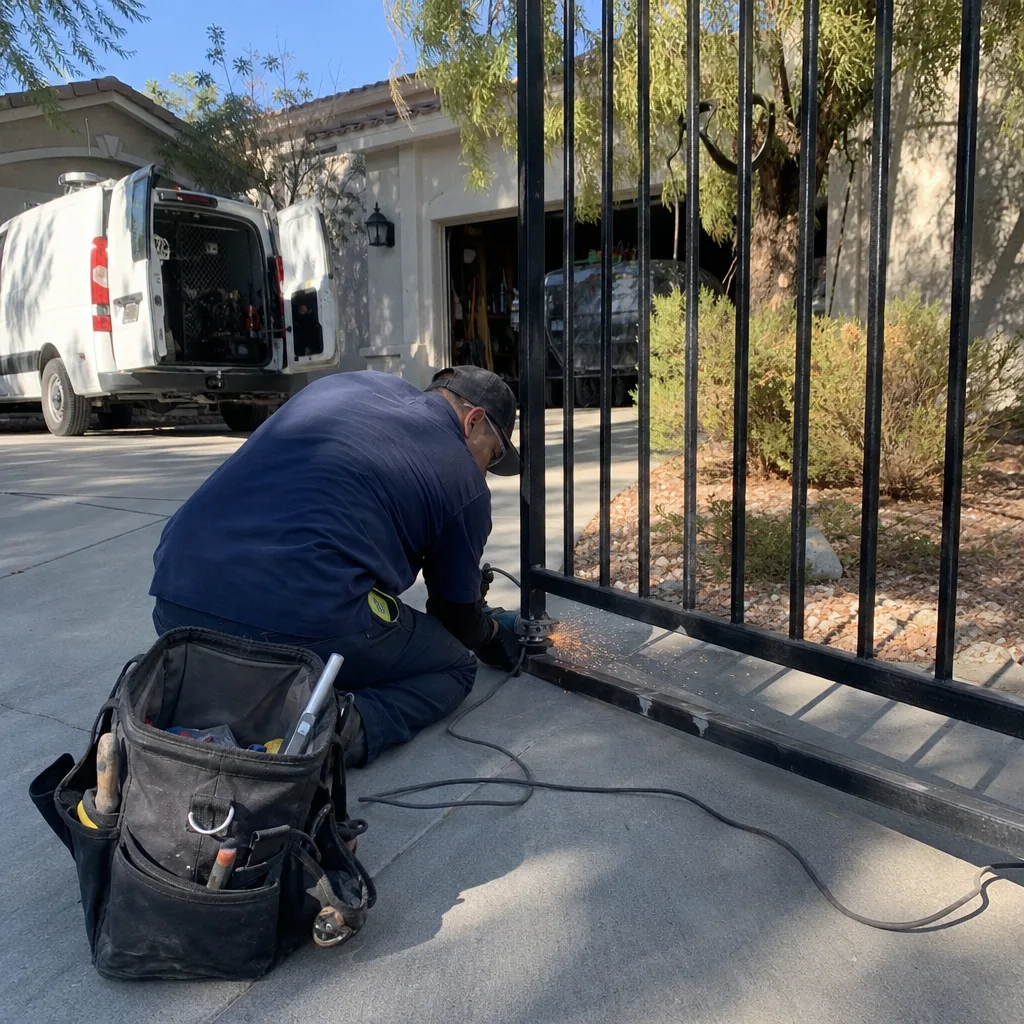
Most Whitney homeowners ask the price before they ask anything else, so here is the range we work within. The written flat price comes before any work starts, under Haven Standard Clause 1, and you get a full year of the 365-Day Done Right Promise covering the completed repair.
| Repair | Typical Range | What Drives the Cost |
|---|---|---|
| Limit switch re-set and adjustment | $120-$210 | How far the post has shifted; number of switches |
| Photo-eye or safety loop diagnostic | $140-$260 | Alignment vs. loop wire fault; driveway access |
| Control board replacement | $280-$620 | Brand; board availability; heat damage in the box |
| Swing arm or drive service | $220-$450 | Binding; bracket condition; motor wear |
| Keypad or remote replacement | $90-$240 | Brand; hard-wired vs. wireless; HOA style match |
Every visit under Haven Standard Clause 4 (Evidence on every job) leaves a written photo record: what we found, what we adjusted, what we replaced. That record includes the wiring diagram and the limit-switch readings. The point is simple. If a future technician, or you, needs to describe the system, the documentation is in your hand rather than a black box. A written price is the same discipline applied to money. A Gate Motor & Opener repair record you can point to saves diagnostic time on the next visit, and that saves you money.
When It’s Worth Calling a Pro
You can reset a remote or clean a dusty keypad. Beyond that, safety matters. Gate springs and arms are under real tension, wiring carries mains voltage, and a limit-switch adjustment done without the right setting tool can throw the gate out of travel and stress the motor. Our technicians carry up to 12 years of experience and arrive with the wiring diagram in hand so they set switches accurately rather than guessing. If a Whitney property has a swing gate or slide gate that reverses, binds, or needs a reset every week, call us and we will document what we find and quote a written price before anyone picks up a tool. We answer live, 24 hours a day.
FAQs
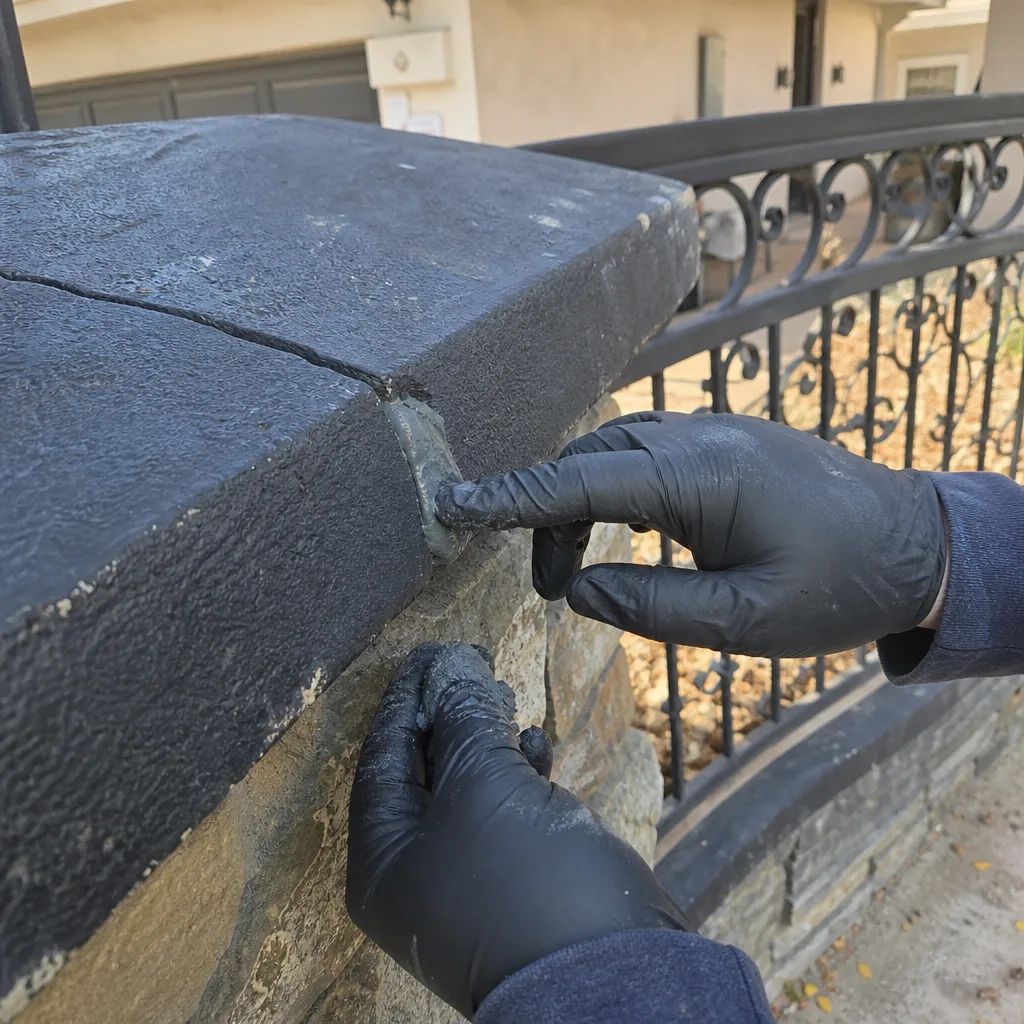
An automatic gate opener takes a command signal from a remote, keypad, intercom, or loop detector, passes it to a control board that checks the safety inputs, fires the motor and drive mechanism to move the gate, and reads limit switches to stop travel at the open and closed positions. In Whitney, the limit switch is the part most likely to fail first, because a settling post changes the travel distance the switch senses. Call (844) 797-4861 for a free written estimate.
A gate that opens but will not close is almost always a safety-input problem, not a motor problem: a misaligned photo-eye, a dusty lens, a spider web across the beam, or a safety loop picking up heat shimmer from the driveway asphalt. On a Whitney driveway, re-aligning a photo-eye by an inch or two is often the whole fix. Call (844) 797-4861 and we will check the safety devices before we touch the motor.
Repair is usually the cheaper answer when the motor and drive still work and the fault is in the control board, a limit switch, a photo-eye, or a keypad. A replacement makes sense mainly when the motor itself has failed or the board is discontinued for a brand we cannot source a match for. We work on all nine major brands and quote repair first. Call (844) 797-4861 for the written numbers before you decide.
A typical gate opener repair in Whitney runs $120-$620 depending on the fault and the brand. Limit switch adjustments sit at $120-$210, photo-eye or safety loop repair at $140-$260, and control board replacement at $280-$620. You get a written flat price before work starts. Call (844) 797-4861 for an exact quote – estimates are free.
If you’d rather have it looked at, Vance Gate Repair Whitney offers a no-pressure assessment in Whitney. Bring a written estimate from another company and we will review it at no cost under our free second-opinion policy. Call (844) 797-4861 for a free estimate.
Written by the team at Vance Gate Repair Whitney, serving Whitney, NV.