
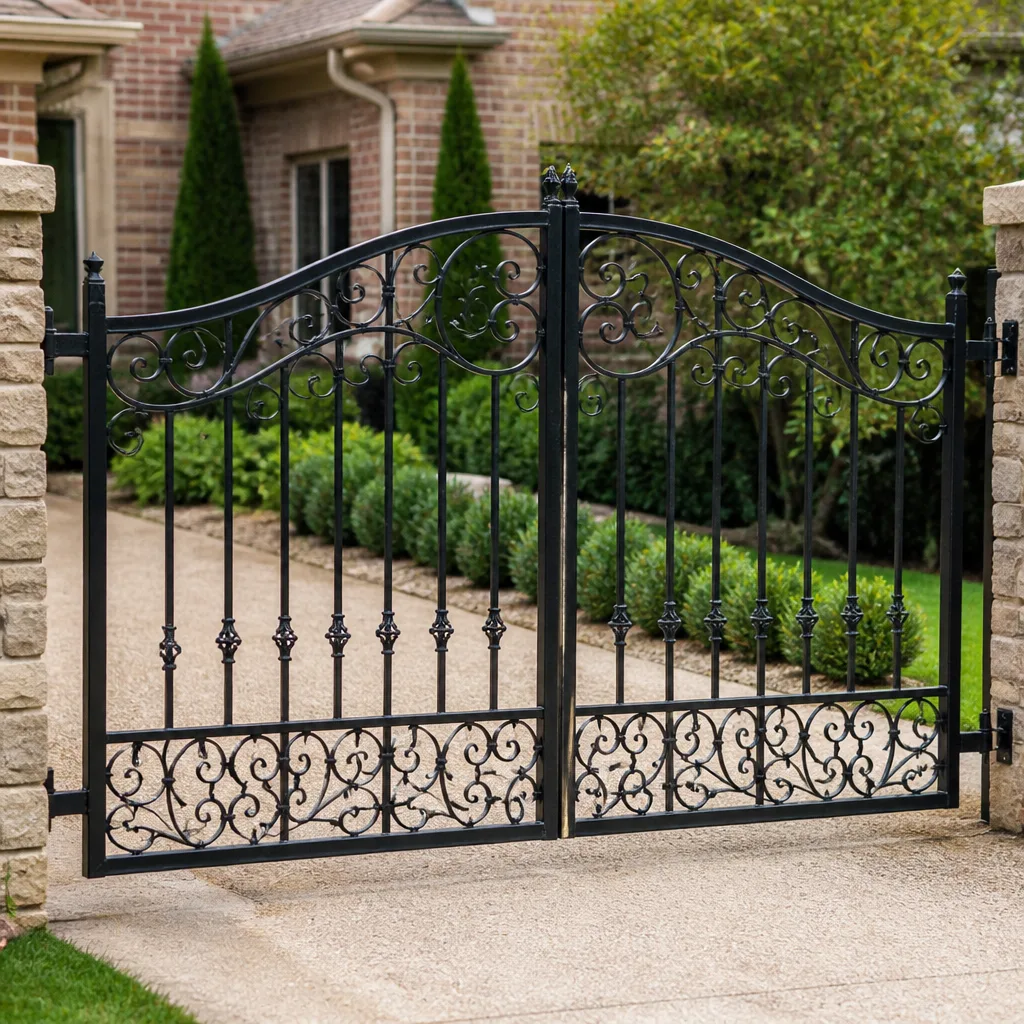
 Wrought iron
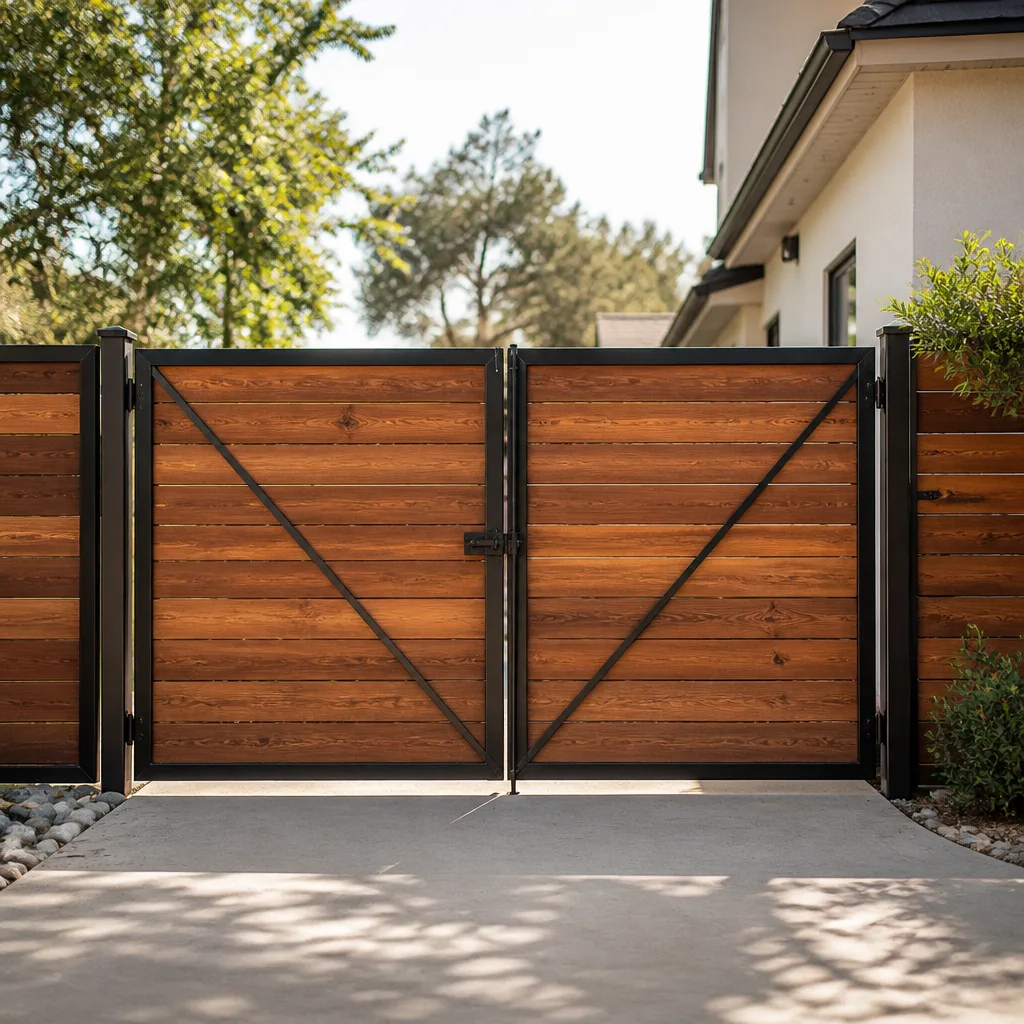 Wood & steel frame
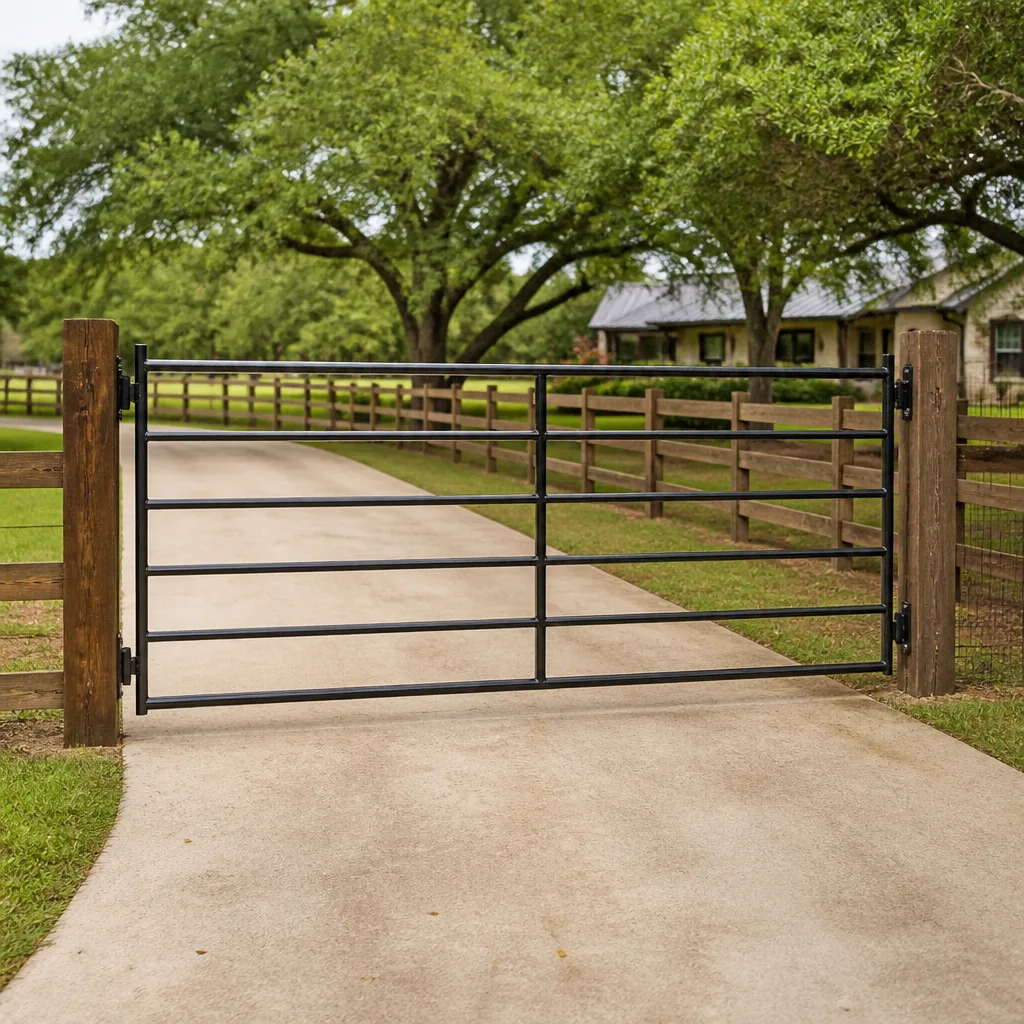 Farm & ranch
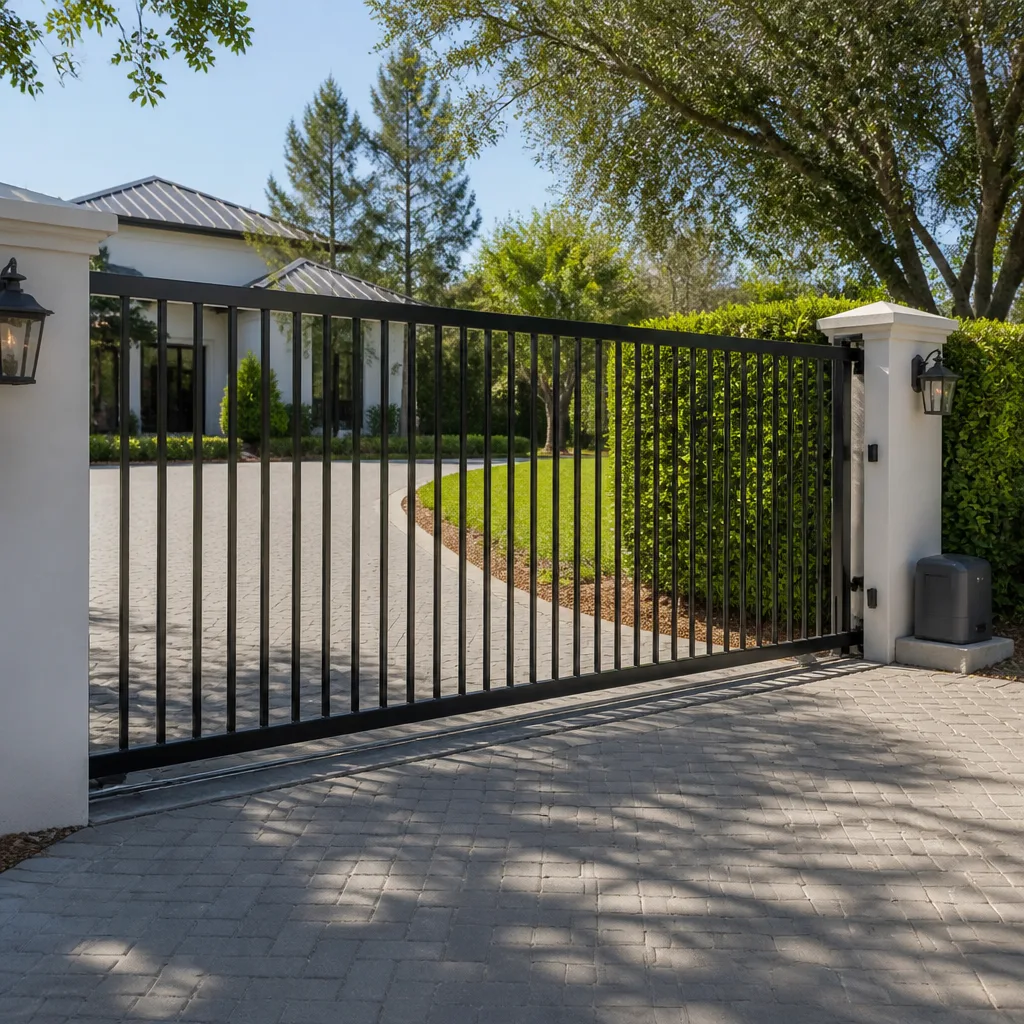 Sliding driveway gates
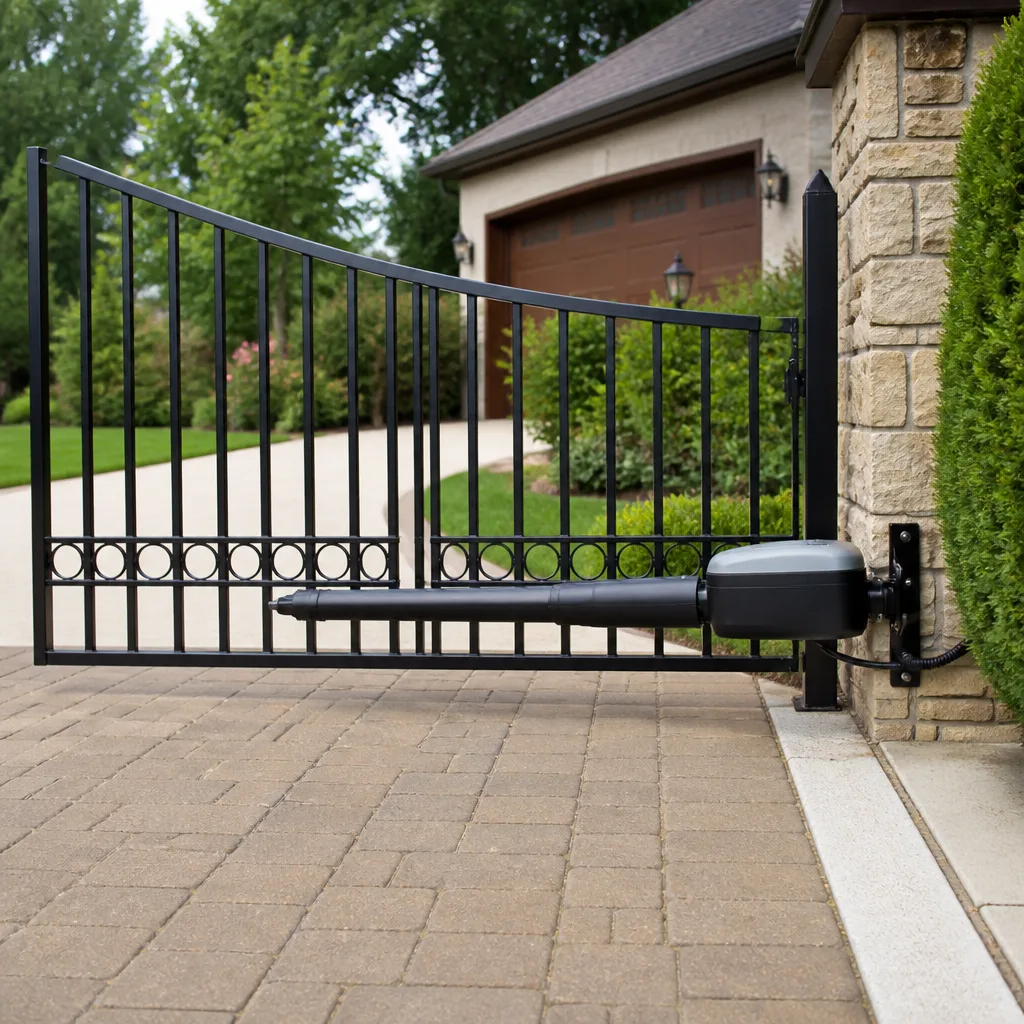 LiftMaster operators
Free on-site gate assessment - hinges, posts, and your LiftMaster or Nice gate operator checked before anything is quoted
The assessment is free and the quote is the invoice.
Get your free estimateStyles & brands we work with
- Wrought iron
- Wood & steel frame
- Farm & ranch
- Sliding driveway gates
- LiftMaster operators
See the difference
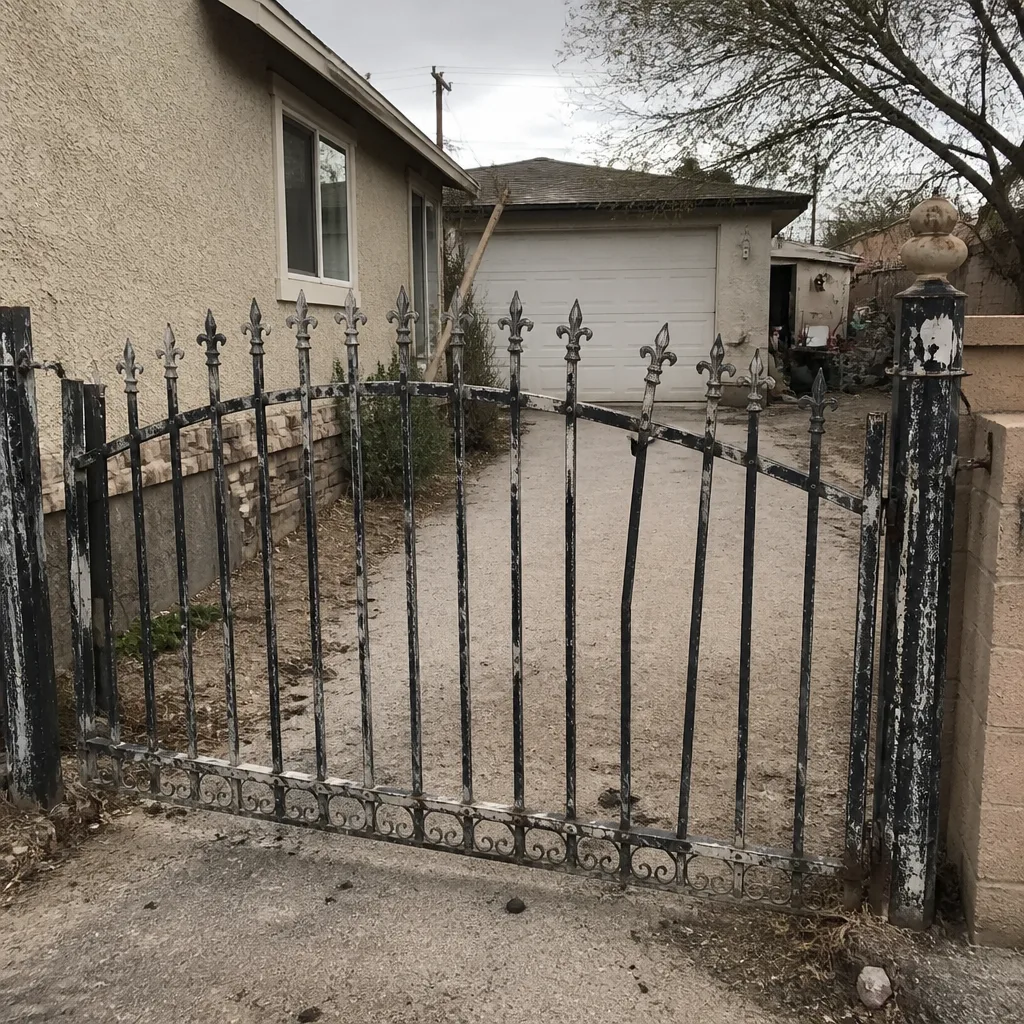 Before
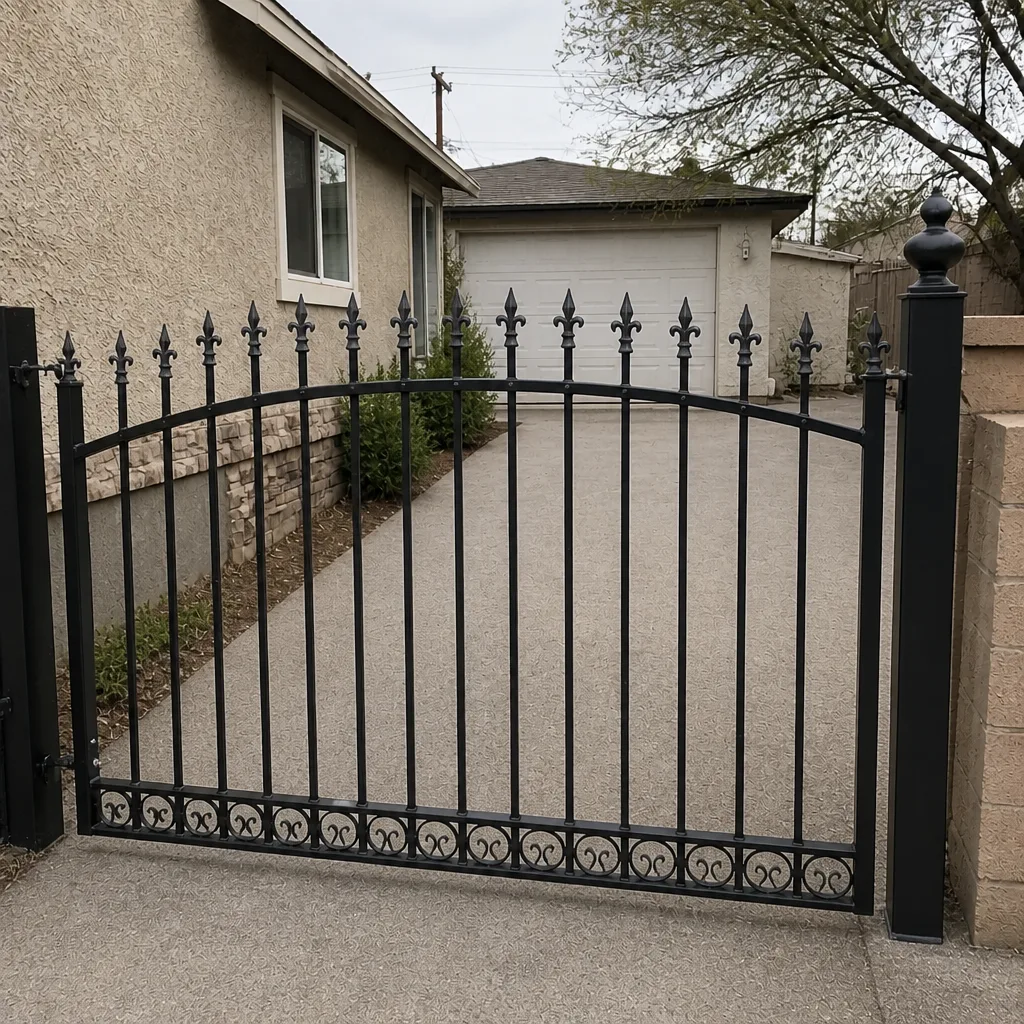 After
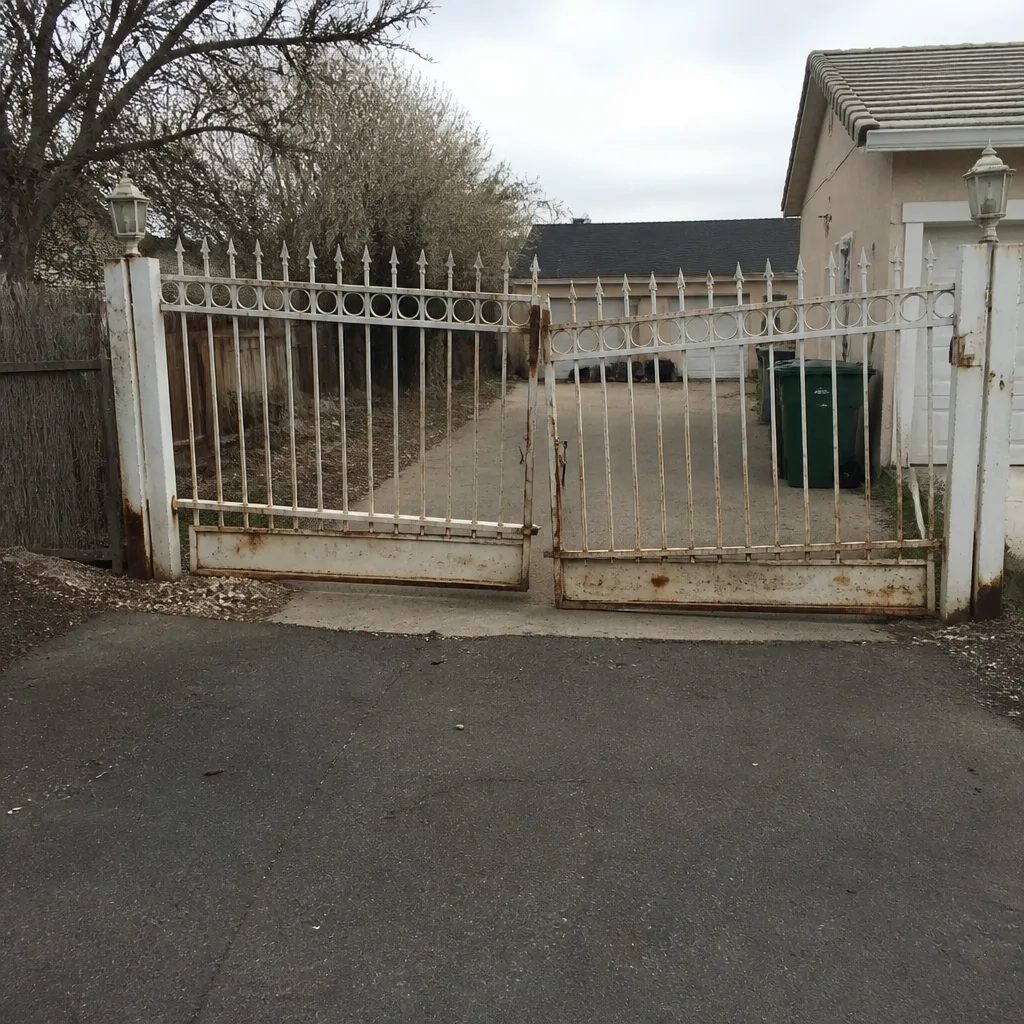 Before
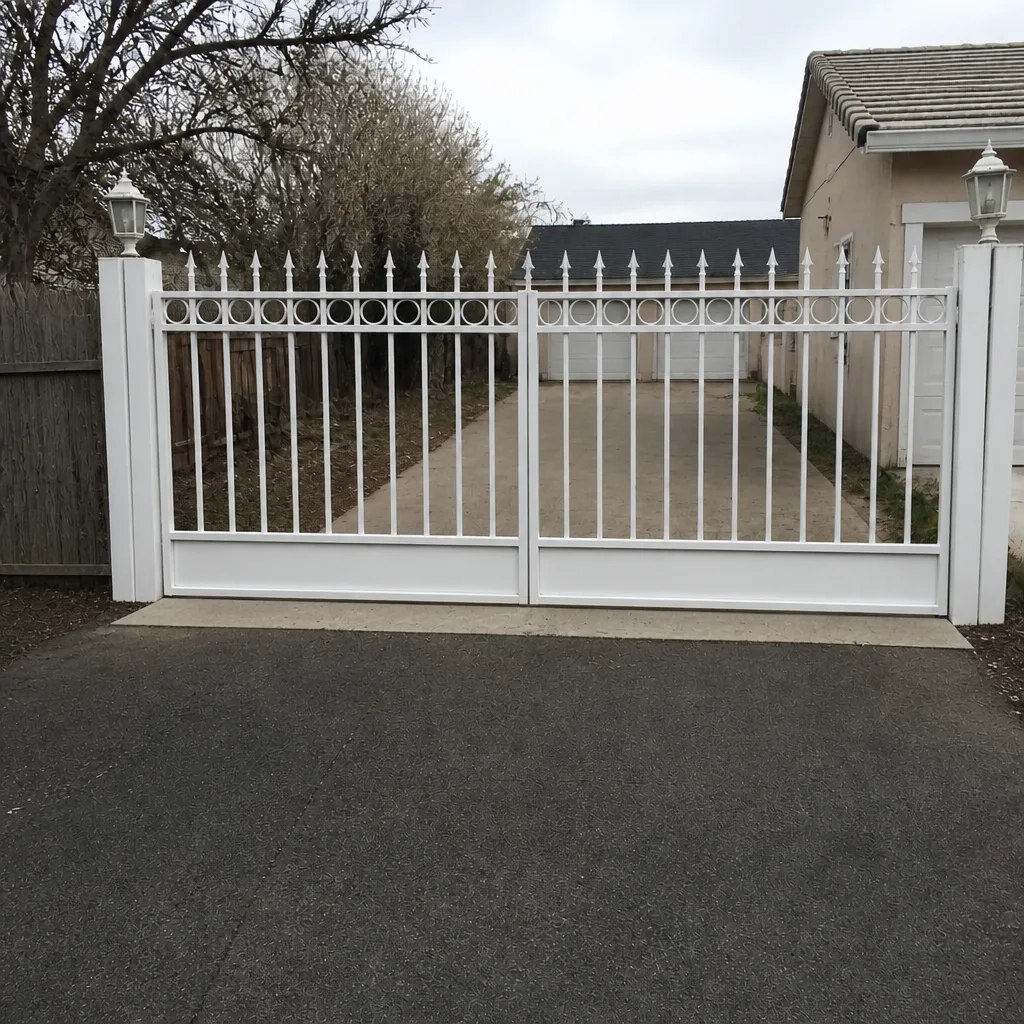 After
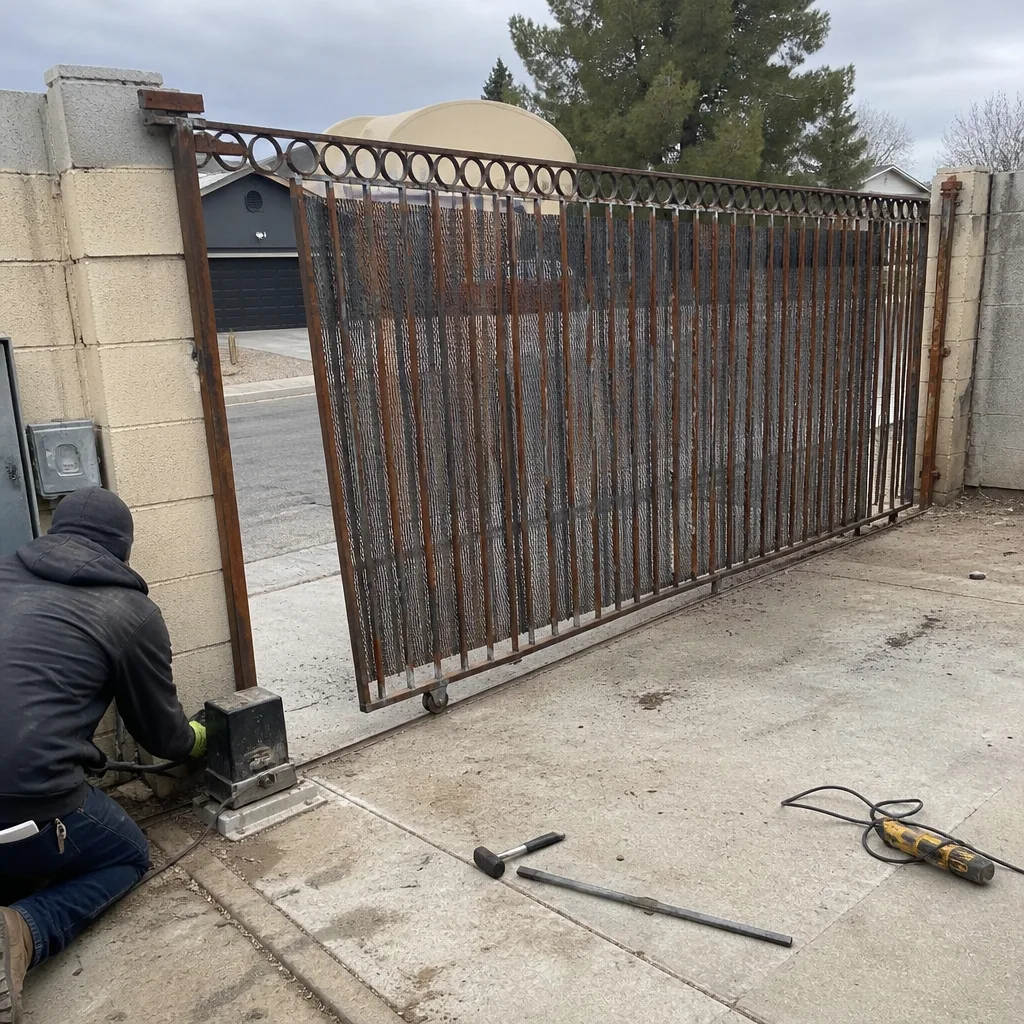 Before
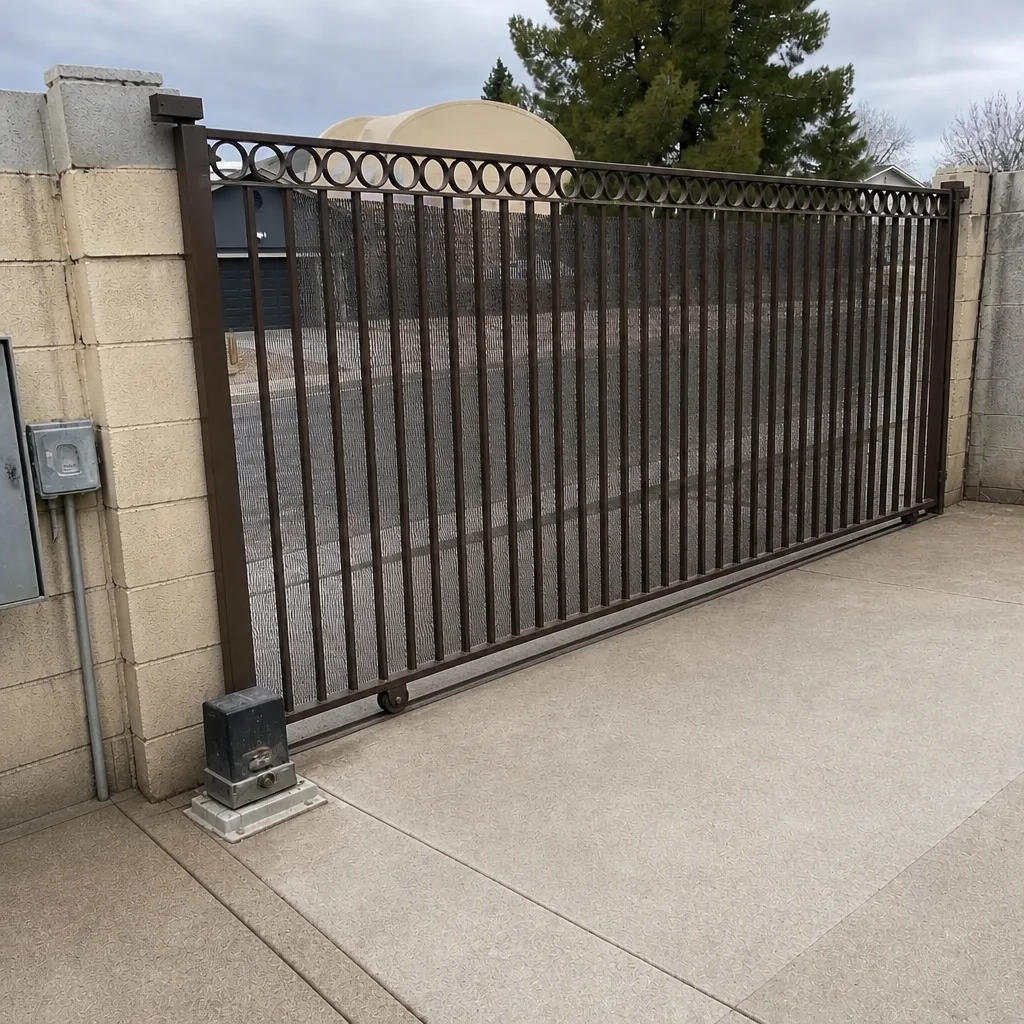 After
Solar Gate Opener vs Electric in Whitney, NV: Choose Hardwired AC Unless Solar Is Your Only Option
For a Whitney driveway, choose a hardwired 120V electric opener unless running a circuit to the gate post would cost more than the gate is worth - in which case a solar kit from FAAC or BFT with a thermal-rated battery is the only solar option we’d recommend. The reason isn’t panel wattage. Whitney gets plenty of sun. The problem is heat: gate-mounted panels in July sit at surface temperatures above 160°F, and that cooks the battery management circuit in most consumer solar kits. Call (844) 797-4861 and we’ll put the comparison in writing before you buy anything.
Why the Solar Pitch Fails in Whitney Specifically
Most solar gate recommendations are built on average sunlight hours. Whitney averages 294 sunny days a year, so on paper a solar opener looks like a clean fit. What those recommendations skip is the second half of the equation: peak solar generation here happens in the same June-to-September window when metal gate components expand, thermal stress on the control board spikes, and the battery sits in a black enclosure baking at ambient temperatures that routinely push past 105°F.
Lead-acid batteries in consumer solar kits start losing capacity fast above 95°F ambient. A battery rated for a three-year service life at 77°F is, in practice, an 18-month battery in Whitney. We’ve pulled cells out of Ghost Controls and Mighty Mule solar kits at the 18-to-20-month mark that tested at roughly 60% of rated capacity - still enough to open the gate on a mild October morning, not enough to cycle it six times during a monsoon gust event in August.
The two-stress convergence
Whitney’s failure window isn’t just heat. It’s heat plus cycle count. Monsoon-season wind gusts force auto-close gates to cycle repeatedly, and every one of those cycles pulls from a battery that’s already degraded. That convergence - thermal degradation plus a spike in daily cycles - is why a solar gate in Whitney tends to fail in late summer rather than in the mild months when the battery still has margin.
Compare by Battery Spec, Not Panel Wattage
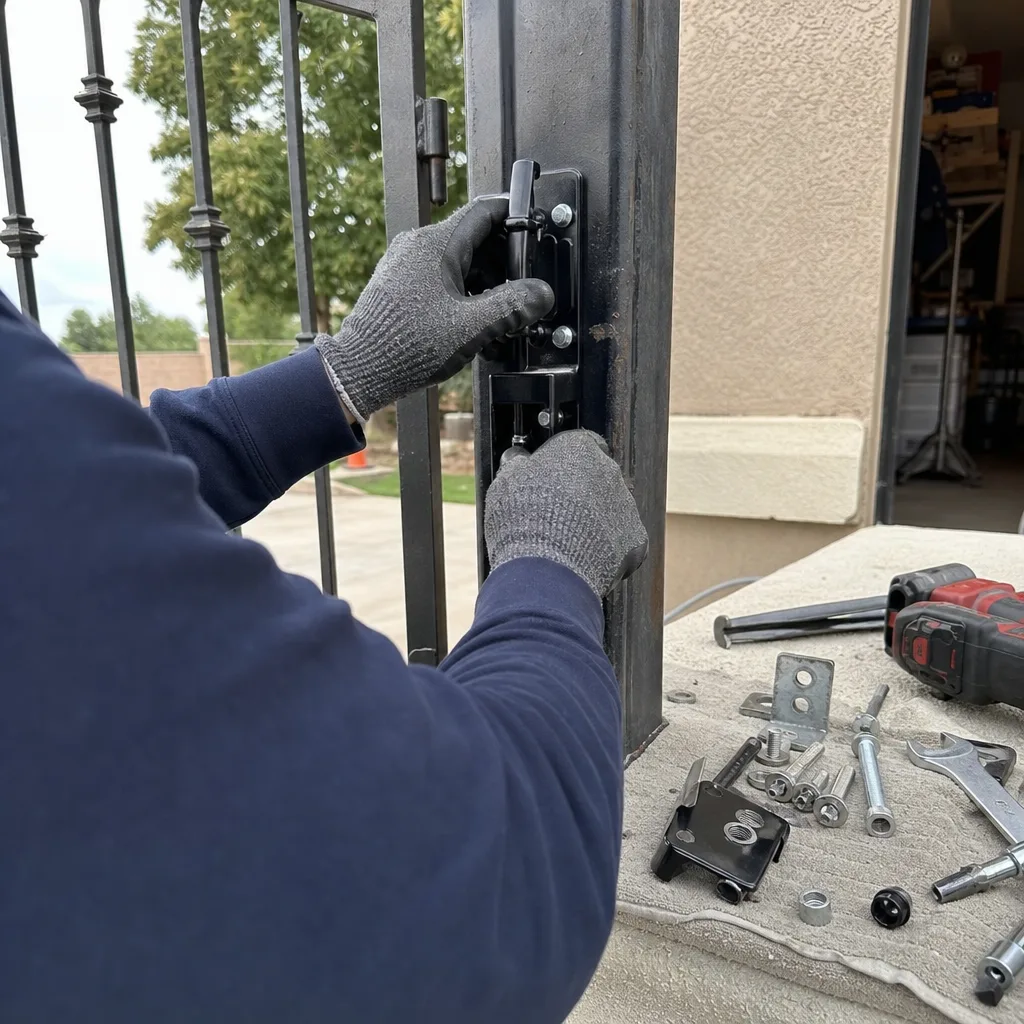
If you’re comparing solar against electric, the number that matters is the battery’s thermal rating, not the panel’s peak output. A 20W panel and a 30W panel both charge the same degraded cell. Ask for the battery model number, its rated capacity at 77°F, and its derating curve above 95°F. That’s the spec sheet that predicts whether you’ll be buying a replacement cell in 18 months or five years.
| Factor | Hardwired 120V electric | Solar kit (consumer grade) | Solar kit (thermal-rated: FAAC, BFT) |
|---|---|---|---|
| Upfront cost | Opener plus circuit run if none exists | Lowest hardware cost | Higher hardware cost |
| Battery replacement cycle in Whitney | None (no battery) | ~18 months typical | Longer with thermal-rated cells; still heat-exposed |
| Performance in June-September | Unaffected by heat load | Degraded capacity plus high cycle count | Better, but still tested by monsoon cycles |
| Best fit | Gate post within ~50 ft of a 120V circuit | Rarely a good fit here | Remote posts where trenching isn’t practical |
The hardwired case is straightforward when a 120V circuit is within about 50 feet of the gate post. The installation cost difference between a solar kit and a hardwired opener is often recovered in battery replacement savings within two years in Whitney - and you stop thinking about the gate between service visits. If you want the full picture on how hardwired systems are specified, our Gate Motor & Opener page covers the brand-by-brand detail.
Brands and what they actually offer
We service nine automation brands, and the solar-versus-electric question lands differently on each:
- FAAC and BFT offer solar-compatible systems with batteries rated for higher ambient temperatures. If solar is genuinely your only path, these are the systems we steer toward.
- Ghost Controls and Mighty Mule sell solar as an add-on to a consumer-grade opener, with battery management built for average U.S. climates rather than Mojave summers. They work well in Whitney’s spring, fall, and winter - the failure window is June through September.
- DoorKing and Elite lean toward hardwired commercial and light-commercial installs where a circuit is assumed.
None of this is a knock on any brand. It’s a spec question. A solar kit is the right tool in the right climate, and Whitney isn’t that climate for most driveways.
BeforeAfterHow We Document the Decision (So You Don’t Guess in Two Years)
Under The Haven Standard, every Vance Gate Repair Whitney visit leaves a written record. When we install or service a solar opener, that record includes the battery model number, the installation date, and the battery’s thermal rating - photographed and filed, with a copy left with you. When the cell starts to fade, the replacement isn’t a guess about which battery the last company used; it’s a documented part number with a date stamp.
That’s the habit we carried over from commercial access-control work, where a missing wiring diagram is a real problem six months later. Homeowners researched the problem before they called us, already read the three-star reviews, and want the price visible on the page. So here it is, in writing, before anyone picks up a tool.
- Assess the post. We check for a 120V circuit within roughly 50 feet of the gate post and note the trenching or conduit cost if it isn’t there. Most Whitney driveways have a circuit close enough that hardwired wins.
- Read the existing motor. If a solar kit is already installed, we pull the battery spec and compare it against what the gate actually cycles in the heat.
- Write the scope. Both options go on one page: hardwired system plus circuit-run cost, or solar system with the thermal-rated battery spec. The price is written and handed over before any work starts.
- Install and document. Every adjustment, the battery model, the limit-switch position, and the new part number get photographed and filed. The 365-Day Done Right Promise covers the completed work for a full year.
Where Whitney’s Gate Hardware Changes the Math
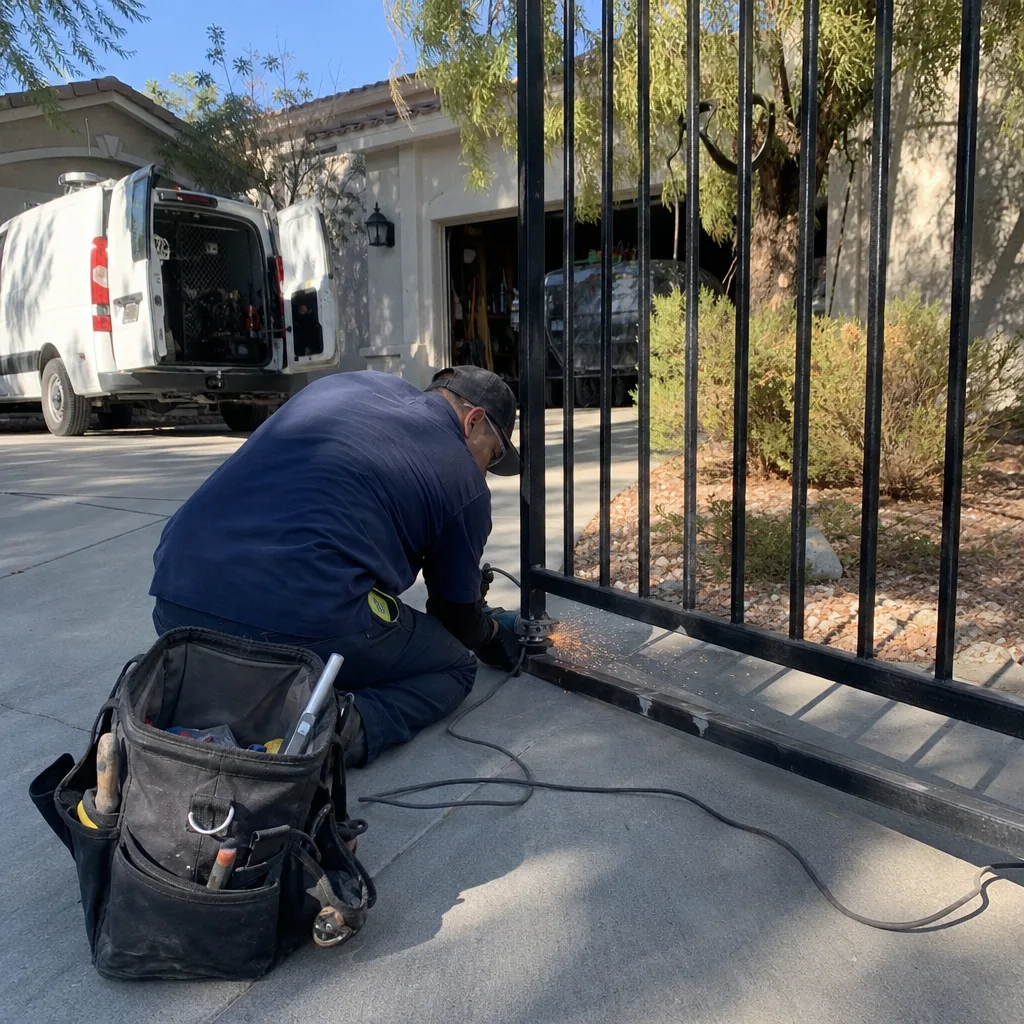
Most Whitney gate work involves wrought-iron or steel driveway gates, aluminum pedestrian gates, and shared block-wall-adjacent fence gates - the late-1990s-to-2000s tract housing stock and HOA-governed subdivisions mean gate decisions tie back to CC&Rs and shared fence-line responsibility as much as to the motor. Caliche-heavy desert soils shift posts and throw gates out of plumb, and that misalignment loads the opener harder every cycle. A solar kit already running a degraded battery feels that added load in August. A hardwired opener just keeps working.
One local wrinkle worth naming: in HOA subdivisions, a replacement or repaint often has to match the association’s approved gate style and color exactly. A technician can dial in a perfect swing and still leave you failing a compliance inspection if the finish doesn’t match the perimeter wall. We flag that before the job, not after.
Safety note: the one thing we won’t walk a homeowner through over the phone is AC wiring at the panel or the low-voltage control side of a gate operator. Live electrical work and 120V circuit runs belong to a licensed electrician, and DC motor side, limit switches, and battery swaps should be done with the system de-energized. When in doubt, call and let a trained technician handle it.
FAQs
Electric hardwired is better for most Whitney driveways because it eliminates the battery that fails in Mojave summer heat. Choose solar only when running a 120V circuit to the post isn’t practical, and then choose a thermal-rated solar system from FAAC or BFT rather than a consumer kit. Call (844) 797-4861 for a free written comparison.
Roughly 18 months for most consumer-grade solar kits in Whitney, versus a three-year rating at 77°F ambient. Summer ambient temperatures above 95°F push lead-acid cells past their derating curve faster than the manufacturer’s average-climate spec suggests. If your solar gate is fading in late summer, that’s the pattern - call (844) 797-4861 and we’ll pull the battery spec and document it.
Yes, when a 120V circuit is within about 50 feet of the gate post, a conversion is usually straightforward - and the installation cost difference is often recovered in battery replacement savings within two years. We assess the circuit distance, the existing motor, and the gate load, then write both options on one page before any work starts. Call (844) 797-4861 for the written scope.
FAAC and BFT offer genuine solar compatibility with thermal-rated batteries; Ghost Controls and Mighty Mule solar kits are consumer-grade add-ons with battery management built for average climates and tend to fail in Whitney’s June-to-September window. DoorKing and Elite lean hardwired. We service all nine brands and won’t steer you toward replacement when a repair will do.
If you’d rather have it looked at, Vance Gate Repair Whitney offers a no-pressure assessment in Whitney - call (844) 797-4861. A live person answers 24/7, and the written price is in your hands before anyone touches the gate.
Written by the team at Vance Gate Repair Whitney, serving Whitney, NV.