
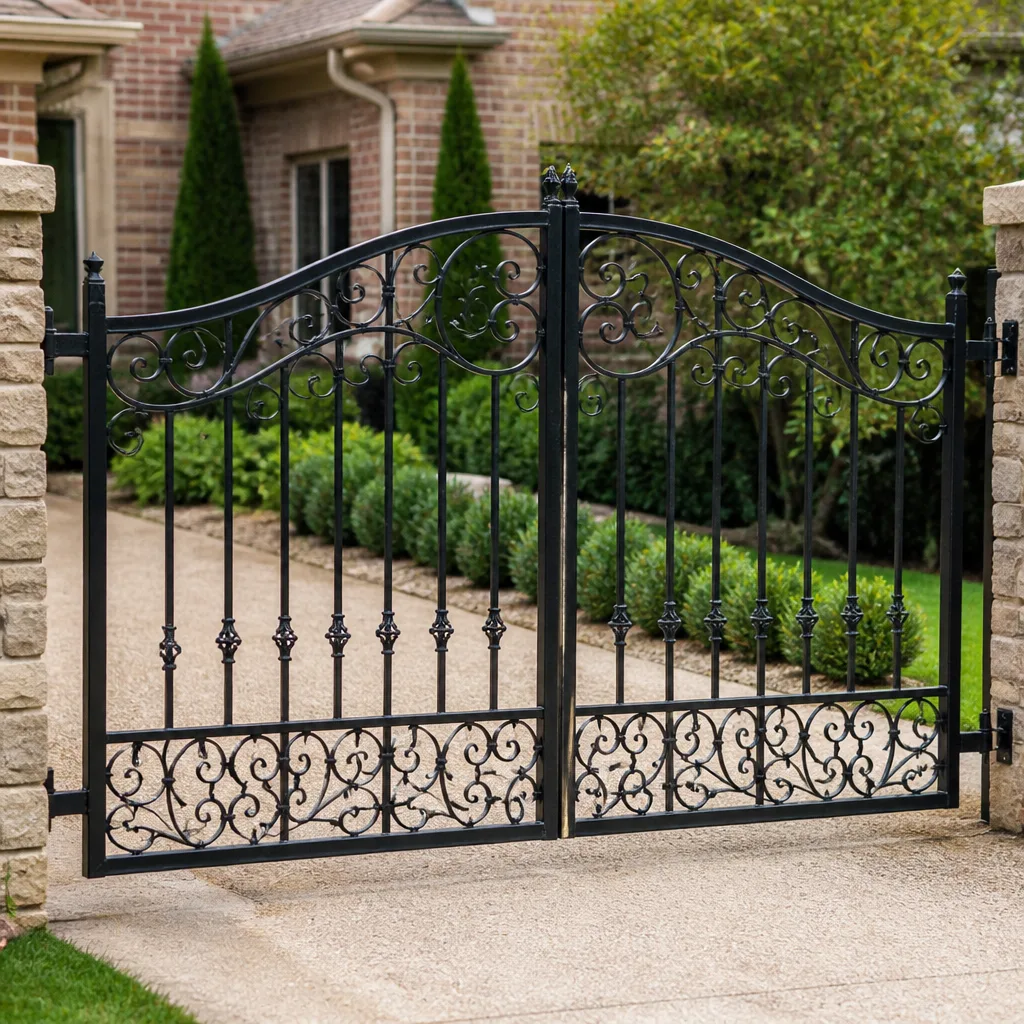
 Wrought iron
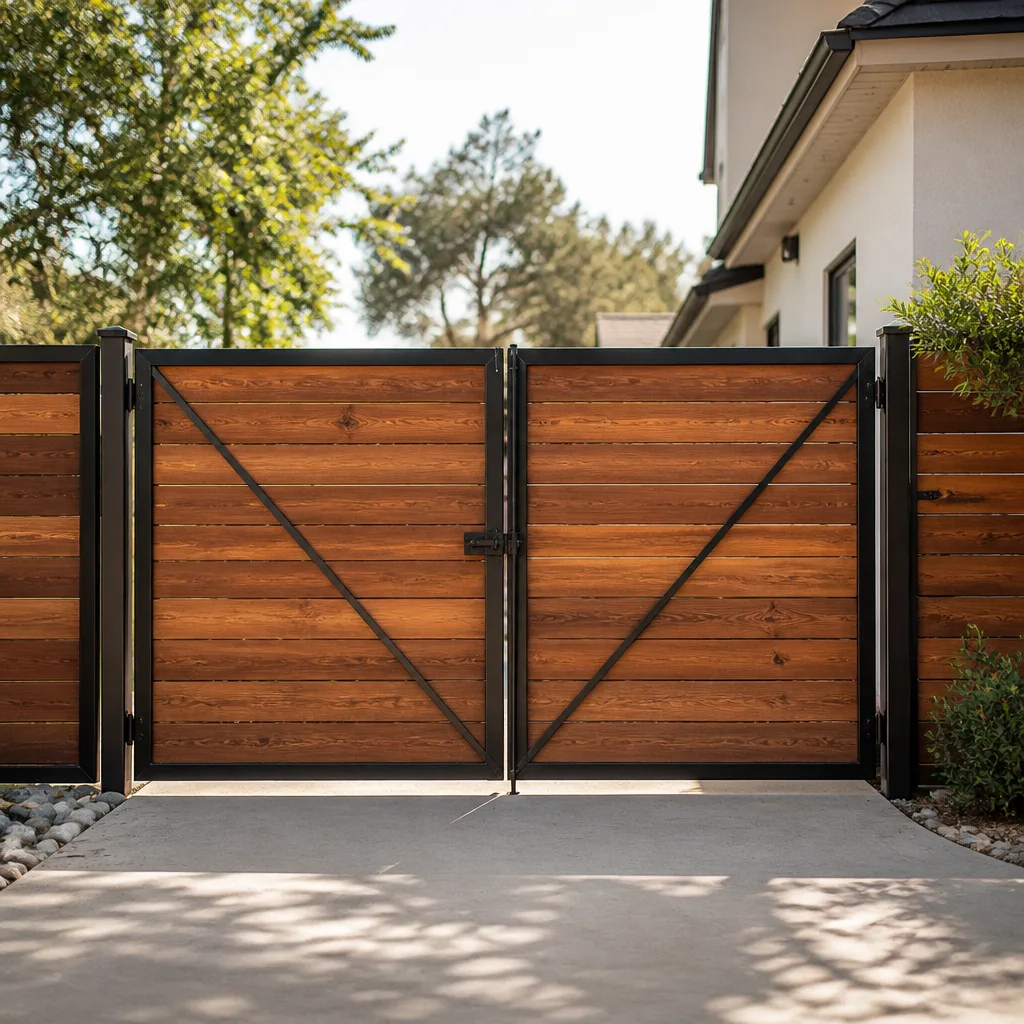 Wood & steel frame
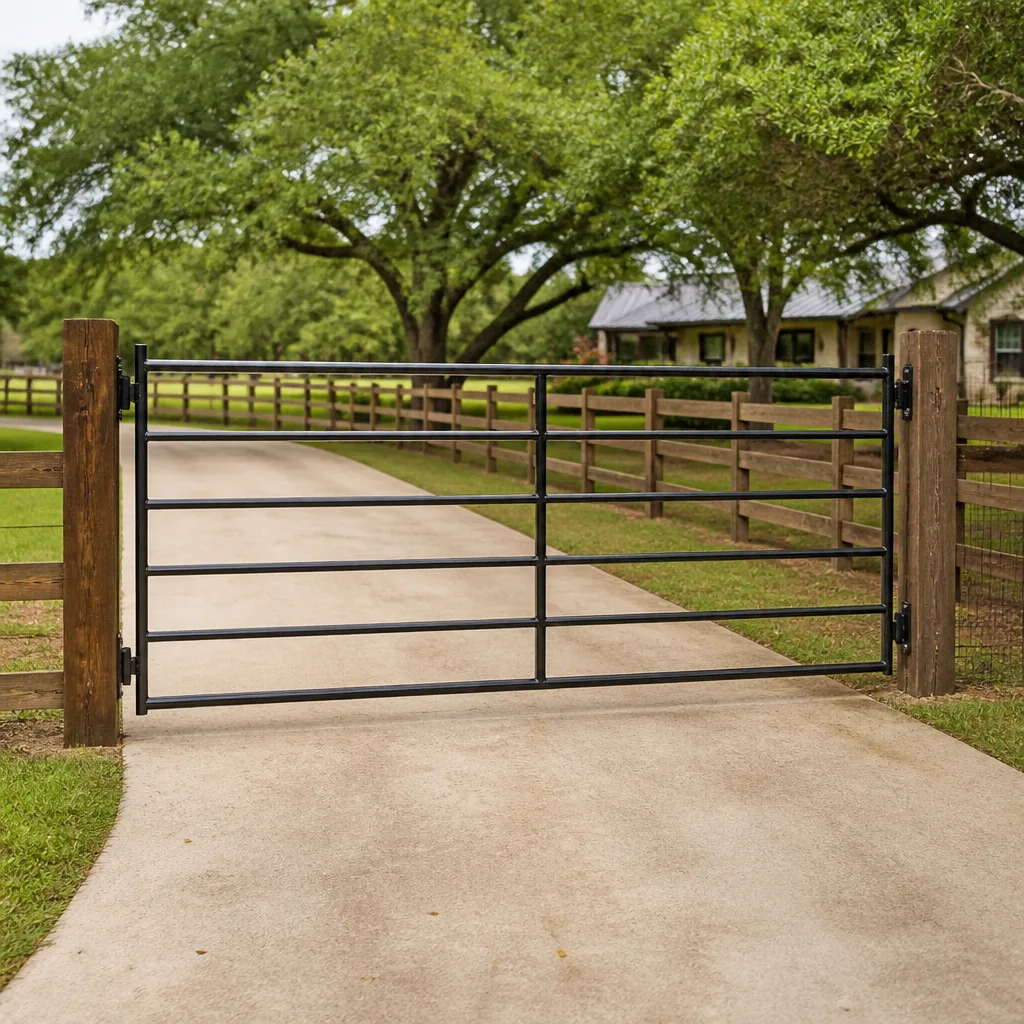 Farm & ranch
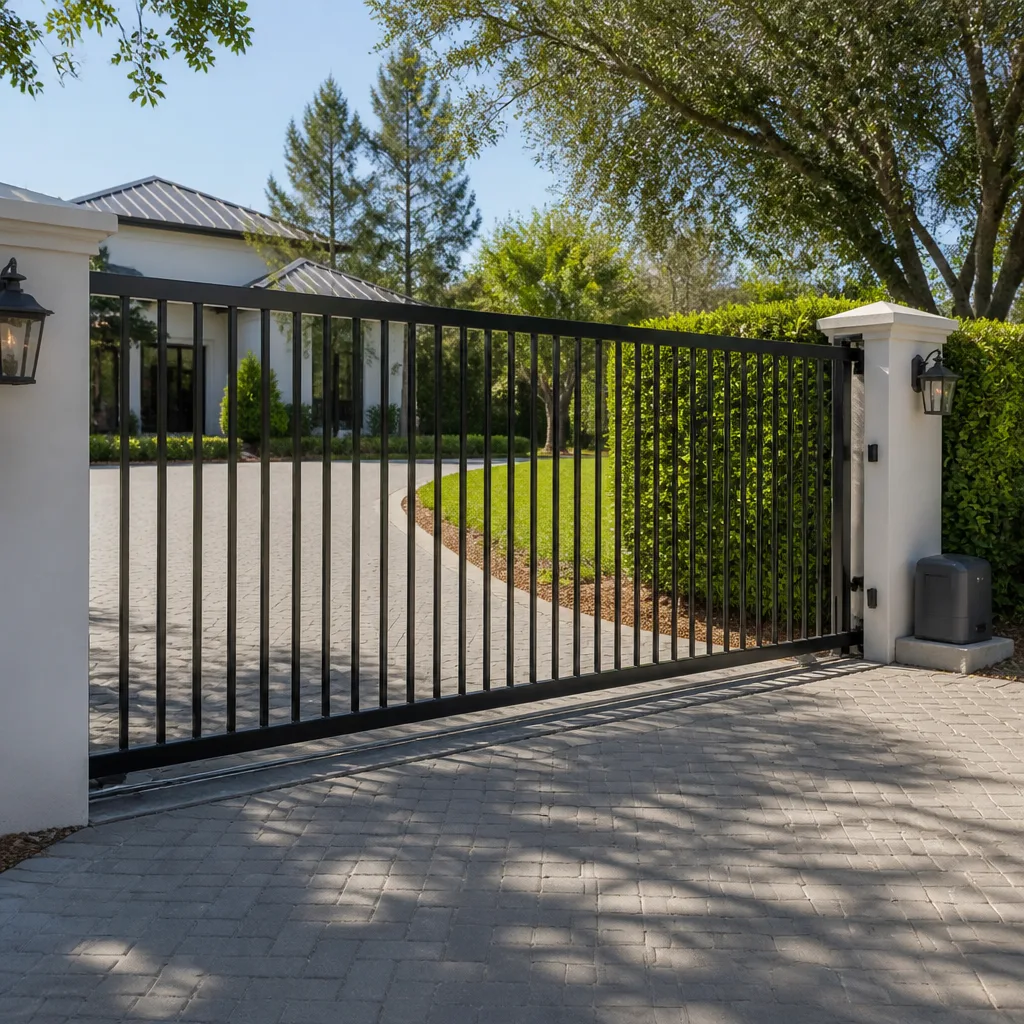 Sliding driveway gates
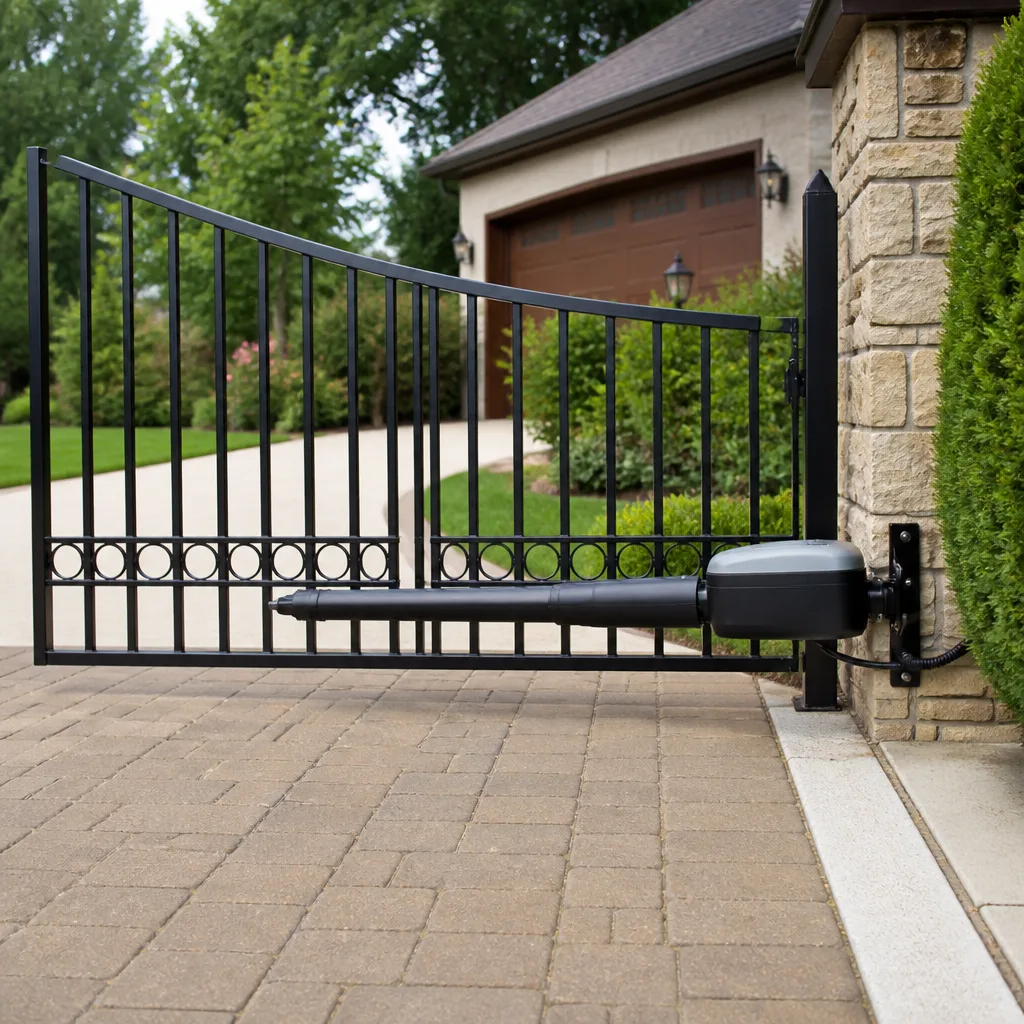 LiftMaster operators
Free on-site gate assessment - hinges, posts, and your LiftMaster or Nice gate operator checked before anything is quoted
The assessment is free and the quote is the invoice.
Get your free estimateStyles & brands we work with
- Wrought iron
- Wood & steel frame
- Farm & ranch
- Sliding driveway gates
- LiftMaster operators
See the difference
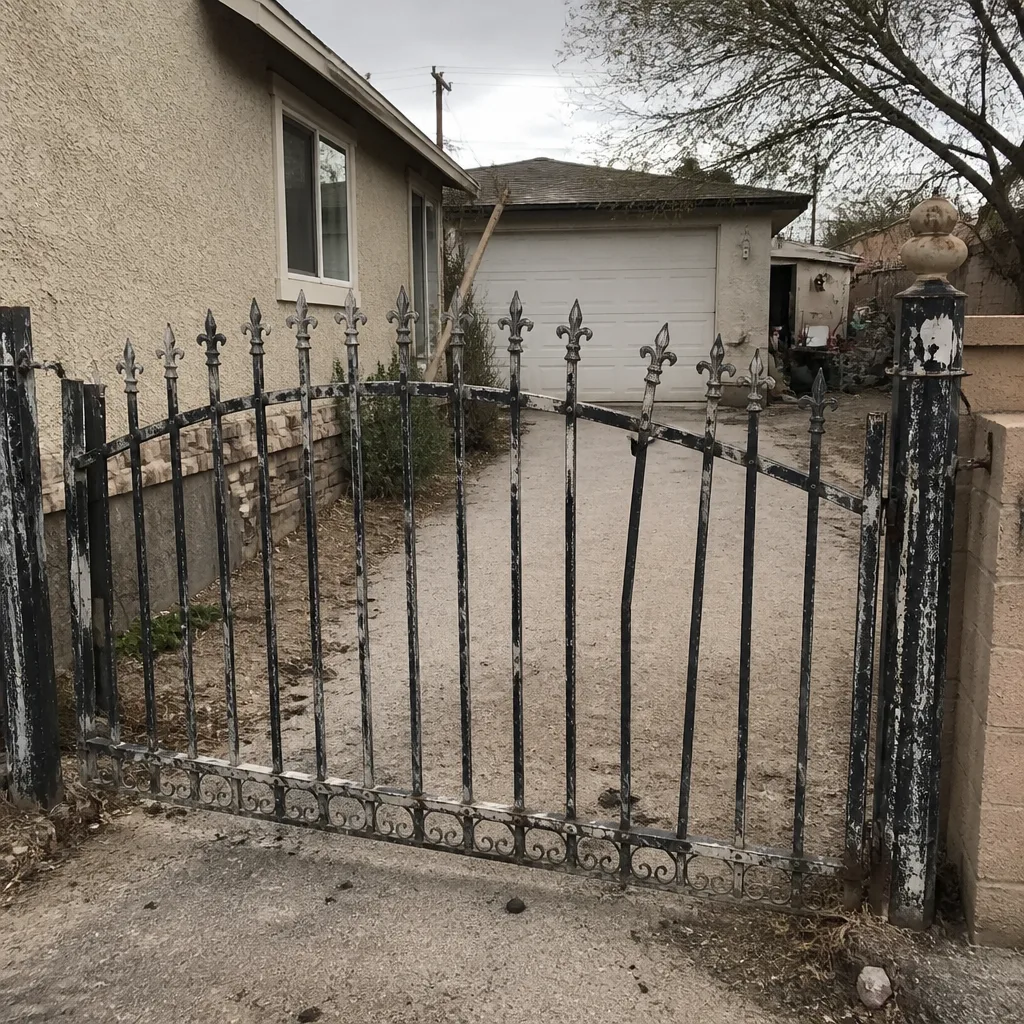 Before
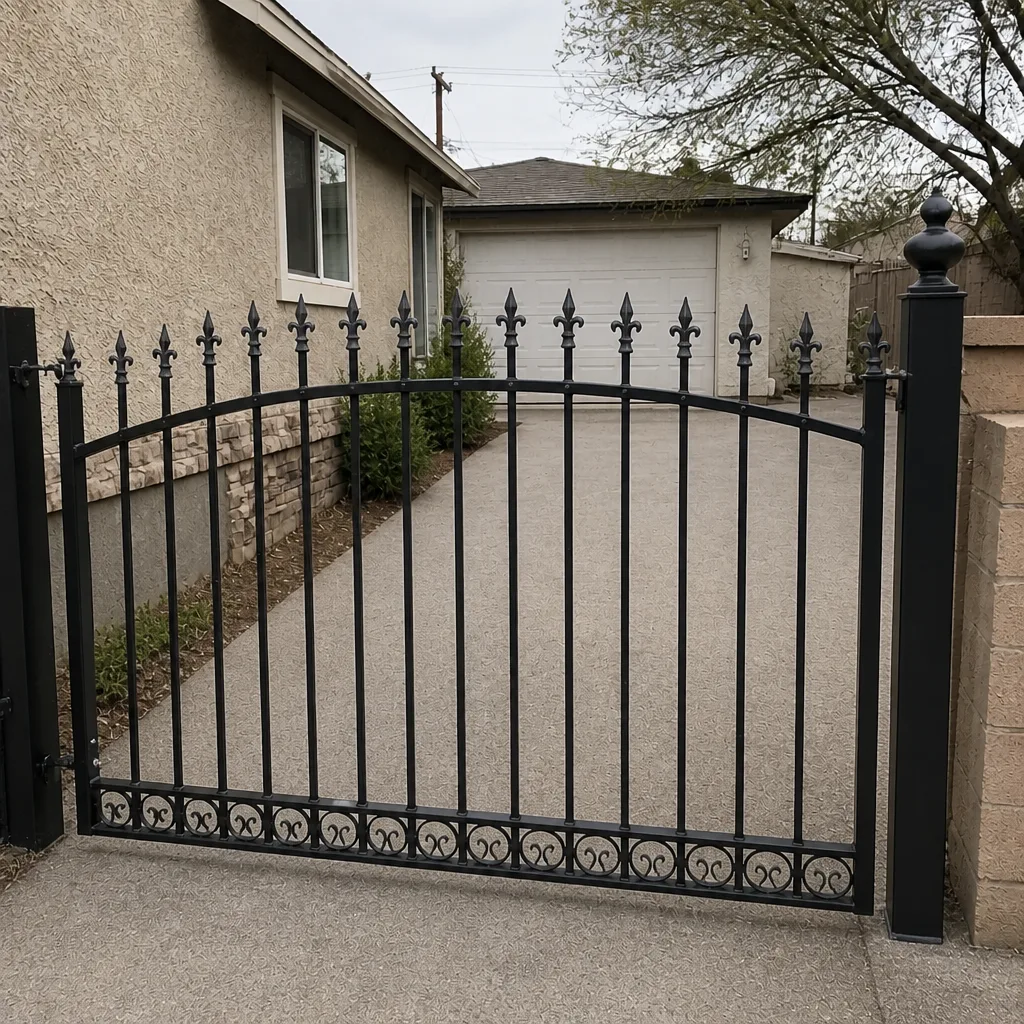 After
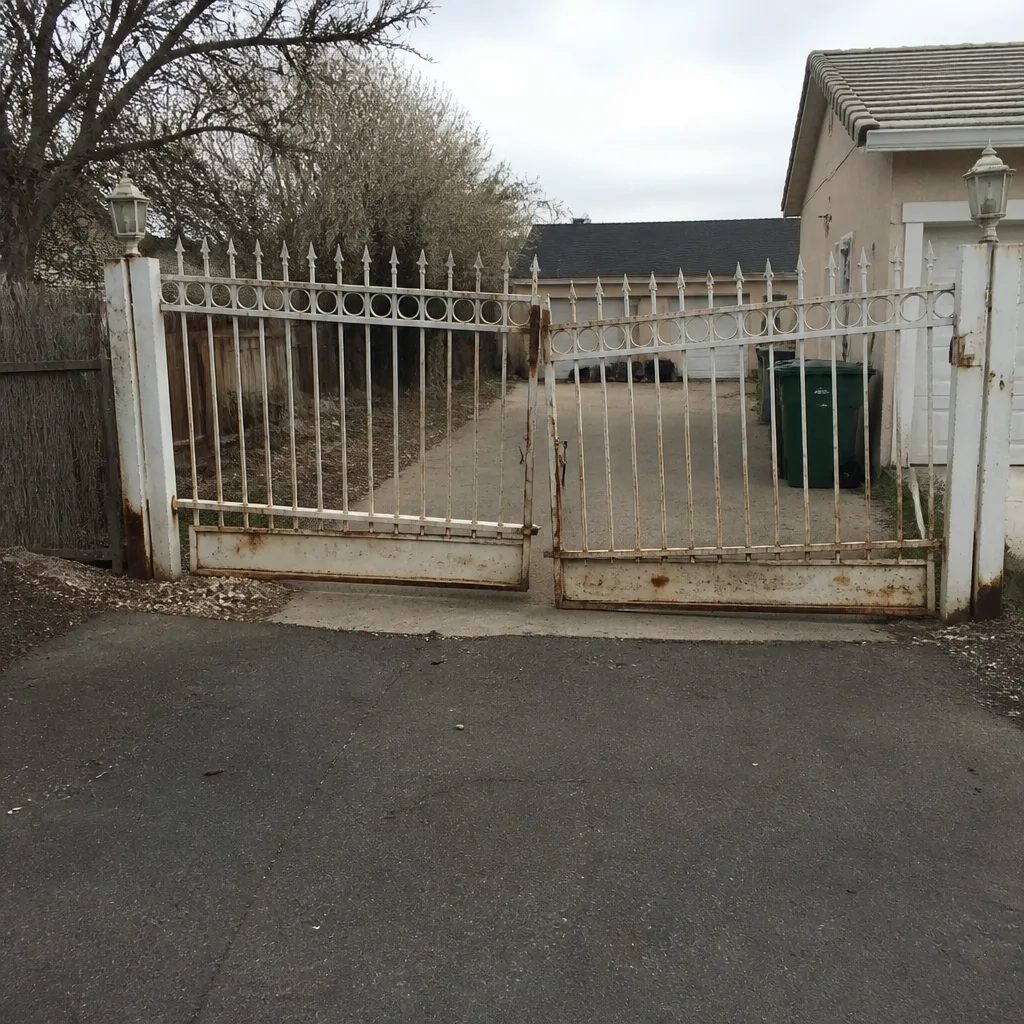 Before
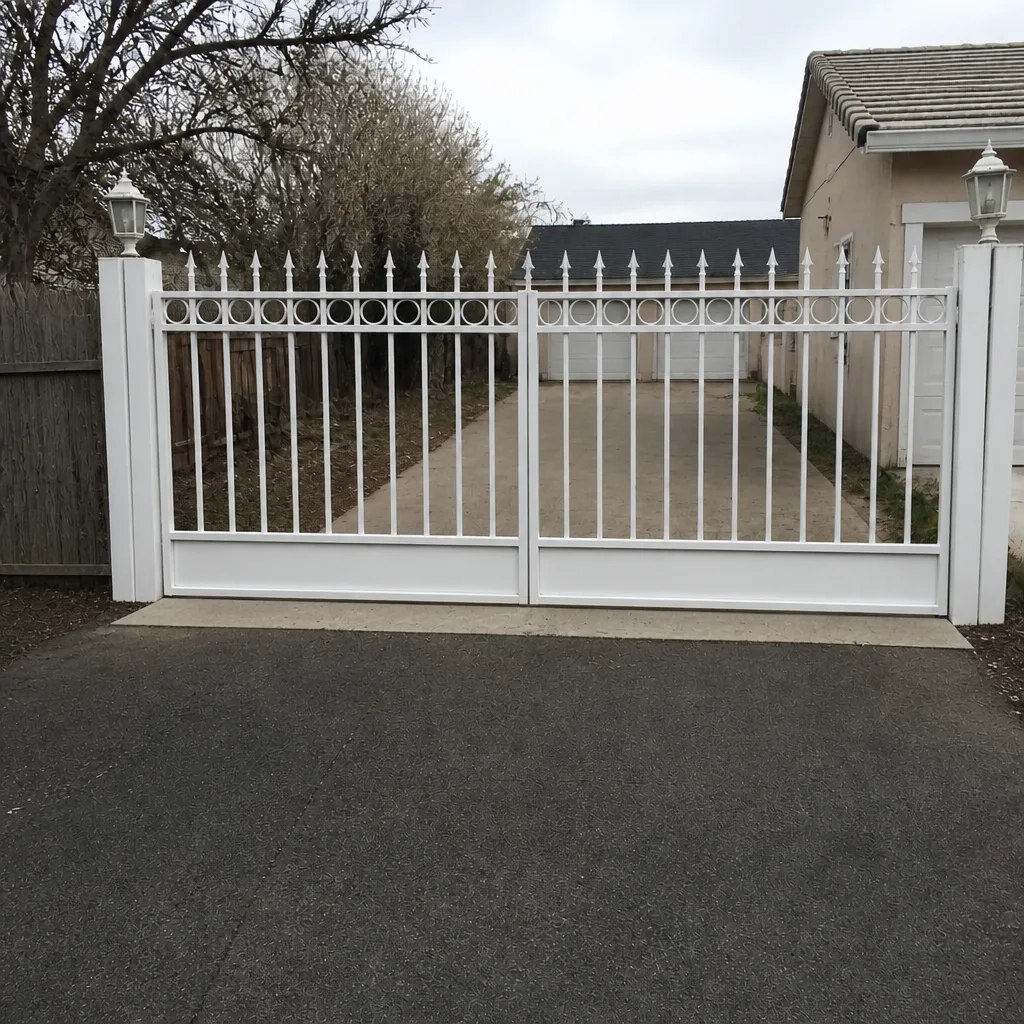 After
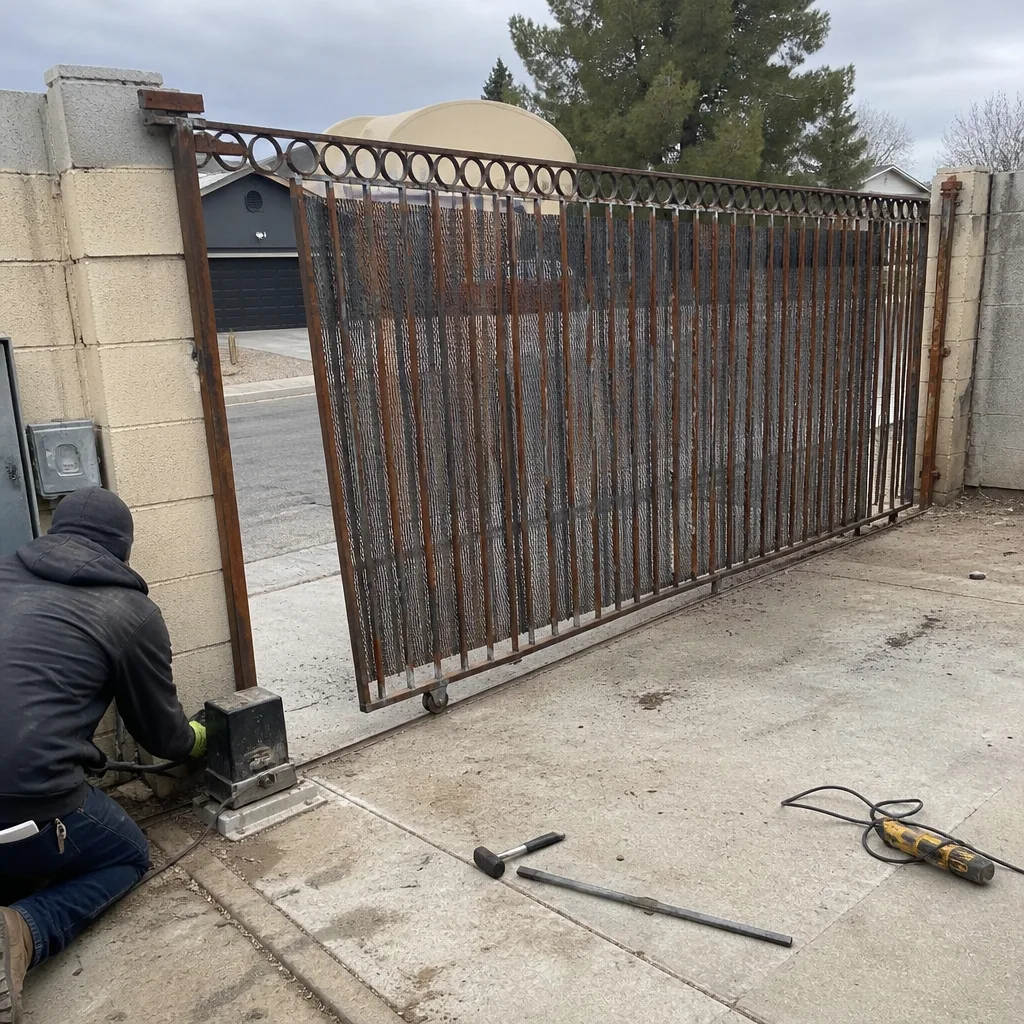 Before
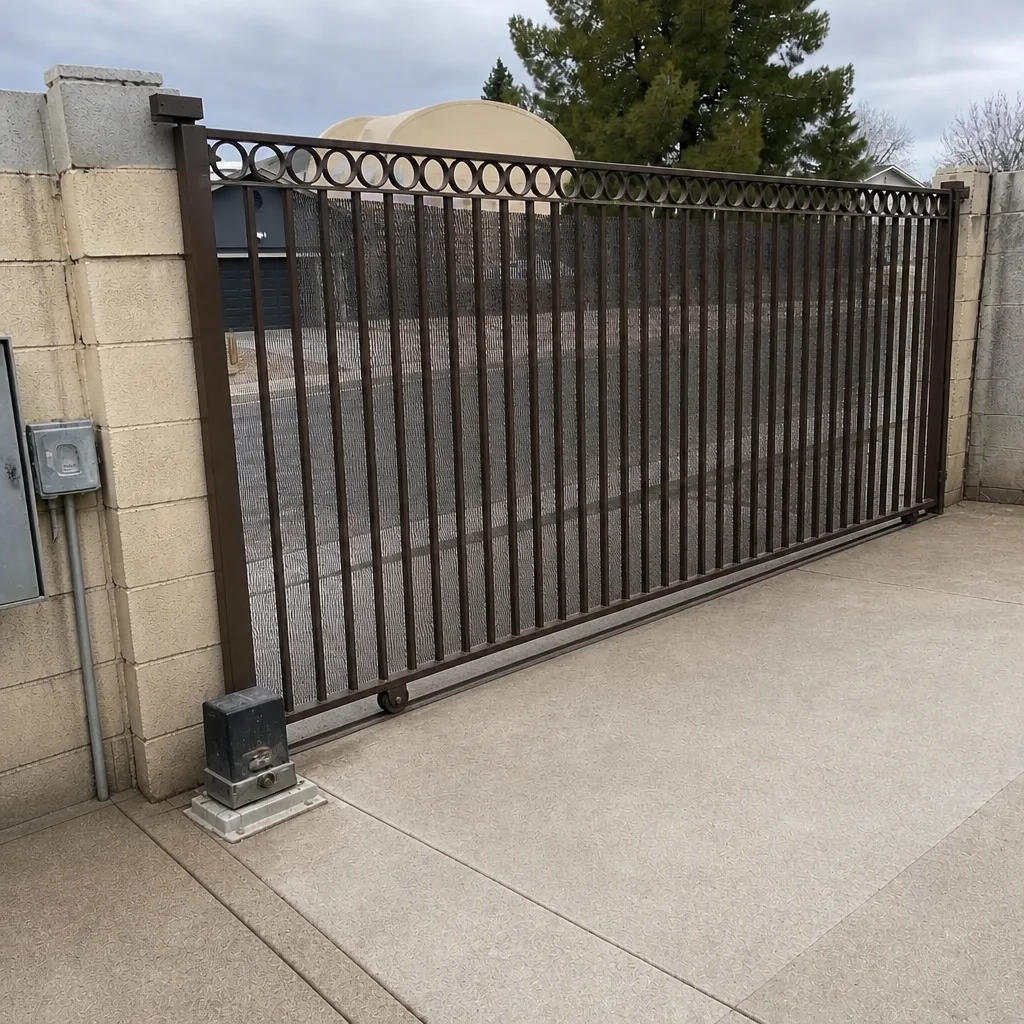 After
How to Reset an Automatic Gate in Whitney, NV (and Why It Usually Won’t)
If your Whitney gate went unresponsive on a summer afternoon and won’t reset, don’t call a technician yet: open the operator cover, wait 15 to 20 minutes in the shade, and try the reset again. The most common cause of an “unresponsive” gate in Mojave heat is a thermal protection hold, not a hardware fault, and it costs nothing to clear if you catch it first. Most operators in this valley shut down around 140°F internally, and a black metal housing sitting against a west-facing block wall in July will hit that well before the motor is actually damaged. Wait for the cutout to clear, then reset. If it comes back and holds, you’re done. If it trips again within 24 hours at normal temperatures, that’s a different conversation and we’ll get to it below. Call (844) 797-4861 if you’d rather talk it through.
Key takeaways
- Thermal cutoff, not a broken board, explains most summer gate failures in Whitney.
- Let the operator cool 15 to 20 minutes before any reset attempt. Resetting a hot board does nothing.
- Every brand resets differently: LiftMaster, FAAC, BFT and Mighty Mule all use different sequences.
- After a reset, most operators need a fresh limit-switch re-learn.
- If it fails again within 24 hours, the fault is progressive and needs a documented diagnostic.
Step one: clear the thermal hold before you touch anything else
This is the step the generic guides skip, and it’s the one that matters most in Whitney. The operator housing on a driveway gate sits in full sun over a concrete-block wall, and the Mojave summer pushes internal board temperatures past the motor’s protection threshold by early afternoon. The control board cuts power to protect itself. The gate sits there, the remote clicks, and nothing moves. It reads as dead. It isn’t.
Here’s the sequence that resolves the largest share of summer failures here before you do anything else:
- Cut power at the breaker or the dedicated disconnect. Not the remote. The actual supply.
- Open the operator cover. On most swing and slide operators it’s a hinged lid or two screws. Photograph the board before you touch it, so any wiring you move can go back exactly where it came from.
- Let it sit for 15 to 20 minutes in ambient shade. Don’t aim a hose at it. Thermal shock on a hot board is a worse problem than the one you started with.
- Restore power and attempt the reset. If the gate moves, you found it. If nothing happens after cooling, the problem is elsewhere and the cooling test just saved you a service call.
One detail from the field: we’ve opened covers in Whitney in August and found the board still warm to the touch forty minutes after the breaker was pulled, because the housing itself holds heat. Give it the full twenty minutes. A reset attempted at minute eight tells you nothing.
Brand-specific reset steps for the operators most common in Whitney
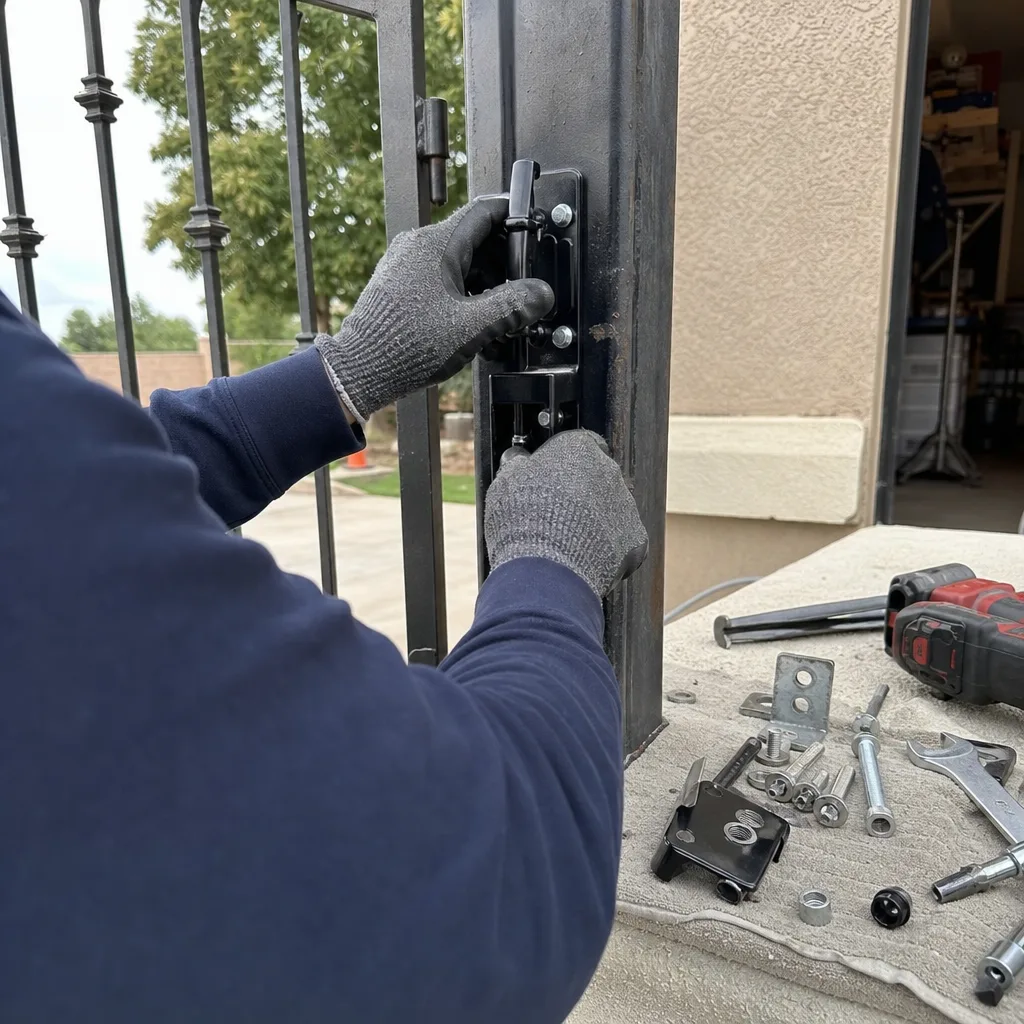
Resetting an automatic gate is not one procedure. It’s a brand-specific sequence, and the operator on your property decides which one you’re running. These are the four we see most on Whitney driveway and perimeter gates. Name the brand before you start, because pressing the wrong sequence on the wrong board can put the operator into a programming mode you didn’t intend to enter.
LiftMaster reset
Pop the operator cover and find the control board. The learn button is typically a small colored button near the terminal strip. Hold it for about six seconds until the LED beside it blinks or goes solid, then release. That clears the memory. Re-pair the remote by pressing the learn button once and then holding the remote button until the operator clicks. Confirm the LED settles solid, not blinking. A blinking LED after pairing means the remote didn’t take.
FAAC reset
FAAC boards vary by model, and two things matter: the DIP switch bank and the keypad. On many FAAC 400 and 390 series boards, a reset means cycling the DIP switches off and back on, or using the board’s dedicated reset jumper. On keypad-controlled FAAC systems, a full reset may need the master code, and if the code has been lost, the board has to be reset at the board itself. Photograph the DIP positions before you move anything. That photo is what gets you back to the original settings if the reset goes wrong.
BFT reset
BFT operators on Whitney properties are usually swing-arm units on wrought-iron driveway gates. The reset procedure on most BFT boards involves the PROG button and confirming via the diagnostic LEDs. Hold PROG until the LEDs flash in the pattern your manual documents, release, and confirm the gate opens and closes cleanly. If the operator runs but stops short, you’re not in a reset problem anymore: that’s the limit-switch issue below.
Mighty Mule reset
Mighty Mule boards reset through the control-board buttons in a specific hold-and-release order, and the order differs from the other brands, which is why homeowners who’ve reset a LiftMaster before still get it wrong here. Their boards also have a distinct behavior on solar-charged models that behaves like a fault but reads as a low-battery hold. If your Mighty Mule has a solar panel and the gate worked all spring then quit in June, check the battery before you reset anything.
For a Whitney property running something older or less common, our Gate Motor & Opener page covers what we work on and how diagnostics go.
BeforeAfterWhy the gate resets but still misses the closed position
The second failure homeowners hit, right after a reset that appears to work, is a gate that runs but stops in the wrong place. It re-learns to a new open and closed position, and the operator records whatever it just traveled as the new limits. The gate travels full open, the operator records the position, the gate travels full closed, the operator records that. If the post has moved, the operator records the new positions and accepts them as correct.
In Whitney, post movement is the usual culprit. Caliche-heavy soils and expansive desert ground shift posts and fence lines with the seasonal wet-dry cycle, and a post that’s two degrees out of plumb throws the limit switch off enough to matter. So the reset succeeds, the gate runs, and it stops three inches short of the HOA’s required closed position. A technician can fix the swing perfectly and the homeowner still fails a compliance inspection because the gate no longer meets the ARC’s specification.
If that’s what you’re seeing, re-learn the limits once, watch the gate through three full cycles, and see if it holds the same position. If the position drifts across those three cycles, stop. Post settling and hinge wear are behind the drift, and no amount of reprogramming corrects a moving frame. That’s when a documented look at the hardware is the right next step, not another reset.
Know your manual release before you need it
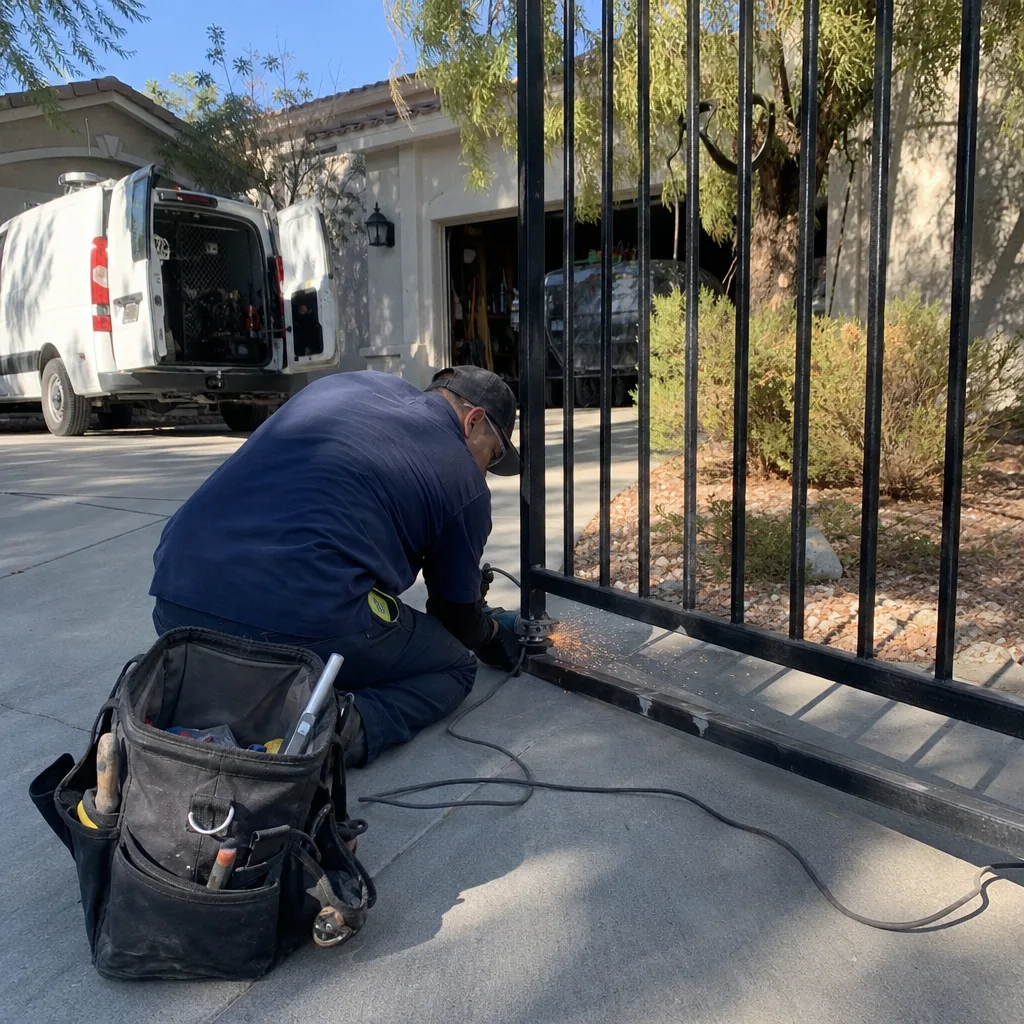
Every operator type releases differently, and knowing which mechanism is on your property is the difference between a two-minute manual operation and a locked-out gate with the car inside. If power is out or the board is unresponsive, the manual release is the way through.
- Swing-arm operators (common on Whitney wrought-iron driveway gates): a keyed release lever at the arm, turn the key and lift the lever, then push the gate by hand.
- Underground actuators: a release cover in the ground close to the hinge post, with a keyed mechanism inside. These are the ones homeowners most often can’t find in the dark.
- Slide operators: a release lever on the operator body that disengages the pinion from the rack, then the gate rolls by hand.
Test the manual release once, in daylight, before you need it. It takes two minutes and it’s the single most useful thing a homeowner can do on a Whitney gate. Because so many of these properties sit inside HOA-governed subdivisions, a gate left stuck open creates a shared-perimeter problem, not just a driveway one, and the association has a view on that. If you’d rather have a technician check the release and the operator together, our Gate Motor & Opener in Whitney page covers what that visit includes.
When a reset is not enough
If the gate resets and fails again within 24 hours at normal temperature, the fault is progressive. That pattern almost always points to one of three things: a capacitor losing its capacitance, a logic board degrading, or post alignment getting worse. Each of those shows up as an intermittent failure that resets clean in the cool of the morning and dies in the afternoon heat. Another reset buys you a day. A documented diagnostic finds the actual cause.
What a diagnostic visit from Vance Gate Repair Whitney looks like: a written price before any work begins, a live person on the phone any hour you call, and a photo record at the end of the visit showing what was found, what was adjusted, and the limit-switch readings. Our technicians have up to 12 years of experience on the nine major gate-automation brands, and we work on whatever operator is already on the property. Every job is covered by the 365-Day Done Right Promise. If a repair isn’t right, we make it right at no additional charge inside that year. If you have a written estimate from another company, we’ll review it at no cost before you commit.
FAQs
Because the operator’s thermal protection is still engaged. In Whitney summer heat, the control board hits its internal cutoff and holds the gate unresponsive until it cools. Cut power, open the cover, wait 15 to 20 minutes in shade, and reset again. If it still won’t reset after cooling, call (844) 797-4861 for a diagnostic.
A diagnostic visit with written findings typically runs $95 to $175, and most common repaired faults (limit-switch re-learn, capacitor, photo-eye realignment) land in the $150 to $350 range depending on the brand and parts. A motor replacement on a swing gate is a different job entirely, and the price is written before we start. Call (844) 797-4861 for an exact figure on your operator.
Yes, in most cases. A live person answers our phone 24 hours a day, seven days a week, and we can often get a technician to a Whitney property the same day for a reset or limit-switch re-learn. Call (844) 797-4861 and we’ll tell you what’s available.
Repair, in most cases, and you shouldn’t trust a quote that jumps to replacement before diagnosing. Capacitors, limit switches, photo-eyes and logic boards are all serviceable on LiftMaster, FAAC, BFT and Mighty Mule operators, and repair preserves the existing mount, wiring and programming. We repair first and price the fix in writing. Call (844) 797-4861 and we’ll look at it before recommending anything.
If you’d rather have it looked at, Vance Gate Repair Whitney offers a no-pressure assessment in Whitney. We write the price down before any work starts, we leave you a photo record of every adjustment, and we back the repair for a full year. Call (844) 797-4861 for a free estimate, or head back to our home page to see what else we handle on Whitney gates.
Written by the team at Vance Gate Repair Whitney, serving Whitney, NV.